• Link to X
  • Link to Youtube
  • Link to Instagram
  • Link to Mail
  • Link to Facebook
Join the community and receive a free EBOOK
Treading My Own Path | Less waste, less stuff, sustainable living
  • ⌂
  • About
  • Work with me
  • Upcoming events
  • Books
    • The Less Waste No Fuss Kitchen
    • Less Stuff
  • Resources
    • Printables
    • Infographics
    • Quotes and facts
  • Explore
    • Minimalism
    • Plastic-free living
    • Real Food and Recipes
    • Zero Waste
  • Blog
  • Click to open the search input field Click to open the search input field Search
  • Menu Menu

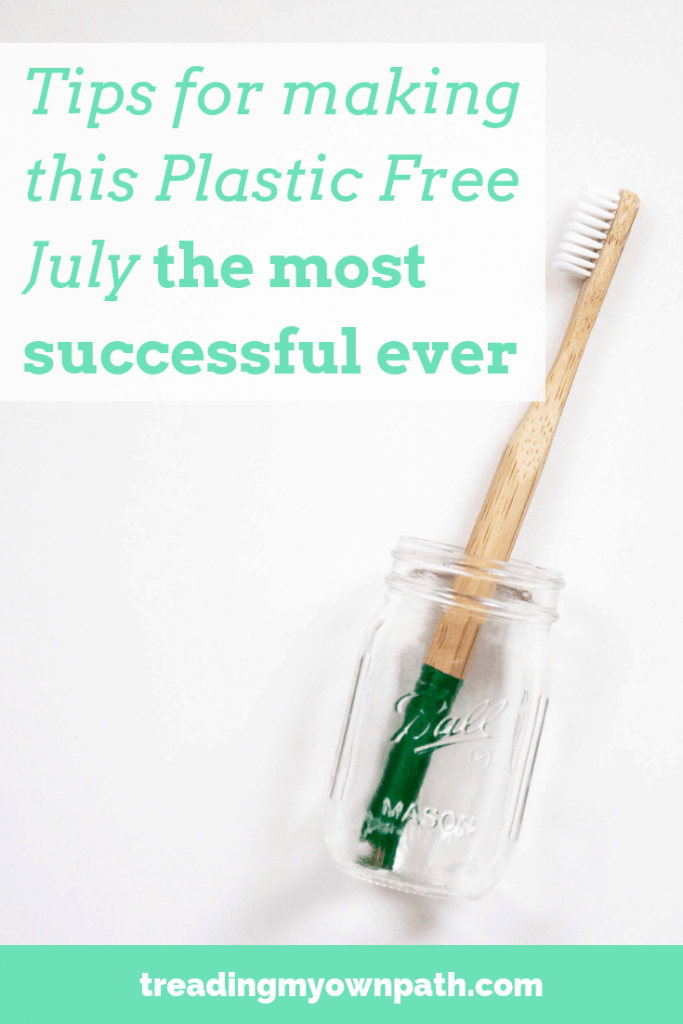
8 Tips for making this Plastic Free July the most successful ever!

21 Comments/in Plastic Free July, Plastic Free Living, Zero Waste/by Lindsay (Treading My Own Path)

I love June and July, because every year during these two months a tide of plastic awareness starts sweeping across the globe. Why? Because people throughout the world start signing up for Plastic Free July, and there’s a wave of optimism, hope and enthusiasm that comes too.

It doesn’t stop there though… all that energy turns into discovery, realisation, commitment to change and then action. New habits are born. People start using less plastic, and for many, they keep on using less plastic long after July has passed. With every year, the plastic-free movement gets stronger!

If you’re not signed up to this year’s Plastic Free July challenge, or you’ve no idea what I’m talking about, stop everything and sign up now. Yep, right now. It won’t take long. Just click here. We’ll wait for you to get back.

Done? See, that didn’t take long at all!

(I should add at this point that we’re not saying that all plastic is bad. We’re just saying that a lot of plastic is unnecessary, and actually avoidable. The truth is, we get stuck in the habit of doing things a certain way simply because that’s the way we’ve always done them, and we’ve never really given much thought to the notion that actually there’s a better way. By better, I mean a way that doesn’t involve drilling oil out of the ground, turning it into plastic, shipping that somewhere and using it for a few minutes before sending it to landfill, where it will languish for the next 500 years.)
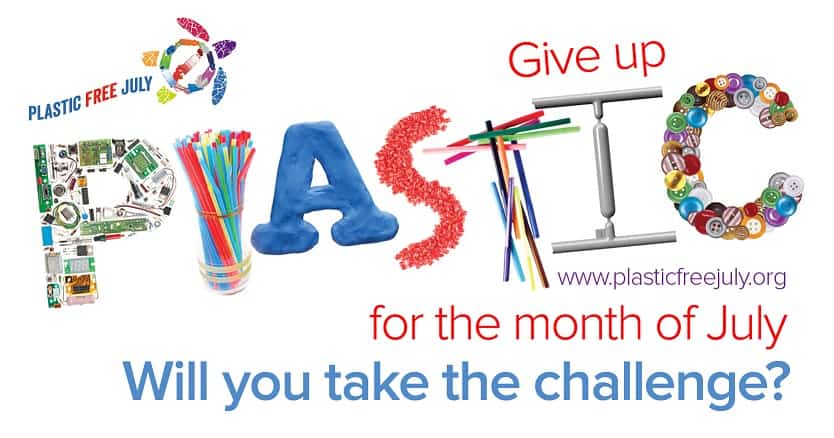
Plastic Free July – the countdown begins!

Now you’re all signed up and ready to go, you’ve got two weeks to prepare and get organized. Plenty of time! Just to make it that little bit easier though, I’ve written a quick guide to help you get started.

1. Think about the Big Four – plastic water bottles, disposable coffee cups (and lids), plastic bags and straws
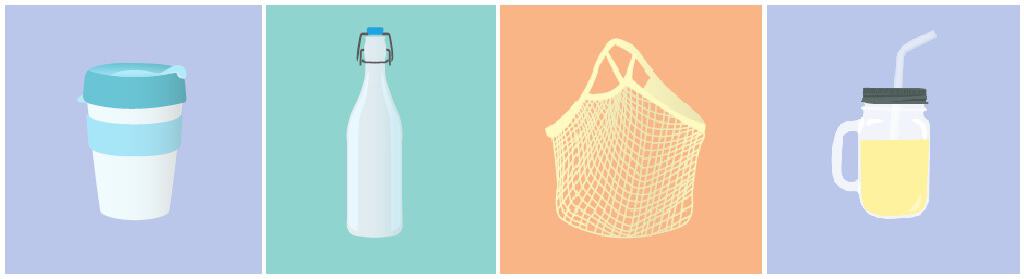
Top 4 Plastic Bags, Disposable Cups, Straws, Plastic Water Bottles

These four items are big contributors to plastic pollution, and all of them can be avoided.

  • Equip yourself with a reusable water bottle, or re-purpose an old bottle you already have. If you don’t like drinking water from the tap, invest in a water filter.
  • Start bringing your own reusable coffee cup if you get takeaway. You can buy stainless steel, glass and ceramic reusable coffee cups, or you can just repurpose an old glass jar or even bring your own mug! Another option is to commit to dining in, so you can make use of the cafe’s cups and mugs.
  • Bring your own bags! Almost every household has reusable shopping bags, and even if you don’t you can use a backpack or rucksack, or make use of plastic bags you already own. Re-use an old cardboard box if that works better for you. The trick is to remember to take them with you! Put them by the front door, in the front of the car, stuff one in your handbag, hang one from your bicycle handlebars – put them wherever you’ll see them so you remember to pick them up as you leave for the shops!
  • Get in the habit of refusing straws. It’s possible to drink most drinks without a straw, so remember to ask for no straw when you order. For those that you can’t drink easily without a straw (frozen drinks and fresh coconuts, for example) you can buy reusable stainless steel, glass or bamboo straws.

2. Do your research – check out your local area for plastic-free shops and markets

You probably go to your regular shops out of habit, so you may not be aware of all the other options available to you. Is there a local Farmers Market close by? A butcher, bakery, deli or fishmonger? An independent fruit and veg shop? Typically these will use less packaging than the supermarkets, but are also usually more open to discussing using less plastic. Health food stores often have bulk sections, even if they are small, and are worth investigating.

3. Start the conversation

  • Talk to local producers, sellers and stallholders. Explain what you are doing. Find out if they are happy for you to bring your own containers, or to package their items differently. Most people are happy to help! (When my mum signed up for Plastic Free July, she sheepishly went to her local butcher and explained that she wanted to start bringing her own containers, but she wouldn’t trouble him if he was busy. His response? He was spending nearly £8,000 a year on plastic single-use packaging, and was more than happy for her to bring her own containers – in fact it would be even better if he was busy, as she might encourage others to bring their own containers too!)
  • Talk to friends and family. Explain the challenge, and what you’re trying to do. They may have ideas on how to help, they may want to sign up too…at the very least they will have a better understanding of what your goals are!

4.  Find your community and join in!

Everyone needs a support network to stay motivated! Plastic free July is happening in over 30 countries, and growing all the time, so see if there are any events happening locally near you. If there’s nothing nearby, seek out your community online! There are many blogs such as this one to seek out ideas and tips, and also Facebook groups to share frustrations, ask questions and celebrate wins.

If you can’t find a local Facebook group consider starting you own! (I started the Perth Zero Waste and Plastic-Free Facebook group for exactly this reason, and it now has over 8,000 members. I’ve written about how to start a Plastic-Free/Zero Waste Facebook group here.)

5. Audit what you buy

The weeks before Plastic Free July are a great opportunity to look at the kind of things you regularly buy. Look at the items that use the most plastic, and start asking questions. Is there an alternative packaging option like paper, glass or even packaging free? Is this something you could go without, or switch to an alternative? Is this something you could buy in bigger pack sizes (so reducing the overall packaging)?

6. Get out the cookbooks!

We tend to cook the same few meals week in, week out because we get stuck in the habit. You don’t have to be a master chef to take part in Plastic Free July, but being open to new ideas does help! If you don’t have any cook books look on Pinterest, Google, borrow from a friend or the local library. Find recipes that match your skill level with ingredients you know you can find plastic-free. It will make your Plastic Free July experience much more enjoyable!

7. There’s no need to buy new stuff

Sure, there are things that make plastic-free living a lot easier, but there’s no need at the start of your journey to rush out and buy a whole heap of new equipment. It’s easy to feel like we’ve made progress because we’ve gone shopping and bought some shiny new gear, but Plastic Free July is about changing habits, and that comes from doing, not buying. If you feel that a new reusable coffee cup or new water bottle will help then that’s great, but it is also possible to get through the month making do with what you already have.

8. Remember – new habits take time to establish

Chances are, if you’re new to Plastic Free July, you currently use quite a lot of plastic. The good news is that it is possible to reduce this to virtually zero! The less good news is that it isn’t going to happen overnight. Change takes time. New habits don’t form instantly. Sometimes it can be a struggle. Sometimes it can be frustrating. Don’t feel disheartened if you have setbacks, because we have all been there! It took me 18 months to go completely plastic-free. Remember, the journey is just as important as the destination!

Now I’d love to hear from you! If you’ve taken part in Plastic Free July before, are there any other tips you’d like to add? Are there any other resources you’d recommend? What were your biggest challenges, and how did you overcome them? If you’re new to Plastic Free July, do you have any concerns or worries? Is there anything else you’d like to add? Please share your thoughts and leave a comment below!
https://treadingmyownpath.com/wp-content/uploads/2015/06/Give-Up-Plastic.jpg 438 834 Lindsay (Treading My Own Path) https://treadingmyownpath.com/wp-content/uploads/2019/06/logo.png Lindsay (Treading My Own Path)2015-06-16 12:00:042022-07-08 11:00:558 Tips for making this Plastic Free July the most successful ever!

The Magic of Making Ripples

10 Comments/in Changemaking, Plastic Free Living, Zero Waste/by Lindsay (Treading My Own Path)

Even the smallest actions can have bigger impacts than we realise. It’s true. When I first came across the challenge of giving up plastic for a month back in 2012 (I’m talking about Plastic Free July) I had no idea just how much this decision would change my life. I had no idea that a world of new discoveries, challenges and opportunities was about to open up before me.

After all, at the time it seemed that all I was signing up for was refusing a few plastic bags and avoiding single-use plastic-packaged groceries!

Plastic Free July changed everything for me. It challenged many things that I’d just accepted to be true, and behaviours I’d simply accepted as the way that things were done. It changed the way I saw the world. It changed the way I saw the problems in the world. It made me realise that change began with me.

It made me act. I slowly cut plastic out of my life, and in doing so I discovered a thriving local community, made many new connections with like-minded people, improved my health, began supporting local businesses and really started living a life that was in line with my values – and felt much happier for it, too!

Plastic Free July ignited a passion in me that has never gone out. The first six months were very much a personal journey, but as new habits formed and the challenges of living plastic-free lessened, this energy and enthusiasm has transferred to something bigger. Now I’m trying to educate and inspire others to think about their own personal environmental impact, and live more sustainable lifestyles, through writing, public speaking and running workshops.

I’ve been running one of these workshops (focusing on sustainable living) over the last six weeks, and last week was the final session. It’s been a great few weeks with a group of inspiring and enthusiastic people, and so rewarding!

At the end of the course I asked the participants to share all the changes they’ve made so far, or are planning to change soon. Here’s what they wrote:

Living Smart Goals

This is the kind of response that makes it all worthwhile! People feeling inspired to make positive changes, and taking action!

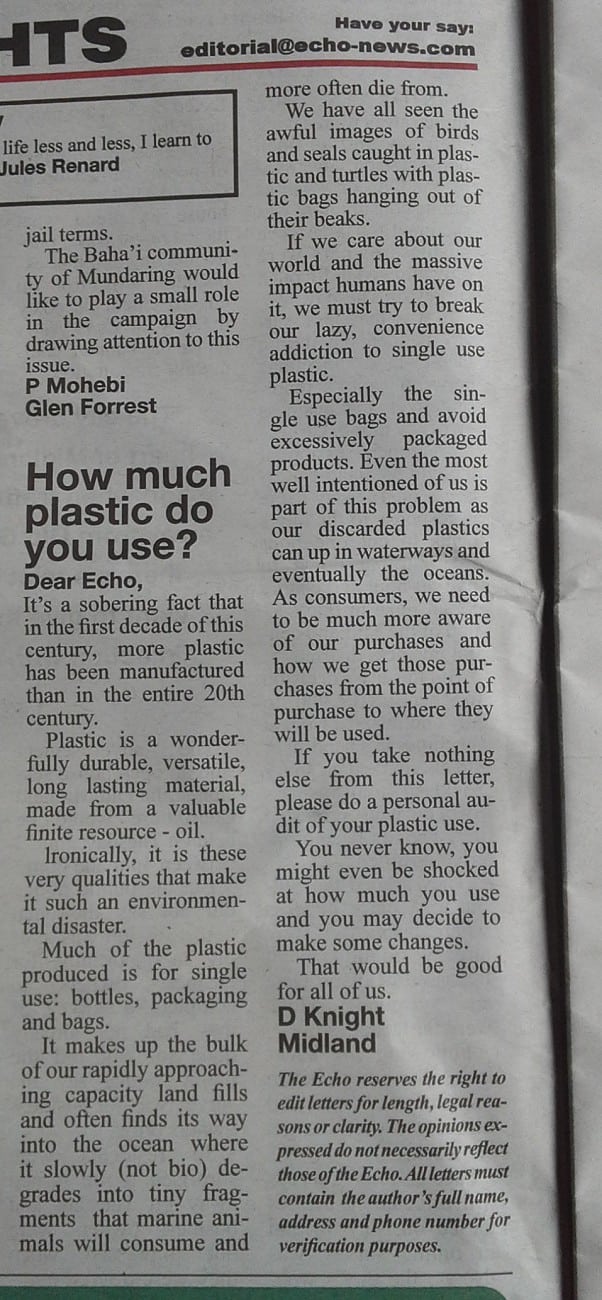
In addition, just after the course ended one of my participants sent me an email… “just a quick email to let you know we really enjoyed the course and we have made some positive changes because of it. I have also attached a photo of a letter that got published by our local rag, the Midland Echo. Its not one of my best but l think it makes the point… If someone replies to it, we can keep the theme rolling for a few weeks and perhaps broaden the debate out.”

Here’s the letter:

Dave Knight Letter to Echo Plastic

When I signed up to Plastic Free July in 2012, I had no idea that as individuals, we really do have the power to make a difference. That is where my real inspiration has come. It’s so rewarding to work with people and support them in making changes to their lives, and to witness the satisfaction that comes with these achievements.

Reading these lists filled me with gratitude that I’ve been able to share a message that is important to me, and that the people I’ve shared it with have been inspired to take that message and make it their own.

I realised something else from looking at these lists. Thinking about it on a personal level, in some way, small or otherwise, I have influenced all of those behaviours. To have that kind of influence is a powerful thing.  But of course, we all have that kind of influence. We usually don’t get to see lists of all the things that we influenced, but nevertheless, everything we do has some kind of influence on someone else.  Everything we do has an impact beyond ourselves, even if we don’t always realise.

Our actions are like ripples, that extend out and reach others in ways we don’t always know or see.

Whether it’s the conversations we have with friends or at the checkout when asked if we need a plastic bag, whether it’s the blog posts or articles we write that others read, whether it’s the way we behave when we pick up litter or choose to use a reusable container in public… There are others around us who are observing, watching, listening, and thinking.

It may be the people we know, or it may be the people we simply have a chance encounter with. The things we choose to do, or say, will have an influence on others. Know that whatever you do, you have the power to make a difference.

[leadpages_leadbox leadbox_id=1429a0746639c5] [/leadpages_leadbox]

https://treadingmyownpath.com/wp-content/uploads/2015/06/Ripples-Changemaking-Treading-My-Own-Path.jpg 709 1000 Lindsay (Treading My Own Path) https://treadingmyownpath.com/wp-content/uploads/2019/06/logo.png Lindsay (Treading My Own Path)2015-06-09 12:00:202017-03-11 10:44:06The Magic of Making Ripples

Exciting News! My Plastic-Free eBook Launching Soon…

16 Comments/in Living With Less Waste, Plastic Free Living, Zero Waste/by Lindsay (Treading My Own Path)

I’m so excited: I’ve been working on a project behind the scenes for what seems like forever (we’re talking almost 12 months) and finally finally finally I can tell you all about it!

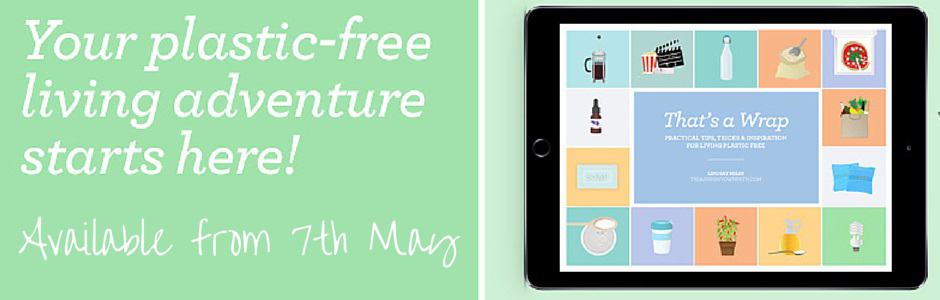
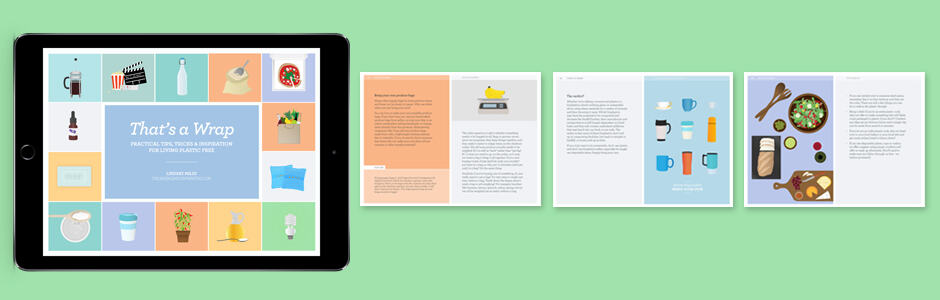
So here’s the news: I’ve been working on my first eGuide “That’s a Wrap: Practical Tips, Tricks and Inspiration for Living Plastic-Free” and last weekend I got the final finished version back, which means it will be available to buy this week! How exciting is that?!

“That’s a Wrap” is an eGuide divided into 8 chapters, and is packed full of practical tips, tricks and inspiration for living with a lot less (or even a little less!) plastic. I wanted to create a guide that was fun to read, easy to understand and beautiful to look at. I didn’t want to create a shopping list of products or stores or brands, so this isn’t a guide of what to buy, or where to shop. It’s all about HOW.

Plastic-free living is a journey, and I want to help give you the tools to help steer you on the right path. It’s the biggest project I’ve ever worked on, and I’m hugely proud of the result.

Want a sneak peek? Here you are!

ThatsAWrap_Banner_940x300_pages

Writing this book felt like a logical step because plastic-free living was where my journey began. It led to all kinds of unexpected benefits: I ditched the junk food, removed the chemicals from my home, I eat better, support local businesses, met (and continue to meet) super inspiring people as well as wasting a whole lot less! Most importantly, it helped me transition to a life where I was living out the values I believe in: protecting the environment, supporting social justice and connecting to the wider community. How could I not want to share that with you?

Hands up if you relate to any of these?

  • You want to make a commitment to the plastic-free lifestyle, but you feel overwhelmed with what to do and where to start?
  • You’re taken some steps towards reducing your plastic consumption, and feel ready for the next stage?
  • You feel frustrated when faced with the sheer amount of information on the internet?
  • You struggle to change old habits, and find it hard to think of alternative solutions?
  • You’re passionate about the planet and want to make a difference through the choices you make?
  • You want to be part of a community that’s working to make the world a better place?

Let’s get started then!

“That’s a Wrap” is available to buy from Thursday 7th May. Find out more here.

I can’t wait to hear all your comments and feedback! It’s the questions that you ask and emails you send that have helped shape this eGuide into what it has become – so thanks for all your help so far. I want more than anything to provide value and create useful content for you on this site, and all your ideas and emails and messages directly help me to serve you better, so please keep them coming!

Only two more sleeps…!

[leadpages_leadbox leadbox_id=1429a0746639c5] [/leadpages_leadbox]

https://treadingmyownpath.com/wp-content/uploads/2015/05/Coming-Soon...Available-from-7th-May.jpg 300 940 Lindsay (Treading My Own Path) https://treadingmyownpath.com/wp-content/uploads/2019/06/logo.png Lindsay (Treading My Own Path)2015-05-05 12:00:552017-03-11 11:03:28Exciting News! My Plastic-Free eBook Launching Soon…

Why Quitting Plastic is an Opportunity

25 Comments/in Plastic Free Living, Zero Waste/by Lindsay (Treading My Own Path)

There’s no doubt that plastic harms the environment. From the iconic Chris Jordan pictures of the dead Albatross chicks on Midway Atoll, who died from starvation after mistakenly being fed plastic by their parents, to the countless images of marine life caught in discarded fishing line or other plastic that should never have made it into the ocean in the first place; from the reports of whales dying after ingesting golf balls, plastic bags and DVD cases; there are articles and stories all over the internet regaling tales of how plastic is damaging our marine life.

It’s not restricted to the oceans, with plastic washed up on beaches and littering the landscape, and land animals are also ingesting this plastic. It harms people too – the people who process plastic for recycling by melting it down, the people walking through rubbish tips finding plastic to sell, and the people whose environments and waterways are littered with plastic.

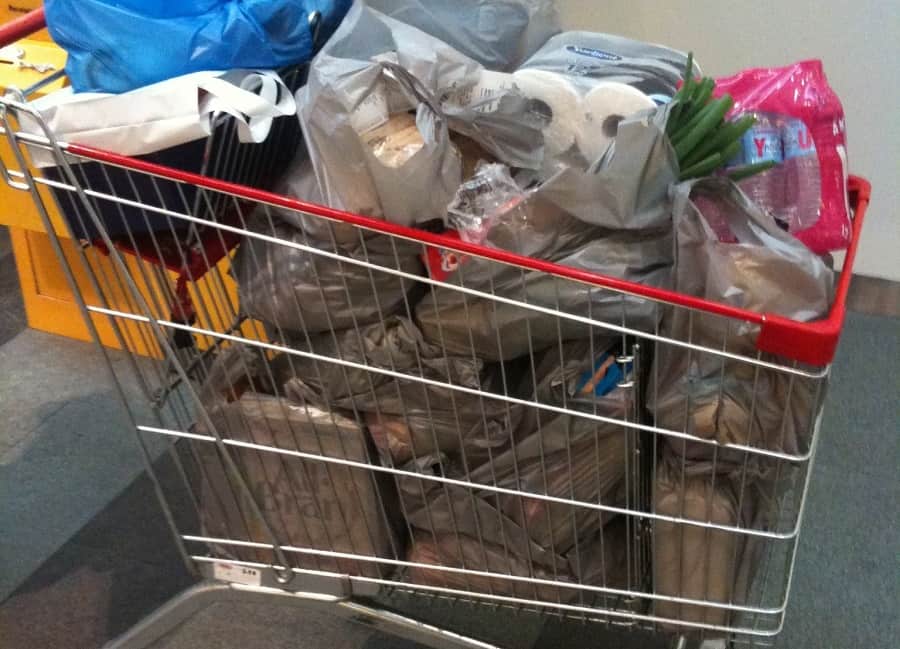
When I first decided to quit plastic, it was because I cared about all these things. I care about the environment, I love being out in nature, and I also believe in social justice – and plastic affects the poorest people in the poorest countries the most.  I cared, but was I doing much about it?

Probably not. I didn’t want to be adding to the problem, but in some ways I was. I certainly wasn’t helping to solve them. Before I really understood that plastic was causing all these problems, maybe I could justify my inaction. But once I knew, how could I not do something to make a difference?

It is a great feeling, beginning to align your behaviour with your values. Rather than thinking, in the future I’ll do this, or when I retire, I’ll change that, making a stand for what you believe in every time you make a decision – and we have these choices every day – and starting RIGHT NOW.

Being done with the excuses – I don’t have the time, I don’t have the money, I’m just one person – and accepting what it is that I can do. What we can do. Maybe we’ll never be the CEO of the bottled water company, and we won’t be able to change their policies alone, but we can stop buying their products, and we can start now.

Quitting plastic was the start of a journey that has brought so many benefits, and helped me live a life according to the values and principles that are important to me. Reducing my impact on the environment was a key one, but there were many others:

  • Before I quit plastic, I shopped regularly at supermarkets. Now, I rarely go there at all. I support local businesses that add value to the local economy, rather than big multinational companies that have complex tax structures and often don’t even benefit the countries whose communities they sit in.
  • Before I quit plastic, I’d buy junk food, particularly when it was on ‘Special’ (and isn’t it always on ‘Special’?!). Now I avoid plastic, the only treats I buy are those made with real ingredients, freshly crafted and without preservatives, additives and fillers. Often I bake my own – many things take a matter of minutes to prepare. My diet is a lot better and I have far more energy, and so does the rest of my family.
  • Before I quit plastic, I’d use conventional shampoo, moisturizer and shower gel without realizing they contained irritants and carcinogens, and buy brands that were marketed at me the hardest – meaning big pharmaceutical giants. I’d clean my dishes and my kitchen worktops with products marked “hazardous”. Now I’ve discovered that it’s possible to find natural skin and haircare products with safe ingredients, and I use green cleaning products like bicarb and vinegar to clean my home.
  • Before I quit plastic, I’d buy things I needed from the shops, all wrapped in plastic. Now I’ve discovered the joy of second-hand stores, charity shops and asking friends to borrow items rather than buying my own. I’ve embraced the sharing economy, starting with my local library…and I’ve saved money in the process.

None of these things happened overnight, but over time they did happen. It started 3 years ago when I made that one simple decision to have less plastic in my life. That’s a decision that you can make too.

Now it’s your turn – I’d love to hear from you! Have you quit plastic, or started to reduce the plastic in your life? What benefits have you found, and how many were unexpected? What’s your favourite thing about living plastic-free? Maybe you’re just starting out – in which case, what appeals to you most about plastic-free living? We’re all in this together and I’d love it if you shared your thoughts and ideas in the comments below!

[leadpages_leadbox leadbox_id=140b48fc6639c5] [/leadpages_leadbox]

https://treadingmyownpath.com/wp-content/uploads/2015/04/plasticshopping-Claremont.jpg 649 900 Lindsay (Treading My Own Path) https://treadingmyownpath.com/wp-content/uploads/2019/06/logo.png Lindsay (Treading My Own Path)2015-04-30 12:00:322018-10-07 13:07:25Why Quitting Plastic is an Opportunity

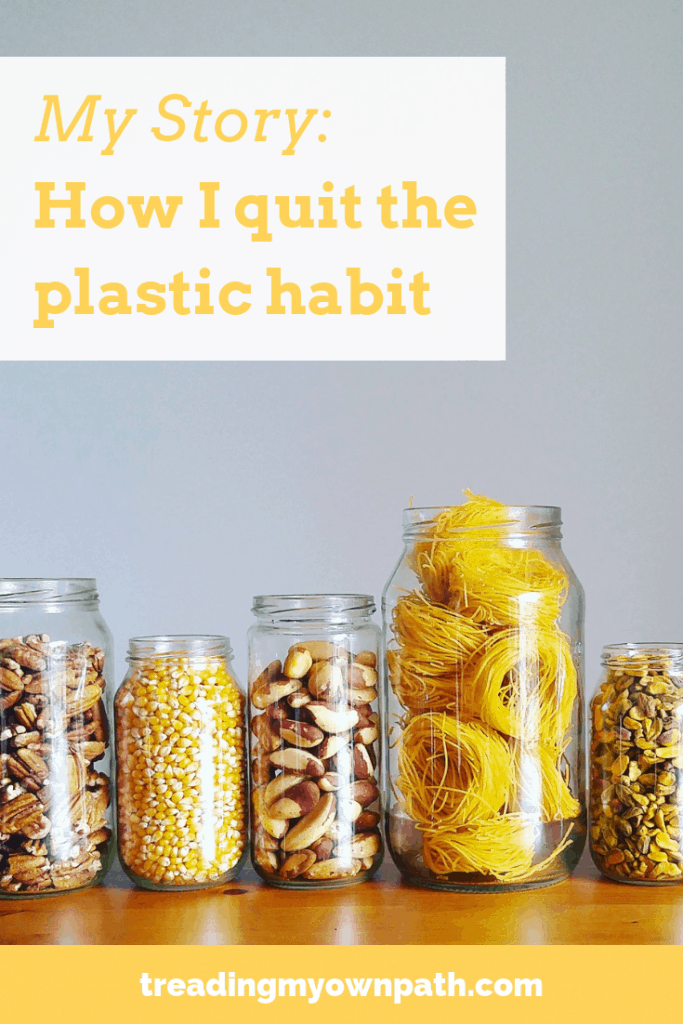
My Story: How I Quit the Plastic Habit

21 Comments/in Living With Less Waste, Plastic Free Living, Zero Waste/by Lindsay (Treading My Own Path)

As part of the event I spoke at last week organised by Plastic Free July, I was asked to talk about my own journey in reducing my plastic consumption. One of my favourite topics! It was a great chance to reflect on how my life has changed in the 3+ years since I gave up plastic.

For those of you that couldn’t come along I thought I’d share my story with you here too.

Back-track to 2012, and I thought I was doing all the right things when it came to being environmentally friendly. I diligently recycled everything I could. I was a master recycler, sorting the plastic PET and HDPE bottles from the TetraPaks and the polypropylene plastic packaging, and disposing of it all responsibly. I religiously took my own bags to the shops.

Of course, every now and then I took a plastic bag at the checkout – after all, I needed them to line my rubbish bin…

I first heard of the Plastic Free July campaign when I saw a flyer at my local library. I’d been living in Australia for just 6 months, having moved from the UK, and I was still finding my way around my local community. The challenge was to give up plastic for the month of July. Give up plastic for a month? I thought. Easy!

As part of the pre-Plastic Free July launch, there was a movie screening of the plastic documentary Bag It! I went along. It changed my life.

It was literally a lightbulb moment. A realization that plastic was a problem. A waste problem, a health problem, a lifestyle problem, a political problem and an environmental problem. And a realization that it was a problem that I could do something about.

I realised that if I wanted to see things change, I had to start with me. I also realised that giving up plastic wasn’t something that I was only going to commit to for a month. I was in it for the long-haul. Plastic-free was going to be my new way of living.

Going home that night, I was aware for the first time that plastic was everywhere. How had I not realised?! Had I been walking around with my eyes shut?! Everything was packaged in plastic! My pantry was filled with plastic-packaged products and my bathroom shelves were lined with plastic bottles. Shrink-wrap, bubble-wrap, plastic-wrap, plastic-lined, plastic-coated, plastic-sealed – arghh!

And so my plastic-free living adventure began.

That first plastic-free shop at the supermarket, I took home bananas, bread, apple juice in a glass bottle, pasta packaged in cardboard, toilet paper wrapped in paper and chocolate. The only plastic-free things that I could find. I realised that if I was going to commit to this, I had to be open to new ideas and new ways of doing things.

Here’s a quick rundown of some of the first things I did to ease the transition:

  • Got hold of a reusable cup and reusable produce bags
  • Switched to bar soap and ditched the shower gel and hand wash
  • Looked up local veg box delivery schemes to avoid the supermarket packaging
  • Hunted around for bulk food stores – even places that sold a single item like olive oil
  • Headed to Farmers’ Markets to see what options were available
  • Dusted off the cookbooks and tried new recipes featuring ingredients that were easier to find in bulk
  • Learnt how to make my own yoghurt, bread, nut milk, dips, you name it!
  • Learnt how to make basic toiletries like deodorant and toothpaste
  • Talked to local producers / traders about selling items to me without packaging
  • Bought more things second hand and made use of the sharing economy – like using the library
  • Started using newspaper to line my bin rather than plastic bags!

In the beginning I made mistakes. Lots of mistakes! I bought plenty of things that I thought were packaged solely in paper or cardboard only to find sneaky plastic inside! I’d forget my reusable coffee cup, or my produce bags, or purchase random ingredients in silly quantities, like 3 kg of sesame seeds simply because I’d found them in bulk but without having the slightest idea what I was going to do with them! Like all things, you keep trying and slowly you get better. Habits form and it gets easier. Now it’s second nature, and I don’t really need to think about it.

The benefits have been enormous, and in plenty of ways that I hadn’t expected. The journey that giving up plastic has taken me on has been so much fun! I never though that giving something up would give me so much more, but it has.

Interestingly, I spend far less on food now than I did before I quit plastic. Partly because all the processed food comes packaged in plastic, all the junk food that adds up on your grocery bill but doesn’t actually fill you up. Plus I stopped buying into those deals that seem like great offers until you end up with packets of stuff you don’t really need.

My diet is a lot better. I shop locally so the fruit and veggies I buy are a lot fresher, I eat far more whole foods and a lot less sugar, and I have a lot more energy.

I learned so many new skills.

That was all in the first six months!

I began my plastic-free journey by looking at the actions I could take, the changes I could make so it was very much a personal journey. As my expertise grew, as I learned more and more about not only the problems of plastic but also the solutions, I was determined to spread the message and to inspire other people to use a little less plastic in their lives.

I started writing my blog, which has connected me to thousands of other people looking to live a similar lifestyle, has allowed me to share my knowledge and enthusiasm, and also learn so much more. I’ve also got involved in my local community, not just with Plastic Free July but also the Earth Carer network and Living Smart, and I also organized a Sustainability Festival called the Less is More Festival in 2013 and 2014.

What really gripped me right from the start about plastic-free living was that it was something that I could do. It’s something we can all do. Plastic is something that we’re faced with every single day. Multiple times a day. We can choose to use it, or we can choose to avoid it, and we make these choices every single day. We can make a difference. We just need to decide what kind of difference we want to make.

You’ve heard my story and now I really want to hear yours! How did you stumble onto the plastic-free path? What have you done to reduce your plastic consumption? What have you found easy? What’s been your biggest challenges? Whether you’ve been working on it for years or you’re new to the idea, please share your journey so far! Tell me your successes and your hopes in the comments below!

[leadpages_leadbox leadbox_id=1429a0746639c5] [/leadpages_leadbox]

https://treadingmyownpath.com/wp-content/uploads/2015/04/Bulk-Produce-in-Glass-Jars-e1429180613733.jpg 716 1000 Lindsay (Treading My Own Path) https://treadingmyownpath.com/wp-content/uploads/2019/06/logo.png Lindsay (Treading My Own Path)2015-04-28 12:00:442019-06-29 15:16:58My Story: How I Quit the Plastic Habit

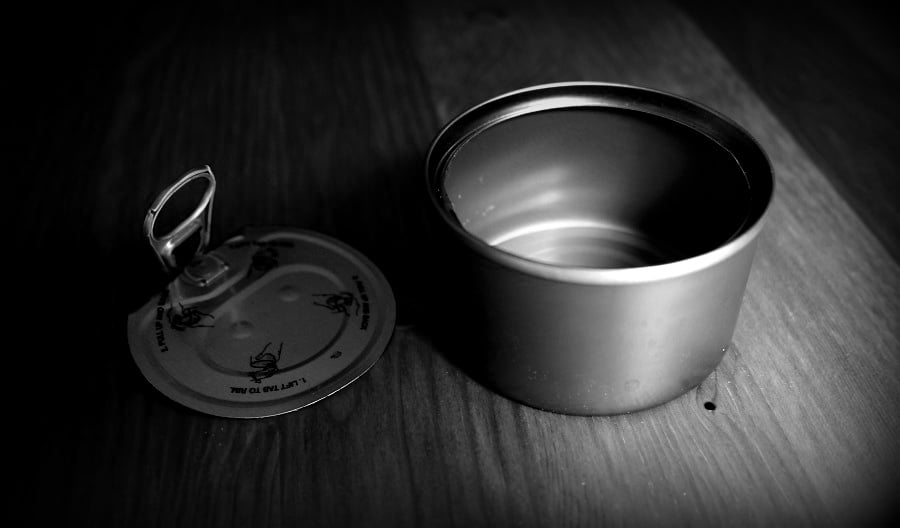
Can this Empty Tin of Tuna Save the World?

30 Comments/in Living With Less Waste, Zero Waste/by Lindsay (Treading My Own Path)

The people at my workplace aren’t the best at recycling. Plastic-free living and zero waste just aren’t on their radar. We’ve slowly introduced paper recycling, and I’m working on moving everyone away from those ridiculous pod coffees to a shared pot of French press coffee under the guise of being more sociable and team-oriented and  community-minded within the office (don’t laugh, because it’s actually working!).

But there’s still a fair way to go.

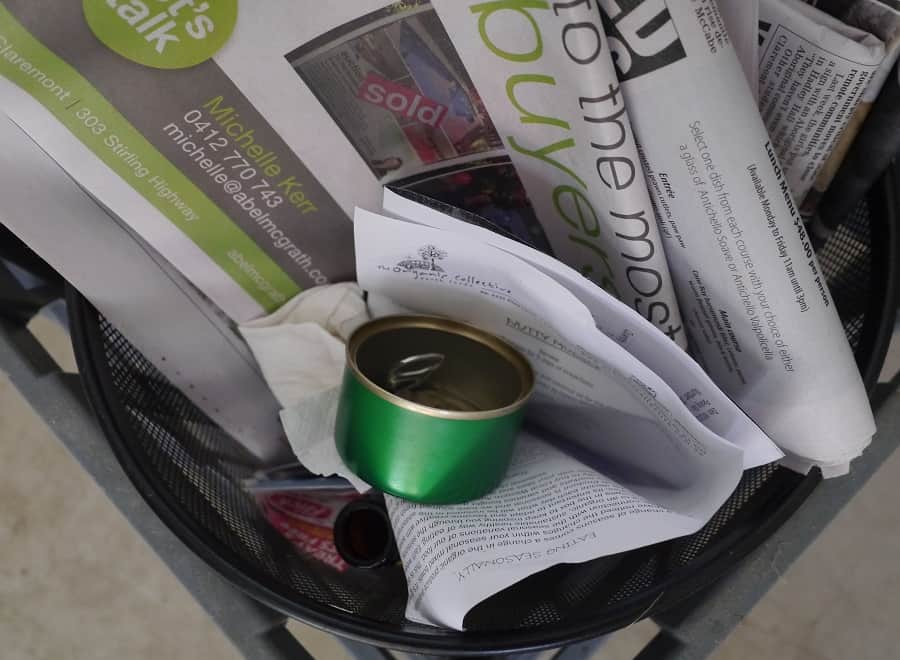
Last week I fished (excuse the pun) an empty tin of tuna out of the bin, gave it a rinse and left it on the side in order to take it home and save it from landfill. Someone went to throw it away and I jumped out of my chair, flailing my arms and saying “no no no no no, I’m going to take that home and recycle it.”

Cue raised eyebrows. I’m used to people thinking my ideas and slightly strange, so that doesn’t bother me in the slightest. The people in my office are slowly getting used to my strange ways, but last week we had a guy working with us who usually works at a different site, and he probably has no idea that I’m a “bit of a greenie”, as they like to say.

“I could tell you something something about recycling, but I won’t”, he said.

“Go on, tell me!”

“No no no. I don’t want to upset you.”

“Go on. You won’t upset me”.

Cue me persuading him to reveal his secrets. Eventually he relented. “Well, you know, I have a friend who knows a lot about these things. Of course, I recycle what I can, I do my bit, but he’s told me that recycling isn’t as good as people think.”

No kidding! Of course, I know a fair bit about waste myself, and having been to a number of waste recovery facility sites on tours and visits, I’m well aware that recycling isn’t the green solution that people think it is.

We compare notes, and bounce facts off of one another.

“In WA, only about a third of all waste generated is recycled at all.”

“A lot of the resources that are sent to recycling facilities aren’t actually recycled at all – their sent to landfill.”

“Anything that’s sent for recycling in a plastic bag is automatically sent to landfill – it’s too risky and time-consuming to unpack.”

“Any bottles, jars or containers that still contain liquid are not recycled but sent to landfill.”

“When people throw pillows, duvets, terracotta plant pots, light bulbs and even shredded paper into recycling streams it contaminates the waste and the whole shipment may get sent to landfill.”

“Glass is not recycled in our state – it’s either trucked to the next state or landfilled.”

“Most plastic and paper products collected at recycling facilities are shipped offshore to Asia for processing.”

I know that all of these facts are true. I’ve read enough reports, been to enough talks and seen enough with my own eyes not to doubt any of them for a second. It makes taking that small empty tin home seem like such a tiny drop in the ocean; such a small thing to do against the insurmountable problem of waste.

Yet I took that tin home anyway and recycled it.

Recycling bin

I’m not trying to kid myself. I know that waste disposal is a huge problem, and my recycling a single can of tuna isn’t going to save the world or make everything better. But what’s the alternative? Give up? I care about the planet, the environment and the people who live on it, and I’m going to take some responsibility for it. I believe that it’s the right thing to do. I might not be able to do everything, but I can do something, and focusing on what I can do is the best place to start.

There’s something else. I have hope. I honestly believe that most people simply don’t realise that we’re living in a system in crisis. They are so busy with their lives, doing the things that they’ve always done, that they just don’t know that there’s a problem. After all, there was a time when I thought recycling was enough. I thought I was being a responsible citizen, buying things in single-use disposable packages and then disposing of them appropriately in the correct recycling bin.

I believe that if I keep doing what I’m doing, and others join in and do their bit, then eventually the tide will turn. I’m not just talking about recycling. We’re never going to recycle our way to sustainable living. But it starts with our personal actions. It starts with the choices we make, and it grows from there. To the conversations we have, to the alternatives that we share, to the ideas that we spread.

I’m not saying it will be fast, or simple, or easy, but together we can make it happen.

[leadpages_leadbox leadbox_id=1429a0746639c5] [/leadpages_leadbox]

https://treadingmyownpath.com/wp-content/uploads/2015/04/Tin-of-Tuna-Header-Image-Black-and-White.jpg 528 900 Lindsay (Treading My Own Path) https://treadingmyownpath.com/wp-content/uploads/2019/06/logo.png Lindsay (Treading My Own Path)2015-04-16 12:00:102017-03-11 11:30:12Can this Empty Tin of Tuna Save the World?

Can you be Zero-Waste and a Minimalist?

51 Comments/in Minimalism, Zero Waste/by Lindsay (Treading My Own Path)

They sound so contradictory, zero waste and minimalism. Zero waste seems to mean hanging on to everything, and minimalism seems to mean getting rid of everything. Surely you can’t get more opposing ideals?

Yet I feel that I belong in both camps. I aspire to zero-waste living, and I’m equally drawn to minimalism. What’s more, I don’t really feel an internal struggle between the two. Which means they can’t be so contradictory at all…can they?

Minimalism, Zero Waste – and How It Began for Me

Was I a minimalist first, or a zero-waster? I’m not entirely sure. I think both ideas were there, even before I became either. At Christmas and birthdays, I’d always feel confused about being bought presents. After all, I didn’t really need anything, so I’d suggest that the gifter found me something useful.

It didn’t occur to me back then to say I didn’t want or need anything at all, but I knew that something wasn’t quite right. Anything I did have I knew could one day come in useful, so I kept cupboards full of glass jars, and shelves full of old tins, and a wardrobe full of clothes I might need if it suddenly got hot enough to wear summer clothes / I lost half a stone / I gained half a stone / hot pink suddenly started to suit me.

The minimalism really took hold when I moved to Australia. I didn’t have anywhere to store stuff whilst overseas, and I didn’t know how long I’d be staying, so there was no point shipping my worldly possessions across the oceans (not to mention, I didn’t have the funds for that). Everything I brought with me had to fit in 1 suitcase.

I remember thinking, when I move back home, I want everything I own to still fit in that one suitcase. It was my first real experience of how liberating it is to have few possessions.

Once we found our first place to live, the things we owned started to add up… but slowly. Our first flat was so small we couldn’t fit a lot of unnecessary furniture. It wasn’t that we consciously tried to be minimalists, but circumstances led us to be that way.

Then, a few months later, I found out about the Plastic Free July campaign. Quitting plastic for a month? Sure! Up until then, I’d been an avid recycler. I’d save my plastic bottles up and traipse across the city to the only depot for recycling. I’d wrap all my tiny bits of aluminium foil into a big ball before putting it in the black box to ensure the machines could pick it up. I composted my scraps. I thought that was enough.

Quitting plastic was only meant to be a month-long challenge, but once we’d seen the devastation that plastic causes in the environment, and understood the health implication from exposing ourselves to plastic, how could we ever go back?

I gave up plastic, and switched to buying things in cardboard and glass. Both of these are noticeably heavier (especially when you don’t have a car to carry your shopping home) and I became aware for the first time of how much packaging I was consuming. Packaging that served the sole purpose of moving something from A to B, and then, with no further purpose, was thrown away.

During that month of Plastic Free July, I also found out that glass isn’t recycled in my state. Yes, it’s accepted in the recycling bins, but it’s either trucked to another state or sent to landfill.

My zero waste journey began.

Zero Waste and Minimalism are both about Simplicity

It’s easy to think that zero waste and minimalism are conflicting ideals. One seems to advocate keeping everything, whilst the other seems to advocate throwing everything away! Actually though, they are both much more similar than first appearances might have you think.

Zero Waste means sending nothing to landfill. Truly zero waste means sending nothing for recycling either. For most zero-wasters it’s an ideal we aspire to; a journey with a destination we may never quite reach but one we are always working towards. For me, the biggest realisation with zero waste is if I don’t want to send anything to landfill or recycling, I have to control what comes in through my front door.

Zero waste means simplifying. I buy in bulk using my own containers. It means I’m limited to where I can shop, so I don’t get dazzled by special offers or buy more than I need. I no longer have multiple bottles of toiletries cluttering my bathroom because I felt compelled to stock up whilst they were on 3 for 2.

If I can’t find what I want without the unnecessary packaging, I look for an alternative, consider making my own, or go without. Occasionally none of these are options, and I’ll make the purchase anyway – I am human after all, and that is why zero waste is an ideal! It’s not about deprivation, but making conscious choices.

Zero waste means I avoid shopping malls where beautiful models try to sell me clothes that I don’t need, or gadgets, or toys. I don’t go to the shops to browse, only when I need something specific. I think about the life cycle of a product before I buy it: what’s it made from, will it last, and how can I dispose of it at the end of its life?

Hang on…or is that minimalism?

Minimalism is about asking ourselves, what is enough? Keeping things that are useful or practical, and getting rid of the clutter. Getting rid of all those “just in case” items that fill our closets and spare rooms and storage space. Choosing the important things and ditching the rest.

What is ‘enough’ varies from person to person, so there are no hard and fast rules for minimalists either. Again, it is an ideal. It’s also a journey and one that requires constant work, because there is always more stuff. As with zero waste, one of the most important ways to keep clutter out of your home is to control what enters through the front door.

Minimalism is actually a huge complement to zero waste living, because it addresses the elephant in the room – or rather that huge big pile of stuff in the room that we’re keeping in case it might ever be useful. Well, that’s how us zero-wasters justify it to ourselves. Don’t want to send it to landfill, it might come in handy!

Look more closely though, and that pile of stuff is probably harbouring a whole heap of negativity. Things we bought that we didn’t need, or want, or use. Waste. Guilt. Things we received as gifts that we didn’t like. More waste. More guilt. Clothes that no longer fit. Further waste. Further guilt. As zero-wasters, we feel guilt even more, because we care about the embedded energy in these things.

The irony is, that as these things sit collecting dust and generally not becoming handy, they may as well be sitting in landfill.

Minimalism is confronting. It makes us question these choices. It makes us look long and hard at our shopping habits and spending patterns. Most importantly, it makes us buy less of what we don’t need – meaning less waste.

Can you be Zero Waste and a Minimalist? Yes!

Zero Waste isn’t about hoarding. Minimalism isn’t about sending constant streams of stuff to landfill. There’s only one key area where zero-wasters and minimalist thinking differs – convenience. Zero wasters are all about reducing what they send to landfill (and/or recycling). Minimalists are all about reducing clutter. Zero wasters are more likely to carry reusables;  minimalists are more likely to use disposables. It all comes down a personal decision as to what is “enough”, and different people have different values. There are zero-wasters who will never embrace minimalism, and minimalists who will never live a zero-waste lifestyle.

Then there are those of us who want to do both.

And yes, it is possible. Both ideals have so much in common. They are both a reaction to waste, to rampant consumerism, to buying more than you need. They are both about mindful living and making conscious choices; deciding what’s important and doing more of that, and less of the stuff that isn’t. Buying fewer things and choosing well. Making do or doing without. Simplifying.

Now I want to hear from you! Which side are you on…are you a minimalist, or a zero waster, or both? (Or are you neither?!) Which came first? Have you found one path has helped you on the other, or hindered your progress? What are your biggest challenges, and what have been your biggest realisations and triumphs? Please tell me your thoughts in the comments below!

[leadpages_leadbox leadbox_id=1429a0746639c5] [/leadpages_leadbox]

https://treadingmyownpath.com/wp-content/uploads/2015/04/Zero-Waste-Minimalism-Treading-My-Own-Path.jpg 666 1000 Lindsay (Treading My Own Path) https://treadingmyownpath.com/wp-content/uploads/2019/06/logo.png Lindsay (Treading My Own Path)2015-04-08 12:00:232018-11-20 17:53:10Can you be Zero-Waste and a Minimalist?

A Guide to Reducing Plastic in the Bathroom (Part 2)

55 Comments/in Living With Less Waste, Plastic Free Living, Zero Waste/by Lindsay (Treading My Own Path)

In Part 1 of Reducing Plastic in the Bathroom I talked about the basics – simple things you can do to reduce the amount of plastic you consume. Now I’m going to talk about all those other issues that us women have to deal with…hair, makeup, looking good, and that time of the month.

Hair Removal

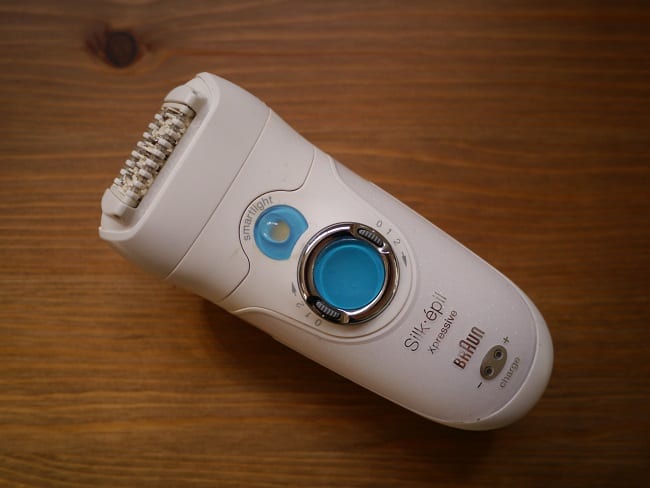
Over 6 years ago (before I understood how ridiculous it was to use fossil fuels for such tasks!) I purchased an epilator – an electronic gadget that removes hairs by the root. Aside from the fact that it’s a huge chunk of plastic with electronic components that probably had a huge carbon footprint to manufacture, there are some advantages from a waste point-of-view. It has a rechargeable battery (that is still going after 6+years), there’s no blades that need continually replacing, and there’s no need to apply shaving foam / cream, or lotion afterwards.

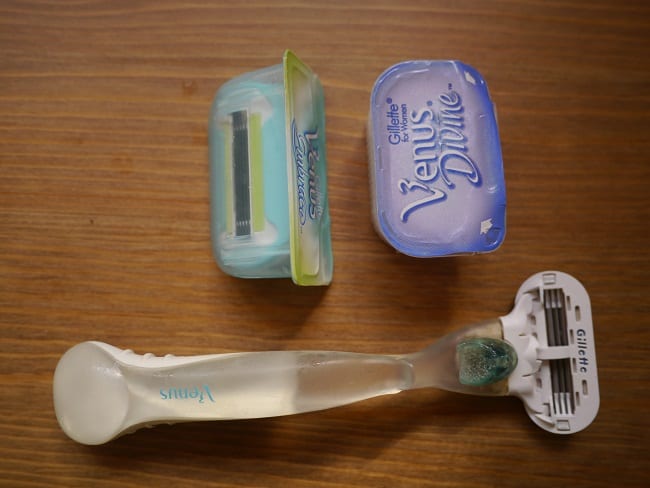
As long as it lasts I’ll keep using it.epilator for hair removalIn addition, I actually have a plastic razor with disposable blades. This may surprise you, but wait, don’t judge! This is another 6+ years ago purchase. I bought the last blades whilst still living in the UK, over 4 years ago. I use it very sparingly, more for emergencies than anything else – hence why I still have 2 blades from 2011!

I also re-use and re-use and re-use the blades, and I’m careful to ensure they don’t rust. Whilst a completely stainless steel blade and handle would look much more the part for someone who promotes plastic-free living, I’m a firm believer in using up what you have first – and this is still in acceptable condition. These two blades will probably last me a couple more years!

Plastic Gilette Razor with Disposable Plastic HeadsWhen all the plastic paraphernalia has gone, then what? Thankfully, there are plenty of options.

  • Sleeves, leggings and long trousers: personally I prefer the shaven look, but I’m also fairly lazy so if I can get away with it by covering up, then I will!
  • Stainless steel razors: becoming more common to buy (look in proper barber shops) but it is easier to cut yourself than with plastic disposable “safety” razors.
  • Tweezers: this is probably not for the faint-hearted, but I’m a huge fan ; )
  • Sugar waxing: this a waxing process that uses sugar (yes, sugar) rather than petroleum-based wax to remove hair. It’s possible to do this at home, or go to a salon. I’m certainly intrigued, although I’ve never tried it.

Make-Up – Stick to the Essentials

Most plastic-free / zero-wasters will agree that it’s far easier to make do with a whole lot less when it comes to make-up! Finding plastic-free, chemical free products can be a challenge, so cutting out anything unnecessary definitely helps. In my twenties I owned multiple shades of eyeshadow, most of which I only wore a couple of times (if that) – what a waste!

I very rarely wear make-up now, but when I do, I stick to the basics – mascara and blusher mostly. (I still have a bag of very old makeup which I use extremely rarely – like on my wedding day!)

It’s possible to buy makeup in tins and in glass. Local artisans often sell products at Farmers or crafts markets and you can discuss with them the possibility of using your own containers. If this isn’t an option, look online for Etsy sellers who sell their products without plastic.

There are plenty of websites out there with recipes for making your own cosmetics. I’ve seen recipes for making blusher using ingredients from the pantry like cacao powder. I can’t recommend any but if you know any good websites with this kind of info be sure to leave a comment at the bottom of the page!

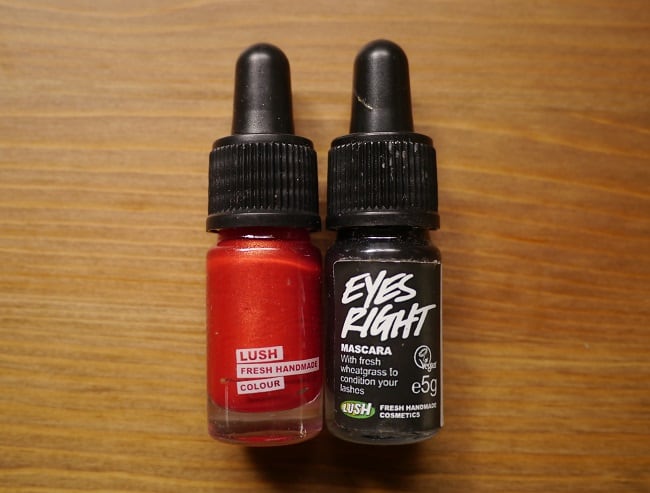
Lush makeup in glass bottles

This lipgloss and mascara were purchased as a gift. the bottles are glass and the wands are recycled plastic. not perfect, but better than plastic tubes.

Skincare and Makeup Removal

Skincare routines are synonymous with disposable makeup pads that come wrapped in plastic. To some extent, using bar soap as a cleanser removes the need for daily cotton pads, but there are still times when they’re useful. However, like all things, there are reusable options!

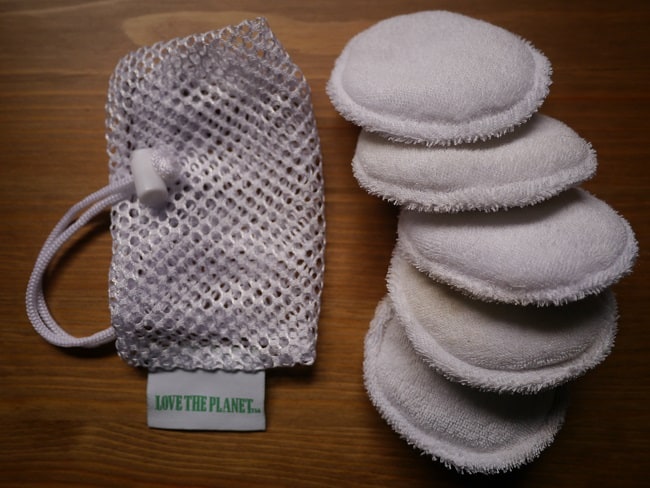
First up, consider using a flannel to clean your face. It’s also possible to buy reusable pads, or make your own using old towels or other material. I wouldn’t recommend getting bright white ones as they will decolour (especially if you’re using to remove mascara!). Make a few, then throw into the washing machine and you’re ready to go again!

reusable cloth pads for removing makeup

I use cotton buds occasionally and I buy organic cotton ones with a cardboard stem. The box has a small plastic window, but it’s the best I can find currently: the plastic-free ones I used to buy were discontinued.

Organic cotton buds in cardboard packaging

That Time of the Month – Go Reusable

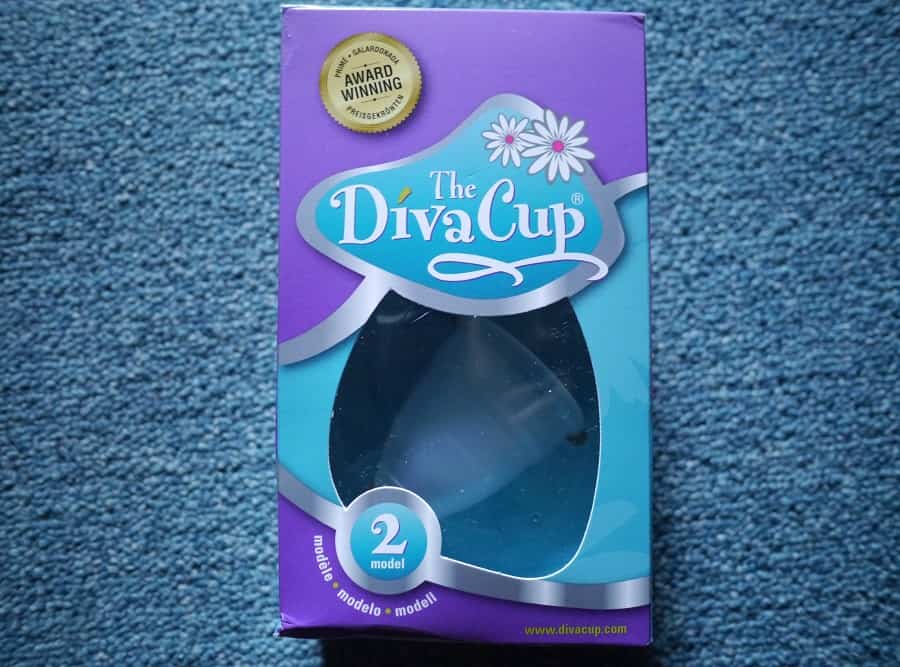
I’ve used a Diva Cup since 2003. It’s a silicone reusable menstrual cup that is worn internally (find more details here as to how it works). I’ll try to spare you too much detail but in summary, they are very comfortable, last ages (you don’t need to empty for several hours) but the removal and emptying can take a bit of getting used to. If you do forget to empty it and it fills up, or you don’t insert it properly and spring a leak…well let’s just say that you do NOT want that to happen. It is messy.

I recently bought a new one: women over 30 need a slightly bigger size as their hips expand, apparently. I actually managed to buy this from a chemist, whereas the first one I had to get shipped from Canada to the UK in the days when internet shopping was almost non-existent!

Diva Cup

The Diva Cup: a zero waste solution

The other product that’s popular amongst zero-waster is homemade or reusable sanitary pads. I don’t have any, but I think they are a great idea – it’s just that I haven’t got round to it. Pinterest is full of DIY tutorials if you’re keen to make your own, otherwise I’d recommend looking on Etsy for local producers. There’s really no need to be using plastic-wrapped disposable products.

There you have it – Part 2 of my guide to reducing plastic in the bathroom. I hope it left you feeling inspired to make some changes!

Now I’d love to hear from you! I’d love to know if you have any further ideas that haven’t been covered in this post or the last? I’d also love to know if you have any recipes, guides or tutorials for DIY products?  Is there anything that you struggle with, or anything you find too extreme? What are the biggest challenges for you, and what have you found easy? Please share your thoughts and leave a comment below!
[leadpages_leadbox leadbox_id=1429a0746639c5] [/leadpages_leadbox]

https://treadingmyownpath.com/wp-content/uploads/2015/03/jelena-ardila-537078-unsplash.jpg 3080 4620 Lindsay (Treading My Own Path) https://treadingmyownpath.com/wp-content/uploads/2019/06/logo.png Lindsay (Treading My Own Path)2015-03-26 12:00:072018-07-27 21:56:21A Guide to Reducing Plastic in the Bathroom (Part 2)

A Guide to Reducing Plastic in the Bathroom (Part 1)

60 Comments/in Plastic Free Living, Zero Waste/by Lindsay (Treading My Own Path)

If food is the most common source of disposable single-use plastic in the house, then bathroom products must be the second. Thing is, they don’t need to be! This two-part guide has tips for how you can reduce plastic packaging in the bathroom, and ditch a lot of dubious synthetic chemicals in the process.

In Part 1 I’m covering the basics: simple swaps, things to think about and what has worked for me. In Part 2 I’ll be covering the dilemmas that we women face – including makeup, shaving and that time of the month.

Buy in Bulk

Buying from bulk stores is the easiest way to transition to plastic-free, if they are an option for you. When I began my plastic-free journey, I found bulk shampoo, bulk conditioner, bulk liquid soap and bulk oil, so I switched to these. Now I’ve simplified even more…read on!

Switch to Bar Everything

Solids are much easier to find plastic-free as they can be sold loose, wrapped in paper or sold in tins, so if you don’t have access to a bulk store switch from liquids to bars! Bar soap is a great replacement for liquid soap, and you can find great products that are gentle enough to use on your face if you look around.

Homemade soaps are having a bit of a revival, so see if you can find someone who makes soap locally as you will be able to chat to them about exactly what ingredients their soaps contain.

Natural Handmade Bar SoapIt’s also possible to find bar shampoo, bar conditioner, bar deodorants and even bar sunscreen! I’ve only ever used bar soap but plenty of people I know use bar shampoo and love it!
Cut Down on the Number of Products You Use

The Campaign for Safe Cosmetics estimate that on average, an American woman uses 12 personal care products every day, and a man uses 6 daily. That’s 12 separate containers, and 12 items to try to find plastic free!

Before I switched to plastic-free, I would have a separate face wash and shower gel. Now I buy one good quality block of natural, handmade soap that has a high oil content (combined olive oil and coconut oil soaps are fairly easy to find) which I use for my face and in the shower.

Rather than a separate face and body moisturizer, I now use one product for both.

I stopped buying separate hair gel and (after shampooing and conditioning as normal) started rubbing a small amount of conditioner into my hair (and leaving it in) as a replacement – I found it works just as well. That was before I began my bicarb and vinegar hair experiment – now I don’t use anything at all.

Are there any products you could double-up on, or anything that isn’t really necessary that you could do without?

Replace Your Exfoliator with a Body Brush

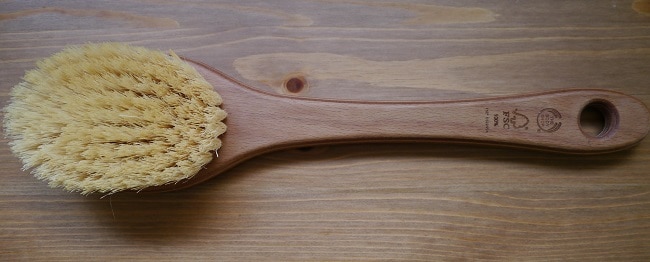
I used to buy exfoliating scrubs until I realised that a body brush was far better. Dry body brushing is great for improving circulation, stimulating lymph glands and removing dead skin cells…and there’s no packaging, microbeads, drain-clogging ingredients or chemical ingredients to decipher.

dry body brush Body Shop FSC CROPPEDThe brushes usually have wooden handles and cactus bristles so are completely plastic free. The idea is you use long sweeping strokes towards the heart, either before or after a shower.
Consider Using Oils

After struggling to find moisturiser and cleanser in plastic-free packaging, I decide to switch to oil. Not oil-based products, but oil. Just one ingredient. Or maybe two, if it’s a blend.

Most lotions are a blend of water and oil, with an emulsifier to make it mix properly and a whole pile of other stuff chucked in there for good measure. Because they contain water, they also need to contain preservatives. Plus, a good proportion of what you’re paying for is water.

Oils are the part that have the moisturizing properties, so why not just use oils?

If you’re thinking oh, but won’t that make my skin oily?, actually no. Oils mimic the skin’s natural sebum. Oil cleansing is far better to clean your face than water, because oil dissolves grease, whereas water does not (like dissolves like).

If you’re thinking, but won’t it clog my pores?, again, no, although it depends on what oil you use and your skin type. All oils have a comedogenic rating, which measures how likely they are to clog pores. If you have oily skin you will be better able to cope with oils that have a higher comedogenic rating. Drier skin has smaller pores and prefer oils with lower comedogenic ratings.

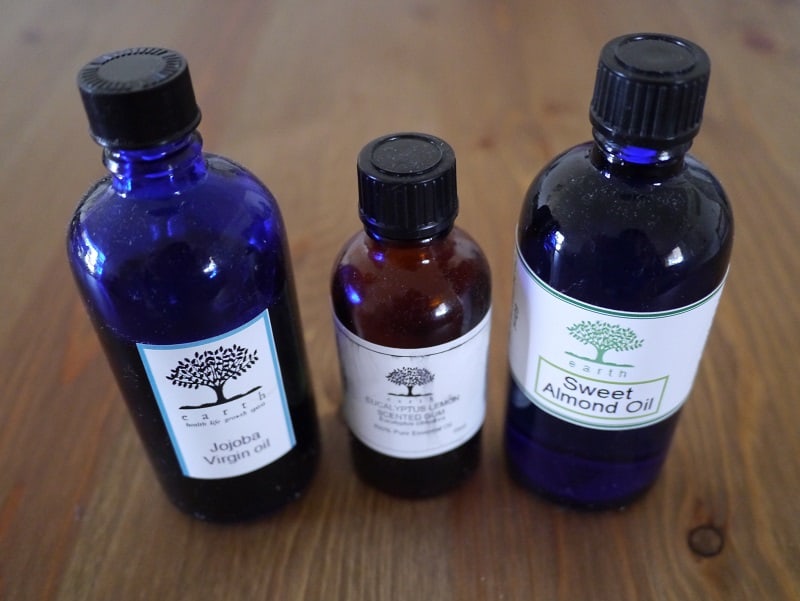
Sweet Almond Oil and Jojoba Oil

I’ve tried hemp oil, but it left a green tinge on my face and stained all my towels green. Many people recommend coconut oil, but I haven’t tried this – its comedogenic rating is quite high. Now I stick to almond, jojoba and rosehip oils for my dry skin. I can get refills for the bottles (so no new packaging) and you need such a small amount each time, they last for ever.

Oil can also be a great treatment for hair, but it’s not something I’ve tried.

Make Your Own – No Experience or Equipment Necessary!

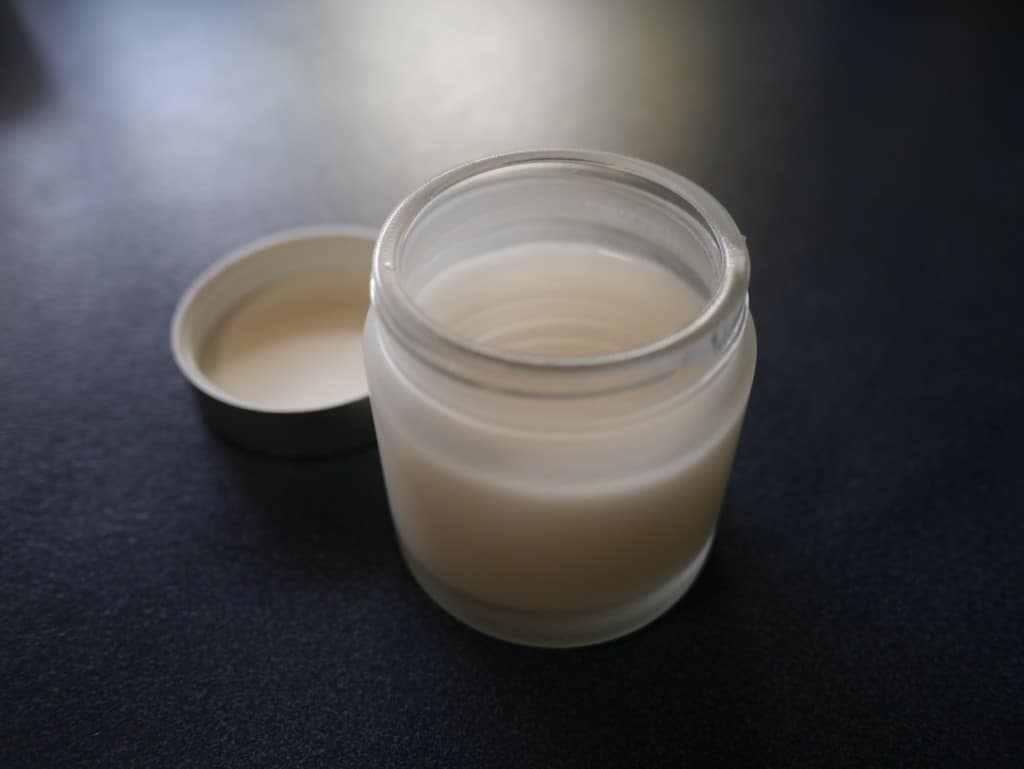
Some products are really simple to make at home. I make my own toothpaste and deodorant using coconut oil, bicarb and essential oil, pretty much. You just mix the ingredients together in a pot and voila! I checked the toothpaste recipe with my dentist, and the deodorant one is a keeper because it actually works.

deo9jpg

I love that I can use bicarb for three different bathroom products (counting the shampoo, too)!

Tooth Brushing

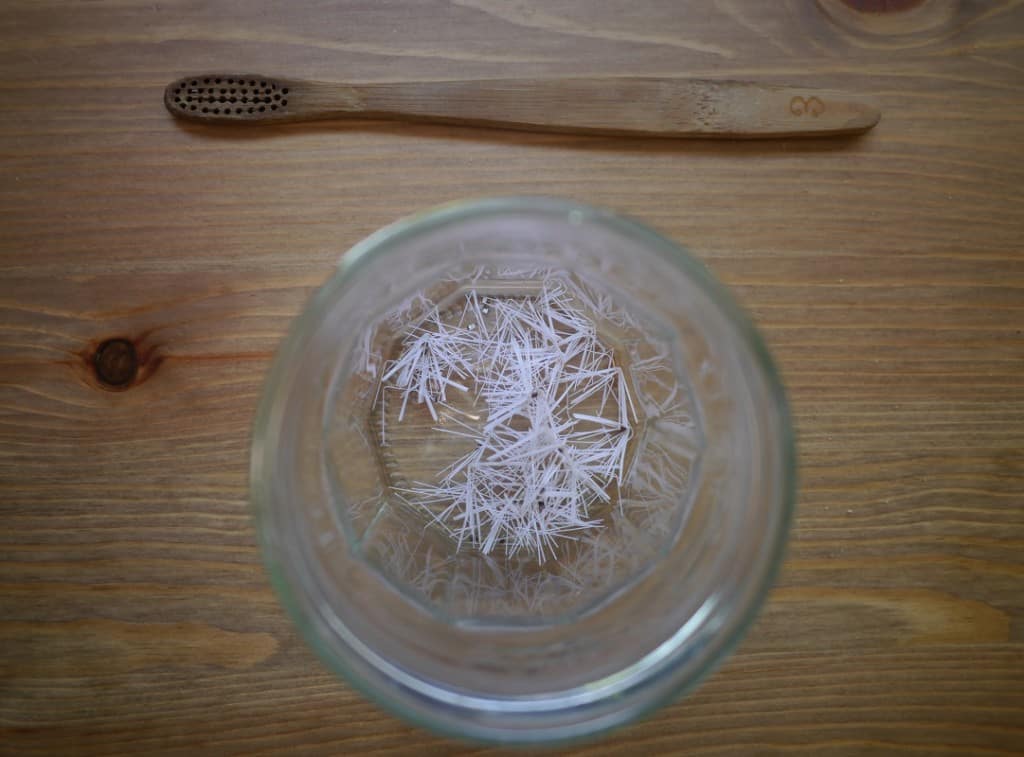
I use a bamboo toothbrush, that comes in a cardboard box. The bristles are plastic. Once the toothbrush is life-expired (you know because the bristles come out in chunks) you can soak the brush in water to release the rest of the bristles, and then compost the wooden handle.

Bamboo toothbrush unassembled

There you have it – Part 1 of my guide to reducing plastic in the bathroom. In Part 2 I’ll be covering all the additional dilemmas that women face when giving up plastic – makeup, shaving, and what to do at that time of the month, so make sure you come back and check it out!

I’d love to hear from you! Have you already taken any of these steps, or there ideas there that you think you’d be able to adopt? Are there any other plastic-free alternatives you can suggest? What works for you? Join the conversation and leave a comment below : )

[leadpages_leadbox leadbox_id=1429a0746639c5] [/leadpages_leadbox]

https://treadingmyownpath.com/wp-content/uploads/2015/03/Guide-to-Reducing-Plastic-in-the-Bathroom-Treading-My-Own-Path-Zero-Waste.jpg 673 1000 Lindsay (Treading My Own Path) https://treadingmyownpath.com/wp-content/uploads/2019/06/logo.png Lindsay (Treading My Own Path)2015-03-24 12:00:022018-07-27 21:51:11A Guide to Reducing Plastic in the Bathroom (Part 1)

Have Experiences. Not Stuff.

10 Comments/in Minimalism, Zero Waste/by Lindsay (Treading My Own Path)

One of the biggest highlights of our holiday last week was heading out to the Bremer Canyon to see killer whales (orcas). The Bremer Canyon, only discovered in 2013, is a place where more than a hundred orca come together to feed during February and March. It’s 65km offshore, and this is the first year that it’s been possible to go and see them as a tourist, and only for these two months.

It’s not your typical tourist adventure, heading out into international waters and rough, icy cold seas on a small boat for several hours, and even the small village where the boat departs from is in an isolated spot, a 2 hour drive from the nearest town and several hours drive from Perth.

When I heard about the tour last year something really grabbed my attention. Whether it was the idea of sailing to the edge of the earth, the rare opportunity to see killer whales in their natural environment, the fact that this spot is so newly discovered that very little is known about it…I’m not sure. I booked two tickets as a birthday present for my husband.

We’re not really into buying presents, and we no longer buy each other Christmas presents. For birthdays we often get tickets so we can experience something together – concerts, theatre, talks. We don’t have a budget or hard-and-fast rules about what we spend but we both agree: there’s no point shelling out money for the sake of it.

The tickets to the Bremer Canyon tour were expensive. Really expensive. I honestly don’t think I’ve ever spent that much money on tickets before. I ummed and ahhed about the cost. There was no guarantees we’d even see anything, and as the tour had never run before there were no reviews to check or compare.

But it was such a unique, exciting adventure, in the end I had to do it.

It made me think. I balked at the price, and yet a few years ago I wouldn’t have thought anything of spending the same price on a gift for my husband. When you consider how many people receive bigger (or smaller)  iPods, thinner iPads, upgraded mobile phones, better computer games consoles, expensive clothes and fancy cameras for Christmas and birthday presents, I wouldn’t be alone.

Now I’ve had a total rethink on stuff, and the idea of spending money upgrading something that already functions perfectly well makes me cringe. As does buying something new just because it’s the latest fad, or because there’s an obligation to purchase a gift. We have everything we need. Rather than spend money on newer, better versions of things we already own, we make do with what we have, and spend the money having new experiences and creating memories.

Back to the tour. Last Saturday we joined the boat, the other tourists and two marine scientists that were studying the orcas and headed two hours from land into international waters to see what was out there in the ocean. There’s no guarantee that the whales will be there. When we arrived at the co-ordinates, though, the whales came. And they were beautiful.

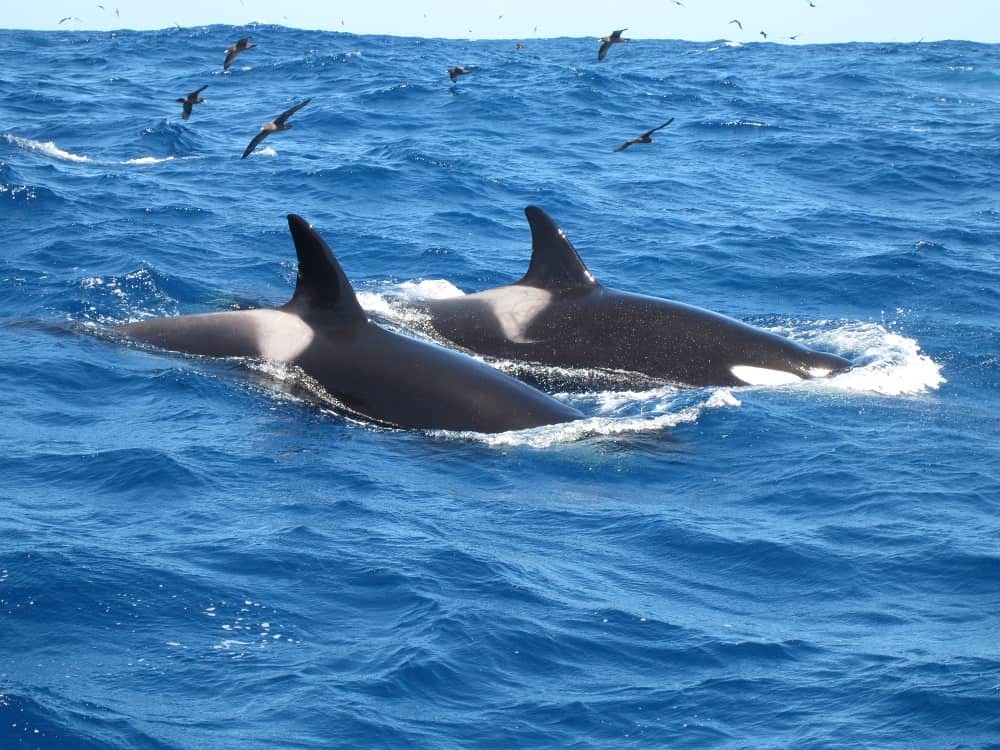
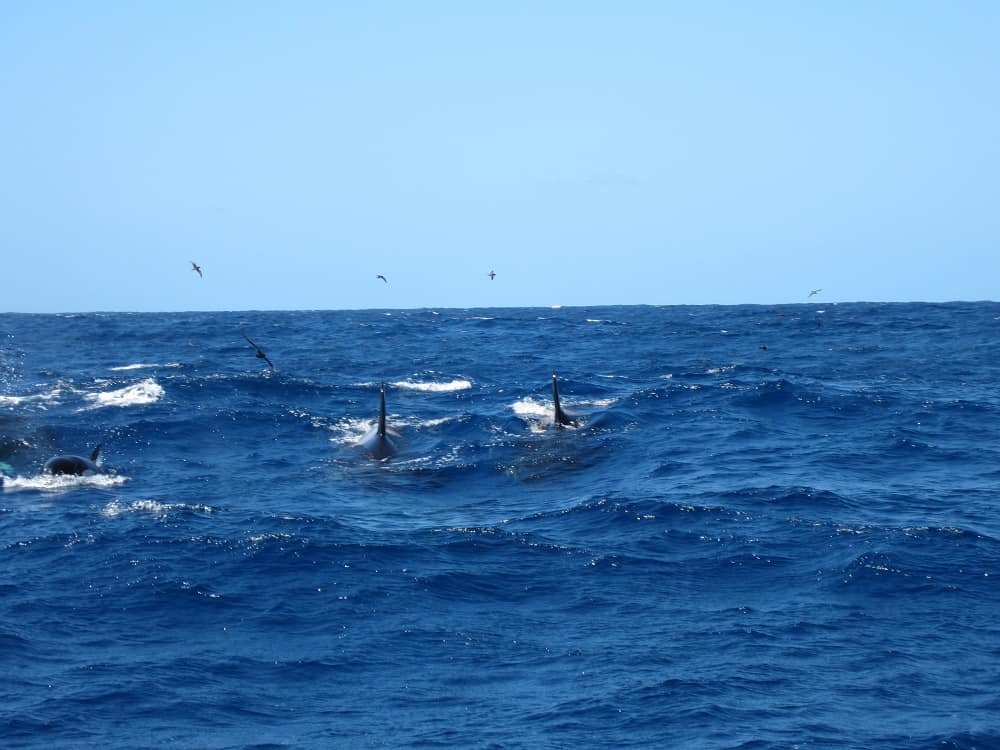
It was such an amazing experience. The orcas gather in groups, and they came up to the boat, swimming alongside and underneath it. We saw them surfing the waves. There was an enormous bull whale and some small calves, whose white patches were still yellow. They came so close it was incredible. The boat just sat there, bobbing in the ocean, whilst these amazing mammals swam around us. I had a couple of out-loud “wow” moments. It was worth every penny.

We only managed to take a couple of photos. Letting go of the rail long enough to use a camera was a tricky task!

Bremer Canyon orcas

Bremer Canyon orcas

Bremer Canyon orcas

Bremer Canyon orcas

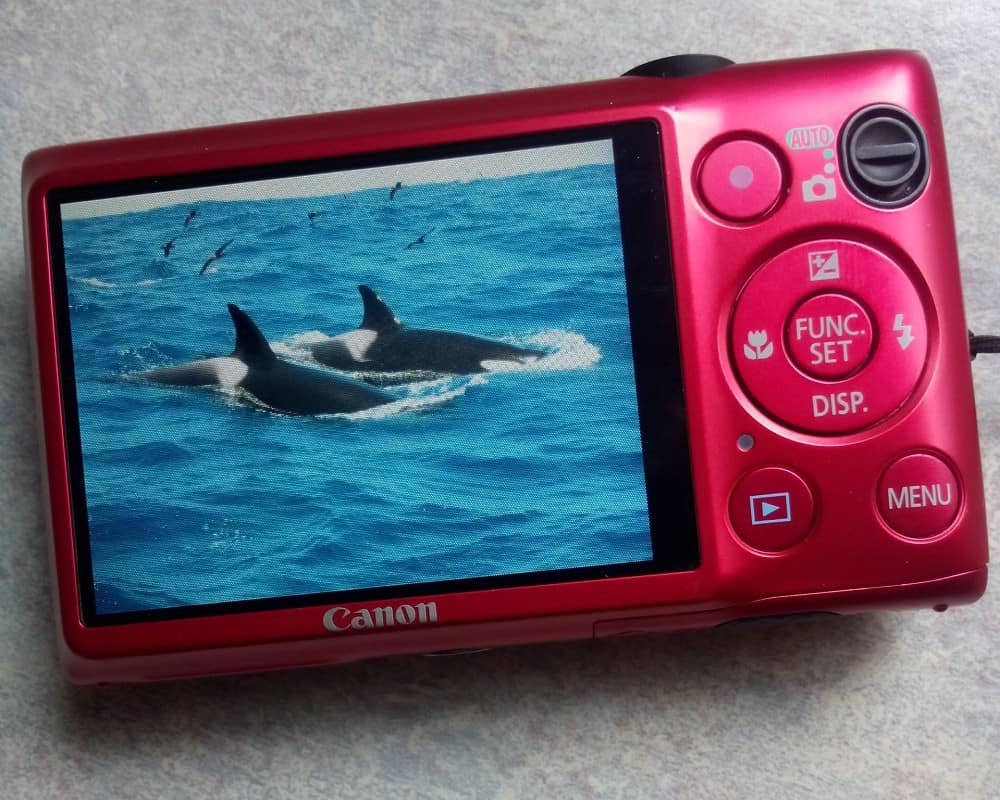
These photos weren’t taken with an SLR camera. They were taken with my husband’s point-and-shoot camera, with no zoom to speak of. We don’t own an SLR. We were able to go on this tour because we don’t own things like fancy cameras. Turns out, when you’re this close to whales, you don’t need a fancy camera anyway.

Orcas on camera

You don’t need a fancy camera (or any camera) to create memories.

These pictures aren’t the thing that’s going to stay with us. What will stay with us is the experience we had. The memories we created. Photos can’t capture the smell of the ocean, the sounds, the movements as these beautiful creatures rode the waves or glided in synchronised groups alongside and underneath the boat. The feelings of total amazement and wonder.

Collect memories. Not stuff.

[leadpages_leadbox leadbox_id=1429a0746639c5] [/leadpages_leadbox]

https://treadingmyownpath.com/wp-content/uploads/2015/03/Bremer-Canyon-Orcas.jpg 750 1000 Lindsay (Treading My Own Path) https://treadingmyownpath.com/wp-content/uploads/2019/06/logo.png Lindsay (Treading My Own Path)2015-03-05 12:00:232018-11-21 12:28:28Have Experiences. Not Stuff.
Page 18 of 21«‹1617181920›»

Pages

  • 9-tips
  • Birthday book reviews
  • Books
  • Cheatsheets and checklists
  • Every Blog Post I’ve Ever Written
  • Food Waste Challenge
  • Hoarder Minimalist Progress Tracker
  • Instagram
  • Join the mailing list
  • One More Step…
  • Real Food and Recipes
  • Thank you – 3 day food waste challenge
  • Thanks for joining!
  • The Less Waste No Fuss Kitchen Bonus Vault
  • Treading My Own Path Gift Voucher
  • Zero Waste + Plastic Free Living in Perth, Western Australia
  • Home
  • Quotes and facts
  • Resources
  • About
  • Infographics
  • Work with me
  • Minimalism / Simple Living
  • Plastic-free living
  • Upcoming events
  • Zero Waste
  • Explore
  • Blog
  • Less Stuff Book
  • The Less Waste No Fuss Kitchen
  • Thank You
  • Disclaimer & Copyright
  • Privacy Policy

Categories

  • About Me
  • Changemaking
  • Chemical-Free Living
  • Climate action
  • Community
  • Decluttering
  • DIY Skincare
  • Energy
  • environmental guilt
  • Ethical Living
  • Garden
  • growing food
  • Health & Wellness
  • How to…
  • Less Stuff
  • Living With Less Waste
  • Minimalism
  • Money-Saving
  • Musings
  • Out & About
  • Permaculture Gardening
  • Plastic Free July
  • Plastic Free Living
  • Real Food
  • Recipes
  • Simple Living
  • Sustainable Food
  • Thrift
  • Transport
  • Uncategorized
  • urban permaculture
  • Water
  • Zero Waste

Archive

  • November 2022
  • July 2022
  • April 2022
  • March 2022
  • February 2022
  • March 2021
  • February 2021
  • January 2021
  • December 2020
  • November 2020
  • October 2020
  • September 2020
  • August 2020
  • July 2020
  • June 2020
  • May 2020
  • April 2020
  • March 2020
  • February 2020
  • January 2020
  • December 2019
  • November 2019
  • October 2019
  • September 2019
  • August 2019
  • July 2019
  • June 2019
  • May 2019
  • April 2019
  • March 2019
  • February 2019
  • January 2019
  • December 2018
  • November 2018
  • October 2018
  • September 2018
  • August 2018
  • July 2018
  • June 2018
  • April 2018
  • March 2018
  • February 2018
  • January 2018
  • December 2017
  • November 2017
  • October 2017
  • September 2017
  • August 2017
  • July 2017
  • June 2017
  • May 2017
  • April 2017
  • March 2017
  • February 2017
  • January 2017
  • December 2016
  • November 2016
  • October 2016
  • September 2016
  • August 2016
  • July 2016
  • June 2016
  • May 2016
  • April 2016
  • March 2016
  • February 2016
  • January 2016
  • December 2015
  • November 2015
  • October 2015
  • September 2015
  • August 2015
  • July 2015
  • June 2015
  • May 2015
  • April 2015
  • March 2015
  • February 2015
  • January 2015
  • December 2014
  • October 2014
  • September 2014
  • August 2014
  • July 2014
  • June 2014
  • May 2014
  • April 2014
  • March 2014
  • February 2014
  • January 2014
  • December 2013
  • November 2013
  • October 2013
  • September 2013
  • August 2013
  • July 2013
  • June 2013
  • May 2013
  • April 2013
  • March 2013

Treading My Own Path

Privacy / Disclaimer

Sign up to the newsletter

Website by Órla Larkin

Lindsay Miles is an educator, speaker, author and passionate zero waste/plastic-free living advocate helping others live more meaningful lives with less waste and less stuff. She has been sharing ideas, tips, tricks and strategies on her website Treading My Own Path since 2013. Her first book, Less Stuff, was published in 2019 and her second, The Less Waste No Fuss Kitchen was published in June 2020. Originally from the UK, Lindsay now lives in Perth, Western Australia.

Lindsay Miles
© 2024 Lindsay Miles | ABN 84 679 541 090
  • Link to X
  • Link to Youtube
  • Link to Instagram
  • Link to Mail
  • Link to Facebook
Scroll to top Scroll to top Scroll to top

This site uses cookies. Cookies enable me to personalise your experience on this site so I can improve my content and communications.

I'm okay with that

Cookie and Privacy Settings


How we use cookies

We may request cookies to be set on your device. We use cookies to let us know when you visit our websites, how you interact with us, to enrich your user experience, and to customize your relationship with our website.

Click on the different category headings to find out more. You can also change some of your preferences. Note that blocking some types of cookies may impact your experience on our websites and the services we are able to offer.

Essential Website Cookies

These cookies are strictly necessary to provide you with services available through our website and to use some of its features.

Because these cookies are strictly necessary to deliver the website, refusing them will have impact how our site functions. You always can block or delete cookies by changing your browser settings and force blocking all cookies on this website. But this will always prompt you to accept/refuse cookies when revisiting our site.

We fully respect if you want to refuse cookies but to avoid asking you again and again kindly allow us to store a cookie for that. You are free to opt out any time or opt in for other cookies to get a better experience. If you refuse cookies we will remove all set cookies in our domain.

We provide you with a list of stored cookies on your computer in our domain so you can check what we stored. Due to security reasons we are not able to show or modify cookies from other domains. You can check these in your browser security settings.

Other external services

We also use different external services like Google Webfonts, Google Maps, and external Video providers. Since these providers may collect personal data like your IP address we allow you to block them here. Please be aware that this might heavily reduce the functionality and appearance of our site. Changes will take effect once you reload the page.

Google Webfont Settings:

Google Map Settings:

Google reCaptcha Settings:

Vimeo and Youtube video embeds:

Privacy Policy

You can read about our cookies and privacy settings in detail on our Privacy Policy Page.

Privacy Policy
Enough is Enough Free ebook for Subscribers front cover

Join our community and you’ll receive free new content every week and a downloadable eBook “Enough is Enough” to help you take the next steps!

Enough is Enough eBook

Please send me the eBook!

Send my eBook link to:

By downloading the eBook you agree to my Privacy Policy.

I hate spam as much as you do, and I promise to keep your email address safe. I will not share or sell your personal information, ever. You can unsubscribe at any time.

This form collects information I will use to send out the free eBook, new content once a week and an occasional newsletter (with other stuff I think you’ll find useful such as events).

Loading Comments...