Zero Waste Kitchen: DIY Chickpea Falafels Recipe

I buy dry chickpeas in bulk, a couple of kilos at a time. I soak them, then cook them, and then proceed to make every chickpea recipe I can think of. (I do freeze the spare for later, so it’s not about needing to use them up. More a celebration of this delicious and super versatile legume.)

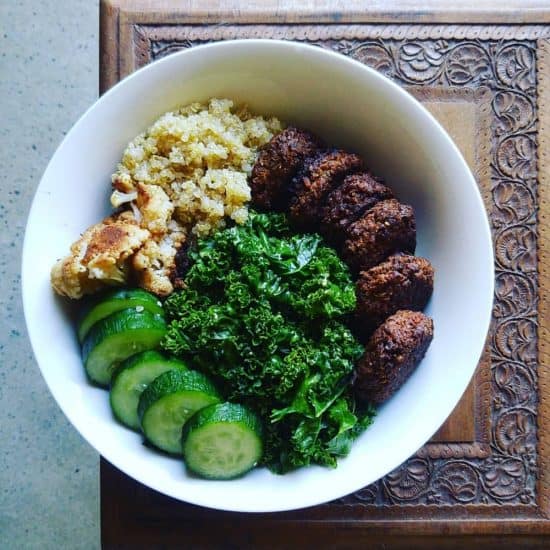
One of my staples is chickpea falafels.
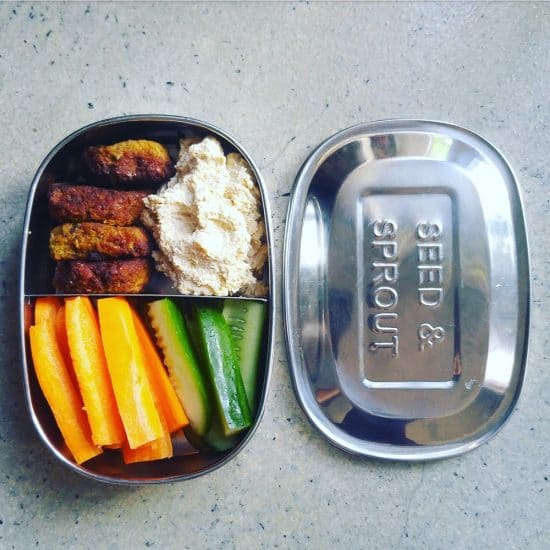
Falafels are actually only a recent staple. Well, the DIY version are. Back in 2011, before I left the UK, I’d buy little plastic tubs of falafels all the time. Plastic tub with plastic lid, and cardboard packaging outer – with 8 falafels inside. I could polish those off in one sitting! Oh, the single-use packaging waste! {Cringe.}

Then I went plastic-free, and falafels were no more.

I’ve tried making falafels many times over the years, but every attempt was a dismal failure. Dismal and messy, I should add. (Which is why I purchased the little tubs.)

I figured they were just too hard, until I went to a party where we had to bring a dish, and my friend brought homemade falafels. And they were ah-mazing! I demanded the recipe, and vowed that I would make them too.

Confession: the first time I made them, they were a disaster. But I knew that my friend had mastered it, so I knew it was possible. I stole all her secrets (we spent rather too much time discussing the finer details of falafel making), I tweaked the recipe a billion times to adjust to my taste and what was in my pantry, and now I have a recipe that works every time. Hurrah!

So if you’ve tried to make falafels before, and you’ve found that they’ve been a disaster, I want to encourage you to try again. Not all recipes are equal, and a homemade falafel is worth striving for, in my view!
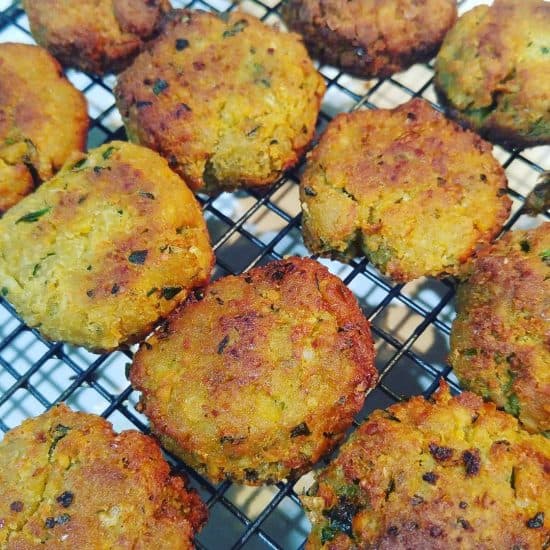
But first, let me quickly talk about chickpeas.

How to Cook Chickpeas from Scratch

Tinned chickpeas tend to have added salt and sugar, not to mention come in a steel tin can that ends up in the recycling. Bulk dried chickpeas are a fraction of the price, and there’s no (or next-to-no) packaging or additives.

Plus fresh always tastes better.

I buy chickpeas a couple of kilos at a time, and cook a big batch. First, I soak.
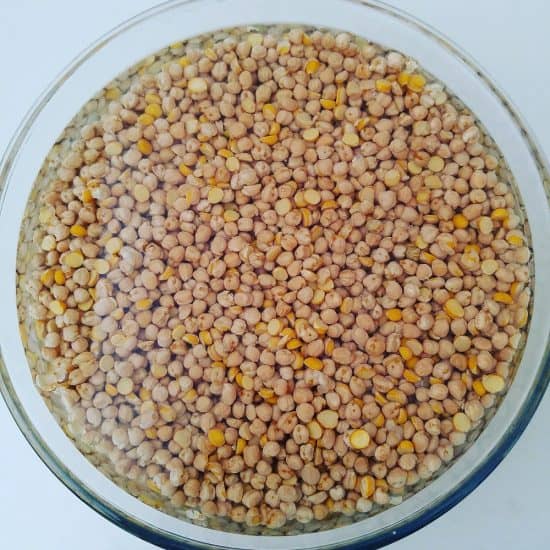
I take my soaking very seriously. Soaking makes chickpeas and other pulses more digestable because they release anti-nutrients. It’s not just about reducing the cooking time.

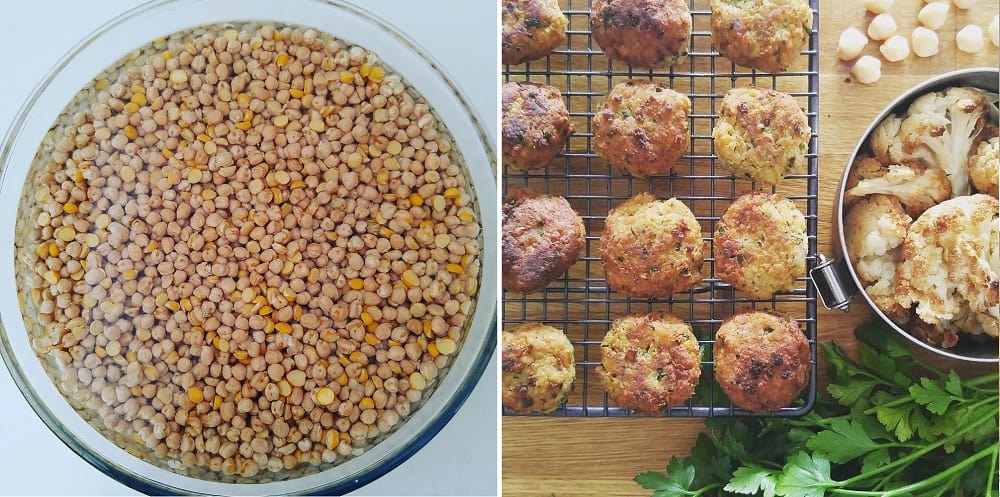
I soak my chickpeas for 2 – 3 days, changing the water every 8 – 12 hours.

After the first couple of days, bubbles start to appear. Then I know that biology is happening and they are becoming more digestible. (They are actually gearing themselves up to sprout, which is what will happen if they get soaked for about 5 days.)

I usually change the water a couple of times after the bubbles start appearing, over the space of a day or so.
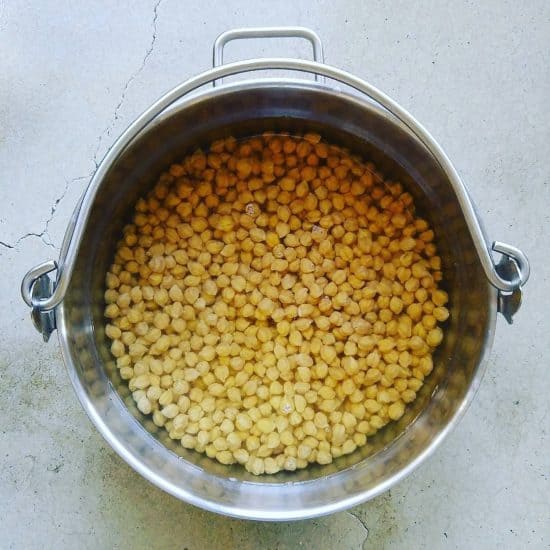
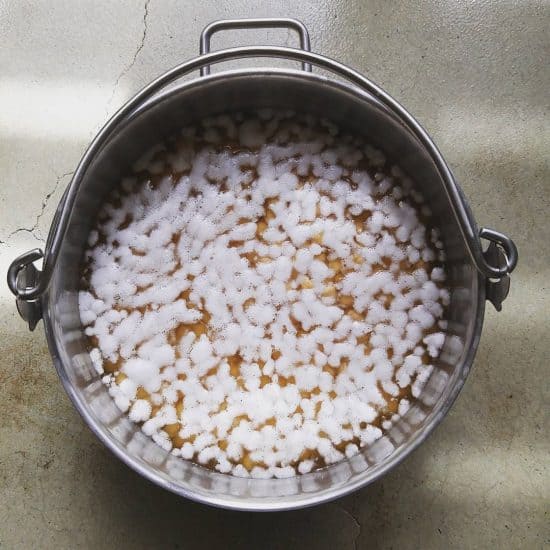
After the final rinse/water change, I cook on the stove for 1.5 hours.

Then they are drained (don’t forget to save the water! This rather murky looking liquid is actually the stuff of magic – aquababa!) and left to cool. After that, I pack the chickpeas into jars and containers. They will keep in the fridge for at least a week, and can be frozen.
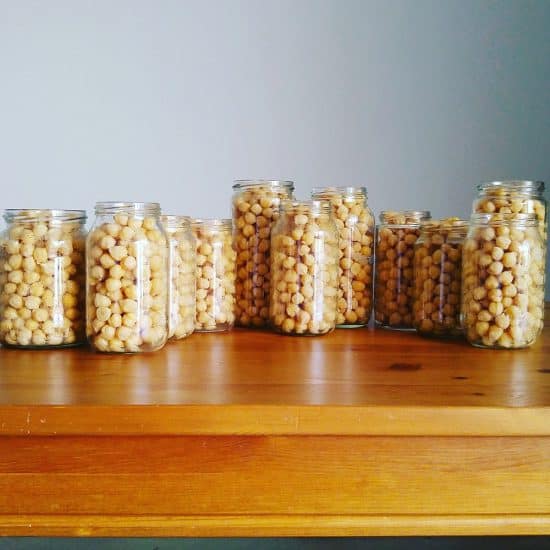
Or, I make falafels! Here’s how.

Recipe: DIY Chickpea Falafels
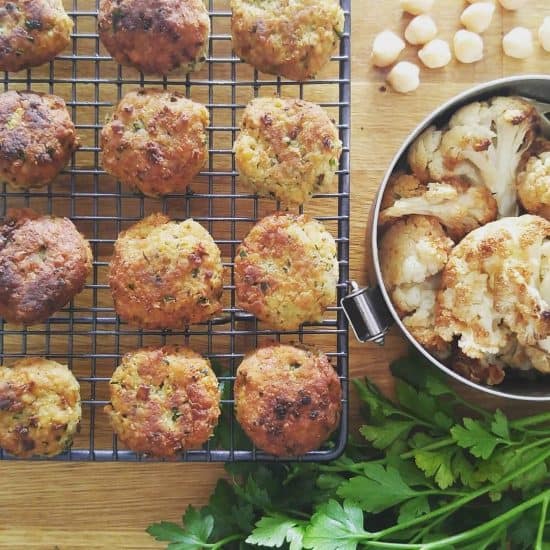
You’ll need a food processor or stick blender with a chopper for this.

Ingredients:

4 cups chickpeas
1/2 cup coarsely ground oats
4 tbsp potato flour or tapioca flour
2 onions, chopped
3-4 garlic cloves, chopped
4 tsp ground cumin
4 tsp ground coriander
1/2 tsp cayenne pepper
1 tsp salt
2 big handfuls fresh coriander, finely chopped
2 big handfuls fresh parsley, finely chopped

Oil, for frying.

Method:

If you don’t already have coarsely ground oats, take regular oats (you’ll need slightly more than 1/2 cup oats, as you get more ground oats in a cup than you do whole oats!) and whizz them in a food processor until they resemble coarse breadcrumbs. Set aside.

Next, whizz the coriander, garlic and parsley together to make a green paste and set aside.

Add the chickpeas to the food processor and grind until coarse. Add the onion and blend again until combined. It’s fine to be a little chunky. You’ll continue to blend as you add other ingredients so it doesn’t need to be super smooth.

Add the flour, oats and spices, and mix again until combined.

Finally, add the green herb/garlic paste and stir to combine. I do this last as it’s easy to see when it has all combined evenly.

If the mixture feels hot and sticky, pop in the fridge for at least 30 minutes to chill.

Next, heat up the oil (enough to fill the base about 1/2 inch deep) in a shallow pan.  Take the chickpea mix, and roll into balls, then press down to flatten slightly. Mine tend to be an inch or so across, and a cm or two thick.

The oil needs to be hot or the falafels will disintegrate when they are added to the oil (learned from experience). My hot plate has a range from 1 – 9, and I use setting 7. Put one in the oil to test, it should bubble immediately. If not, wait until it does before adding any more to the oil.

Add the falafels a few at a time, and after a minute or two turn over to cook the other side.I use a fork to flip rather than tongs.

I tend to roll a few, then add them to the oil, roll another few, then turn the first ones over to cook the other side, add the newly rolled ones to the oil, roll a few more then remove the first ones from the oil, turn the second, add the third to keep things moving. If it’s your first time, you might find it easier to have them all rolled in advance – this will take longer.

Once they are done, place on a cooling rack to drain the excess oil.
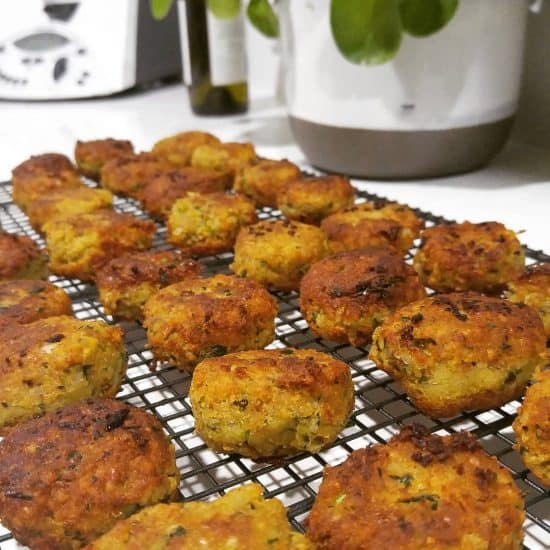
Store in the fridge, or can be frozen.

Troubleshooting:

If they start to disintegrate, stop. Drain the oil into a bowl using a tea strainer to remove all the bits, then put back in the pan and try again. It might have been that the oil wasn’t hot enough first time.

If disintegrating is still a problem, consider baking in the oven. You’ll need to brush with olive oil. They won’t taste exactly the same but they will still taste good.

If they don’t taste completely cooked all the way through, finish them off in the oven for a few minutes on a medium setting.
Note about the Ingredients:

I’m a big believer that recipes are there to be broken. Meaning, try things out but then make them your own! Add extra spices, substitute ingredients you don’t have for those you do and try things out.

This recipe was originally given to me by a friend (a photograph out of a cookery cook she had) but I’ve changed pretty much every ingredient. The original recipe used breadcrumbs and I changed to oats as I always have oats and don’t always have breadcrumbs. The few times I’ve tried breadcrumbs, they tended to disintegrate. Now I stick to oats.

I used potato flour by mistake thinking it was regular flour (I really should label my jars) and it worked so well I stuck to it. Both potato flour and tapioca flour are great at binding, which is why I use them and it keeps them gluten-free.

Fresh herbs are great and I use parsley and coriander as I have both, but I’ve also made with just parsley. If you like other herbs, try those. I’ve heard that dill is also great.

After chatting on Instagram with an Egyptian lady who makes falafels every day, I tried using raw chickpeas (bear in mind I soak them for three days, so they are pre-sprouted). The mixture is much wetter, but actually they seem to cook even better and the resulting falafels are firmer. The taste is a little different but equally good. I make these if I’m a bit behind schedule and don’t have time to cook the chickpeas first.

Next spring I intend to try with fresh broad beans!

Now I’d love to hear from you! Have you made falafels? Are you game to try these? Any tips or “how-not-to-do-it”s that you’d like to share? Any other chickpea recipes that you love? Leave a comment below!

[leadpages_leadbox leadbox_id=1429a0746639c5] [/leadpages_leadbox]
Spilling the Truth About the “Perfect” Zero Waste Image

I’ll admit it. I do like a stylish, carefully curated zero waste image. I’m prone to double-tapping “like” when a snap of a beautiful pantry with whole foods stacked neatly in glass jars appears on my social media feed.

I think that pictures of products made of stainless steel and glass are much more visually appealing than the equivalents in plastic.

But I also know that for me, zero waste doesn’t really look like that most of the time.

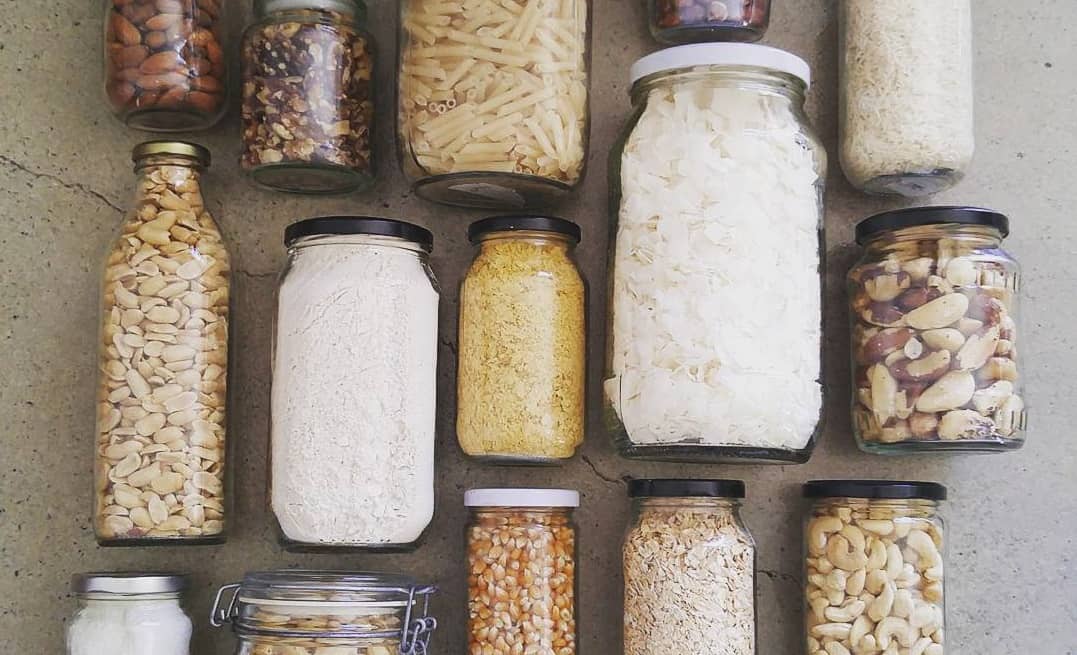
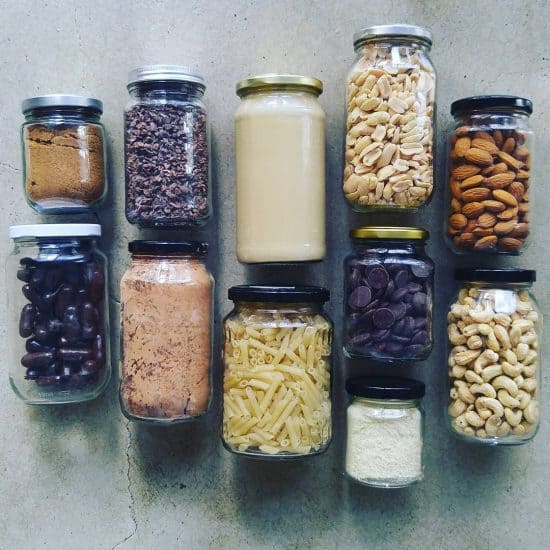
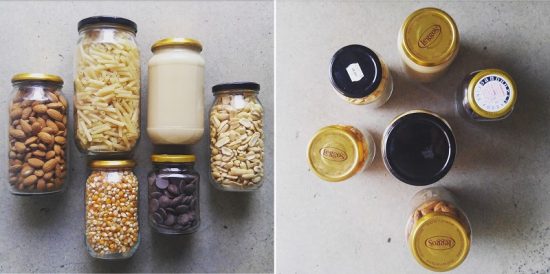
Sure, I can take a cute snap of my pantry essentials once I’ve hauled them home from the Source Bulk Foods (which is my local bulk store, and lets me bring and fill my own jars – and jars can look lovely in a photograph)…

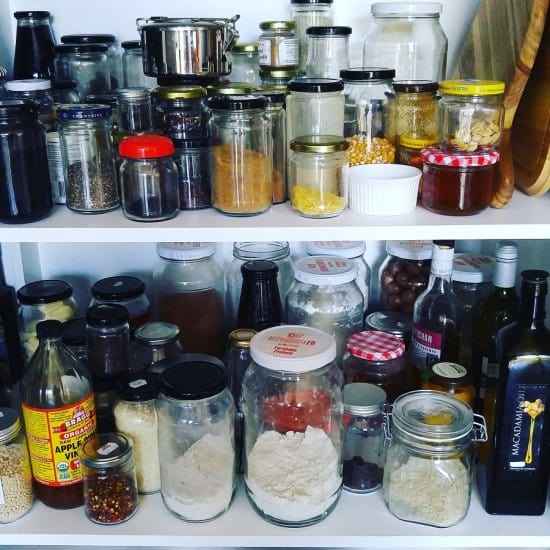
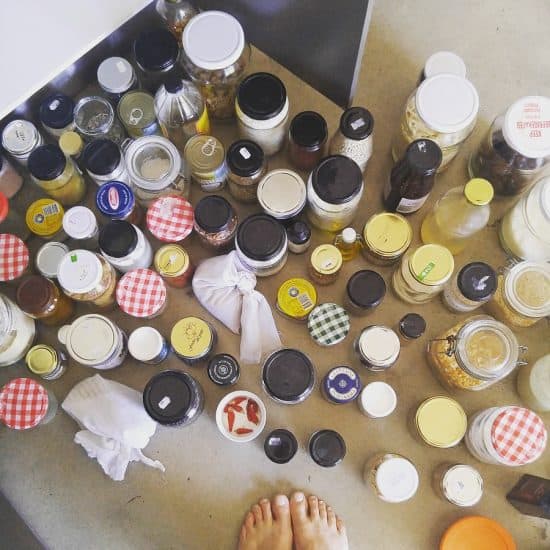
…But then they get shoved in my pantry, which is not some kind of oasis for groceries, but a ramshackle assortment of mis-matched jars with mis-matched lids.

The kind that won’t be gracing the front cover of magazines anywhere, ever.

The reality is, zero waste is a lot more jumbled and mis-matched and imperfect in real life. At least, it is for me.

That may seem obvious. But a scroll through any social media feed suggests that zero waste is all perfectly matched jars, beautiful white homes and stylish accessories.

This begins to set unrealistic expectations.

It plants the idea that we need different things – better things – in order to fit with the zero waste lifestyle.

Zero waste is a lifestyle choice. But that lifestyle, in my mind, is one of consuming less and making do with what we already have.

It’s easy to see how the curated images of social media could give a different impression – one that implies a need to purchase new things if they fit with the zero waste ideal.

But zero waste is not about consuming more.

The most important thing with living zero waste is the intention. The intention to reduce our footprint, reduce our waste, and make the best choice we can with the time, resources and options available to us.

Image is secondary to this.

Of course, we all share the best images we have. Good images help – they help attract attention, raise awareness, start a conversation. I don’t think there’s anything wrong with sharing the best, so long as we don’t only share the perfect bits. There are lots of imperfect bits to share, too.

Without sharing those, we are doing the zero waste movement a bit of a disservice.

Perfection is intimidating. No-one should feel that this lifestyle is unattainable because they don’t own the “right” things.

As someone who could never describe themselves as effortlessly stylish (or, let’s face it, even stylish when I do put in the effort), zero waste does not look perfect in my house.

Yet I’m definitely guilty of curating my images to share more of the perfect bits, and omit more of the less perfect bits.

Crazy really, when I believe that intention comes before image.

With that in mind, I thought I’d share some snaps from my zero waste life that fit firmly in this category. The embarrassing, cringe-worthy, no-way-near-perfect images that are the reality of what zero waste living looks like for me.

Intention over Image: What Zero Waste Really Looks Like for Me

The Zero Waste Pantry

I’ve already shared a couple of pictures of my groceries and pantry above, but groceries in glass jars are such an iconic image of the zero waste movement, I thought I’d share a couple more of my less-than-perfect moments, just to get my point across.

Sharing pictures of my grocery shopping in glass jars on social media is one of my guilty pleasures. I like the way groceries look in glass, and I also think it’s useful to share the kinds of foods that it’s possible to buy in bulk.

Whilst my groceries tend to look pretty stylish when laid flat, viewing from the top down reveals the truth about the containers I use: upcycled jars with mis-matched lids retrieved from the recycling bin over the years.

In fact, if I empty the entire contents of my pantry, it’s the same thing on a bigger scale.

For me, the intention is to reuse what I can. I’m happy with upcycled mismatched jars. Whilst I love the look of Weck and Le Parfait jars, I can’t justify buying new (and as they are German and French brands, they don’t often turn up second-hand in Australia).

My pantry might not look the most aesthetically pleasing, but it works for me.

Zero Waste Cleaning

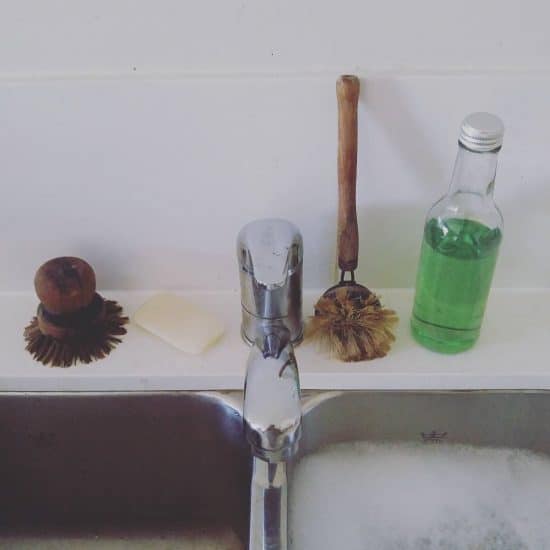
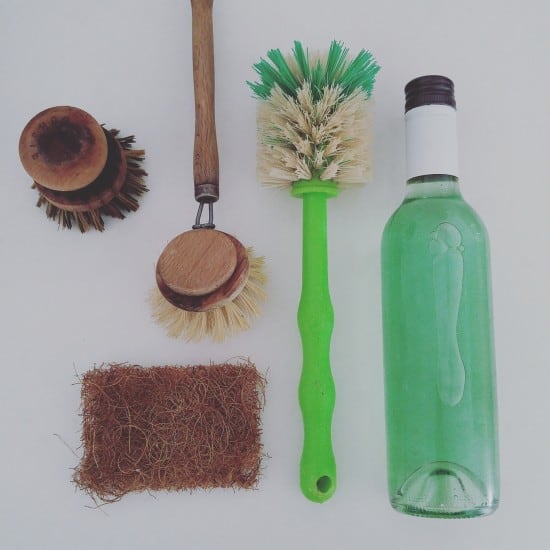
My washing-up set-up looks pretty much like this: a wooden dishbrush with replaceable head, a natural pot brush, and dishwashing liquid purchased from the bulk store.

Oh, but there’s also my 2012 dish brush, which doesn’t often turn up in photos due to the fact it’s plastic, bright green, and really doesn’t suit the zero waste aesthetic.

In the spirit of zero waste, I said that I’d keep it and use it until it wears out, and then obviously not replace it. Well, it’s now 2018, and that damn brush is still going strong! Which, really is a good thing, considering how quickly plastic dish brushes degrade.

It might not look good in the photos, but the intention is to use things until they wear out, and choose better next time, and that brush continues to serve its purpose.

Zero Waste Bathroom

I make my bathroom products from scratch, with ingredients that I buy packaging-free, and I use repurposed containers. Ticking all the zero waste boxes there!

However, there’s plenty of other things in my bathroom that don’t fit the zero waste aesthetic at all.

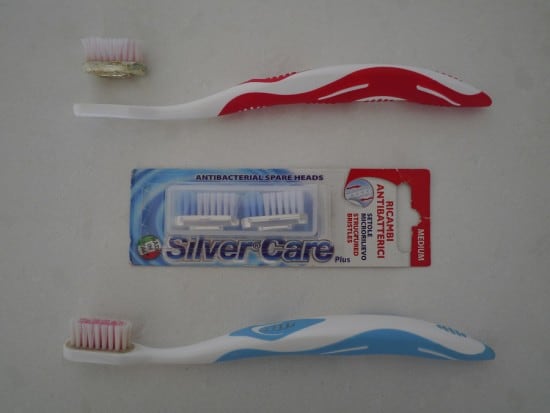
When I first went plastic-free I used a bamboo toothbrush, and I hated it. The bristles would fall out in my mouth and then get washed down the sink (hello, microplastic). After more than a year of that, I had enough and purchased a toothbrush with replaceable heads.

Since then (we’re talking back in 2012), the number of bamboo toothbrush brands has exploded, and many of my readers have suggested bamboo alternatives that don’t lose bristles. The thing is, now I have this brush, the most zero waste thing is to keep using it. Plus it works, which is what I want from a toothbrush.

Yes, it’s ugly (and definitely not the zero waste aesthetic). But that’s how it sometimes is.

The intention is to create as little waste as possible whilst still feeling comfortable with the choice I’ve made. Bamboo toothbrushes just didn’t do it for me.

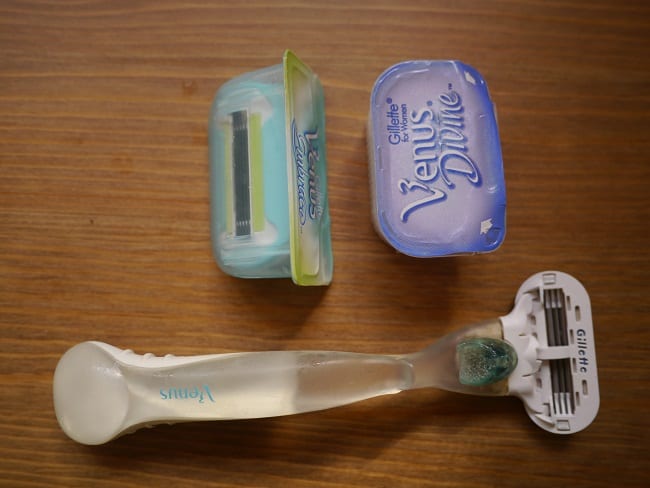
Whilst we are on the subject of ugly plastic, I still have my plastic razor from circa 2009. When I went plastic-free, I had the razor and a number of blades, and I declared that I would continue to use it until the heads wore out, and then I would replace it.

This picture is from 2014, when I still had three blades left.

I’ve been down to the last one for a while, and eventually it will wear out. But a good rinse, drying properly and polishing the blades with a piece of denim cloth has seen it last a lot longer than I expected.

Of course, a stainless steel razor would look much better in my bathroom, and in any pics I share. But actually, what I need is a razor that works, which is what I have. Right now the only reason to swap the ugly plastic one for a shiny stainless steel one is the aesthetic.

Which from a zero waste perspective, isn’t the intention. Replacing functional items solely for better looking ones makes no sense.

The point I want to make is this: zero waste isn’t picture perfect.

Don’t get disheartened by “perfect” images. We all share the best moments, but that is rarely the whole story. Behind every perfect image is plenty of imperfection. That’s just how life is.

Don’t be tempted to buy new stuff to “fit in”. If you want to fit into the zero waste lifestyle, use what you have, and make do.

Zero waste is about intention. It isn’t about buying the right things. It is about caring about the right things.

Now I’d love to hear from you! What do you think is missing from the curated zero waste images shared in social media? Are you guilty of sharing the better bits and excluding the less good bits? Do you ever feel embarrassed about the appearance of your zero waste attempts? Are you happy to share things exactly as they are, whatever they look like? Anything else to add? Please share your thoughts in the comments below!

[leadpages_leadbox leadbox_id=1429a0746639c5] [/leadpages_leadbox]
Reducing Food Waste with Worm Farms: Trialing the Hungry Bin

Zero waste is all about circular living. It’s often talked about in terms of the circular economy (which is the ideal and the one we want to work towards) as opposed to the linear economy (which is the one we have now).

The idea is that materials and resources should cycle, being reused or repurposed or reshaped again and again.

Circular living supports local solutions, which means less packaging, distribution costs and transport emissions; and more connection and resilience within our local communities.

Anything we can do at home, or within our street, or within our suburb, the better.

With this in mind, let’s talk about food waste.

In Australia almost 40% of everything we throw in our landfill bins in food waste. Even more scary, I think, is that 25% of what the average household throws away is food that could have been eaten.

Even if we are super diligent, there’s always going to be food waste that can’t be eaten. Onion peels, lemon skins, cores, seeds, pips, stalks, outer leaves, and general bad bits.

If we want to reduce our environmental impact, processing our food scraps at home is a great solution.

I love it when a problem has multiple solutions, and food waste is exactly that. There’s so many ways we can deal with food scraps at home. No “one size fits all solution” – different methods that work for different locations, spaces and households.

There’s composting (yes, regardless whether or not you have space for your own compost bin), there’s bokashi, and there’s worm farms.

Worm farms were the first thing I tried when I went zero waste, and over the years I’ve successfully used a number of different worm farms: from polystyrene box worm farms that you can DIY yourself, and degassed fridge worm farms (which work like polystyrene box worm farms, but on a bigger scale) to the black plastic worm cafes that can be purchased from hardware stores (or even better, found on the verge).

Over the last three months I’ve been trialing a new design of worm farm: the Hungry Bin, and it’s my favourite so far.

I came across the Hungry Bin worm farm because of my friend Josie (who came across them first). She was so impressed with it as a way to effectively process food scraps for her family of five, that she decided to distribute the Hungry Bins here in Western Australia. She set up her business Pearthworms selling the worms farms last year (in 2017).

Pearthworms were kind enough to loan me a Hungry Bin worm farm to test drive. I’m always keen to learn more about ways for households to reduce their own waste, and love innovative products that make it easier. Wins all round!

Here’s the lowdown.

The Hungry Bin Worm Farm: Composting Food Scraps at Home

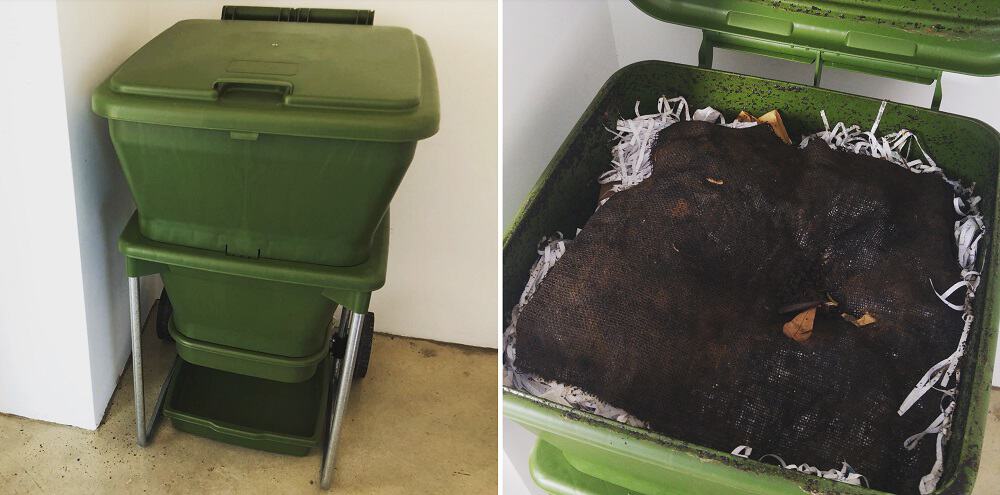
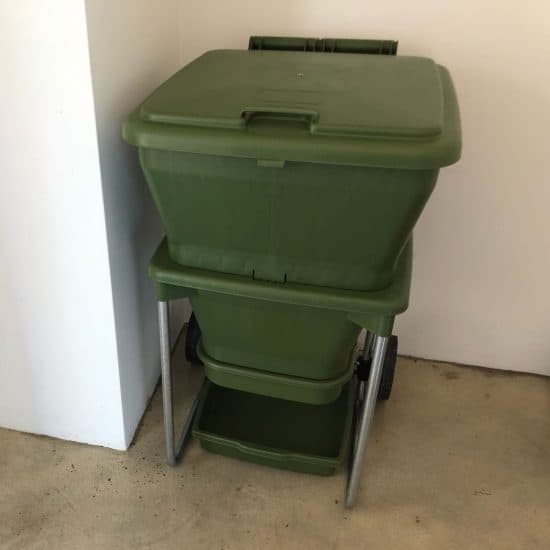
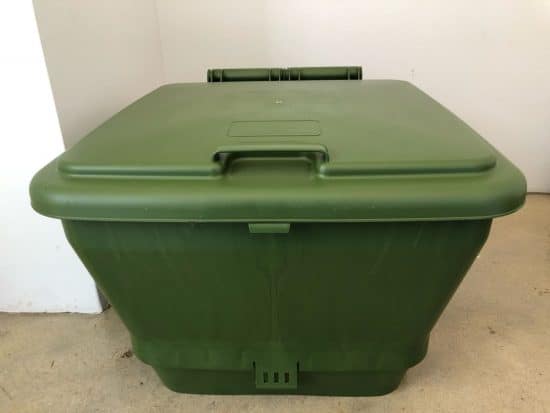
At first glance the Hungry Bin might look like a regular flip-top waste bin, but there’s actually a fair bit of thought and engineering that’s gone into the design. It is designed and made in New Zealand.

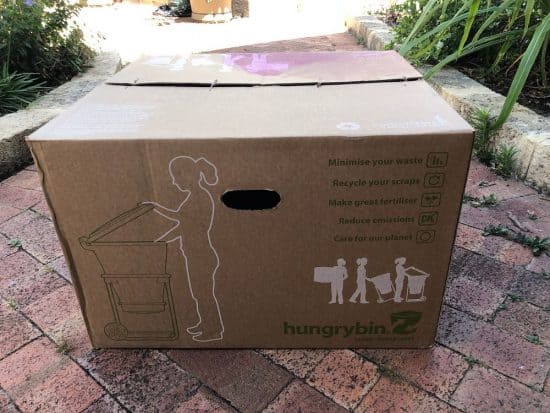
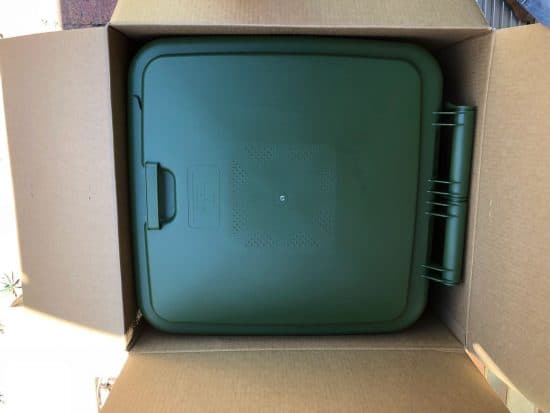
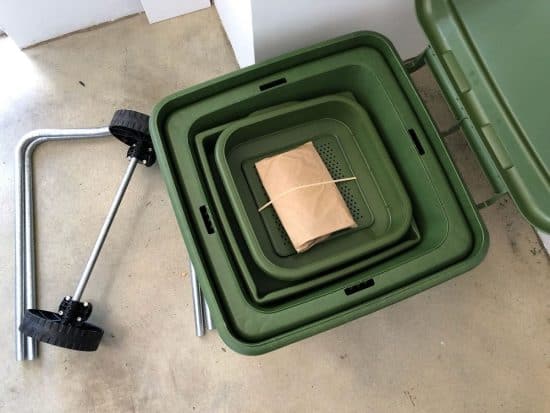
Firstly, it actually packs down pretty small. The bin is actually made of two parts that lock together, and one fits inside the other, making it a fairly small package. The bin itself is made from UV resistant plastic with recycled content, and is expected to last for 25 years. The packaging is minimal, with a cardboard outer, and none of the parts come packaged in additional plastic.

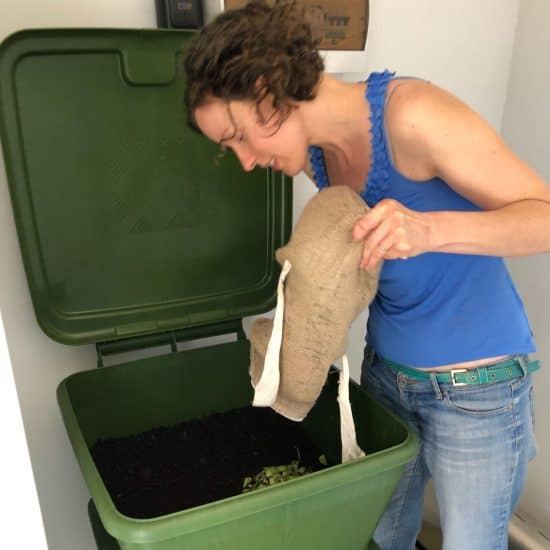
Once clipped together, the bin is filled with bedding, then food scraps and worms are added to the top. Worms remain near the top, gobbling up the food scraps and creating worm castings, a nutrient-rich medium. More food waste gets added on top, the worms move up to find them, and the castings naturally accumulate underneath.

The tapered design enhances the efficiency of the system. Composting worms are surface feeders, and food scraps are added at the top, so keeping the worms near the surface increases the efficiency. The top is the widest point of the whole bin, and the bin can hold 16,000 worms and process 2kg of food scraps per day.

Because the bin tapers, the worm castings naturally compress at the bottom. This encourages the worms to move to the surface and also ensures that when the bottom is removed, the entire contents don’t fall out.

The reason you’d want to remove the bottom is to get your hands on the worm castings. They can be used to grow seedlings, added to pots or to existing plants or dug into the garden. You simply unclip the tray, scoop out the worm castings and reattach.

The bin has a tray that sits underneath, that collects the worm juice. This can be used like a fertiliser.

I trialled mine indoors, but they are intended as much for outdoor use.

Pearthworms and the Hungry Bin

As I mentioned before, I’m a fan of local solutions. Pearthworms is a local, Perth-based business, and they intend to stay that way. They only supply Hungry Bins to people in Perth and Western Australia. With 1.3 million people living in Perth, and probably that same number of cafes and takeaway food outlets (okay, I’m kidding, but there’s a lot), there’s huge potential to make a massive difference without needing to look further afield.

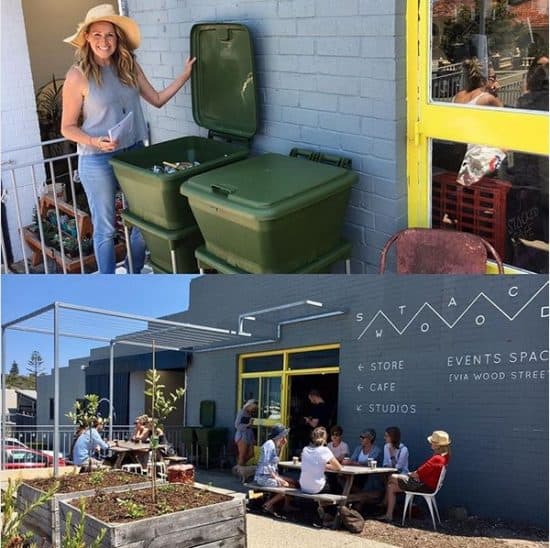
Pearthworms are keen to focus not just on individual households, but also commercial venues: restaurants, cafes (the picture above is Josie with the two bins she has installed at Stackwood Cafe in Fremantle), businesses, community gardens – anywhere that is creating food waste.

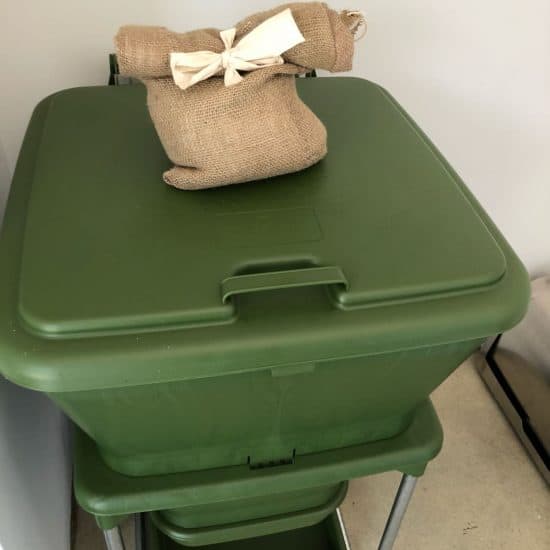
Pearthworms also supply happy, healthy worms with the Hungry Bin (Eisenia fetida worms, and 2000 of them, to be exact). It’s easy to imagine these worms would just come in a plastic bag, but no – they come in a natural hessian pouch sewn from an old coffee sack.

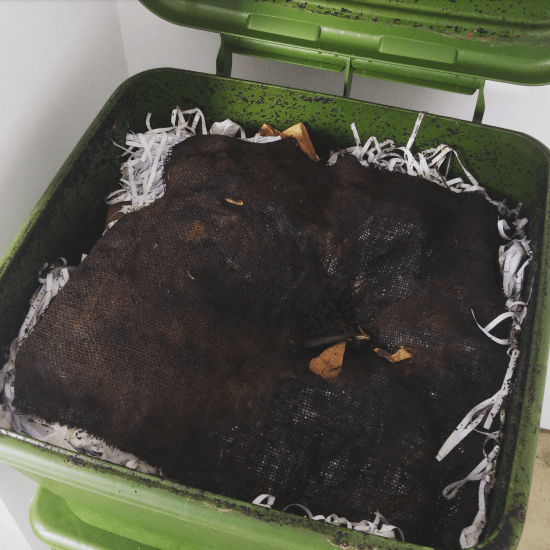
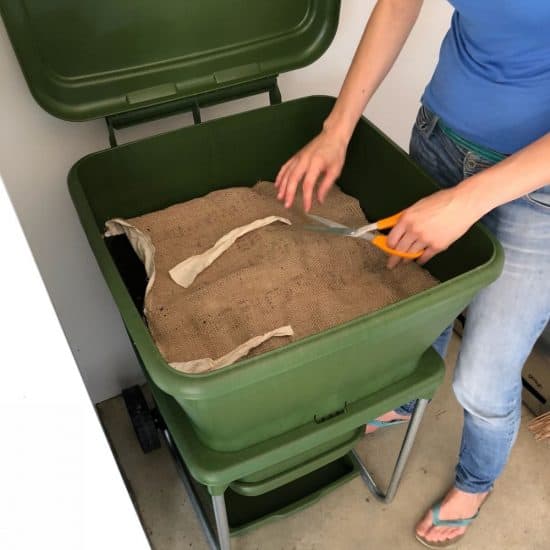
Even better, once the worms are added to the Hungry Bin, the sack can be cut in half along the seam to make a cover that perfectly fits the inside of the Hungry Bin. (The cover is important as worms don’t like light.)

My experience with the Hungry Bin in the three months that I’ve had it has been great. It’s dealt with far more food scraps than my other worm farms can manage; it doesn’t smell; it’s so easy to use; it’s much less sensitive to extremes of temperature than other commercial worm farms; and once I get my first tray of castings, my garden is going to love me.

(Plus, this worm farm is going to churn out worm castings for 25 years. That’s an epic deal in the long run, if you think about how many trips to and from the hardware store that would be saving, buying plastic bags of seed raising mix and compost.)

It is a more expensive option (especially when compared to the DIY polystyrene box worm farm approach) but then again, DIY isn’t everyone’s thing. Different systems suit different households, different lifestyles, and different budgets.

The important thing is that we stop sending our food scraps to landfill. How we do it doesn’t really matter. There are plenty of solutions, we just need to find the one that works for us.

If you’d like to chat to Josie in person to find out more or see a Hungry Bin worm farm in action, Pearthworms currently have a stall every Saturday morning at the Subiaco Farmers Markets. Alternatively, their website is pearthworms.com.au.

[leadpages_leadbox leadbox_id=1429a0746639c5] [/leadpages_leadbox]
The Illusion of Being Perfectly Zero Waste (or Perfectly Plastic-Free)

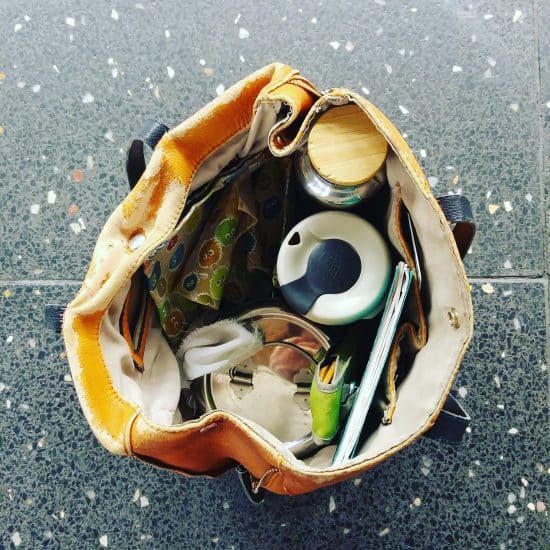
A few years ago, I wandered into a second-hand bag outlet in a pop-up shop that sold handbags. One bag caught my eye – it was in excellent condition and very inexpensive (it was $28 AUD). The lady explained that she had purchased it thinking it was leather, but then realised it wasn’t leather at all, so she had reduced it to clear – she was a leather shop, and didn’t want to stock non-leather items.

I bought the bag. It was second-hand, in almost new condition, and I really liked it. It seemed like a good purchase. It carried my zero waste and plastic-free essentials around for a few years.

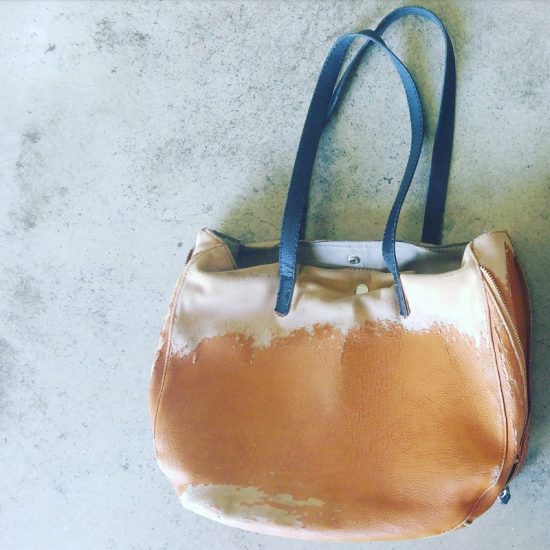
But over time, the faux leather began to flake off. Slowly at first, but as the bag aged it got worse and worse.

Aside from the fact that it looked pretty tatty, I was also acutely aware that this flaking faux leather was actually microplastic, shedding into the environment.

Eventually enough was enough, and I realised I had to get a new bag.

I always say that it’s important to think about how we’ll dispose of an item when it’s life expired before we make the purchase. (If we are concerned about waste and are trying to reduce our landfill, at least.)

Clearly when I chose this bag, I didn’t think about that at all.

I think that’s why I held onto it as long as I did, even though it was disintegrating before my eyes. I knew that there was nothing I could do to save it. It’s 100% synthetic materials, so not biodegradable, not reusable, not salvageable. It’s next destination was landfill.

Of course, I feel bad about that.

I knew that my next purchase had to be better.

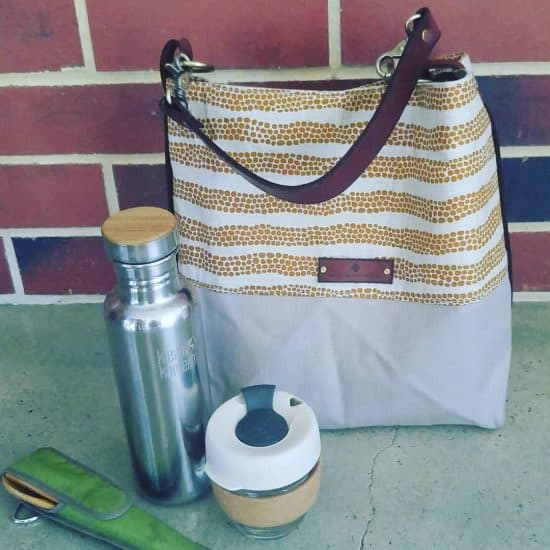
I’ve been following a small independent handmade bag business based on the east coast of Australia (in Mackay, Queensland) called Small World Dreams on Instagram since forever, and I’d decided that when I needed a new bag, I’d purchased one from Claire. I first heard about her because she uses Ink and Spindle fabric to make her bags – Ink and Spindle are a Melbourne-based company who use organic fabric, natural dyes and Australian flora to inspire their hand-printed designs.

I wanted my new bag to be made responsibly and transparently, fit all my things in it, be repairable, not contain any plastic at all and therefore be completely biodegradable, and be made so well that the idea of even needing to put it in the compost is one for the next decade, not this one.

The bag I chose fits all of these criteria.

But I confess, I felt a small pang of guilt when I chose it, because even though it meets all my criteria, is completely plastic-free, and is almost entirely made from organic cotton, the strap is made of leather.

I feel bad about this because I try very hard to avoid purchasing animal products.

But my previous bag, made of faux leather (which is plastic) ended up creating microplastic pollution and damaging the environment that way. It also ended up in landfill.

I feel bad about that, too.

In the end, I kept the leather to an absolute minimum, and made peace with my purchase because plastic-free was my first and biggest priority.

I know that if I’d really tried, I could have found a completely natural and biodegradable bag. I’m sure there are other great ethical small businesses I could have chosen from. Small World Dreams even stock a vegan range made using Piñatex, a relatively new leather alternative made from pineapple fibres. These bags didn’t suit my needs, however – and gold really isn’t my colour.

Actually, I really like the bag I chose. I love the style, the design, the craftsmanship. I know the strap will last a long time (and that is important to me).

I think the guilt I feel comes a lot from the need to try to be perfect.

I know it would be much easier to share with you a completely biodegradable, ethically made, natural, vegan bag – one ideally made locally with organic fabric, and packaged in recycled sustainable materials.

Easier in my mind because if I tick all the “ethical boxes”, no-one can make judgments about my choices.

Which is a false truth, actually, because people will make judgments whatever the choice.

Choices are rarely (ever?) perfect. No matter how many boxes are ticked, there’s always something that was forgotten about.

It’s a scary thing, putting your life and your choices in public. You’re opening yourself up to criticism and judgment. The reason I do it is because I think that sharing what I do and the choices I make helps others find their own way, learn from my discoveries and make better choices themselves.

Knowing that I can influence others to have a positive impact in their own lives and towards the environment is what keeps me motivated to continue.

It’s much easier then, to share the best choices. The things that work really well. The success stories.

But none of us are perfect. I’m not perfect. I don’t pretend to be, either, but it’s a lot easier to share the perfect bits than the imperfect bits.

I’d rather tell you that I’m the perfect vegan.

I’d rather tell you that I’m perfect at zero waste.

I’d rather tell you that I’m perfect at plastic-free.

But of course, I’m not any of these things.

The reality is that absolutes are hard. Different values can be conflicting, and we have to find our own way.

I have complete respect for anyone who lives with absolutes. I know that for many vegans, their resolve is absolute, and the idea of being an “imperfect vegan” is an oxymoron. There’s no room for flexibility: you either are or you aren’t.

For me, doing what I can is better than doing nothing at all. I try, and I struggle, and I fall short, but I keep striving to do better.

I wonder if my imperfections are because I’m multi-passionate. I care about too many things to be completely focused on one at the expense of all the others. I care about plastic-free and zero waste, supporting the local economy, buying second-hand and supporting Fair Trade. I care about food miles and air miles and reducing carbon emissions. My diet is plant-based and I don’t buy animal products at home, but when I’m out I make exceptions, and especially when friends have cooked for me.

My decisions are always about reducing my impact, but what that looks like varies from one decision to another – there’s always a compromise somewhere.

Then again, maybe my imperfections are nothing to do with being multi-passionate. Maybe they are simply because that’s how I am. Imperfectly imperfect.

What I’ve realised is, I don’t want to feel bad about the decisions I make. I try so hard to weigh up all the options and make the best decisions that I can. Not perfect ones, but better ones than the time before. That’s something I should feel good about.

Making better choices is something we should all feel good about.

Chasing the crazy notion of perfection, that’s what leads to overwhelm, stress and feeling miserable. Embracing our imperfections? That’s acceptance of what actually is. None of us are perfect at everything, all the time. Being kind to ourselves (and to others) is a much better alternative than beating ourselves up over our shortcomings.

My choices won’t be everybody’s choices. But they are my choices. In all their imperfection, I make them. Being happy with them means letting go of the desire to be perfect, and the fear of being judged when I’m not.

I’m not perfect, and I can be happy with that.

Now I’d love to hear from you! Do you struggle with the need to be perfect? How do you tackle criticism or judgment of the choices you make? Have you found your peace with making imperfect decisions? Anything else you’d like to share? Please tell me your thoughts in the comments!

[leadpages_leadbox leadbox_id=1429a0746639c5] [/leadpages_leadbox]
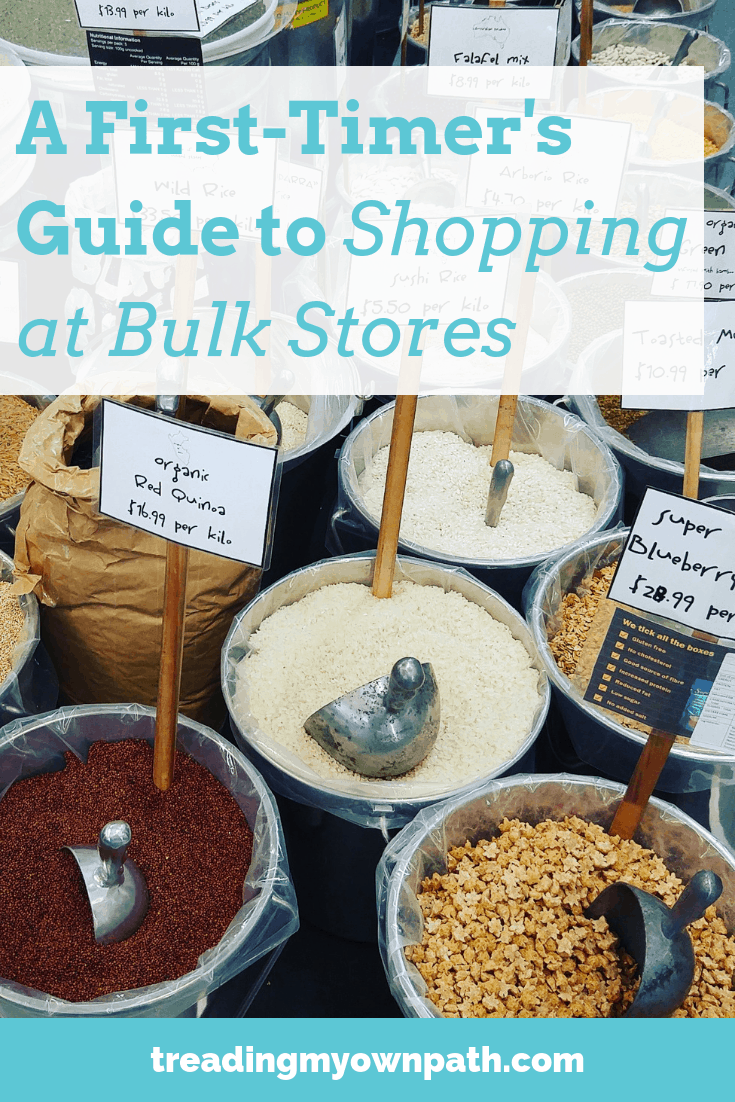
A First-Timer’s Guide to Shopping at Bulk Stores

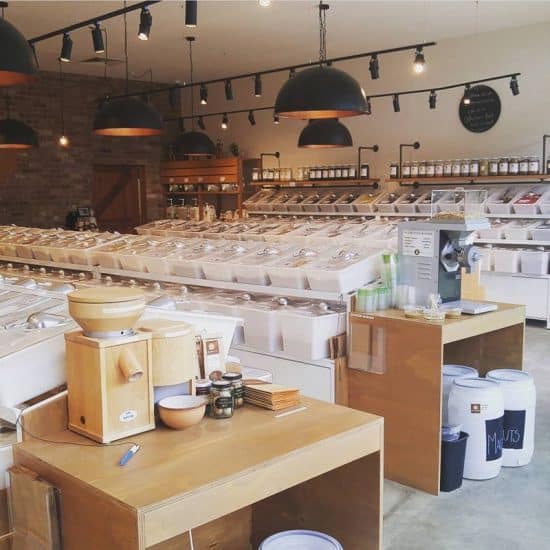
Bulk stores make shopping plastic-free and zero waste so much easier. They allow us to avoid unnecessary packaging, and buy only what we need (no unnecessary food waste). But they operate quite differently to regular stores and supermarkets, and if you haven’t shopped at one before, the idea can be a little intimidating.

If you’re new to living plastic-free and zero waste, and find the idea of shopping at bulk stores a little nerve-wracking, I’ve put together a guide to help you out. No two bulk stores are exactly the same, but the principles are.

I believe that we should be embracing these types of shops where we can, and there’s no need to be intimidated!

Shopping at Bulk Stores – Before You Leave Home

The first thing I’d recommend you take is a shopping list. Go through your pantry and decide what you need before you get there. Browsing in a store you’ve never been in before can be a little overwhelming, and it’s easy to spend more money than you intend on ingredients that you didn’t really need.

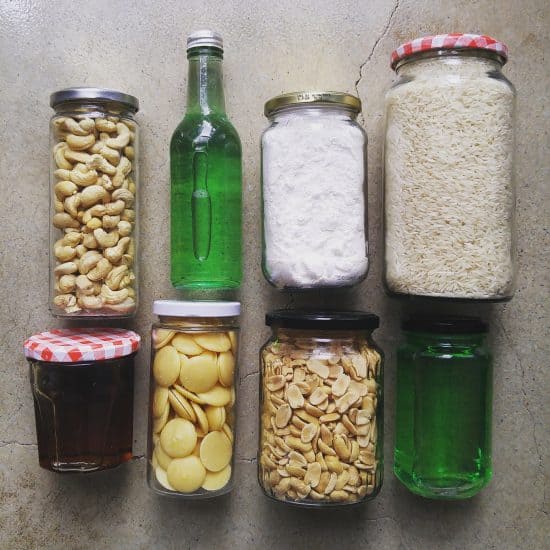
Second, think about how you intend to buy your groceries. If you want to avoid packaging you might want to bring glass jars, containers or reusable produce bags. However not all bulk stores are set up the same.

For a first shop, I’d recommend taking reusable produce bags rather than jars or containers. (If you don’t have reusable produce bags and want to invest in some, you can find my online zero waste stores guide here.)

I shop at the Source Bulk Foods (and there are 50 of these stores across Australia and New Zealand) and these stores are set up for customers to bring their own containers. I can take a bag full of empty glass jars, the team will weigh them for me and record the weight on the jars, and then I can fill them up. When I get to the till the weight of the jar will be subtracted from the total, meaning I only pay for the weight of the actual products I buy.

Not all bulk stores offer this service. Maybe they don’t have the technology, maybe they don’t have the staff training, or maybe they just don’t want to. In these stores, using glass jars will be an expensive exercise as you’ll end up paying for the weight of the jar as well as the product. Reusable produce bags are the best alternative.

If you really want to use containers, consider ringing ahead and asking if they will be able to tare the weight, and how it works.

Shopping at Bulk Stores – Once You Arrive

Shopping at a bulk store is a very different experience to shopping at a supermarket. It’s extremely likely that the staff are as passionate about reducing waste as you are, and they will be more than happy to help. If you’re unsure in any way, I’d recommend going straight to a staff member and explaining that you’re new to this way of shopping, and asking how their store works and if there’s anything you need to know.

Ask them about different containers, and if they have preferences. Ask what other customers do. Start the conversation!

Some bulk stores might allow you to weigh your own containers. Some might ask that you write the code number of the product down (many people using their own jars do this by writing the numbers in their mobile phone as they go) to present at the till.

Some might print their own labels which just need scanning at the till. Ask to find out how your store works.

Shopping at Bulk Stores – Other Things to Consider

If we are used to supermarkets, we are much more used to unit prices (such as x price for a jar of peanut butter) rather than price per kilo. Even though supermarkets will list these prices, we don’t tend to pay much attention. This can be confusing at the start when shopping at bulk stores, because we often don’t have much idea how much things weigh. For example, chocolate coated nuts are quite heavy, so they might not sound expensive per kilo but a bag full can be more expensive than expected! On the other hand, items like tea can seem very expensive per kilo, but a full jar will not weigh much and be more affordable than the price suggests.

If you’re on a budget, for the first few shops I’d recommend getting a receipt, and tracking how much things cost, and making adjustments next time. I learned the hard way that big jars full of chocolates hurt my pocket!

Most things sold at bulk stores are sold by weight, but occasionally products are sold per unit (priced “each”) and some liquids will be sold by volume. The price label will always tell you how you will be charged. If a liquid is sold by volume, you will need to know the volume of the container rather than the weight (such as knowing the jar is 500ml or a litre).

If you do make a mistake, the store will help you sort it as best they can. They deal with a lot of containers and will have a good idea of the weight (if you forgot to weigh it) or the volume (if it doesn’t say on the container).

Whilst I’m shopping, I like to take note of the other ingredients that I see. If I see something interesting, I’ll head home and read up on how to prepare or cook it, and look up some recipes. If I decide I’d like to try it, I add to my list for next time. This works better for me than buying random ingredients that then sit in the cupboard untouched.

We’re often used to heading to the supermarket every week, but bulk stores can be approached a little differently. If you live far from a bulk store, getting super organised can mean you only need to head there every few weeks – the products they sell have a long shelf life, so there is no need to head in weekly. On the other hand, if you prefer to pop in every few days rather than stockpile, that works too.

Whichever you prefer, bulk stores offer more freedom than supermarkets to choose how you’d like to shop. They’re also friendly places, selling real food, and owned by real people rather than faceless corporations. What’s not to love?!

Now I’d love to hear from you! What practices does your local bulk store use? Are there any quirks that you’d like to share? Any other tips on bulk shopping?  If you’re new to the idea, any questions we haven’t covered? Please share your thoughts in the comments below!

[leadpages_leadbox leadbox_id=1429a0746639c5] [/leadpages_leadbox]
5 Ideas for Donating Stuff You Don’t Need (But Is Still Useful)

We all end up with stuff that we don’t need. Unwanted gifts, stuff that we upgrade or replace, stuff we realise we don’t use or don’t like, duplicates. The list goes on.

Getting rid of stuff, when we don’t like waste, can be a challenge. Especially when this stuff isn’t really fit for selling or donating to the charity shop. Things that are broken (even if they are repairable), items with parts missing, things that have low value, stuff that has been used, opened or are worn.

We don’t want to throw it out, but we know in our hearts that the charity shop doesn’t really want it either.

The thing I love about challenges is that whilst they can be difficult, they are not impossible. Someone, somewhere, will want what you have. Whatever it is. (I mean that. You’d be surprised.) The challenge is finding that person.

It can take time, and effort, but if you succeed it is such a good feeling. You’re saving something from landfill, and making someone happy in the process.

Remember: it’s only waste if you waste it.

I’ve put together a guide of what to do with some of the random bits and pieces that you have that you know are useful… but don’t know how to find them new homes.

Ideas for Rehoming Items Responsibly

Donating to the Charity Shop

This is most people’s go-to when letting go of unwanted stuff. But that doesn’t mean that it’s the best place for the stuff. Most of us would rather donate something than throw it in the bin, but that doesn’t necessarily mean that the charity shop will want it.

Charity shops want things that they can sell! If you wouldn’t buy it, and can’t imagine that anyone else would either, don’t donate it. Charity shops get so many donations – far more than they can handle. In Australia it’s estimated only 15% of all donated clothes are resold.

Don’t kid yourself that the charity shop will want your moth-eaten old clothing with buttons missing.

Two ideas when donating to charity shops to ensure a better chance of the item being onsold:

  • Call ahead and find out if they take (and need) the things that you’re donating. Some charity shops have the capacity to test electrical items and will accept them for resale, others don’t. Some don’t have space to take toys, or may have a shortage of certain things. Calling ahead is a good way to find out what they need – and what they don’t want.
  • Think seasonally. Stores need to turn over goods fast to make money. Donating winter jumpers in summer or Christmas branded items in February will mean stock sitting around, and it may end up in landfill, even if the quality is good.

Donating on Gumtree or Craigslist

Gumtree, Craigslist and other platforms allow us to list items for free for others to take. How effective this is can be dependent on where you live (it’s easier in urban centres than rural locations). It’s also more effective for certain types of items, such as homewares, furniture and electrical goods.

That doesn’t mean that what you have won’t be wanted though, so it’s worth listing things anyway. Things like spare coat hangers, old bubble wrap, moving boxes and crates of old jam jars all shift surprising well.

Bear in mind that the more obscure the item, the longer it will take to shift.

(If you’ve never listed anything on Gumtree before, I’ve written a guide to selling second-hand to help you get started.)

Buy Nothing Groups and Local Online Community Networks

The more local something is, the easier it is for others to collect it, and the more likely it is to find a new home. That’s why community exchanges work so well. My local area has very active Buy Nothing Groups (a group that operates through Facebook, where goods can be taken and offered for free, with council boundaries determining whether someone can join).

Other Facebook groups include Swap & Barter groups and Zero Waste groups, or groups for exchanging specific items (fishing equipment, childen’s toys, craft supplies).

Outside of Facebook, my parents (who live in the UK) use and love a local community network called NextDoor, which allows them to connect with other members of their village.

There’s plenty of others, so explore what is local and active in your area. The global platforms might have better looking websites and thousands of members worldwide, but if there’s only two people living within 25km of you, that isn’t going to work.

If you use Facebook, that’s a great way to track down local and active groups. If not, see if you can contact community groups and ask if they have any knowledge or suggestions.

Real Life Community Groups

Community groups are another great place to consider. Craft and arts groups may be collecting certain items for projects (broken crockery is great for mosaic making, half-used paint tins may be wanted for other projects), community gardens may be able to use offcuts of materials or old tools, playgroups will accept all sorts of things for children to play with (small boxes that held electronic items are popular, as are old plastic loyalty cards (for playing “shop”).

For specialist equipment for a particular hobby, it may be worth finding an enthusiast’s group and finding out if any of their members can use what you have. For example, finding an Apiarist’s society to donate beekeeping equipment to is a much better match than simply listing on Gumtree or donating to the charity shop.

Charities and For-Purpose Enterprises

Different charities have different needs, and can be a great way to pass on unwanted items that aren’t suitable (or are too “niche”) for charity shops. Some ideas include:

  • Animal refuges often accept towels, sheets and other bedding, pet food and possibly other equipment and accessories;
  • Refugee centres accept donations of clothing, books, food, furniture, whitegoods and more (here’s a list of refugee organisations in Australia and the donations they accept);
  • Women’s refuges, homeless centres and hostels accept clothing and blankets and may accept toiletries and sanitary items (be aware that refuges do not publicly list their addresses for obvious reasons, so you will need to connect with a local charity serving these centres to find out what they will and won’t accept).
  • Charities (such as Fair Game in Australia) accept used sports equipment and clothing to redistribute to underserviced communities.
  • Opticians often accept used glasses to send to underserviced communities.
  • Food banks accept food but at Christmas or other times of year may accept toiletries, sanitary items and other non-food items – check with the individual organization.

Thoughts on (Shabby) Second-Hand Donations

Whilst I think it is brilliant to donate second-hand items, I also think that it is important to be mindful of their condition and respectful of where we donate them.

I once met an enthusiastic and well-meaning guy who was trying to set up a shoe enterprise donating second-hand shoes to Africa. He had collected thousands of shoes but didn’t have a warehouse, and was storing them in his garden in the open under a tarpaulin. They’d been there for 18 months.

He hadn’t given that much thought to where he would send them, whether there was an existing industry in the country that might be adversely impacted by an influx of shoes, or whether the shoes were appropriate for the climate or recipients.

His colleague said in the presentation “people in Africa deserve high-heeled shoes too!” That might be the case, but the intended community where these shoes were to be donated hadn’t actually been consulted as to their needs.

I don’t know what happened to the enterprise, and I hope they were able to have a positive impact. I think sometimes enterprises can be well-meaning but ill-considered. Sometimes we can be guilty of not really thinking through our choices.

I do think it’s important when donating to charity to consider if the recipients will really want our stuff, as tempting as it is to want to keep things out of landfill.

For example, I know that there are charities that collect used bras. I personally wear mine until they are stretched, misshapen and there is barely any life in them. I do not consider it appropriate to then donate it. That’s my opinion and my choice.

I think it can be tempting to fall into the trap of thinking that underprivileged people will want our shabby stuff. Actually, they might not.

Final Thought on Donating Unusual Items

This is not a complete list by any means, and with enough grit and determination it is possible to donate most things – not always for the purpose they were originally intended, but a purpose nonetheless. If you have something that you think is too good to throw away, get creative and start asking questions (zero waste Facebook groups are great for this).

You may be happily surprised.

Now I’d love to hear from you! What’s the craziest or strangest thing you’ve successfully donated to a happy recipient? Any other tips for where to donate unusual items? If you work in a charity shop or a for-purpose enterprise, are there any “no-no”s that you see donated often that aren’t suitable? Anything else to add? Please comment below.

[leadpages_leadbox leadbox_id=1429a0746639c5] [/leadpages_leadbox]
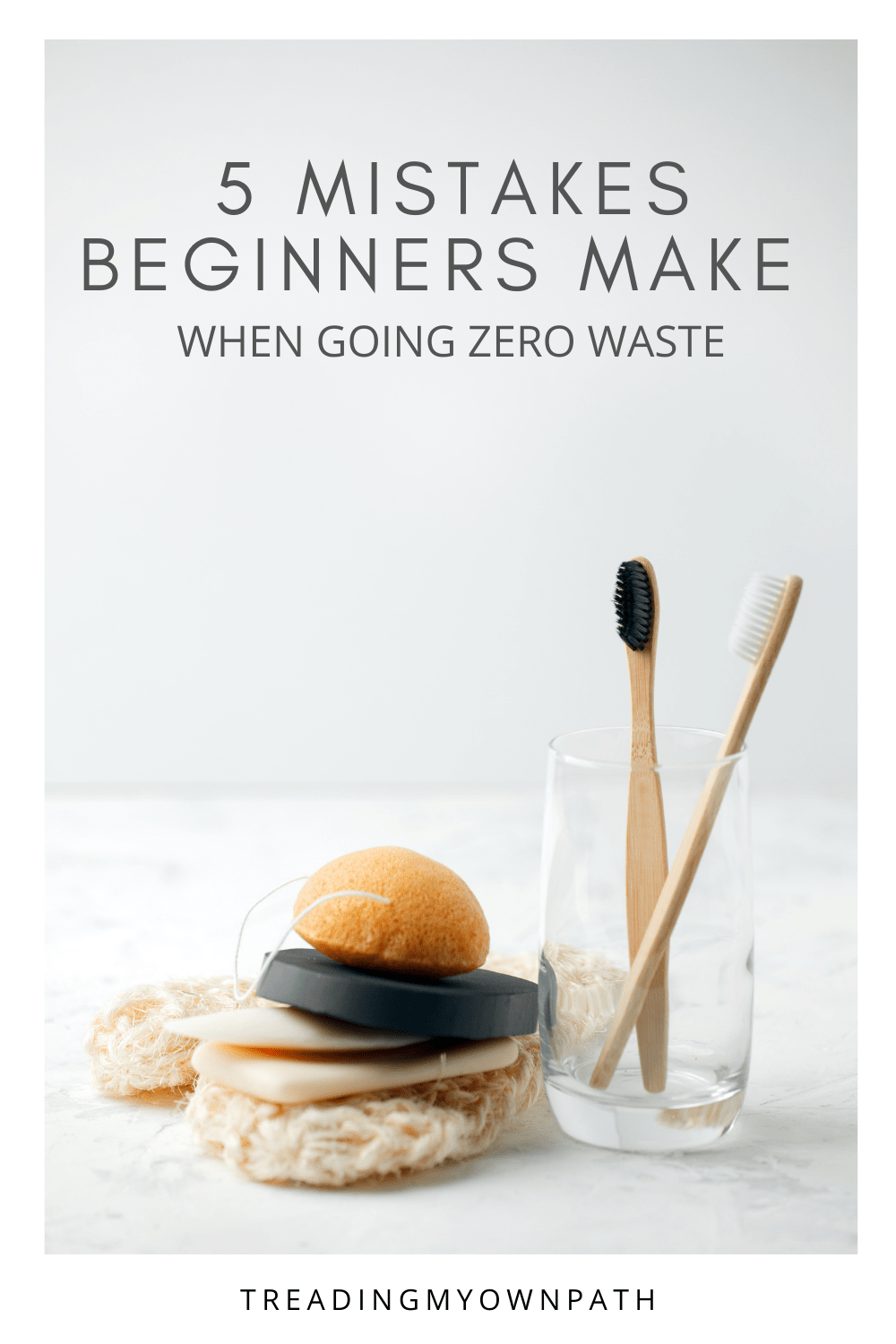
5 Mistakes That Beginners Make When Going Zero Waste + Plastic Free

I don’t know about you, but when I set out to tackle a new project or challenge, I begin by feeling pretty excited about what I’m going to achieve. I feel good about making the commitment, I anticipate how great it’s going to be when I get there.

Only… not long after that, the doubt starts to set in. I realise the enormity of what I’m trying to tackle. I hit a stumbling block, and realise that the goal I set myself isn’t going to be such easy sailing.

It’s going to be hard work, and progress isn’t going to be a straight line.

It can be pretty disheartening after the euphoria of the beginning.

Can you relate?

However, progress is never a straight line, and there’s no need to give up just because things get a little tough. It’s all about practice, and chipping away, and bouncing back after we’ve been knocked down.

Time is always on our side.

No-one learns how to play the guitar in a few days, or speaks a language fluently in a week – so why should other habits be any different?

If you’ve set yourself the goal of really trying to live plastic-free and/or embrace zero waste, chances are you started out feeling great about what you want to achieve, only to feel deflated and overwhelmed as the days roll on. Whether you’ve struggled to find a good bulk store, argued with an obstinate customer service assistant who rolled their eyes and refused to let you use your own containers (or insisted on bagging them afterwards) or simply forgot your reusables because you were in a rush and took the single-use packaging without thinking – I promise you, we have all been there.

When that happens, dust yourself off, file it away under “experiences” and keep going.

We all make mistakes. If you’re a beginner on the zero waste journey, here’s 5 more common mistakes that people make, and how you can think differently about them.

Five mistakes that beginners make when going zero waste or plastic free

1. Not starting small.

It’s easy to focus so much on the end result that we forget this: big changes are really lots of small changes added together. Yes, the end goal is important. But the small actions are how we are going to get there.

If we want our expectations to meet our reality, we have to start small and achievable.

It’s much more motivating to pick a small, attainable goal and actually achieve it. That’s what spurs us on to take another action. Picking a wildly ambitious goal and then failing to meet it just makes us feel guilty, miserable and more like giving up.

If you’re new to zero waste and have never done anything to reduce your waste in the past, deciding that you’re going to go straight for the “all-my-waste-fitting-in-a-jam-jar” challenge in week 1 might be a step too far.

Why not start with sourcing a good set of reusables, and work on remembering to take them with you when you head out? Or choose one item that takes up a huge amount of space in your rubbish bin, and decide to find a low waste solution to that?

You’ll find some inspiration for micro actions you can take to reduce your waste here.

2. Feeling bad about the successes of others.

Comparisonitis is very real. We see other people doing things that we want to be doing, possibly better than we could ever do them, and we feel bad about ourselves. Social media makes it worse, as we are much more exposed to what others are doing.

But comparing ourselves to others isn’t helpful, especially when we feel miserable or disheartened as a result.

Rather than feeling bad about the successes of others, we can choose to celebrate with them. People make progress as a result of hard work, determination, and courage. Anyone ahead of us on the journey can share their experiences, help us make progress and shine a light on the path to take.

That’s a good thing, not a bad thing.

Personally, I think that social media is a tool for good, connecting us with great ideas and inspiring people. We can choose to follow people who motivate us and lift us up. People who write kind words, share ideas freely and build supportive communities.

If you find that you follow people who make you feel bad, you can stop that immediately by unfollowing them.

If we find that social media gets a little overwhelming, we can take time out.

If it doesn’t feel good, there is no need to do it. We have the control and the power to change it.

Try to celebrate the success of others. If you find this too difficult, choose to disconnect from it. It’s all a choice.

3. Letting the negative opinions of others influence your journey.

We all try to make the best decisions we can based on the knowledge we have, the time and resources available to us and our experiences. There is rarely a perfect choice, so we do what we think is best in that moment.

That doesn’t mean that our decisions are right for everyone, or are what others would choose.

I think the most important thing is to understand why we make the choices we make: to know why they feel right for us.

Others will have different ideas. Sometimes this feedback can be very useful. We can learn about other (and maybe better) ways of doing things. We can consider new perspectives, and factors we hadn’t considered before.

This can help us make better, and more informed, decisions next time.

Sometimes, although people are well-meaning, these comments can come across as overly critical or negative. It might not be what they say, but the way they say it, or what is implied.

You don’t make your own? I do.

You bought something new when you could have made do/found it second hand? That’s not zero waste.

Do you know it contains palm oil/is made in China/some other thing that’s terrible for the planet? I thought you cared about that.

I believe that most people mean well. Sometimes our passion and excitement for a subject can get in the way of thoughtfulness. Just remembering this fact can help us see past any unintended negativity.

Of course, sometimes people do try to catch us out. To point out our flaws and imperfections. Really, that says more about them than it does about us.

Regardless, there is often (but not always) an element of truth to consider in any negative feedback or comments. It’s worth taking a step back, considering the message and taking any feedback on board for next time.

It’s not worth dwelling on it, though. Or getting upset by it. Or letting it negatively influence our efforts.

Remember, people have no idea about your life. It’s your journey, and you’re figuring it out as best you can.

Negative feedback can be useful. Just don’t let it derail your plans.

4. Not seeing making bad choices as a learning experience.

On any journey we make decisions and choices that, with the benefit of hindsight, we wouldn’t make again. That’s part of the learning experience.

Bad choices are not a reason to give up. We all make them, and we will all continue to make them. Hopefully, the more we progress the less we’ll make, but there are no guarantees!

Making a bad decision, and realising that it was a bad decision, is what helps us make better decisions next time round. I would argue that making a bad decision is better than making no decision – taking action is how we get clarity.

Most decisions will be good, some will be not so good. It doesn’t matter.

5. Making things harder than they need to be.

Going plastic-free or zero waste is not about going without. That said, it can take time to find workable solutions for everything. There has to be balance, and in trying to find that balance we can tip a little too far the other way.

To find balance, we need to push things in order to find out just where the equilibrium lies.

However, if we go too far, we need to recognize that, and bring things back, or we will stress ourselves out and the whole thing will become unsustainable.

There’s plenty of ways that we can unintentionally make things harder for ourselves. Creating an unmanageable amount of work for ourselves by trying to make every single thing from scratch. Trying to ensure our entire family is zero waste or plastic-free rather than just focusing on ourselves. Tackling multiple challenges at once, like going zero waste, plastic-free, vegan, organic and local all together. Forgoing things we love (and that make us happy), or letting our health suffer for the “cause”.

We can only do what we can do. Some things we can maintain in the long-term, some things we can strive for only in the short-term, and other things just won’t work for us at all – at least not in the present.

Zero waste, plastic-free and sustainable living is not meant to feel like a chore. Its not meant to feel like a struggle. If it does, it might be time to take a step back and let some things go. There will be a time to try again.

There’s no benefit to anyone in making things harder than they need to be.

If you have any mistakes you’d like to add to this list, I’d love to hear them so please share! Were there any mistakes that you made when starting out? Are there any mistakes you see others make at the beginning of their journey? Anything else to add? Please share your thoughts below!

[leadpages_leadbox leadbox_id=1429a0746639c5] [/leadpages_leadbox]
New Habits: 8 Micro Actions to Reduce Rubbish in 2021

A brand new year is about to roll around the corner, and for many of us that means thinking about our dreams, aspirations and plans of what we’d like to see, do and accomplish over the next twelve months. Whilst I don’t set New Years Resolutions, I do like to use this time between Christmas and New Year to reflect on the year that was and think about the year that’s ahead.

Before I get any further, let me reassure you: this isn’t going to be one of those posts about “achieving everything you ever wanted in 2021” or “having your best year ever”.

Really, all the big things that we want to achieve and accomplish are the result of taking lots of micro actions. So rather than focus on the big picture, the goal at the end, I’m going to focus on the small things – the journey itself – and encourage you to consider doing so too.

In my experience, it’s a better journey.

For example, if we’d like to reduce our rubbish or plastic-waste in 2018, declaring that we’ll “be zero waste” is a huge step. It sets a high (and possibly unrealistic) expectation of ourselves, adds unnecessary pressure and can feel overwhelming before it’s even begun.

That’s not a recipe for a fun ride.

Rather than make grandiose goals, try thinking about the small steps that need to be taken. Break it down into things that you can start on straightaway. You will start making progress, and that will give you the confidence to take the next step when you’re ready.

It’s not meant to happen overnight. It’s a process, and a journey, and there’s so much to learn along the way. Why would you want to rush?

Here’s some ideas to get you started.

8 Micro Actions You Can Take to Reduce Rubbish in 2021

1. Make 1 Food Item from Scratch

You do not need to be a great baker or masterchef to go zero waste. Being able to make things from scratch is a useful skill, but it has nothing to do with being good at cooking. if you can stir stuff, or use a rolling pin, or chop, chances are you can make something from scratch.

Think about the things you use, and the packaging that you end up with, and find out if you can make any of those things rather than buy them ready-made.

Some things will be far too complicated, take too much time and you won’t think it is worth it.

But other things are very simple, and you might start to wonder why you ever purchased them in the first place.

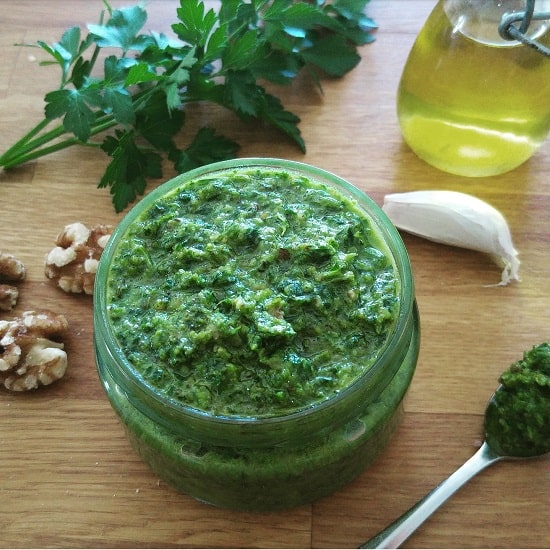
Simple things to start with (that take no skills and very little time) include pesto, hummus, apple cider vinegar and yoghurt. You could consider getting a (second-hand) breadmaker. Cookies are much easier (and quicker) to make than cakes, and ridiculously tasty.

Just try it.

2. DIY Just 1 Bathroom Product

Food packaging and bathroom products account for the majority of our weekly household rubbish and recycling. By swapping one purchased product for a DIY alternative, you will save a huge amount of packaging over a lifetime.

It isn’t about making DIY alternatives to everything. I buy (rather than make) bar soap, laundry powder and dishwashing liquid. I have good local options (I buy my laundry powder and dishwashing liquid from The Source Bulk Foods, my local bulk store) and I don’t have the time or inclination to make everything.

I do make my own toothpaste, deodorant, moisturiser and sunscreen. I tried making mascara once and it was a disaster, so I decided not to bother again, but there are plenty of recipes for DIY makeup if its something you wear.

3. Support Bulk Stores

Bulk stores are a great way to shop packaging free, and many bulk stores are dedicated to reducing waste upstream too. This means that as well as reducing the waste for their customers, they are working with suppliers to reduce the waste generated before the stock arrives at the hands of the customers.

Not everyone has access to bulk stores. Not everyone can afford to shop at bulk stores. But there’s still steps that we can take. Choosing to make a trip to a bulk store out-of-town every month, or every two months, is one option. Choosing a small number of staples to buy at the bulk store, even if the rest of the groceries needs to be purchased elsewhere and in packaging due to budget or practical constraints.

Everything that we do makes a difference. If an entire bulk shop isn’t going to work for you, don’t write them off entirely. It’s not all or nothing. Even making the commitment to buy a couple of things occasionally will help: it will help you reduce your waste, and help support bulk stores so they can thrive into the future.

4. Choose (and Use) Reusables

Most of us own reusables, but it takes practice to remember them, and remember to use them. Commit to using reusable shopping bags, or a reusable coffee cup, or not forgetting your reusable water bottle.

If using reusables is something that’s new to you, don’t expect perfection all at once. Choose one thing to get into the habit of remembering, and work up from there.

Once you’ve mastered the basics, then think about investing in some reusable produce bags, or taking your Tupperware or Pyrex next time you go to the bakery or deli counter. If a reusable straw is something that will help you reduce waste, invest in one.

Beeswax wraps or sandwich wraps can help reduce clingwrap (more on alternatives for food wrap can be found here).

Glass jars are a very good alternative for all sorts of things.

Just choose one thing to start with.

5. Buy Local and Support Independent Stores

The more local we can buy things, the better: less fuel, less packaging, and keeping money in the local economy. Whether it is food items (locally grown vegetables and fruit), or supporting a local greengrocer; whether it is using an independent bricks-and-mortar store; whether it is supporting local artisans, there are plenty of ways to support local businesses.

Most of us would agree that we don’t want to support sweatshops and unethical businesses, yet when it comes to shopping, it can be tempting to search out the lowest price, and forget about the bigger picture.

That’s not to say we can all afford organic hand-stitched everything. It’s a balance.

Buying everything local and from independent stores might seem too much of a stretch. In which case, consider making a smaller commitment.

What about doing the big shop at the supermarket, but the top-up shop from the independent grocer? Using the Farmers Market for two months in summer? Buying jeans from the department store, but jumpers from the local mill? Buying books from the bricks-and-mortar bookshop rather than the online giants?

Commit to one change, and start there.

6. Tell Businesses When They Do Something Good

It’s oh-so easy to tell businesses when they are doing something wrong, but we often forget to congratulate the ones that do the right thing. Particularly when the right thing isn’t the easiest thing, or the thing that makes the most economical business sense.

When businesses put their values before profit, or the environment before convenience, we should let them know that we noticed, and that we thank them for their efforts.

This isn’t something that I do often, but it’s something that I want to do more of in the coming year. I see so many businesses doing great things, but do I tell them? Not as often as I should.

If you see something good – and it can be as simple as a cafe using jars of sugar on the tables rather than individual sachets, or as committed as refusing single-use disposable packaging – tell the business that you noticed, and you like what they do.

Let’s celebrate the good guys.

7. Think About Who (or What) You Can Influence

Power and influence isn’t just about being a politician or having a huge social media following. Most of us have the ability to influence others, whether it’s in our workplaces, social clubs, friendship circles, local groups, the council, or our favourite cafe.

I often think that the person who does the stationery order for a business is in quite a position of power, when it comes to reducing waste. Or the person that runs the community garden cake sale. Or the person who chooses the venue for book club.

These things all matter.

Making good choices around these things is about helping others to make better choices too. Starting conversations and opening eyes to new ways of doing things.

Some things can’t be changed, and some people won’t be changed. Family can be the toughest. (You can find tips for dealing with friends and family here.) Rather than trying to fight a battle with those that are reluctant to change, see if there’s somewhere else in your life where you could have a positive impact, and focus on that.

8. Join In.

Community is important. It’s a way to share ideas, support others and be supported, meet like-minded people and enrich our lives. The plastic-free and zero waste communities are two examples of people coming together to support a common cause.

It’s a great feeling to know that others care about the same things as we do.

How you choose to get involved is up to you, but there are plenty of options.

On one hand, reading blogs and commenting is a great first step, as are joining Facebook groups and other online networks. If you can’t find an online group that works for you, or would prefer to connect with local people so you have the opportunity to meet in real life, consider starting your own Facebook group.

Getting out and about and meeting people in real life is even better. If you’re not sure where to start, you could try Transition Towns, local litter clean-up groups (Sea Shepherd and Responsible Runners are good places to look), Boomerang Bags groups, or a community garden.

Here’s some more ideas for how to join in, whether you’re an introvert or extrovert, and no matter how much free time you have.

There are plenty of things that we can do to make a difference. Things that are good for the planet, and make us feel good too. Rather than reaching for fantastical goals like “having the best year ever”, my approach this year is to look at the small things I can do to make things slightly better.

Not the best, but better.

It’s all a journey, so let’s be kind to ourselves and have some fun along the way.

Now I’d like to hear from you! What small goals are you planning to work on in the coming months? Is there one thing you really want to work towards, or a number of things you want to tweak? Are you taking the slow approach? What was your approach last year, did it work for you, and how is that influencing your choices this year? Anything else you’d like to add? Please share your thoughts in the comments!

[leadpages_leadbox leadbox_id=1429a0746639c5] [/leadpages_leadbox]
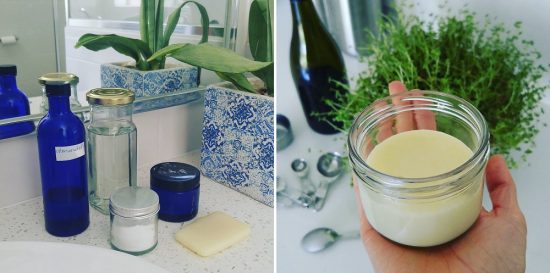
Using Oil as a Facial Moisturiser (+ A DIY Recipe for When Oil Alone is Not Enough)

I never thought I was a sucker for marketing. But when it came to beauty products, I used to spend a fortune buying products with names I didn’t understand (but sounded fancy) from department store beauty counters. You know those counters, the ones with the ladies wearing lab coats (oooh, how science-y!).

I thought those products were better for my skin. Plus they looked so luxurious, with all that (plasticky, single-use) packaging.

{Cringe.}

When I decided to go plastic-free, I realised that rather than trying to replace all of the products in my bathroom, it would be better for my sanity (and success rate) if I chose to simplify. Meaning, less products. I’ve talked about the switches I made and my natural skincare regime before, but today I wanted to focus on one aspect of that: moisturizer.

I used to buy an eye cream, a day cream, a night cream, and body lotion. Maybe after-sun in summer. It makes me laugh (or cry, perhaps) to tell you that, because I didn’t think I was a high-maintenance woman. Those marketing peeps got me good.

Rather than try to find 5 alternatives without packaging, I decided to go for one simple swap to replace all of them. Rather than using moisturiser, I switched to oil.

Using Oil as a Moisturiser

When I say I use oil as a moisturiser, I mean oil as a single ingredient. I do not mean oil-based products or oil blends that contain other chemicals.

The staple oil I use as moisturiser is sweet almond oil. It is easy to find in bulk, absorbs well, is a neutral colour and has a very mild fragrance.

I have also used jojoba oil, rosehip oil, olive oil, hemp seed oil, coconut oil and shea butter. Jojoba oil is thought to most closely mimic the skin’s natural sebum. Rosehip oil is great, and apparently has anti-aging properties but is more expensive. Olive and hemp seed oil have a slightly green colour and need to be thoroughly rubbed in to avoid a green tinge. Coconut oil and shea butter are more effort to apply (both are solid at room temperature).

One of the other properties that differs between oils is their ability to block pores. Oils are graded on their ability to block pores, known as their comedogenic rating. (A comedone is a plug of dirt, bacteria and oil that blocks a pore and causes a spot: usually a blackhead but sometimes a whitehead).

Ratings vary from 0 (will not clog pores at all) through to 5 (likely to clog pores).

Almond oil, jojoba oil and olive oil are all graded 2, which means they have a moderately low chance of clogging pores. Rosehip oil is rated 1; hemp seed oil and shea butter are non-comedogenic with a score of 0. Coconut oil has a score of 4, and some people who use coconut oil find they do break out in spots.

People with dry skin tend to have smaller pores, and are more suited to oils with a lower comedogenic rating (2 or below). I have dry skin and almond oil works fine for me.

Does using oil make your skin oily? Actually, no.

I know that sounds counter-intuitive. But our skin produces its own natural oil, called sebum. It is produced to lubricate, waterproof and protect the skin. The absolute worst thing we can do is use cleansers and chemicals to try to strip this oil from our skin. That just makes our skin react, and produce more sebum.

Using oil doesn’t strip this sebum, and doesn’t stimulate the skin to produce more. Some people do produce more sebum than others, but that is due to more active sebaceous glands.

Using oil as moisturiser will not make your skin oily.

Oil can make the skin shiny, at least until the oil is absorbed. If shiny-ness is something you care about, a simple face powder will sort that out.

Rather than make the skin oily, using oil can make your skin dry out, particularly if you are prone to dry skin, as I am. I’ve talked about this below, and what to do if this happens.

Tips for Using Oil as Moisturiser More Effectively

Although I say I use oil as a moisturiser, oil does not actually contain moisture. It works as a barrier on the skin, preventing moisture loss. For most of the year this is fine, but in winter, when heating, extra hot showers and exposure to cold winds causes my skin to dry out, the oil cannot add moisture back in.

In contrast, most moisturisers are oil blended with water and stabilised with emulsifier. When they are applied they add moisture to the skin, and the oil acts as a barrier to keep it there.

When I start to notice dry patches on my skin, applying oil alone does not hydrate my skin. It appears to work temporarily, but the dry skin returns. There are some things that I do to help hydrate my skin.

Apply Oil Before Showering

In winter I always apply oil to my face before showering. This provides a barrier to stop the hot water and steam drying out my skin.

Avoid Soap or Soap-Based Cleansers

I use soap on my face very rarely in winter, and do not use it on my body every day. Instead, I use water and oil. Oil cleansing is an age-old method of cleansing, working on the premise that like dissolves in like. Grease and dirt on the skin are replaced with clean oil. It is as simple as putting a small amount of oil on the skin, and then wiping off with a flannel.

Apply Oil After Showering, But Before the Skin is Completely Dry

When I get out of the shower, I blot my skin dry with a towel but I always apply oil to my face before my skin is completely dry. If it has already dried, then I splash water on my face before applying oil. It is harder to rub in as the oil and water don’t like each other, but it leaves my skin much more moisturised.

Drink More Water

This is definitely a case of “do as I say, not as I do” because in my world, I’m constantly realising that it is 4pm and the only thing I have drunk all day is coffee. But I do know that drinking water is good for the skin, and I definitely notice the difference when I drink more water.

When Oil Really Isn’t Enough

Last winter was particularly cold, and my skin got very dry. I didn’t know back then that oil alone wasn’t going to hydrate my skin. I’d apply more and more oil, slathering it on thicker and thicker, and my skin just got drier and drier.

Eventually I realised I needed something with a little more oomph.

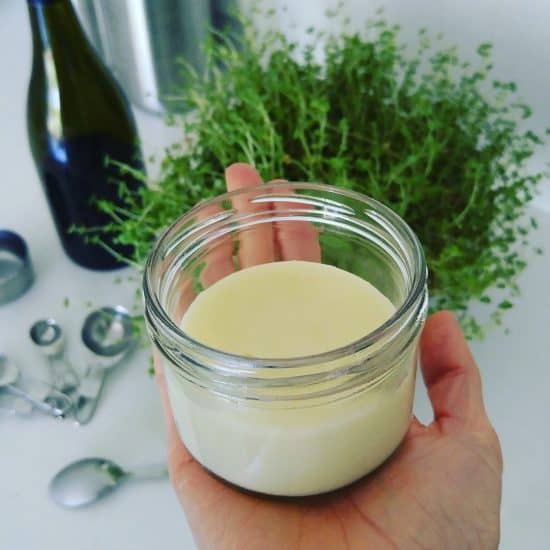
I’ve messed around with a few DIY moisturisers and balms, but the one I come back to often is cold cream. Cold cream is a water-in-oil type of emulsion (whereas most moisturisers are oil-in-water emulsions). Being oil in water, it is soothing and cooling on the skin.

Cold cream can be used as a cleanser, make-up remover, face mask or moisturiser. I’m a big fan of products with multiple uses.

The recipe I use is based on a recipe by Aelius Galenus, a Greek who was born in 129AD. Definitely a recipe that has been handed down through generations!

Galen’s Cold Cream Recipe

INGREDIENTS:
75 ml rose water / distilled water / rain water
15 g beeswax (2 tablespoons)
90 ml olive oil / almond oil
4 drops rose geranium essential oil
Optional: 2 drops vitamin E (vitamin E is a natural preservative)

METHOD:
Heat the rose water in a bowl over a pan of hot water.

Place beeswax and olive oil in a separate bowl over a pan of hot water, and melt. Remove from the heat and pour the rosewater into the melted oil, using a whisk to mix together. (Please be careful as melted oils become very hot and can cause burns.)

As the mixture begins to cool, it will turn opaque. Add the essential oil (and vitamin E, if using) and pour into a glass jar. Use within 6 months.

NOTES: Vitamin E is a preservative, so omitting this might shorten the shelf life of the product. If you are vegan, two alternatives to beeswax are candelilla wax and carnauba wax, which are both palm oil free. They are harder than beeswax so half the amount (1tbsp rather than 2tbsp) if using these waxes.

This cold cream cleared up my dry skin patches within days. Whilst I still use oil as my main moisturiser, I now use cold cream as an extra boost in the winter months, particularly if I am going to be outside.

Now I’d love to hear from you! What is your skincare routine? Do you use oil as a moisturizer? Which is your favourite? Do you make your own moisturiser? Is there a brand that you buy and love? Any other thoughts or questions? Join the conversation and leave a comment below!

[leadpages_leadbox leadbox_id=1429a0746639c5] [/leadpages_leadbox]
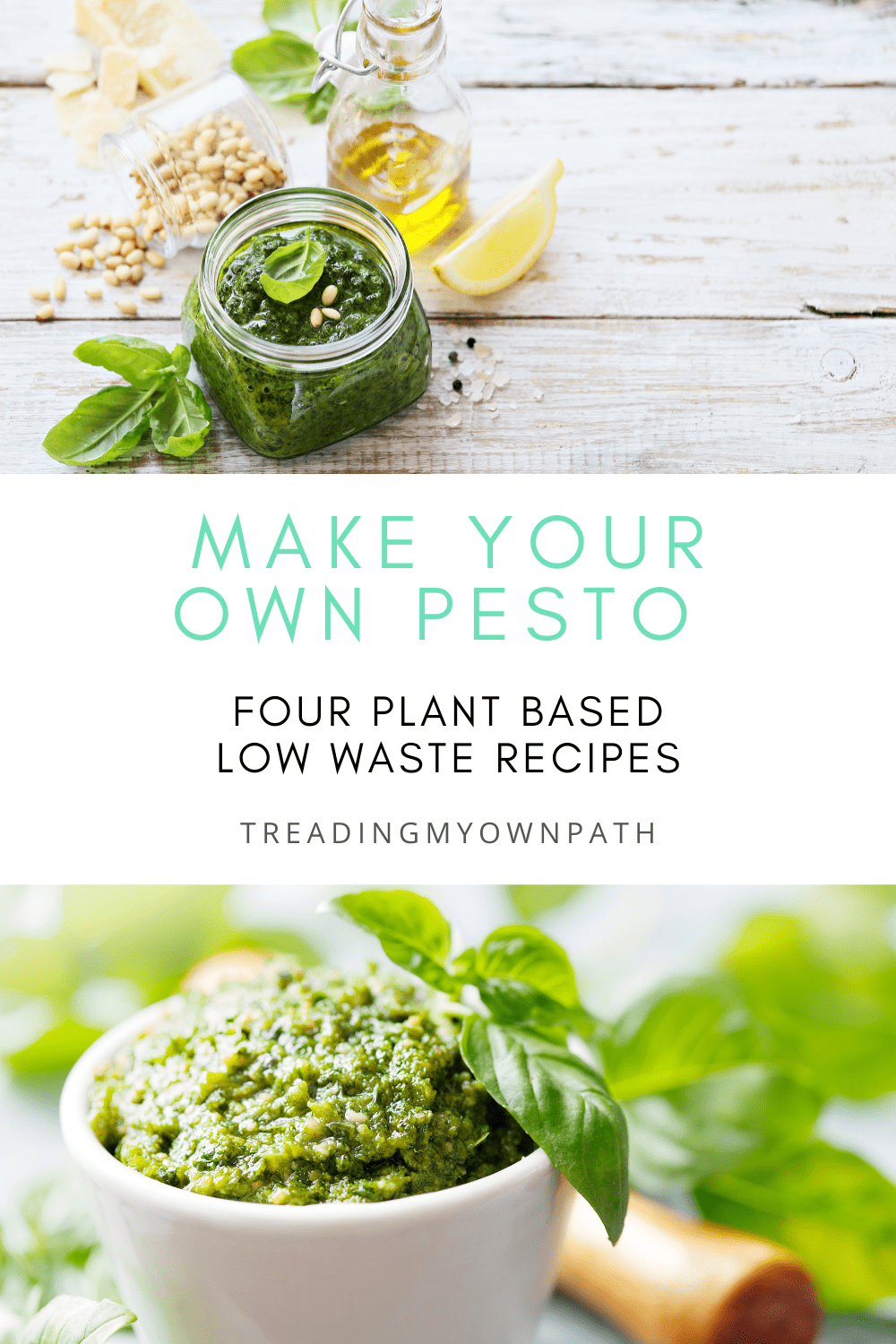
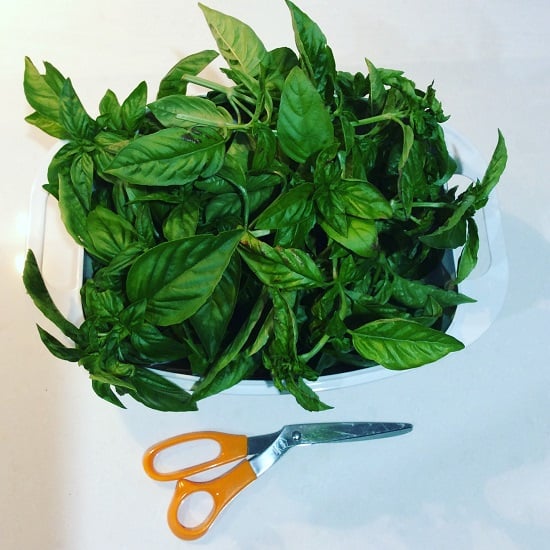
Zero Waste Pesto, Four Ways (4 Plant Based Recipes)

Pasta and pesto is one of those go-to meals when you need to whip something up in minutes rather than hours. Before I went zero waste, I’d make my own pesto sometimes, but I’d also buy those “convenient” jars.

No more! Being zero waste means I avoid buying jars of anything. Pesto is such an easy DIY, and so delicious, that there’s no reason not to make it.

Once you begin making your own pesto, honestly, there is no going back. It’s so fresh and so much tastier, and you can control how much oil and salt you are adding. Plus of course… zero waste!

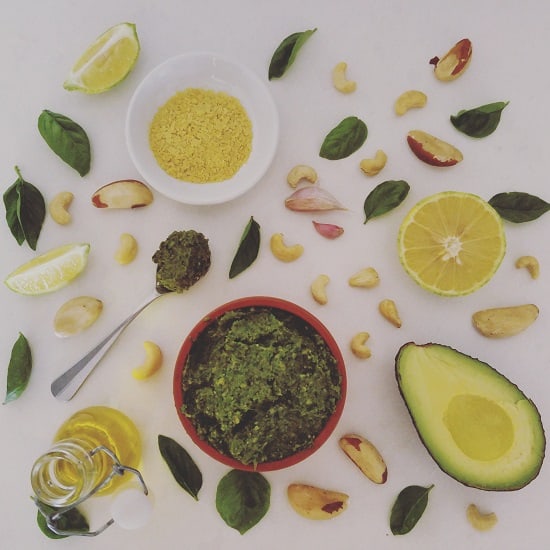
Vegan recipes use nuts and/or nutritional yeast in place of the parmesan. Nutritional yeast (sometimes called nooch) is a deactivated yeast typically sold as yellow flakes or a powder. It’s most commonly found at health food stores or bulk stores with a health focus (I get mine from The Source Bulk Foods).

If you are vegan but can’t find nutritional yeast, you can omit – the recipes will still taste good, just not quite as cheesy. The nuts will add some of the texture and flavour. If you’re not vegan, you can simply use parmesan where I’ve suggested to use nutritional yeast.

I use a food processor to make pesto. A pestle and mortar will also work, but requires more effort and patience. A herb chopper attachment on a stick blender should work too, but be careful not to overheat the motor, especially when chopping nuts.

Italians look away now! Some pesto tips for non-Italians

Italians take their culinary heritage very seriously, and some of the suggestions I’m going to make here will be considered sacrilege by Italians. But if you’re not Italian, and are happy to be flexible with your ingredients in order to keep them local, use less packaging or make them more budget-friendly, here’s some tips.

Don’t feel limited by pine nuts. Although they are the traditional nut of pesto, plenty of others will work well too. Macadamias, almonds, cashews and brazil nuts all make great pesto. If you’re allergic to nuts or prefer a budget option, sunflower and pumpkin seeds will work too.

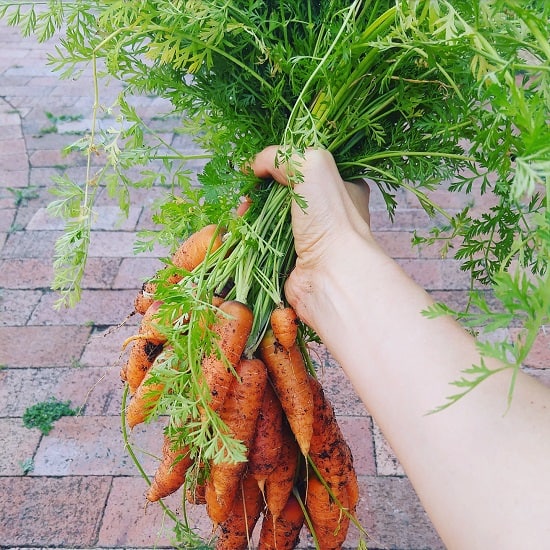
If you’d like to give your pesto a health boost, consider omitting some of the oil and adding avocado instead. Pesto with avocado won’t keep as well, and is more sensitive to cooking than regular pesto, but it’s a healthier choice. I always use avocado in my carrot top pesto.

Finally, experiment with mixing up your greens! Generally I stick to one herb which gives the signature flavour, but often add in small amounts of other leafy greens if I have them to hand. Don’t be afraid to add a little spinach or kale to your basil, or blend in a few beetroot leaves or wilted lettuce.

Regular (Plant-Based) Basil Pesto

I add avocado to my basil pesto to make it more nutritious and less oily. If that seems strange to you, omit the avocado and add olive oil to taste. I’d start with 1/4 – 1/2 cup and go from there. If you’re mixing with pasta, add more oil. If you’re using as a spread, dip or marinade, less oil will make a thicker, more spreadable paste.

Ingredients:

3 cups / 3 large handfuls basil
1/3 cup cashew nuts
3 tbsp pine nuts / 9 brazil nuts
2 tbsp olive oil
1 large garlic clove
Juice of half a lemon
(1/3 cup nutritional yeast – optional)

Method:

Chop the pine nuts / brazil nuts (or blend in a food processor) until they resemble coarse breadbrumbs, and set aside. Do the same with the cashews.

Chop the garlic, then add the basil leaves and blend until fine. Add oil, lemon juice and blend again. Add cashews and blend to combine. Add brazils and nutritional yeast, if using, and stir to combine.

Add more oil to taste if required.

Notes:

Basil pesto has a tendency to discolour, and the lemon juice helps stop this. If not using immediately, store in a jar and pour olive oil on the top to create a seal, and store in the fridge and use within 5 days. Pesto can also be frozen.

Carrot Top Pesto

Carrot tops make great pesto. Carrot tops are slightly bitter, so I blend with 1/3 basil to keep the traditional pesto flavour.

Ingredients:

2 cups / 2 large handfuls carrot tops
1 cup / 1 large handful basil
1/3 cup cashew nuts
9 brazil nuts
2 tbsp olive oil
1 large garlic clove
1/2 avocado
(1/3 cup nutritional yeast – optional)

Method:

Chop the brazil nuts (or blend in a food processor) until they resemble coarse breadbrumbs, and set aside. Do the same with the cashews.

Chop the garlic, then add the basil leaves and carrot tops and blend until fine. Add oil and blend again. Add cashews and blend to combine. Add the brazil nuts and nutritional yeast, if using, and stir to combine.

Add more oil to taste if required.

Store in a glass jar in the fridge, and use within 5 days. Can be frozen.

Parsley and Walnut Pesto

Unlike basil pesto, parsley pesto does not discolour, making it a better option for dips.

Ingredients:

3 cups flat leaf / Italian parsley
1 cup walnuts
1 cup olive oil
3 cloves garlic
3 tbsp nutritional yeast

Makes 1 jar.

Method:

Chop the garlic, then add together with parsley and blend. Add walnuts and blitz, then add oil and combine. Finally, add nutritional yeast and stir through.

Store in a glass jar in the fridge, and use within 5 days. Can be frozen.

Coriander and Cashew Pesto

Coriander pesto has a distinctive Thai flavour and is recommended for rice or rice pasta rather than regular pasta. It is also great with vegetables (such as pumpkin, potatoes or mixed with stir-fried vegetables).

Ingredients:

4 cups coriander
1.5 cups cashew nuts
3/4 cup macadamia oil (or other flavourless oil)
1 – 2 cloves garlic

Method:

Chop the garlic, then add the coriander and blend to make a paste. Add the cashews and blitz to combine. Finally, add oil until you reach the consistency required.

Store in a glass jar in the fridge, and use within 5 days. Can be frozen.

Ideas for Using Pesto:

As much as pesto and pasta is a go-to meal, there are plenty more options with pesto.

Here’s a few ideas to get you started:

  • Pesto stuffed mushrooms. Remove the stalks of button or field mushrooms, place upturned on a baking tray and add a blob of pesto to the mushrooms. Top with breadcrumbs if you’d like a little extra crunch, and bake in the oven at a medium heat for 15-20 minutes until cooked.
  • Pesto pumpkin/squash. Thinly slice pumpkin or squash into wedges 1cm – 2 cm thick, and lay flat on a baking tray. Spread pesto on the side that is facing up, and bake in the oven for 20 minutes until cooked.
  • Pesto potatoes. Boil or roast some potatoes, place in a bowl and allow to cool, then stir pesto through.
  • Pesto dip. A classier version of “just eat outta the jar with a spoon”. Chop up veggies (carrot, cucumber, capsicum) or use crackers and dip them into the pesto. Mmm.
  • Pesto spread on toast and topped with mushrooms and/or tomatoes. Pesto is a great spread and combines very well with mushrooms, tomatoes or sauteed greens. Delicious on toast.

Now I’d love to hear from you! What is your favourite pesto recipe? What are you best recipes for using pesto once you’ve made it? Any flavour combinations you’ve tried that were a total disaster? Please share your thoughts in the comments below!

[leadpages_leadbox leadbox_id=1429a0746639c5] [/leadpages_leadbox]