• Link to X
  • Link to Youtube
  • Link to Instagram
  • Link to Mail
  • Link to Facebook
Join the community and receive a free EBOOK
Treading My Own Path | Less waste, less stuff, sustainable living
  • ⌂
  • About
  • Work with me
  • Upcoming events
  • Books
    • The Less Waste No Fuss Kitchen
    • Less Stuff
  • Resources
    • Printables
    • Infographics
    • Quotes and facts
  • Explore
    • Minimalism
    • Plastic-free living
    • Real Food and Recipes
    • Zero Waste
  • Blog
  • Click to open the search input field Click to open the search input field Search
  • Menu Menu

A Zero Waste Guide to Reusable Coffee Cups

68 Comments/in Living With Less Waste, Zero Waste/by Lindsay (Treading My Own Path)

Is a reusable coffee cup a zero waste essential? Well, that depends on your perspective. Do you think that coffee is a life essential? ;)

Seriously, whether you personally think so or not, the fact is that over 500 billion disposable coffee cups are produced every year. Which clearly shows that plenty of people do think coffee is a life necessity.

Reusable coffee cups are the obvious solution if we are to do something to stem this tide of disposables heading to landfill (or worse) every year.

Use a reusable just 15 times and the environment wins. (Hocking’s 1994 lifecycle energy analysis found that ceramic cups needed to be used 39 times, plastic cups 17 times, and glass cups 15 times before they became equally energy efficient to plastic-lined paper cups.)

Bear in mind that a reusable, looked after, will last for many years.

The message that these cups send is just as (maybe more) important than the vessels themselves. It’s about showing the solution. Demonstrating to the public that there is an alternative. Showing others that there are people (us!) who care about this issue, and are doing something about it.

Making reusables a little more socially acceptable, and single-use disposables a little less so. Changing the story about convenience.

With this in mind, I’ve put together a list of some of the best reusable coffee cup brands that I could find. Companies that not only make great reusables, but that care about the impact single-use items have on the planet.

(This is not a sponsored post. None of these brands have paid to be featured.)
Choosing Reusables: Coffee Cups

All brands listed below make cups that are barista standard. This means they hold the same volume as standardised disposable takeaway cups, and fit underneath a coffee machine.

Most reusable takeaway cups do have a small element of plastic or silicone, because they need a sealable lid and a band to protect the fingers from burns. Their primary purpose is takeaway, after all.

I’ve listed brand websites below, but if you’re looking for a local store to make a purchase from, I have a worldwide list of local online zero waste stores. Please try to support a local independent business, if you can. The big department stores and Amazon really don’t need our money, and these small businesses do.

7 Reusable Zero Waste Coffee Cup Brands I Recommend

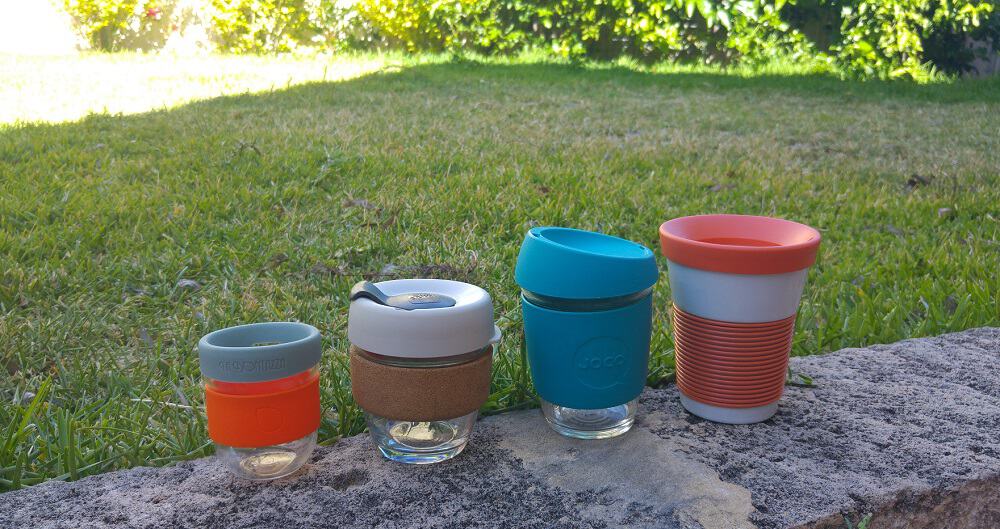
1. KeepCup
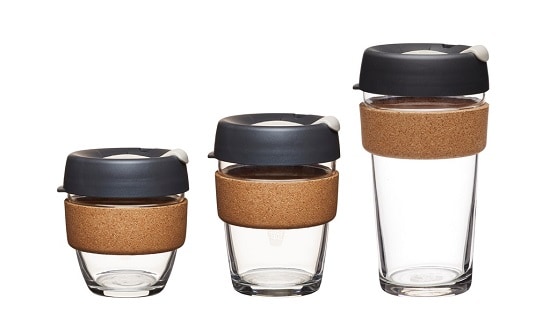
KeepCup is possibly the original reusable cup brand, and if not the first, definitely the most well known.

KeepCup began in 2009, and are now sold in 65 countries around the world. KeepCup ship from Australia, the UK and the USA.

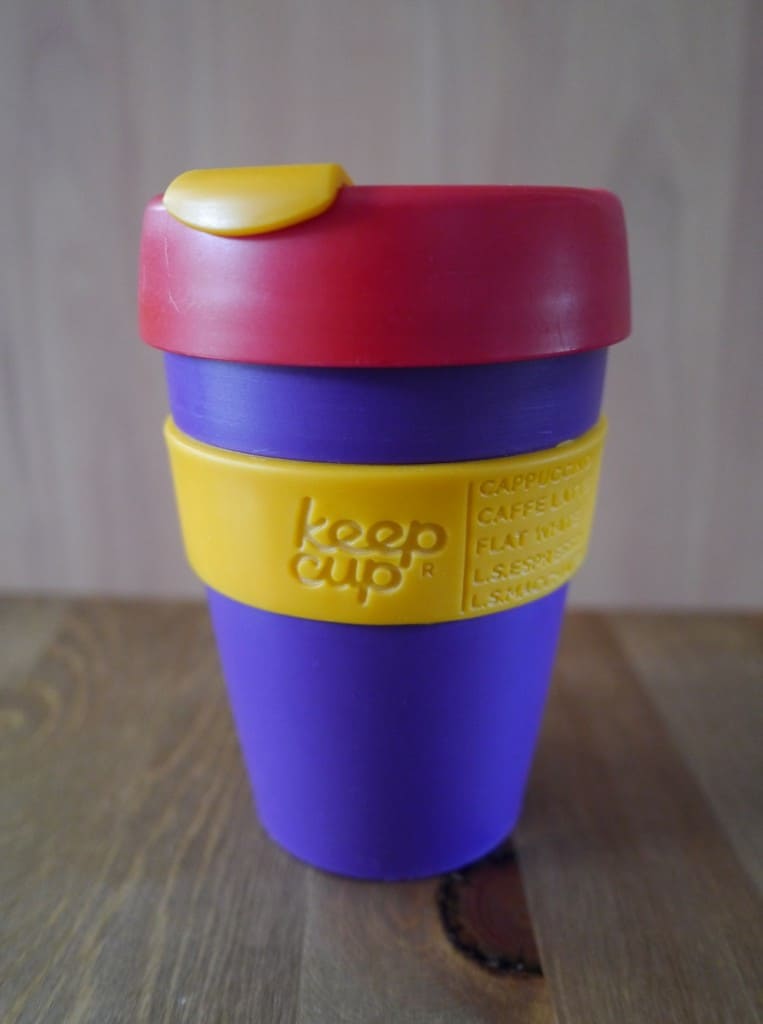
Their cups are available in both plastic and glass. All cups have a plastic lid (plastic #4, LDPE) which is hard and rigid, with a plastic plug (a polyethylene polymer called TPU). The bands are made of silicone.

Their plastic cups (plastic #5, or polypropylene – considered to be the best food grade plastic with thermal stability) come in 5 sizes: 4oz (the ideal size for a babycino), 6oz, 8oz, 12oz and 16oz. Their glass cups come in 3 sizes: 8oz, 12oz and 16oz. Additionally, they offer a glass “LongPlay” booster for the 12oz and 16oz sizes which creates a double-walled vessel to keep hot drinks hot (and cold drinks cold) for longer.

Their KeepCup Brew edition features a glass cup (8oz, 12oz or 16oz) with a cork band, making it their least plastic option.

W: https://keepcup.com

2. JOCO Cup

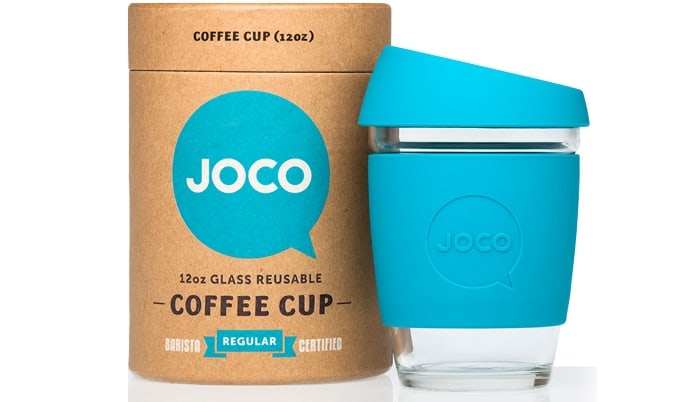
JOCO cups were the first company to produce a barista standard glass coffee cup. The glass cups come in 3 sizes: 8oz, 12oz and 16oz. The lid is made of silicone, which makes it soft and rubbery. The band is also made of silicone.

JOCO cups are distributed worldwide, and ship from Australia and the USA.

W: https://jococups.com

3. La Bontazza

La Bontazza is another Australian company (influenced by Italian style) that produces reusable glass coffee cups with silicone lids and bands. La Bontazza are the only company I’ve found that make a small 4oz reusable coffee cup in glass – perfect for short macchiato drinkers, espresso drinkers and babycino drinkers (who are old enough to handle a glass cup).

Their three cup sizes are 4oz, 8oz and 12oz.

W: http://www.labontazza.com

4. Planet Cups by Pottery for the Planet
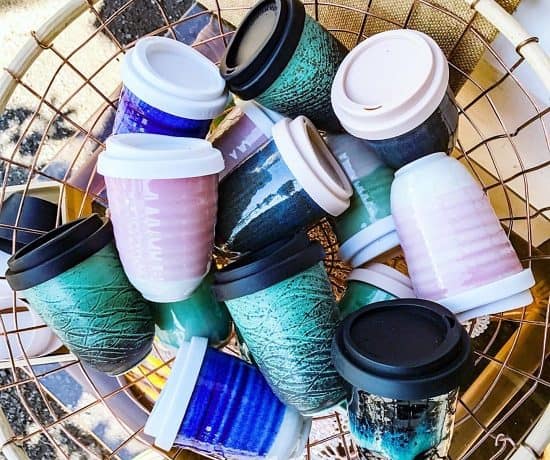
Planet Cups are handmade pottery cups fitted with a silicone lid, and with an optional silicone band. They are available in 3 sizes: 6 oz, 8oz and 12oz. Every single cup is unique, being made by Renton Bishopric ceramics in their Queensland studio.

The cups are not currently sold via their website, but stockists can be found via their social media channels.

W: http://www.rentonbishopric.com

5. Cupit by Kahla
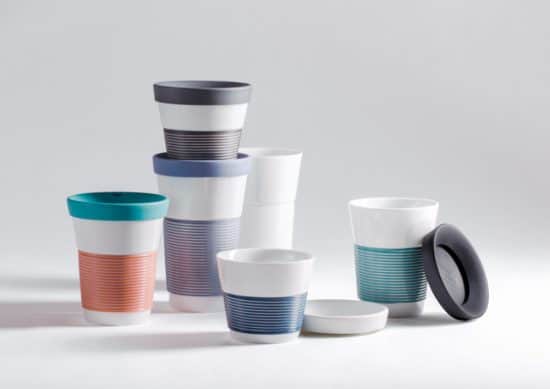
Kahla is a German ceramics manufacturer who produces Cupit, a range of white ceramic reusable coffee cups in three sizes: 8oz, 12oz and 16oz. The lid is available to purchase separate from the cup. Both the cups and the lids are made in Germany.

The ceramic cups have a silicone foot at the base, making them non slip. The lid is plastic, and the band that wraps around the cup is fixed and cannot be removed. The cups are slightly heavier than a glass reusable coffee cup, and are very sturdy.

W: http://en.kahlaporzellan.com

6. Klean Kanteen

Klean Kanteen produce insulated stainless steel tumblers with a plastic tumbler lid in 3 sizes: 8oz, 16oz and 20oz. The tumbler lid is designed for transporting liquids (although it is not leak proof) but is not designed for drinking through.

W: https://www.kleankanteen.com

7. Ecojarz
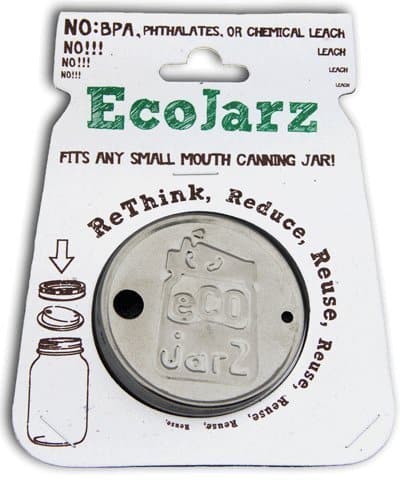
For anyone who doesn’t drink takeaway often and doesn’t see the need for a purpose-built vessel, Ecojarz offer an alternative: a stainless steel drinking lid with silicone seal that fits your existing wide-mouth mason or canning jars.

They also offer hot drink holders and silicone bands.

W: http://ecojarz.com

Of course, I realise that reusable coffee cups aren’t for everybody. (Is anything?!) You may not be a daily takeaway coffee drinker. But I’ve no doubt that you know someone who is. The public’s perception of plastic bags has shifted, plastic pollution awareness is rising, and tackling disposable coffee cups seem the next logical step.

Reusable coffee cups are a great and practical solution.

Let’s get the conversation started. Bring on the reuse revolution. 

Now I’d love to hear from you! Do you use a reusable coffee cup? Do you use one of these brands listed or an alternative I haven’t mentioned? Do you make do with a DIY approach? Do you think reusable coffee cups are a load of nonsense? Any other thoughts to add? Please share your thoughts in the comments below!

[leadpages_leadbox leadbox_id=140b48fc6639c5] [/leadpages_leadbox]

https://treadingmyownpath.com/wp-content/uploads/2017/11/A-Zero-Waste-Guide-to-Reusable-Coffee-Cups.jpg 529 1000 Lindsay (Treading My Own Path) https://treadingmyownpath.com/wp-content/uploads/2019/06/logo.png Lindsay (Treading My Own Path)2017-11-16 12:00:272019-12-20 16:48:48A Zero Waste Guide to Reusable Coffee Cups

What I *Actually* Mean By Living “Plastic Free”

85 Comments/in Plastic Free Living, Zero Waste/by Lindsay (Treading My Own Path)

What if I told you that “living plastic-free” doesn’t actually mean living plastic free at all?

Let me explain.

A reader of this blog, Stephanie, recently contacted me to share an online article that she had read, and had found rather discouraging. The article opened with the statement “I’m suspicious of people who claim to live plastic-free” and the title of the article was “I tried to give up plastic for a month and realised it’s impossible.”

Woah.

I like to look towards the positives, the solutions, the next steps. Any article that begins by declaring defeat is unlikely to inspire and motivate (how can it?!) and I tend to avoid reading them. Give me a good news story any day!

But I read this one.

I came across some arguments I hear surprisingly often. What about laptops, and mobile phones, and credit cards? True, I use all these things. I also came across some thoughts that had never crossed my mind before in the context of plastic-free living: using plastic furniture in public spaces; answering the (plastic) telephone at work, or taking public transport (yes, buses and the London Tube both use plastic as a construction material).

I feel that the idea of “plastic-free living” is perhaps sometimes taken more literally than it is often meant.

In my view, there is nothing suspicious about claiming to live a plastic-free life. No-one is out to fool anybody. In my experience, anyone who says they live plastic-free is trying to be as transparent as possible about the things they do and don’t do, the choices they make… and the mishaps they have along the way.

I can’t speak for everyone who claims to live plastic-free, but I can speak for myself. I’d like to explain what I mean when I say that I live a plastic-free life, what I don’t mean, and when plastic-free doesn’t actually mean plastic-free.

Here’s my thoughts.

What Living Plastic Free Actually Means (To Me)

I always say that plastic-free living is a journey. Like any journey, things change along the way. What I mean when I say “plastic-free” today isn’t necessarily what I thought it meant when I began.

My plastic-free journey began in 2012 when I signed up to Plastic Free July and saw the documentary Bag It. Both the challenge and the documentary opened my eyes to the issues, but also my own habits, and made me realise just how much of the plastic I bought was avoidable.

It made me feel embarrassed that I’d never realised before, and determined to do what I could to make a difference and refuse all future plastic.

My first challenge was to reduce all the single-use plastic from my life. By single-use I meant anything that was designed to be used once. Not just things like plastic bags and takeaway coffee cups, but also things like plastic bottles of shampoo. Whilst the container might last a few months, it is not designed to be refilled and is therefore single-use.

With single-use plastic the main thing on my radar, other types of plastic hadn’t yet reached my awareness.

One of the first purchases I made when I embraced this plastic-free life was a reusable plastic KeepCup. I remember my husband (who has been with me on this journey since the beginning) posting a picture of them on Facebook, and one of his old school friends came back with the comment “but it’s plastic!”

We rolled our eyes and shook our heads at this lack of understanding. In our minds, it made total sense!

Of course, now I can see why there was a lack of understanding. Clearly, buying a plastic cup for Plastic Free July is not actually plastic-free in itself. It made sense at the time because it was reducing all the single-use plastic.

(5 years on, this cup is still going. My husband uses it at work. Would I make the same purchase today? No. But that’s part of the journey.)

Six months into my plastic-free living journey, and I’d found plastic-free solutions to a lot of the products that I’d previously bought regularly in plastic. I’d also stopped buying so much stuff generally (my minimalism journey had also begun) which gave me the space to think more carefully about the things that I did buy.

My single-use plastic avoidance became all plastic… where there was a reasonable alternative.

I started out as an idealist, but I soon realised that reason had a part to play. What does “a reasonable alternative” mean? For me, reasonable means practical, affordable (and I am happy to pay more for plastic-free items) and suitable.

It is possible to find plastic-free alternatives to most items. But not all.

Sometimes, plastic items have their place. I avoid new plastic as much as possible, but I’m happy to reuse plastic items to save them from landfill. If I think something is well made, built to last and serves a purpose, and I cannot think of (or find) a better alternative, then I consider plastic.

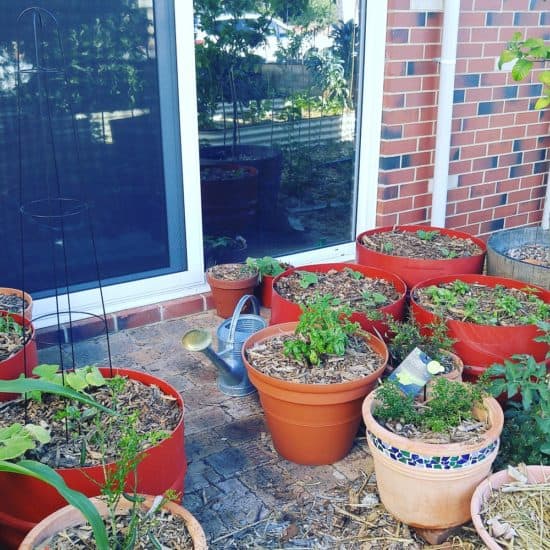
This includes the plastic olive barrels that I’ve upcycled into veggie beds in my garden, the clothing with plastic fibres that I’ve purchased second-hand from the charity shop, and the empty plastic yoghurt tubs I’m currently collecting via the Buy Nothing Group for mushroom growing.

What do I mean when I say I live “plastic-free”? Well, I mean no single use plastic packaging. I mean that I don’t buy brand new plastic things, unless there is absolutely no alternative, I consider that item to be necessary, and it is not not available second-hand. I minimize my second-hand plastic purchases, but I don’t avoid them completely.

For me, plastic-free is not an absolute. I make exceptions. I’m also very transparent about the exceptions that I make. Plastic-free living is an ideal, a goal to work towards, and a journey. I’m doing what I can, and always striving to do better.

What Living Plastic Free Doesn’t Mean (To Me)

At the start, I was determined to eliminate plastic completely from my life. Over time, I’ve taken a more moderate approach to what’s practical and possible for me.

I still use a mobile phone and a laptop. I have plastic travel cards (a Smartrider and an Oyster card). I have plastic bank cards, and I use plastic money (Australian bank notes are made of plastic). Plastic still sneaks into my life in other ways.

Plastic-free does not mean living in a house that I built myself from tree branches. (Natural building is a thing, so it’s not out of the question that I could live in a plastic-free house. But I don’t.) Maybe one day I’ll get the skills and the space to do it. Or maybe not. For now, I live in a house with recycled plastic/stone kitchen benches, plastic guttering, a plastic bathroom bench, a plastic rainwater tank, plastic doors, windows and frames.

Plastic-free does not mean avoiding touching anything plastic. The pipes that bring water to our house the cables that bring electricity and the internet to our house, every kind of transport (public or private) – it all features plastic.

Plastic-free does not mean refusing medical treatment. I take painkillers in packaging on the rare occasion I need to, I have a plastic filling (I wasn’t choosing mercury as the alternative option).

Plastic-free has never meant (and never will mean) throwing existing plastic away. In my home, plastic that is perfectly usable will never be replaced it with something that is plastic-free for asthetic reasons.

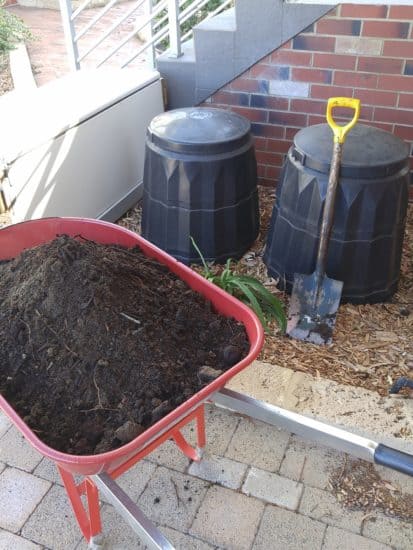
If I need to buy something in plastic so that I can avoid plastic in the future then I do. I buy seeds that come in plastic bags, but I am saving my seeds so in future I can use my own. I bought a second-hand plastic compost bin so that I can make my own compost and not need to buy plastic-packaged soil amendments for the garden.

Plastic-free living, for me, is not about taking things to extremes. It’s about finding alternatives, solutions and better ways of doing things. Every piece of plastic ever made still exists. If I can reduce my plastic by 95%, that’s a lot of plastic refused.

Does it really matter that I use a small amount of plastic to reduce my impact in other areas? To me, no.

When Is Plastic-Free not Plastic-Free?

I am passionate about living with less waste (you might have noticed). For me there are three branches to this, and they are all slightly different. There’s zero waste, which is about sending nothing to landfill. There’s plastic-free, which is about using no plastic. Then there’s the broader aspect of sustainability, using what already exists.

The way I live is the result of these three elements (plastic-free and zero waste and reducing waste) colliding. My ultimate goal is reducing landfill and making the best use of resources. So sometimes I choose second-hand polyester over brand new organic Fairtrade cotton. Or upcycled plastic buckets rescued from landfill over French oak wine barrels.

It’s not that one option is better than the others. There’s rarely a perfect choice. I just do what feels right to me and my values.

I say I live plastic-free because it’s a label that people can understand. It’s certainly a lot less of a mouthful than “I live single-use-plastic-free-and-new-plastic-free-but-occasionally-I-buy-second-hand-things-made-of-plastic-but-mostly-I’m-plastic-free”. It starts conversations, encourages new ideas and provokes dialogue.

Plus, it’s a way of doing something good for the planet, and for ourselves and our community.

I’m not one to dwell on the negatives. I could lament all of the things that I can’t change, and the things that hold me back from perfection. I could give up before I start, because I’ll never make 100%. But plastic-free living is not about perfection. It’s about making better choices. 

There’s so much opportunity to make change to reduce our collective plastic habit. To refuse single use items, make simple switches, avoid plastic packing. Living plastic-free is 95% possible. But even 1% plastic-free is better than nothing. Let’s not get bogged down with the things we can’t change. We can all change something. Let’s do what we can.

Now I’d love to hear from you! Do you agree that saying plastic-free or zero waste is misleading? Or do you find labels a useful way to strike up conservation and convey ideas simply? Do you use these labels, or do you prefer not to? If you live plastic-free, what plastic compromises do you make? Share your thoughts in the comments below!

[leadpages_leadbox leadbox_id=1429a0746639c5] [/leadpages_leadbox]
https://treadingmyownpath.com/wp-content/uploads/2017/11/What-Does-Plastic-Free-Living-Mean.jpg 750 1000 Lindsay (Treading My Own Path) https://treadingmyownpath.com/wp-content/uploads/2019/06/logo.png Lindsay (Treading My Own Path)2017-11-09 12:33:072019-12-23 15:51:56What I *Actually* Mean By Living “Plastic Free”

Zero Waste Travel: Tips for a Zero Waste Road Trip

34 Comments/in Zero Waste/by Lindsay (Treading My Own Path)

Having a zero waste and plastic-free routine at home is one thing, but making it work whilst on holidays (and away from home) is quite another. There’s dealing with new places and situations; having limited options to buy anything in bulk or recycle; and being without many of the tools that make zero waste living possible at home – and they all create challenges for keeping waste down.

Having been on plenty of road trips and holidays since I started my zero waste journey (goodness, don’t I sound well travelled?! It’s more that I’ve been living this way for 5 years rather than that I go on holidays all the time!) I’ve learned plenty of tricks along the way to help reduce my waste.

If you’re planning a road trip or holiday/vacation and you want to keep the waste down (which of course you do!), this one is for you.

Reducing Waste on Holiday: Before You Leave

As with anything and everything zero waste, planning is important. Waste tends to happen when things are unplanned, and convenience suddenly steps in. That doesn’t mean spreadsheets or anything complex. Just thinking about where you’re going, what you’ll be doing and likely scenarios, and google the options.

Check Out What Facilities Exist Where You’re Heading.

There are three types of facilities I check out before we go somewhere:

1. Shops, cafes, restaurants.

Knowing what kinds of shops exist and the kinds of food they sell is a good place to start. (For example, is there a supermarket, a service station, a bulk store, a Farmers Market?)

Considering what cafes and restaurants exist and the kinds of foods they sell is also useful (especially if you are vegan/vegetarian, gluten-free or have other dietary requirements). Opening hours are worth looking into too.

Looking at the reviews on Tripadvisor is helpful as a starting point, and we’ve used the website Happy Cow several times to find out vegetarian and vegan options in unknown places. If your friends or family that have been to the destination before, ask them to share their experiences.

2. Recycling Facilities.

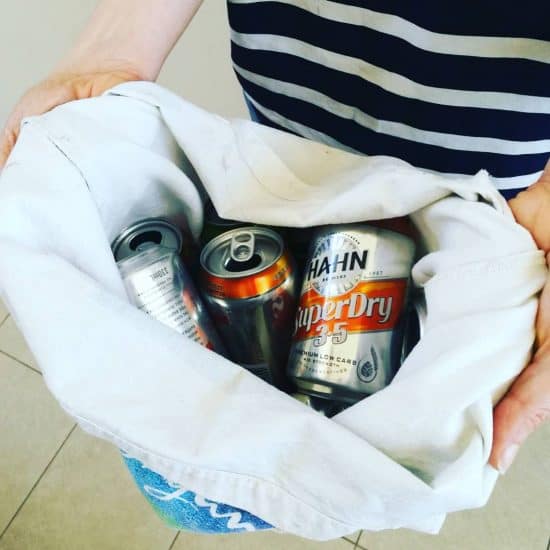
In WA, not much is recycled north of Perth. Many of the places we stayed on this trip only recycle aluminium cans. My husband and dad both enjoy a beer, so whilst we were away they opted for beer in cans which we could recycle along the way, rather than glass bottles, which aren’t recycled.

(Whilst we always take home anything that cannot be recycled, glass is not truly recycled in Perth but crushed into road base, so choosing cans is a better option. There was a small amount of glass too, and that came home with us.)

3. Composting Options.

It is my dream that one day everyone with a composting bin will register their bin on the ShareWaste website. It’s a free service which connects home composters with people with excess food scraps.

I always check this service before I travel. I also search for community gardens in the ares that might have compost bins.

Sadly, rural WA is very lacking in bins on the map yet, so I knew that whatever food waste we took with us we would have to bury, or bring home.

Go Food Shopping Before You Leave

Depending on how much you intend to eat out whilst away, and the access you will have to refrigeration and cooking facilities, you might not want to take heaps of groceries with you, but it’s worth considering the basics: tea, coffee and snacks ;)

There are no bulk stores in WA further north than Perth, so we did a big bulk shop at The Source Bulk Foods (I’ve never bought so many nuts!) and bought fruit and vegetables from the local fruit and veg store to last us the first few days.

I made a big Ottolenghi-inspired salad to take with us, and also a big batch of sugar-free muesli. As well as fresh produce, I also took big jars of rice, quinoa and lentils so I could make meals at home.

Pack Reusables and Other Tools

Packing a water bottle, reusable cutlery set and reusable coffee cup goes without saying – these things practically live in my handbag anyway.

I also take a number of cloth produce bags, and either Pyrex containers, my stainless steel tiffin, or both. I have a set of round Pyrex containers that fit one inside the other so don’t take up too much space.

We take an esky with us to keep things cool in between destinations.

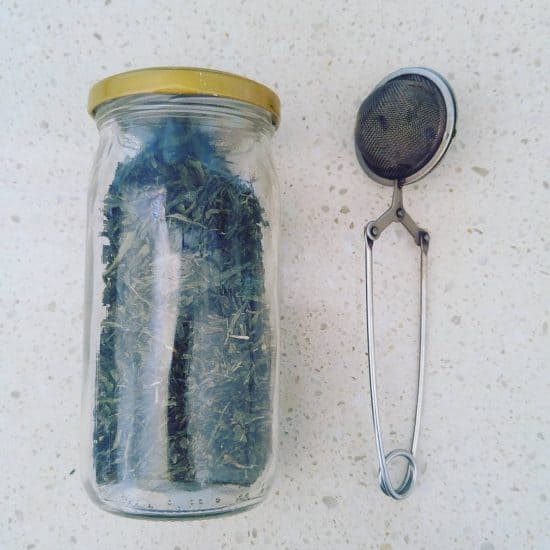
As well as the more obvious reusables, there are a few things I always pack for road trips. I always take a sharp knife (it makes all the difference when you’re trying to cook from scratch), our salt and pepper grinder and our coffee press. This time I took a tea strainer also.

This one might be a bit out there, but I also take our food processor with us.

I once met a lady who took her food processor with her when she went overseas. I’m not that extreme, but it is the most useful tool in my kitchen, it doesn’t take up much space, and it does so many things that now I always pack it. It’s great for making nut milk along the way, but we often use it for many other things (it has a heating function).

Dealing With Compost

If you don’t want to throw food scraps into landfill (and I definitely don’t), there are a few options: finding a composting facility locally, burying food scraps along the way, or taking them home with you.

Burying food scraps isn’t ideal, because it means using a rental home back yard without their knowledge, other private land without the owners’ knowledge, or public land. There’s the chance it could attract pests, or be dug up by dogs. A few veggie scraps from one person is one thing, but if everyone started doing this, it could be a big problem.

As I can’t bring myself to throw food scraps away, and we were away for two weeks, I did bury some of my waste.

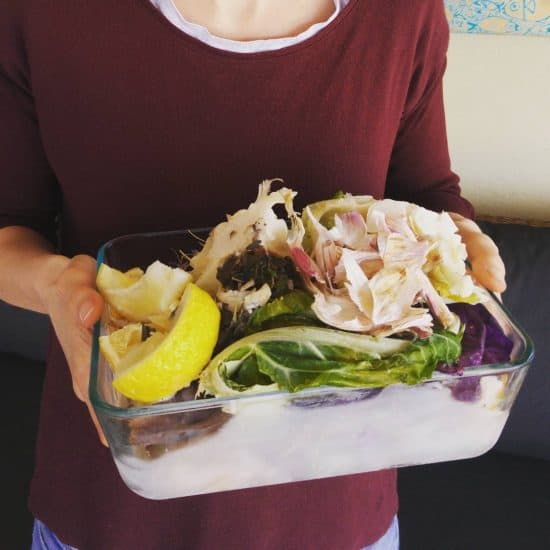
I store food scraps in the freezer (in a Pyrex container) until I’m ready to bury it. I also blended some of it in the food processor to break it into smaller pieces, to help it compost more quickly. I tend to dig a few holes rather than one big one, as deep as I can, and ensure the waste is well covered with soil.

I do feel a little guilty, but I figure it is the lesser of two evils.

Once we hit the half way mark of the trip, I decided that we’d take what we created back to Perth with us. There was more room in the esky for food scraps, which were kept frozen.

Avoiding Single Use and Travel Items

Because we bring our own tea and coffee making facilities, we never use the single-serve tea and coffee. If any other single-use items are provided, like biscuits or breakfast cereal or UHT carton milk, we leave it in situ.

We always bring all of our own toiletries too, to avoid using individually wrapped soap or mini bottles of shower gel. There was a time when I’d clear out the place we were staying of anything miniature, but those days are long gone. They stay where they are.

I’ve also learned to bring our own dishwashing liquid, dish brush and cleaning cloth with us. The cloths provided are always plastic, and will be thrown away as soon as we leave, even if it’s one night. Should we need to use them, we take them with us so we ensure they are used until they wear out.

Our holiday packing isn’t the most minimal, but because we never take much clothing or footwear, there is always room to include reusables. I know I’ll have a much more relaxing holiday if I’m not creating waste. Funny that these days my priority is packing Pyrex rather than extra pairs of shoes!

Remembering reusables is something that just takes practice. The hardest thing is dealing with food scraps. If you have a compost bin at home, please consider registering it on the ShareWaste site. It’s free to use, and even if you don’t think you live in a touristy area, you never know who might be passing through.

I’m looking forward to the day when I can go on a road trip and there’s more compost bins to stop at along the way than service stations ;)

Now I’d love to hear from you! What tips for zero waste road trips do you have? What challenges have you faced whilst you’ve been away from home or on the road? Which tips can you see yourself adopting – or not?! Anything else to add? Please leave a comment below!

[leadpages_leadbox leadbox_id=1429a0746639c5] [/leadpages_leadbox]

https://treadingmyownpath.com/wp-content/uploads/2017/10/Zero-Waste-Plastic-Free-Travel-Banner-Treading-My-Own-Path.jpg 331 1000 Lindsay (Treading My Own Path) https://treadingmyownpath.com/wp-content/uploads/2019/06/logo.png Lindsay (Treading My Own Path)2017-10-26 12:00:042017-10-25 08:07:58Zero Waste Travel: Tips for a Zero Waste Road Trip

How To Begin a Zero Waste/Plastic Free Facebook Group

9 Comments/in Changemaking, Zero Waste/by Lindsay (Treading My Own Path)

Back in April 2016, I set up a Perth Zero Waste + Plastic Free Facebook Group. I wanted to create a space where local people could get information, ask questions, receive feedback and “meet” other people in our area. My website focuses a lot on zero waste and plastic-free living: the what, the why, and to some extent, the how – but not the finer details.

I always felt that this was missing and needed talking about somewhere, but I didn’t know where, or how to manage it. This kind of information changes quickly, and it is a lot for one person to keep on top of.

Eventually it occurred to me that Facebook Groups could be the answer.

Last week, the Perth Zero Waste + Plastic Free group hit 5,000 members. 5000! I am so proud and humbled that our community has that many people who care about their waste, and that they have all been able to connect with one another thanks to this group. The ideas shared and friendships made has been so inspiring.

I’m a huge fan of connecting offline, and there’s nothing like attending a workshop or talk or group activity to really get into the spirit. But there’s definitely a space for online groups. We don’t all have the time or energy to get out into the community, and besides – if you just want to know where to buy plastic-free tofu, that isn’t really a workshop kind of question!

I think when they work together – people meeting online and then connecting offline – that’s magical.

Our group has been really successful, and has far exceeded my expectations – not jut in terms of numbers, but also the kinds of information available and also the types of people who have joined. It’s a really diverse group, too. I talked about zero waste privilege a few weeks ago, and this group definitely debunks the white, middle-class female myth about zero waste living.

I definitely think it’s the members who have made the community what it is. But I also think the success has been due to the vision and the planning, and the way it is administrated.

Love or hate Facebook, there’s a lot of people using it. More than one billion people, in fact. Whilst we can all lament the fake news, and the fact we spend far more time looking at cat videos than we ever intend to, Facebook is a useful tool. Facebook groups in particular, have been a great way to connect with like-minded people. (At the time of writing this, Facebook Groups are still free from ads – another reason I like them.)

I thought I’d put together a guide for how I set up and how I run our Facebook group, what’s worked well and what I’ve learned. Whether you’re thinking of setting up your own group, or have a group that you’d like to improve, hopefully you’ll be able to draw from my experiences.

Setting Up a Zero Waste Facebook Group – Before You Begin

Consider Who The Group Is For, and What You Want It To Achieve

Think about your audience, the types of people you’d like to attract as members, and the types of people you think that you can serve best. What is your area of expertise, and who will benefit from joining a group that covers this?

Think also about how many members would make a good group. More isn’t necessarily better. Do you want a smaller, more connected group who you can get to know and maybe transition to an offline group? Do you want to keep things very local (just to your suburb), or to your town, or region/county/state? Is it for certain language speakers? Do you want the broad depth of knowledge that comes from a worldwide group?

Is your group just for women, or men; young mums, retirees, or students; low income earners, the unemployed or professionals? Beginners or experts?

There’s no right or wrong answer, but it helps to think about this in advance. Things evolve over time, but if you have a clear idea who the group is for, it will keep the information offered specific and relevant.

Try to think deeper than just “everybody”! Whilst “everybody” sounds inclusive, the more general you are, the less helpful you will actually be to your members.

For my group, it was specifically people who live in Perth who wanted to learn more about reducing their waste. They can be experts or beginners, but the information shared in the group has to be relevant to living zero waste and plastic free in the Perth area.

Why? Because I felt that this information was in my head and needed to be shared, and my website wasn’t the place. I knew people in Perth would want to know the specifics that other blog readers would not.

I also remember when I first took part in Plastic Free July back in 2012, the Facebook page was very small. Because Plastic Free July began in Perth, it was easy to get local information there. Fast forward a few years and there are now 30,000 followers on the Plastic Free July page. There is no way you’d find out which local grocers sell milk in glass.

I felt people new to Plastic Free July were missing out on something useful that I had experienced.

Check The “Competition”

I don’t really believe in competition. When we’re all working towards a common cause, it isn’t a competition, is it? What I really mean is “duplication”. There is absolutely no point in exactly recreating something that already exists. See what exists, and ask yourself – how will your group be different?

This doesn’t mean that if someone is doing something similar, that there isn’t space for you. Competition can mean there is high demand! Think about how many cookbooks there are on Italian cookery, or even something as specific as pasta – heaps.

However, duplication is wasted energy. There will be a different take or a different spin that you can offer. Be clear what it is.

Consider Who Else Can Join When You Launch

Tempting as it can be to open up the group to everyone, if you’re clear about who your audience is and who you want to participate, be careful about letting others who do not fit those categories in. Whilst it could be fine, you might dilute the message and usefulness of the group for other members.

One thing that I should have done differently was be much stricter about who could join the Perth group. The group is for people in Perth to talk about Perth things, but when I launched the group, I opened it up to members worldwide. I think I worried about getting enough members to make the conversations interesting and provide value. Honestly, when I set it up, I hoped to reach about 500 members. The group hit 500 members and kept on growing, and I realised if I didn’t change who could join, we’d end up with a generic audience with less relevance.

Firstly I limited the audience to Australia, and then Western Australia. Now anyone wanting to join has to let us know where they live in Perth or WA to be considered as a member. There are still some inter-state and international members who joined before we changed the terms (we didn’t delete anyone!), but they know that the conversation is Perth-centric.

Prepare the “Rules”

I wrote a couple of documents outlining what the group is about, who can join and how we expect members to behave. Our group is friendly and supportive, it doesn’t matter where you are in the journey and no question is a stupid question.

When new members join, they are expected to read this post. Whilst not everyone does, it is helpful to refer back to when conversations stray from the topics. It’s also useful to assess if a post or member doesn’t meet the standards we expect, and needs removing.

Running A Zero Waste Facebook Group – The Early Days

Finding New Members

I started with the people I knew, people who were already Facebook friends. I’m lucky that I have a lot of friends passionate about this topic! I probably started the group with 80 or so personal friends.

When I give talks, I always mention the Facebook group at the end as a next step for people to join. (I actually mention this rather than my website.) After every talk I give, a new flush of members comes in. As the audience grows, friends of friends request to join, and so it has grown organically.

Finding Admins

Unless you’re on Facebook all the time, you’ll likely need admins to help you approve new members, answer questions and delete spam. I asked a good friend and my husband to help admin the group (my husband uses Facebook much more than I do).

At the start, I checked in every day, often twice a day (once in the morning and once in the evening). As the group has grown, I’ve found I need to do this less often as there are plenty of knowledgeable people in the group to answer questions and share expertise.

Running A Zero Waste Facebook Group – Maintenance

Moderating a Growing Audience

As the audience grows, so does the number of admins required. I didn’t react to this quickly enough at the start, and there were a couple of times when huge fights broke out and then blew up in between the times I checked. When someone called it out as the admins “allowing this to happen” I realised it was too big for me to manage.

Once a group has been running for a while, it’s easy to spot the people who post often, are helpful, polite, and have interesting insights. I asked a few of these people (I chose people I’d also met in real life, although this isn’t necessary) to join as moderators. I really wish I’d done this sooner – it was a huge weight off my shoulders and it stopped any crazy conversations getting out of hand.

Occasionally I post to remind people about the values of the group (being nice to beginners, answering the question asked rather than telling the asker what they are doing wrong, not posting blatant advertising or Amazon affiliate links) but it doesn’t happen that often. Other members who are not moderators know how the group works, and are quick to jump in and remind people if a conversation begins to go off track.

Moderating the Conversation

Not every single post is 100% useful or 100% relevant, but we try to delete as little as possible. By sticking to the guidelines (no salesy posts or affiliate links, relevant to Perth, and relevant to zero waste and plastic free living) it’s pretty easy to decide whether something should stay or go. Posts about tiny houses in Oregon or India banning styrofoam might be really interesting, but they don’t fit the description of what our group is about, and ultimately they detract from the message.

Now we have 5000 members, we have to keep things stricter. We have a lot of posts per day, and we don’t want members feeling like the feed has become a bunch of memes. Happily, I think it’s worked.

…

Overall, I love what our group has become. It feels like a positive, inspiring and motivating space to spend time. (That isn’t something I thought I’d say about social media.) That’s not to say it’s perfect, and there are occasional disagreements and fiery exchanges, but overall the support offered and received is wonderful. It’s one of the best things I ever did to support zero waste living in my community.

If you’ve been wondering how you can get the zero waste or plastic free message out into your community, maybe it’s something you can do too.

Now I’d love to hear from you! Do you use Facebook Groups for connecting to your community (doesn’t have to be zero waste related) and what benefits have you found? Have you had a good experience, or a bad experience? Had it been mixed? Any other thoughts about Facebook groups you’d like to add? Leave a comment below!

[leadpages_leadbox leadbox_id=1429a0746639c5] [/leadpages_leadbox]
https://treadingmyownpath.com/wp-content/uploads/2017/10/How-to-Start-a-Plastic-Free-Zero-Waste-Facebook-Group-Online-Community.jpg 750 1000 Lindsay (Treading My Own Path) https://treadingmyownpath.com/wp-content/uploads/2019/06/logo.png Lindsay (Treading My Own Path)2017-10-12 13:17:522019-03-09 19:24:59How To Begin a Zero Waste/Plastic Free Facebook Group

7 Tips for Choosing Ethical Zero Waste Essentials

39 Comments/in Ethical Living, Zero Waste/by Lindsay (Treading My Own Path)

The zero waste and plastic-free movements have been steadily building momentum over the last few years, and along with that, so has the proliferation of associated “stuff”. When I started my plastic-free journey back in 2012, there were products to assist with zero waste living, but choice was limited. Now, it seems we are inundated with options, an there are more coming onto the marketplace every day.

That makes me a little nervous.

It makes me nervous because zero waste is about not creating waste; buying less stuff, and making do with what we have. It still means the occasional purchase, but usually “buy-once-and-will-last-forever” type products.

The more stuff on the market, the more we are tempted to buy, the more fashion and style comes into it and practicality and functionality seem less important.

When there’s so much choice, and there’s the temptation to buy more or try new things, these reusables can become “single use”. Reusables made of glass or stainless steel have a big production footprint. Great if we use them all the time, and of course they are made to last forever. But we have to use them often.

When we buy things and then don’t (or rarely) use them, they aren’t such better than single-use.

Finally, it makes me nervous because choice is paralyzing, and too much choice can lead to overwhelm and inaction. Changing habits is hard, and that is without having to exert energy deciding which products might be useful and appropriate, sifting through the greenwash and making good decisions.

Choice adds another layer of complexity.

I recognise that we often do need to buy stuff at the start of our plastic-free and zero waste journey. Not everything, but some things. Now there’s all this choice on the marketplace, I thought I’d put together an ethical zero waste purchasing guide to help navigate through some of the choices.

1. ‘Needs’ versus ‘wants’

There are many beautiful, ethically-produced things out there. Far more than we could ever need. The truth is, we can appreciate and admire the things we see without having to purchase them all. It can be tempting to buy something, thinking “I need this”! But really, is it a  need – or is it a want?

Can we make do without? Can we sit on the decision for a week, or a month, and decide whether we really need it?

The most zero waste option is always to make do with what you have, and buy nothing.

That’s not to say we should never purchase anything. Sometimes “wants” have a place. Sometimes we want to support a local ethical business because we believe in the work they do. Sometimes we know we don’t need something, but we really really want it, and we decide to buy it. No-one is perfect, and we all have desires, standards of living we want to maintain… and moments of weakness!

It’s a balance.

Let’s not kid ourselves that buying things makes us more zero waste. It might help our journey, it might support others in theirs, but is buying something the absolutely most zero waste thing to do? No. So let’s make the things that we do buy the absolute best ethical choices that we can.

2. Before you go shopping…

Think about what you need. Think about the properties what you need has to have. Think about how you’ll use it. Decide what you need, and then go looking for it. Going to a shop for “inspiration” likely ends up in you buying things you don’t actually need.

Do your research. Look online, and search for options. If you find a product you like the look of, go to the manufacturer’s website and read more. Read their mission statement and ethical credentials. Read customer reviews.

If you find the choice overwhelming, ask others on social media what they recommend to narrow your choices down.

3. Read the labels. And I mean *really* read the labels.

Just because someone has shared a photo of a product on social media and stated it is compostable/ethical/zero waste/better, don’t just take their word for it. Go to the product’s website and look. What is the packaging made of? Where is it produced? What is the company’s reason for being? Ethical companies will be clear about their commitment to sustainability.

Does it claim to be biodegradable or compostable, and if so, is it certified? (Biodegradable can include toxic residue, and doesn’t mean that it will break down in home or even commercial composting facilities. There’s no regulations on using this term, and lots of products make the claim without providing evidence. If a product isn’t certified biodegradable or better still, compostable, I would avoid it.)

What does “better” mean? There’s a product on the market called “Boxed Water is Better”. Better how? Their containers are made of paperboard, a plastic-lined card that isn’t easily recycled in Australia. Why is it “better”? It’s because water packaged in paperboard uses less carbon emissions to transport than bottled water packaged in glass. Better in that scenario, yes, but why are they shipping water around the globe anyway? Transporting water to countries that already have drinkable water coming out of the tap doesn’t strike me as environmentally sound.

Ask questions. Dig deeper. Suspect everything ;)

If you ask questions, and can’t find the answers, stay away. Better to support those companies that are transparent and honest.

4. A gap in the market or a slice of the pie?

There are companies that have been working on the plastic-free / zero waste message for years. Stores like Biome opened in 2003, Life Without Plastic opened in 2006; brands like Klean Kanteen formed in 2002. They’ve been trailblazers in getting the zero waste message out there.

Then there are new companies and brands, popping up year after year, increasing the reach, making zero waste more accessible, and offering new products and ways of doing things.

I’m all for choice, and I love new companies that offer innovative products, improve and build on existing designs, or increase accessibility by opening in new markets.

What I don’t love is companies who see that there is money to be made, and rip off another company’s product with their own label, or maybe make a cheaper version (easy to do when someone has done the design work for you and proven the business model).

If the only differentiating feature of a zero waste product is that it’s cheaper than an identical product available on the market, that’s not a great reason to buy.

Where products are similar, I prefer to support the original. They were the ones that took the risk and put their product out there.

Where there’s multiple options, I look for other criteria: who owns the business and how it is run, what organisations and non-profits they support, how they manage their supply chains, where production and offices are based, how they support their customers.

5. Be wary of Kickstarter (and other crowdfunding campaigns)

Crowdfunding campaigns ask the general public to support them in raising funds to begin a business venture, often in exchange for a discounted product. Don’t get me wrong – there are heaps of great projects worth supporting.

But there are many more that are not.

What makes a good project? In my mind, it is something that does not exist already; a product that there is clear demand for, and there seems to be a viable business model behind it all.

Projects I prefer not to support: anything that seems like more unnecessary “stuff”, anything made of plastic (we have enough plastic stuff in the world already!), another version of a product that already has a saturated market. (Do we really need another reusable coffee cup design, or reusable water bottle? Maybe…but probably not.)

Crowdfunding campaigns offering discounted versions of reusables which imitate products already on the market can be tempting. We all know reusables can be expensive. But these campaigns put pressure on existing businesses. Once the discounted phase is over, are the new companies likely to stay in business? Or are simply they fracturing the market?

6. Choose your stores wisely

I think it is so, so important to support local, ethical businesses when making purchases. Ethical products purchased from a Big Box store in order to save a few dollars is missing a huge opportunity to support a small, independent, ethical business. The way I see it, these purchases are an investment, which will last years, and a few extra dollars upfront is worth it.

Yes, no-one wants to be ripped off, and we all have budgets we need to stick to. But that doesn’t necessarily mean choosing the absolute lowest price.

Ask yourself honestly, can you afford to spend just a little bit more? Those few extra dollars probably aren’t that much to you, but your support will mean a lot to a small business.

My first recommendation, before we even start to think about hitting the shops, is to try to find what you need second-hand. Try Gumtree, eBay, Buy Nothing groups, or charity shops.

Next, I always recommend local brick-and-mortar stores (or market stalls) in your local area. No shipping costs (both financial and emissions/carbon footprint), no unnecessary packaging, and you get to connect with a real person.

If that isn’t an option for you, then consider independent ethical online businesses. I’ve put together a worldwide list of online independent zero waste stores here.

(You’ll never ever find me linking to Amazon. The owner is worth US$81.6 billion: many would argue he made his fortunes by destroying competition and the high street, avoiding paying taxes, and other dubious practices. Maybe you’d argue that it’s fair – business is business. Personally, I don’t see why one man can possibly need all that money. I value choice, and I’d rather see thousands of small businesses owners earning enough money to send their children to college and affording holidays and buying good food than one man reap all the wealth.)

7. It’s not about perfection…

Ethical purchases are a minefield, and there’s rarely a perfect solution. There’s always compromise or trade-offs somewhere. The most important thing is making conscious choices. Knowing why you made the choice you did, and putting thought into the decision.

Think about what’s important to you – the carbon footprint, the production conditions, the company’s wider ethical footprint, transport miles, supporting the local economy, supporting Fair Trade, whether it’s made to last forever, whether it’s recyclable, whether it’s compostable. Chances are you won’t be able to tick all the boxes.

Ticking some is better than none.

Don’t be afraid to take action or make choices that aren’t perfect. Better to do something than do nothing. Worst case, you realise down the track that you could have chosen better. That’s a learning experience. We’ve all made mistakes, opted for choices we wouldn’t take again.

Let’s aim for progress, not perfection.

Now I’d love to hear from you! What are your biggest ethical struggles when it comes to making purchases? Do you have any non-negotiable criteria? How has your view on ethical purchasing changed over time? What tips do you have to add? Anything else you’d like to share? Please leave a comment below!

[leadpages_leadbox leadbox_id=1429a0746639c5] [/leadpages_leadbox]
Disclaimer: This post contains some affiliate links which means if you click a link and choose to purchase a product, I may be compensated a small amount at no extra cost to you. This in no way affects my recommendations as my priority is always you, my readers. I only recommend brands I love, and that I think you will love too.

https://treadingmyownpath.com/wp-content/uploads/2017/10/7-tips-for-choosing-ethical-zero-waste-essentials-min-scaled.jpg 1707 2560 Lindsay (Treading My Own Path) https://treadingmyownpath.com/wp-content/uploads/2019/06/logo.png Lindsay (Treading My Own Path)2017-10-05 12:32:172020-08-13 12:57:117 Tips for Choosing Ethical Zero Waste Essentials

6+ Zero Waste Plastic-Free Snack Ideas

32 Comments/in Recipes, Zero Waste/by Lindsay (Treading My Own Path)

This week, I’m talking snacks. Specifically, zero waste snacks that you can make at home. If you have access to a bulk store, then you’ll have access to heaps of delicious plastic- and packaging-free snacks. For example, we can buy vegetable crisps, flavoured nuts, rice crackers, protein balls, and chocolate-coated everything (not to mention chocolate itself).

If you don’t have access to a bulk store, then this is not the least bit helpful. I realise that!

Rather than bore you all (or make you jealous) by telling you how wonderful bulk stores are, I’m going to focus on things that you can do and snacks that you can make without access to a bulk store. Level playing fields for all!

Zero Waste Snacks: Fresh Fruit

I know, I know. Boring! But also very good for you. Extremely easy to find without packaging.

Zero Waste Snacks: Fruit with Extras

I get it. You don’t want fruit. You want chocolate. You want something satisfying. I hear you.

But fruit is very versatile, and can easily be jazzed up. One of my favourite things to make fruit a little more filling (and tasty) is to slather it with nut butter. Apple slices spread with almond butter is the best. (If you’re allergic to nuts, or want a cheaper option, consider seed butters.)

Literally, nut and seed butters are just blended nuts or seeds. The natural oils are released with the friction, so there’s no need to add anything else. Generally toasted (and cooled) nuts will blend better than raw ones, so unless you have a super fancy blender, stick to toasted.

Another favourite is chopping bananas into rounds, and filling two rounds with peanut butter to make a sandwich.

Talking of bananas, I’ve also seen them peeled, dipped into chocolate (maybe half the length) and then nuts, seeds, coconut or other sprinkles used as a topping.

Orange segments, strawberries and raspberries can also be dipped in chocolate (assuming you can find berries packaging-free).

Zero Waste Snacks: Nice Cream

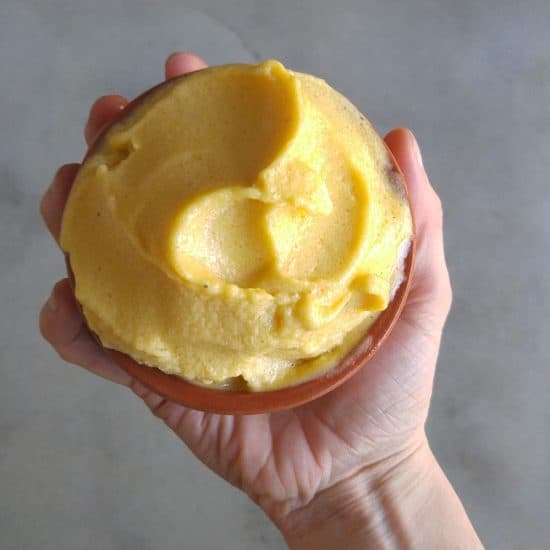
“Nice cream” is often used to describe vegan ice cream, but actually it’s not really ice cream – nothing so complicated. It’s actually just blended frozen fruit, which makes a soft-serve sorbet / ice cream that is eaten straightaway..

This one is mango and banana. A spoonful of nut butter or coconut butter adds a bit of creaminess. Literally take frozen fruit out of the freezer, and blend. Then, eat. So refreshing on a hot day!

Another favourite “nice cream” combo of mine is chocolate banana peanut butter : literally 2 frozen bananas, 1/3 cup cocoa powder and 2 tbsp peanut butter, blended. Yum.

Zero Waste Snacks: Vegetables

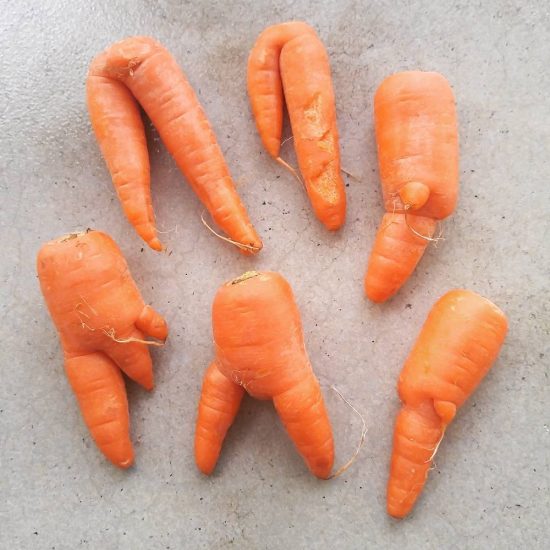
Yes, vegetables can be a snack. Carrots, capsicum, cucumber, radish, celery can all be chopped into crudites – although I tend to just chomp on carrots as they are. If you’ve got a dip (such as hummus – see my recipe here) all the better, but they can be good on their own. Pesto and even peanut butter (yes, carrots and peanut butter are a “thing”) also make good dips.

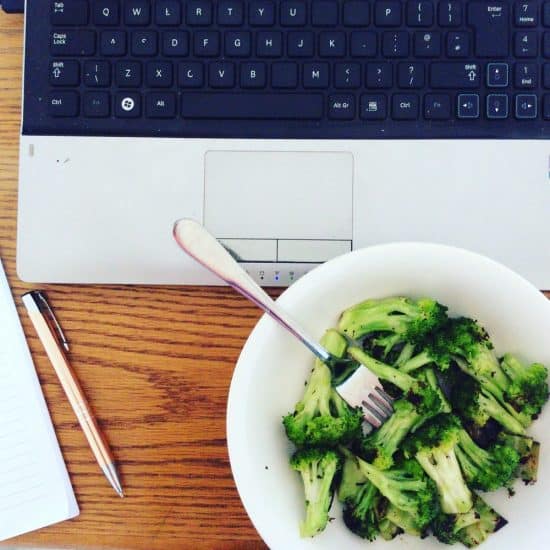
Broccoli has to be my favourite vegetable ever. I could eat bowlfuls of it… and I do. I like to fry it on a high heat so it chars a little, then add a big squeeze of lemon juice and a couple of tablespoons of tahini and mix together. Yum.

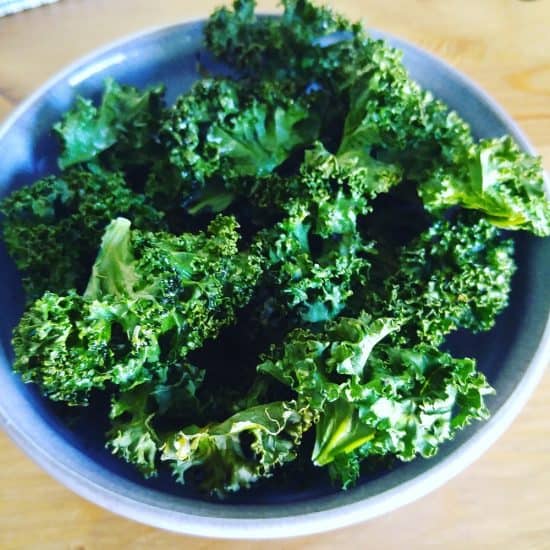
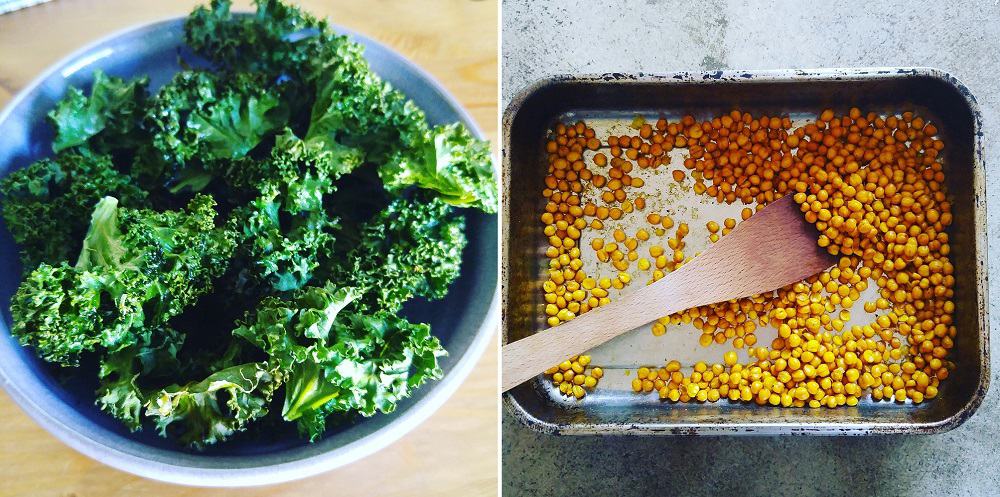
If you’ve never made kale chips, you are missing a trick. Yes, they look green and a little too healthy, but actually they are oily and salty and very tasty. I add to a roasting pan, drizzle with olive oil, sprinkle a little salt and pepper and bake in the oven on a low temperature (100ºC) for about 30 minutes.

(The low temp dries them out whilst keeping them green. If the oven is too high they will dry out and be ready quicker, but they will also be brown – not nearly so attractive.)

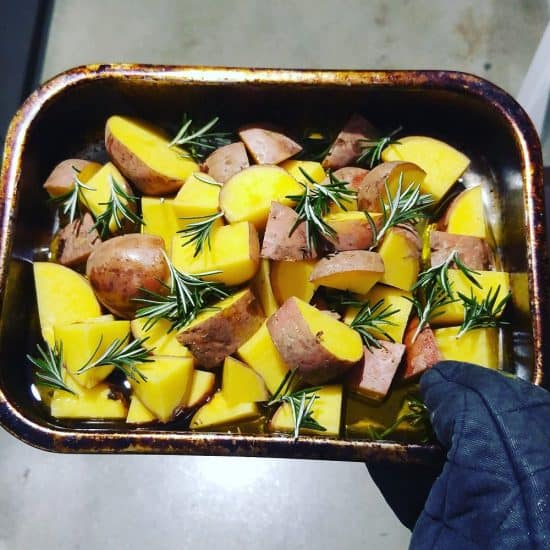
We don’t buy potato chips as they don’t come without packaging. Sometimes as a treat we’ll make a bowl of roast potatoes (chopped into small cubes and roasted to increase the crispy surface area) and snack on them. Probably not the healthiest option, but potato chips aren’t exactly either!

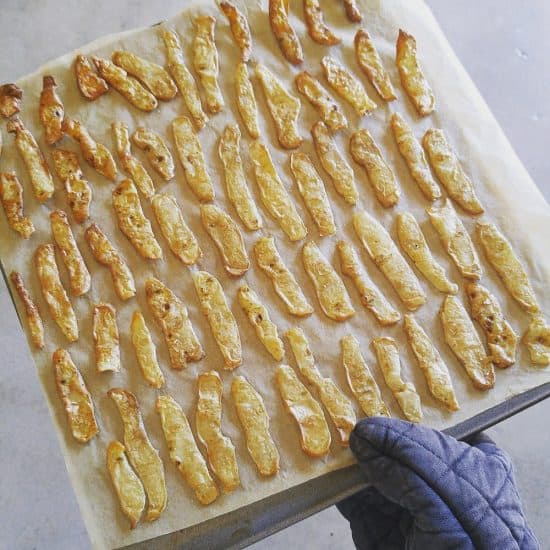
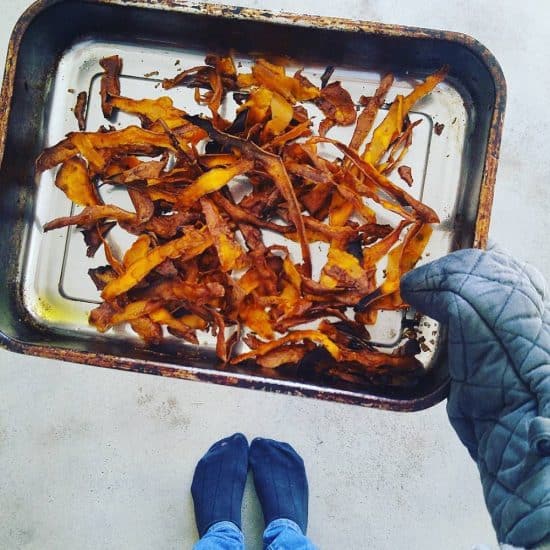
Vegetable peels also make great potato chips / crisps. I don’t tend to peel my veggies often (who can be bothered?!) But sometimes a recipe calls for peeling. If that’s the case I give the veggies a good scrub, peel and then put the veggies in a bowl with a small amount of olive oil. Mix, lay out of a baking sheet and bake in the oven for 10 mins or so, turning half way through.

This works for most veggie peels: potato, carrot and parsnip are my favourite (and the tastiest), but beetroot peels and sweet potato peels also work.

Zero Waste Snacks: Other Crunchy, Salty Things

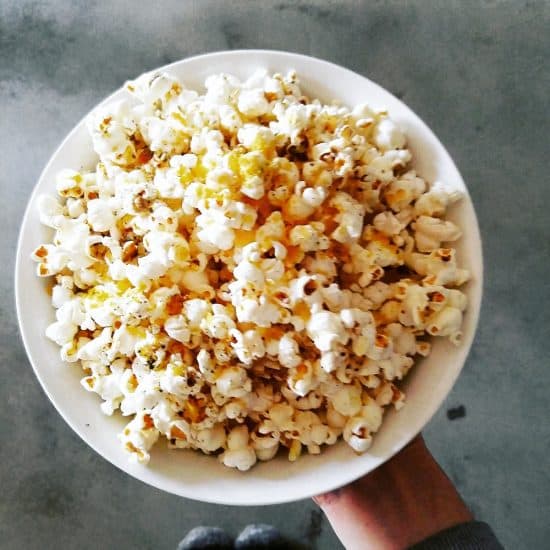
When I crave snacks, it’s not necessarily that I’m hungry. (Usually I’m procrastinating!) Often I just want something crunchy and salty. For me, my go-to option is popcorn.

Even if you can’t buy popcorn from a bulk store and without packaging, a 500g bag of popping corn will make a LOT of popcorn. If you were to buy that many packets of pre-popped popcorn or even potato chips, the waste would be enormous. Even if it comes in plastic, popcorn is a very low-waste snack.

I always make mine in a saucepan. Heat enough oil in the bottom of the pan to coat the kernels (but not so much it covers them) and heat until the kernels begin to pop. Rather than use a saucepan lid, I use a tea towel to stop the popcorn pinging out of the pan. Whilst popcorn is doing its thing, it releases a lot of steam. I find with a saucepan lid the moisture condenses and drips back onto the popcorn – cue soggy popcorn. The tea towel allows the steam to escape and gives you crispy popcorn. Hurrah!

(As soon as the popping slows down, take the pan off the heat, otherwise the popcorn will burn. You can always save unpopped kernels for next time.)

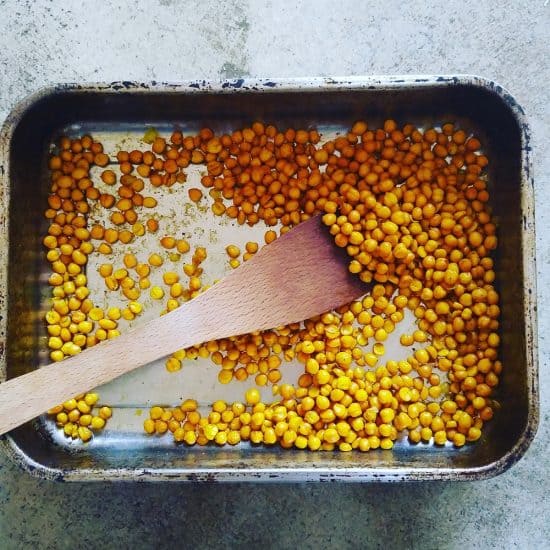
Roasted chickpeas are another snack I make. I tend to buy chickpeas in bulk and cook them up a couple of kilos at a time, so I’ll often make a batch of these. If you have access to dried chickpeas, either in bulk or in large bags, this is a great option. If you can only buy the tins, I probably wouldn’t bother (you’ll end up with way more packaging than snack). You can find my roasted chickpea recipe here.

Zero Waste Snacks: Really Simple Making & Baking

When I think of snacks, I think of something quick and easy. Baking is great, and I love it, but it often requires a little time. However, there are a few things that you can pull together and bake very quickly, so I’ve included a couple of ideas.

Bliss balls are the first option. All you need is a blender or food processor. They are typically made from nuts and dates blended together and rolled into balls. The less ingredients the better, in my view.

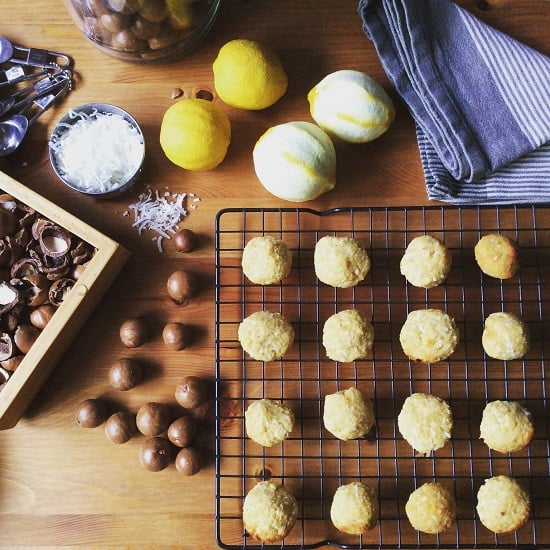
These are macadamias, shredded coconut, rice malt syrup and the juice and rind of a couple of lemons. Macadamias, dates and fresh ginger are also a great combo. And anything chocolate-flavoured, of course. Simply google “bliss balls” and you will find millions of options.

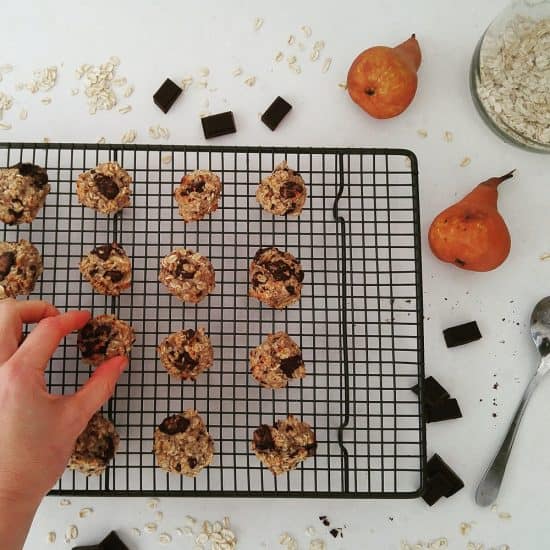
Cookies are another simple, low fuss baking solution, and 84th & 3rd’s 3 ingredient emergency cookies are a great zero waste option, requiring oats (these can be bought in cardboard only if not in bulk), pears and chocolate. You can substitute the pear for banana, switch the chocolate for nuts, add a couple of spoonfuls of nut butter to increase the flavour.

I’m not going to delve into full-on baking in this post, but of course, your imagination is your only limitation. Don’t be afraid to google recipes, or even inspiration for single ingredients and see what the internet has to offer. Or even better, experiment!

Now I’d love to hear from you! What are your favourite zero waste and plastic-free snacks? Any recipes that you’d recommend? Any tips and tricks to share? Any particular struggles that you have? I’d love to know more so please share your thoughts in the comments below!

[leadpages_leadbox leadbox_id=1429a0746639c5] [/leadpages_leadbox]
https://treadingmyownpath.com/wp-content/uploads/2017/09/Zero-Waste-Snacks-Treading-My-Own-Path.jpg 497 1000 Lindsay (Treading My Own Path) https://treadingmyownpath.com/wp-content/uploads/2019/06/logo.png Lindsay (Treading My Own Path)2017-09-28 12:00:032019-12-21 21:17:026+ Zero Waste Plastic-Free Snack Ideas

A Zero Waste Food Diary (Part 1): Mealtimes

30 Comments/in Recipes, Zero Waste/by Lindsay (Treading My Own Path)

I get asked about this a lot and I’ve been intending to write about this for ages: the kinds of things I eat in a typical week. I confess, I tend to get stuck in a rut of eating the same 5-7 meals week in, week out until inspiration strikes again. (Can anyone else relate to that?)

Even though there is a whole plethora of things I love to eat, my brain seems to forget them all save a few. Then I’ll glance on a long-forgotten recipe, and that will become the new staple for a couple of months, and something else will fall off the list.

So what I’ve shared below isn’t a typical week, so much as a collection of the kinds of things we eat.

I don’t tend to meal plan, at least not week by week. We get a veg box delivered once a fortnight (from The Organic Collective) and we never know exactly what we are going to get. We also have a veggie garden that does not ripen according to any meal-planning schedule. Fortunately, I do have a knack for being able to whip up a meal even when my husband assures me that there is simply nothing to eat in the house.

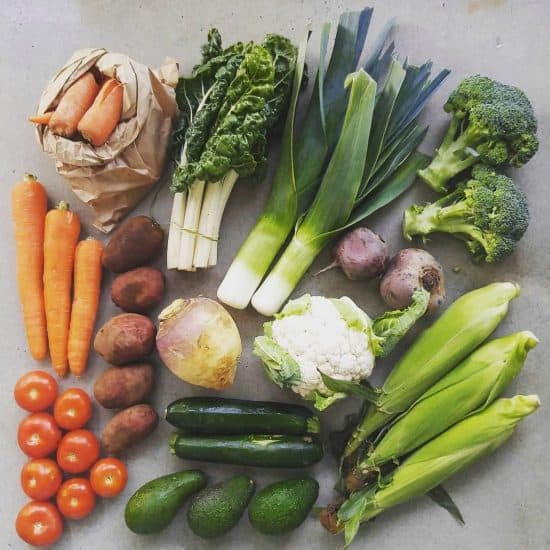
Organic Collective Veg Box

The veg box arrives on a Tuesday, and I’ll open it up to see what we have and make a rough meal plan in my head for the next fortnight. There will be things that I need to buy to supplement what I want to make. I also tend to buy avocados (we eat a LOT of avocados; grateful they grow here in WA), mushrooms, onions, garlic and tomatoes from the store fairly regularly to supplement the box.

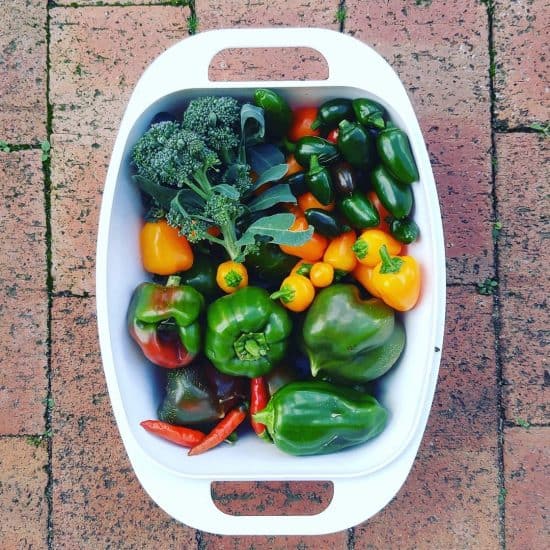
In my veggie garden there is always a variety of greens, plenty of herbs, chillis and some seasonal vegetables. (I recorded a garden tour video last week for my Patreon page; you’ll get access to this and additional content if you become a member.)

Garden Pickings

Sometimes I make my own sourdough, but recently we’ve been buying bread from Escape and Rebellion, a local microbakery. My bulk goods come from The Source Bulk Foods (specifically the Vic Park store), which has everything I could ever need… and plenty of things I don’t but that I buy anyway (hello, enormous and delicious chocolatey section.)

A Zero Waste Food Diary: Breakfast

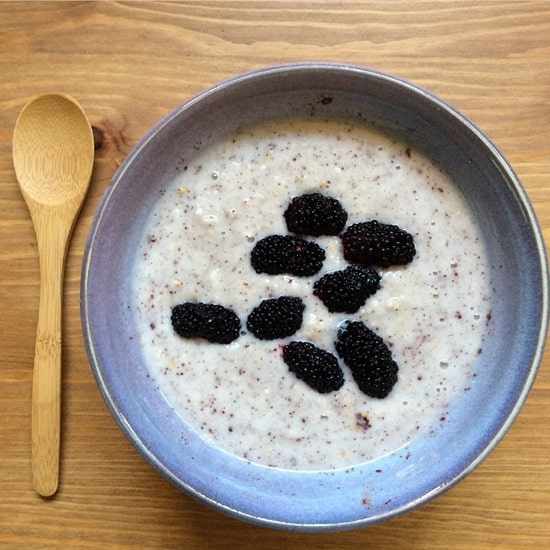
Porridge is one of our staple breakfasts. I cook the oats on a very low temperature with water, and stir through a little cashew milk as soon as I’ve taken it off the heat. I often add hemp seeds, chia seeds or flax seeds. Sometimes I add fruit: chopped banana or mulberries (when in season).

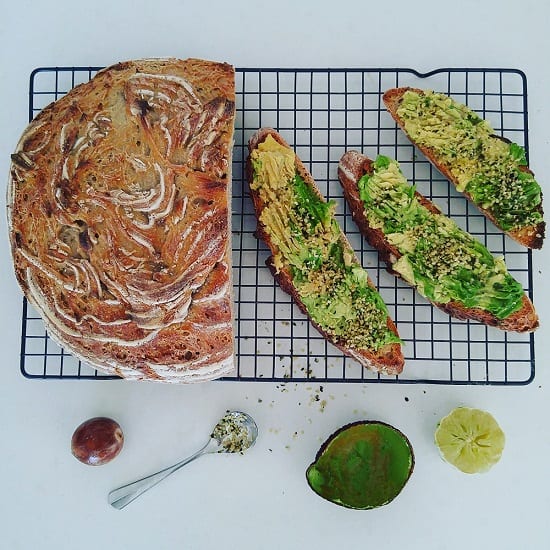
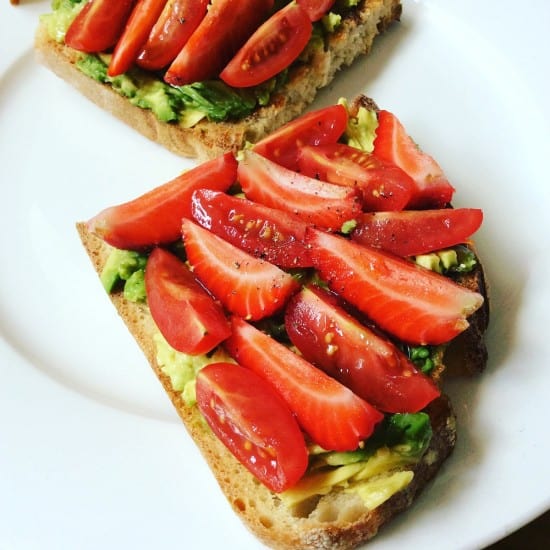
Toast comes and goes as a breakfast item. I don’t think it’s really that healthy; but it’s easy, and since we discovered the new microbakery we have been eating it a little more. We generally top our toast with mashed avocado, a squeeze of lemon juice and a sprinkling of hemp seeds.

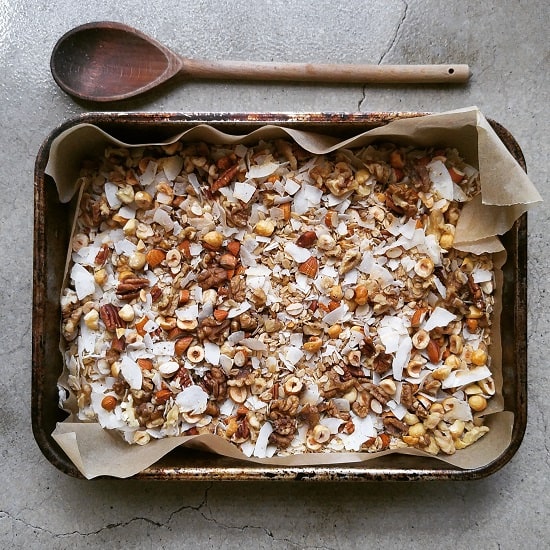
Muesli is another breakfast basic. I make my own using this no sugar muesli recipe. Sometimes I’ll use it as a topper for porridge or a smoothie if I want some extra crunch.

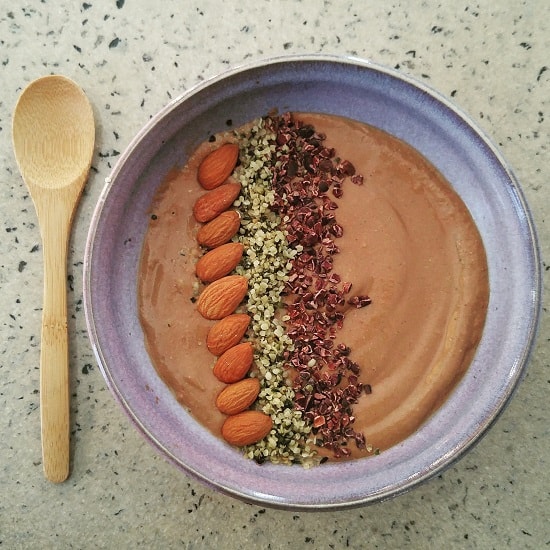
Smoothies and smoothie bowls tend to be more a summer thing than a winter one. Smoothie bowls are simply smoothies that are thick enough to eat with a spoon. Adding half an avocado and a few spoonfuls of nut butter helps bulk it out.

It is worth noting that I am a huge fan of leftovers, and will quite often have leftovers for breakfast: salad, rice and vegetables, etc.

A Zero Waste Food Diary: Lunchtime / Light Meals

It is actually quite hard to distinguish between lunch and dinner in our household, as lunch usually consists of last night’s dinner or other leftovers. We don’t tend to eat sandwiches or wraps or other lunchtime-y things.

One of the reasons I don’t love having bread in the house is that it is all too easy to have toast for lunch as well as breakfast. Sometimes we will have bruchetta at the weekends, but not often during the week.

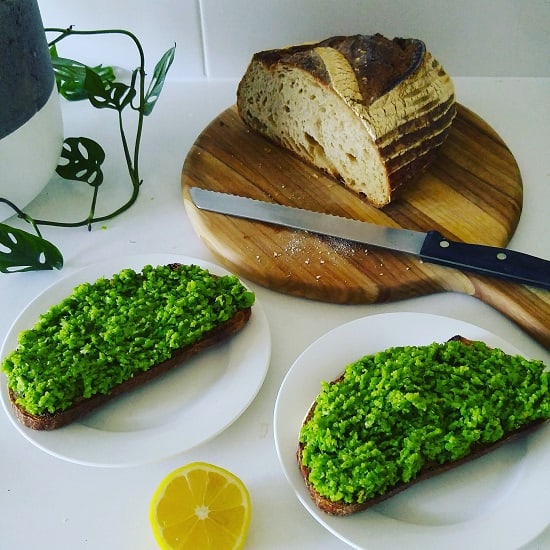
Great things to put on bread / bruschetta (aside from avocado): dips (hummus especially), pesto, fresh tomatoes, fresh mashed broad beans, lots of herbs.

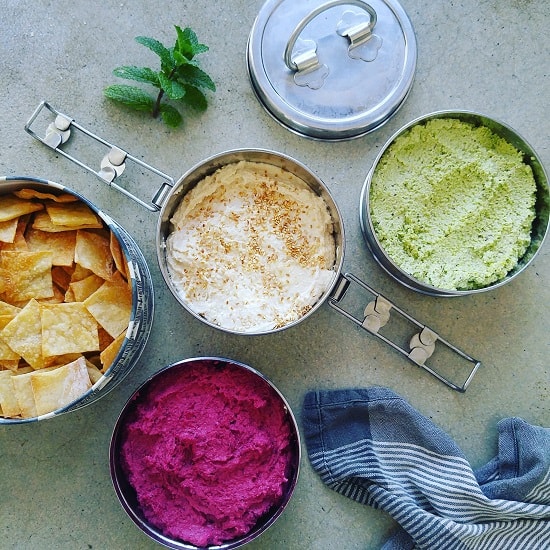
Dips are really easy to make from scratch. I make hummus often (you can find my hummus recipe here). To make beetroot hummus I simply add finely grated beetroot to the regular hummus recipe (both raw and cooked beetroot work). Hummus freezes really well, so make more than you need and freeze the rest.

To eat I either slather on toast, chop up veggies to make crudites or make my own sourdough crackers.

Salads tend to be a side serve rather than a meal in themselves, unless it’s a 40 degree day. Salads do not have to be boring. If they are insipid and without any flavour or substance, it just means you will spend all afternoon eating chocolate.

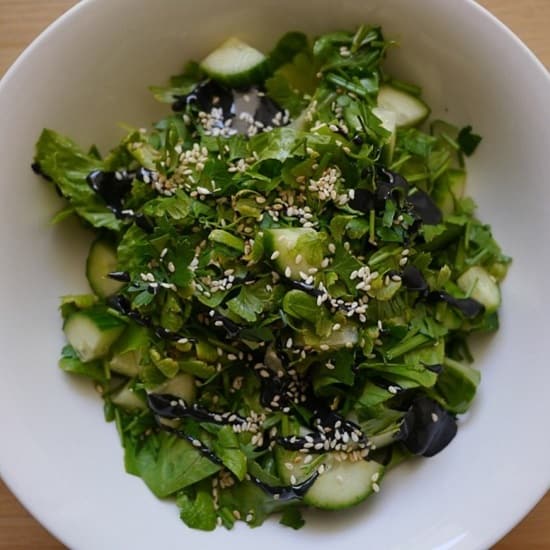
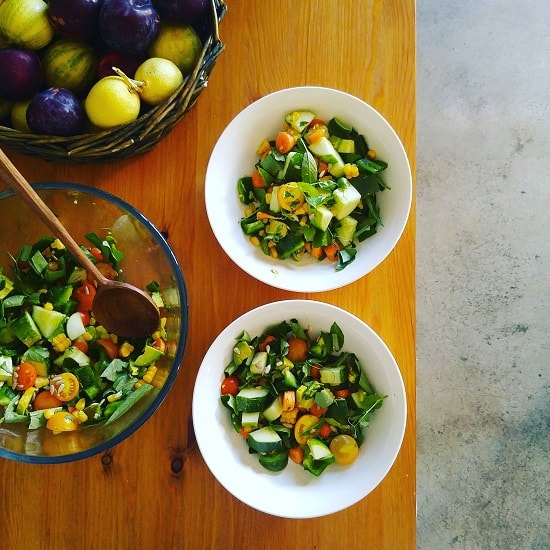
I’m a big fan of a colourful salad, but I also like making green salads where the only ingredients can be green. This can include: lettuce, kale, pan-fried broccoli, lots of herbs (ideas include coriander, parsley, Thai basil and mint – probably not all at once!), cucumber, green capsicum/pepper, green jalapenos, avocado. I always add some kind of fat (avocado, nuts and/or seeds) and try to include different textures. Capers add a bit of punch.

For salad dressing I add a squeeze of lemon or lime juice, maybe a dash of apple cider vinegar and a drizzle of tahini.

Colourful salads can contain everything! Don’t be afraid to add apple or pear, strawberries (which go amazingly with tomato) or mango to a salad. Roasted vegetables that have cooled are a great addition too (think butternut squash, sweet potato, beetroot). Always add some kind of crunchy topping – nuts or seeds, even croutons.

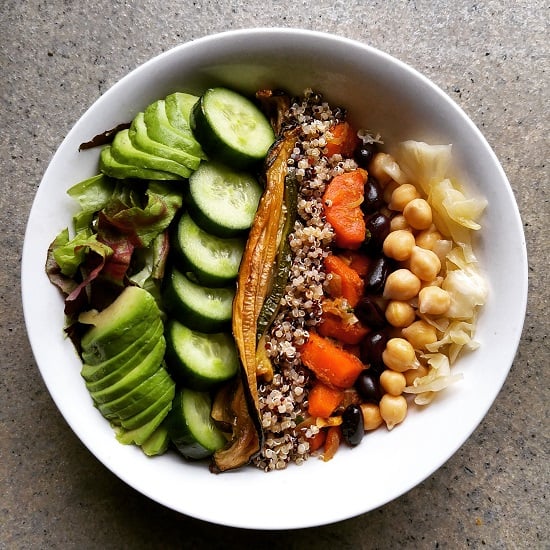
I often eat salad with a side of quinoa. Generally I mix it all up in the bowl, but here I was being all fancy-like. It’s simply green lettuce, cucumber, avocado, roasted zucchini, quinoa, roasted carrots, olives, chickpeas and sauerkraut (DIY sauerkraut recipe here).

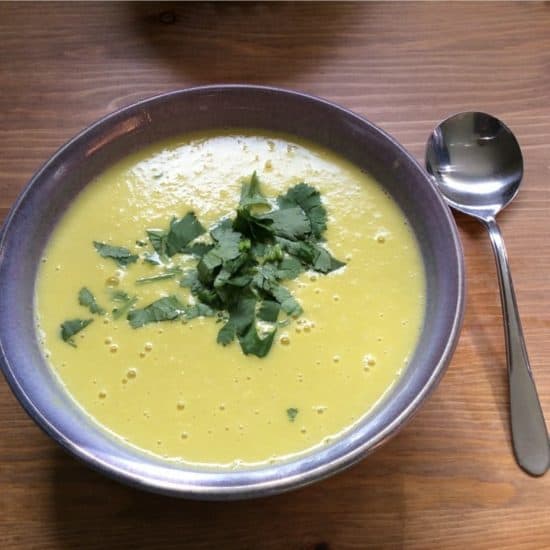
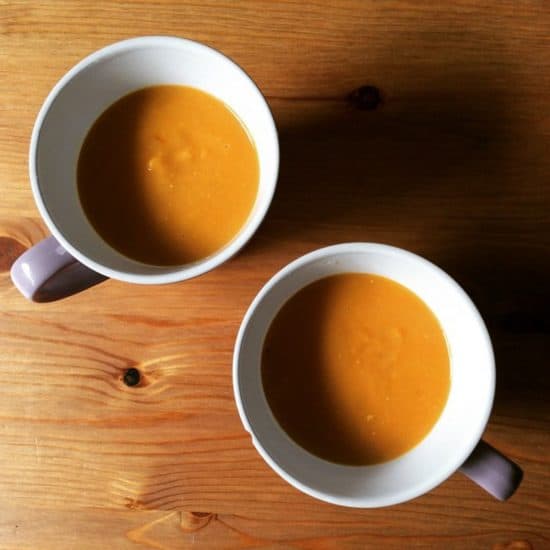
Soup is another lunch option. I tend to like soup that only has one or two vegetables in it (rather than generic chunky veg soup), so it tends to be made if I have a glut of something. I often have a corn cob with soup for lunch, and have been known to use soup as a pasta sauce.

A Zero Waste Food Diary: Dinnertime / Heavier Meals

I take a lot of my inspiration from Yotam Ottolenghi. The man is a vegetable-cooking genius, and he is not even vegetarian! An Israeli-Italian living in London, he knows how to use vegetables, pulses and beans to create filling, tasty, flavourful dishes. I own a couple of his cookbooks (and as a minimalist, that’s saying something!)

Some of his recipes can be a little fiddly but most are easily adaptable. If you’re unsure how to get started with vegetarian cooking, or using chickpeas and other pulses, I’d recommend his books Plenty and Plenty More (check your library).

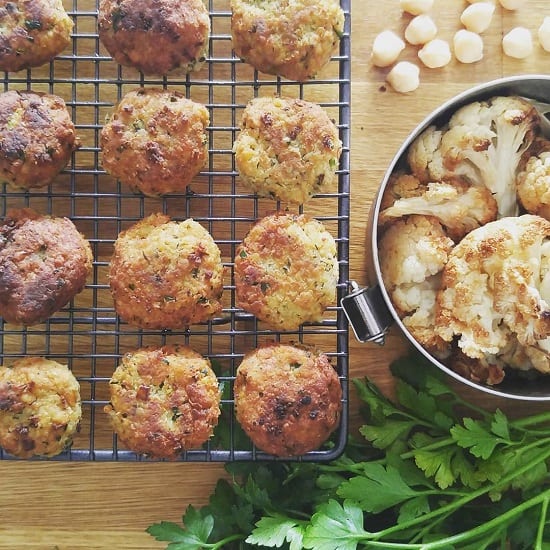
These falafels are not from Ottolenghi, but it’s the kind of thing you’d find in his books. (I suspect he has a recipe somewhere.) After struggling to make falafels several times, I’ve finally nailed a recipe and these have become a staple in our house.

(Back when I lived in the UK, before I went plastic-free / zero waste, I used to eat a lot of falafels. They came in a hard plastic tub, with a plastic film lid, then with a cardboard outer. You’d get 8 in a pack. I bought them often. Cringe!)

I almost always serve with roasted cauliflower (not tried roasted cauliflower? You’re missing a trick!) and a rice salad which I’ve talked about below.

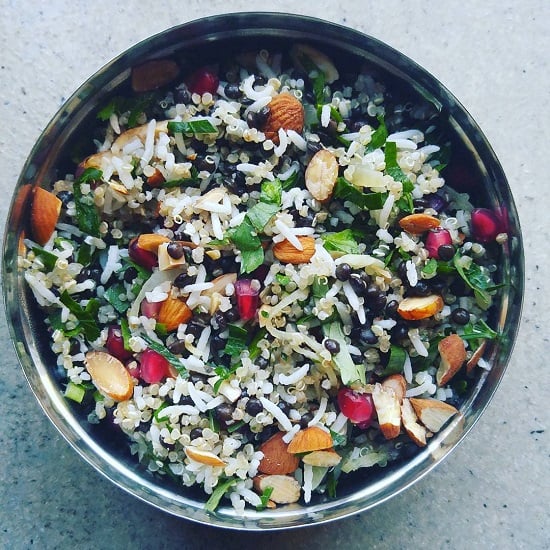
This rice salad definitely draws inspiration from Ottolenghi: he has a bunch of salads that look like this. I’ve made most of them over the years: these days I follow a general formula rather than a recipe as such. As a minimum I cook white rice, lentils (usually puy lentils) and quinoa. I cook all three separately and combine when cooled). I’ll thinly slice and fry onions until caramelised. Then I add heaps of herbs (coriander, parsley and mint tend to be the ones I have; I don’t necessarily use all but at least two). Finally I add something for sweetness (pomegranate, cape gooseberries, dried cherries) and something for crunch (roasted almonds, occasionally pine nuts).

Sometimes I’ll add wild rice, or use red rice instead of white rice. The puy lentils can be switched for beluga lentils, or green lentils, or even chickpeas. I’ll use spinach or mizuna lettuce instead / as well as herbs. Sometimes I add cumin or lemon zest. I find it pretty flexible.

I also make an enormous bowl and we tend to eat it for lunch and dinner for a few days.

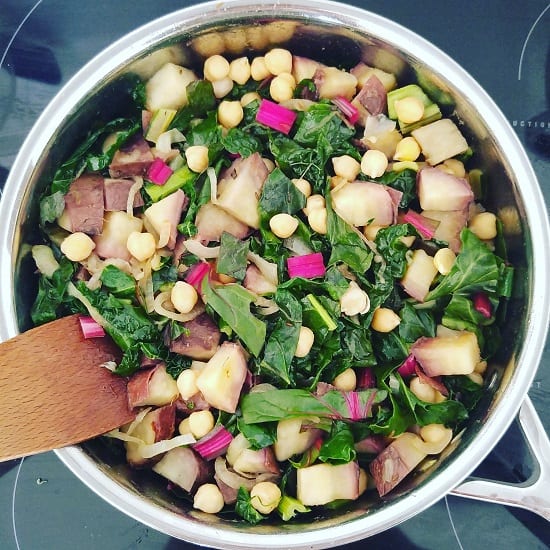
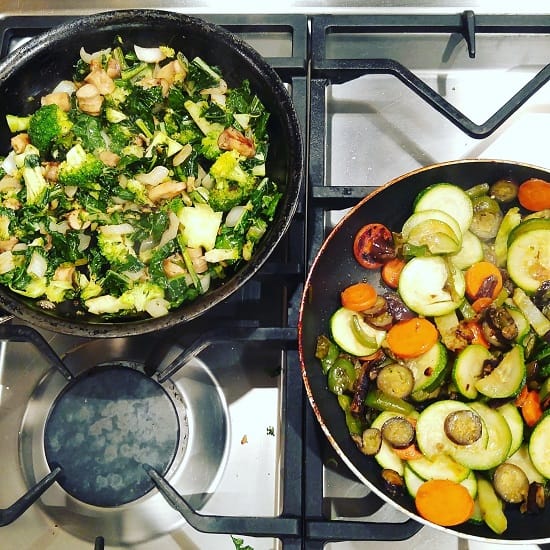
We also eat a lot of stir-fries and one-pot vegetable dishes. This one below was inspired by Ottolenghi – I didn’t have half of the ingredients, but had similar things so I looked at the picture and made my own version. It’s white sweet potato (pre-cooked) fried in a pan with onion, chard and chickpeas, and lots of lemon juice.

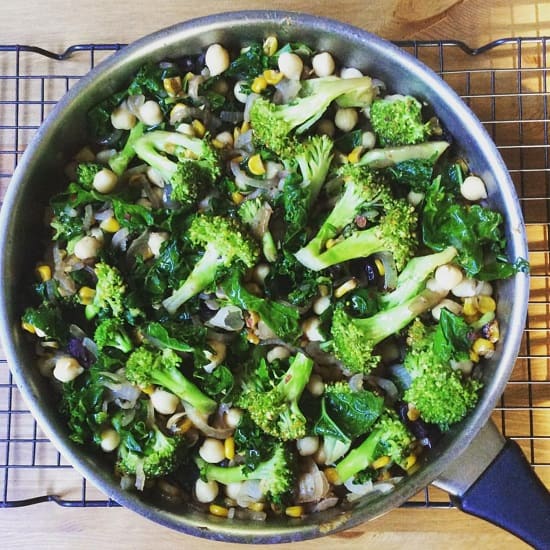
More vegetable one-pot meals: this would be the kind of filling I’d use for baked potatoes or sweet potatoes – topped with avocado and drizzled with tahini.

This is literally a use-up-whats-in-the-fridge meal. I used two pans to try and keep the flavours different and make it a bit more interesting.

We eat pasta occasionally, usually with a tomato-based sauce (we chop up fresh tomatoes), or with pesto (made with herbs from the garden) or a creamy sauce made with avocado. This is chopped greens (kale, spinach and parsley), fried in garlic, drizzled in lemon juice and mixed with some pesto.

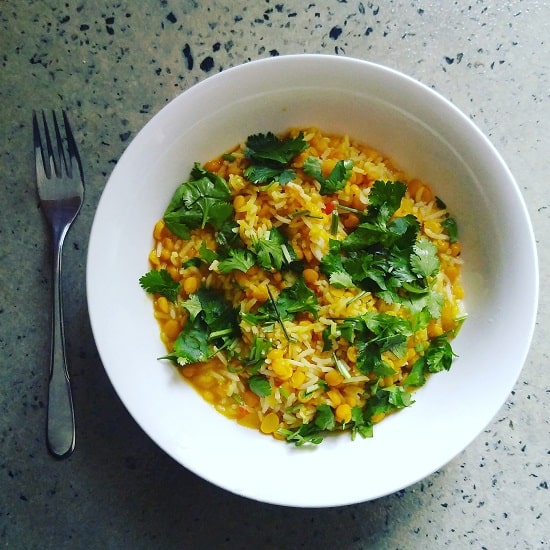
We also eat a lot of dahl (which is basically Indian spiced cooked lentils). I tend to use yellow lentils for this. I first made dahl using Nigel Slater’s recipe way back when. I still use it as a base recipe, but mess around with the spices, or add coconut milk (probably not a very dahl thing to do) or add lots of kale.

Usually I don’t mix dahl with rice, but this was a case of reheating leftovers and only wanting to wash one saucepan.

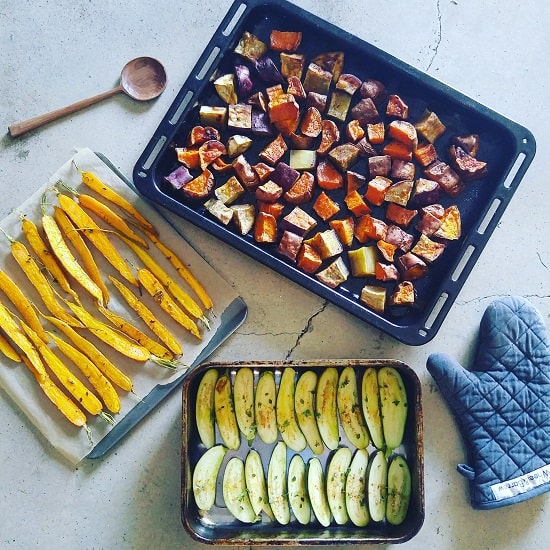
Roast vegetables are a winter staple in our house. I roast a lot of butternut squash and other pumpkins, sweet potato, beetroot, carrots. Once roasted I use in salads, as a side, or with puy lentils to make a more filling dish. Alternatively I used leftover roast veggies to make soup, or add to hummus.

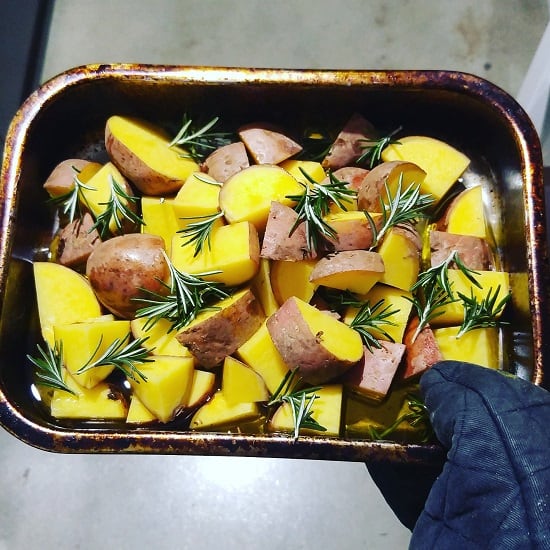
I have a guilty pleasure of roasting actual potatoes and then eating out of a bowl as a snack.

As I mentioned at the beginning, this isn’t a complete food diary of what I eat in a week – rather I’ve tried to show you as many ideas as possible. There’s plenty more I could talk about. Plant foods are so versatile, it is truly impossible to run out of inspiration!

In part 2 I’m going to be talking about zero waste snacks: in particular, snacks to eat when you don’t have access to a bulk store. Until then, I’d love to hear from you! What are your go-to zero waste meals? Any quick and easy ones you recommend? Or anything that takes a bit of effort but is totally worth it? Any flavour or ingredient combos you love? Anything else to add? Please share your thoughts in the comments below!

[leadpages_leadbox leadbox_id=1429a0746639c5] [/leadpages_leadbox]
https://treadingmyownpath.com/wp-content/uploads/2017/09/Zero-Waste-Food-Diary-Treading-My-Own-Path-Dual.jpg 496 1000 Lindsay (Treading My Own Path) https://treadingmyownpath.com/wp-content/uploads/2019/06/logo.png Lindsay (Treading My Own Path)2017-09-21 12:39:032018-12-15 14:08:31A Zero Waste Food Diary (Part 1): Mealtimes

Is Zero Waste Only for the Privileged? (And Does It Matter?)

81 Comments/in Zero Waste/by Lindsay (Treading My Own Path)

I’ve received a few emails recently asking whether I think zero waste is a lifestyle for the privileged. After all, it is predominantly represented in the media by white, seemingly middle-class females. Is zero waste really a lifestyle for everybody? Or just the more affluent few, or those with more time on their hands to spend traipsing to the various trendy organic stores and making DIY skincare products from scratch?

I wanted to explore this further by answering four questions: what is privilege; what is zero waste; is zero waste a lifestyle for the privileged; and ultimately, does it matter?

What is Privilege?

A good definition of privilege is this: “a special right, advantage, or immunity granted or available only to a particular person or group”. These “privileges” are often unearned, for example, being born into a particular country or family. Actually, privilege is a lot more complex than simply calling it an “advantage”. Often it’s multiple advantages, based on all kinds of factors.

This short video (less than 2 minutes) does a great job of explaining privilege, and this video below (which is 4 minutes) demonstrates how different people are affected by privilege in society.

In many ways, privilege is an advantage that manifests itself as choice. The more privilege, the more choice.

Having privilege doesn’t make anyone a bad person. It doesn’t mean not having to work hard, or struggle to achieve a goal. It just means having advantages that make these things easier than for someone else without that privilege.

What is Zero Waste?

I think it is important here to explain both “zero waste”, and also “zero waste as represented by the media”, because they are not the same.

“Zero waste” is about sending nothing to landfill, and recycling as little as possible. It’s about rethinking the way we do things: refusing what we don’t need, reducing what we use, reusing what we have, repairing what we can, and recycling as a last resort.

Zero waste is about consuming less, making conscious choices when we do need to make purchases, supporting companies who are trying to do the right thing and reducing our environmental impact. It’s about choosing second-hand, borrowing or making do, choosing things that will last and taking responsibility for our personal choices.

Of course, the media represent zero waste in a slightly different way. Zero waste in the media is the newsworthy bits, the glamorous bits, the bits that invite intrigue and discussion. The media love to talk about and show photographs of glass jars of annual trash, trendy bulk stores and Farmers Markets.

Some of the most popular zero wasters are glamorous Americans who are also extremely photogenic and live in beautiful houses and apartments, and their lifestyles lend themselves to media coverage.

But this is just a snapshot. Even glamorous zero wasters shop at second-hand stores, and compost their food scraps, yet this isn’t talked about nearly as much. Or they choose to buy nothing at all – but where is the photo opportunity there?

Is Zero Waste a Lifestyle for the Privileged?

I would say no. But also yes.

Whilst any “lifestyle” is a choice, and therefore infers some level of privilege, the zero waste lifestyle is the lifestyle of consuming less, of refusing the unnecessary. Of borrowing, and choosing second-hand. These choices are accessible to most.

So no, the zero waste lifestyle is not reserved only for the young, affluent, or those with plenty of time on their hands.

The media might represent the zero waste movement as white, female and middle-class, but scratch beneath this veneer and you will find that zero waste is embraced by men and women, young and old, from all of the continents.

The glass jar full of trash might be the emblem of the movement, but to me, the zero waste lifestyle is a philosophy and a set of principles rather than a destination.

Anyone can subscribe to the ideals.

How far and how quickly we can progress towards these ideals, in practical terms; I do think that is a matter of privilege.

Having a choice – about where we live, where we shop, what we buy and how we spend our money – that is a privilege.

I don’t have children. I don’t have elderly or sick relatives that I need to look after. I don’t have any disabilities, serious health complaints or allergies. I live in a city with plenty of options. I can do a big bulk grocery shop once a month because my budget allows me to, rather than having to go every week. Because the bulk store is very close to my house, I can also pop over there if I’ve forgotten a couple of things.

These factors make it easier for me to reduce my waste, and that is privilege.

Access to bulk stores and Farmers Markets, the choice of grocery store, being able to afford things like stainless steel lunchboxes or organic oats, these choices are not available to everyone.

For those of us who do have access to these things, we are privileged.

Of course, zero waste is not about stainless steel lunchboxes or organic oats. It’s about working towards reducing waste, consuming less and choosing better. Privilege makes it easier, for sure. The less privilege and the less choice, the harder we have to work for our desired results and vice versa.

Zero waste is no different from any other scenario.

Does it Matter?

I don’t want to talk about whether privilege matters. Rather, I’m interested in why, when it comes to living zero waste, privilege is talked about at all, and more so, why it is seen as a bad thing.

Privilege exists everywhere, that’s just a fact. Yes, privilege tends to mean more resources and more choice. Like many things, zero waste is easier for some than others.

But that shouldn’t stop us doing what we can. Every step is a step in the right direction, and small changes still add up to create a big impact.

Whenever I see negative press or comments about zero waste in the media, the discontent tends to be around privilege; perceived and actual. It is perceived that zero wasters are well off, and therefore the lifestyle is not attainable to most.

Firstly, I disagree that zero waste is only for the affluent. I disagree that we need expensive zero waste “trinkets” (like stainless steel lunchboxes or reusable coffee cups) to live zero waste. They are luxury items.

As someone who owns both a stainless steel lunchbox and a reusable coffee cup, I realise this. The most sustainable and zero waste choice would be for me to not drink coffee at all, and drink only water. But I enjoy an occasional coffee, and so I have a reusable coffee cup.

That doesn’t mean these things are necessities of the zero waste lifestyle.

The “stuff” gets talked about so much because it is a talking point! But talking about the “stuff” can detract from the real message.

 Zero waste is the lifestyle of refusing, rethinking, reducing, reusing and repairing. Of using what we have, and making do.

Buy nothing new and choose second-hand – that’s the zero waste lifestyle. Join the library – that’s the zero waste lifestyle. Ride a bike and get rid of the car – that’s the zero waste lifestyle. Refuse a plastic bag and a plastic drinking straw – that’s the zero waste lifestyle. Own less pairs of shoes, choose the best you can afford and wear them often – that’s the zero waste lifestyle.

Let’s not get distracted by the things that others buy. Zero waste is not about what we can afford to buy. It is about what we choose not to buy. Ultimately, zero waste is not a lifestyle of “buying” or “stuff”. The less we buy and the more we make do, the better job we do of living zero waste.

Secondly, I’m at a loss as to why anyone would think it is a bad thing that those with privilege are choosing to live zero waste, use less resources and tread more lightly on the planet. There are plenty of people with privilege exploiting the planet, using more than their fair share of resources, and encouraging consumption.

Why attack or dismiss those using their privilege trying to make the world a better place?

Anyone working towards reducing their impact and sharing what they’ve learned should be applauded, in my view.

I am very aware that I am white, female, middle-class, and living in Australia. The stories that I share are written from this perspective: my lived experience. Most zero waste advocates share their own experiences and lifestyle choices. It’s fact-sharing rather than prescribing a lifestyle for others. We do what we can, and we share what we know.

I do not think that people with privilege talking about and advocating for zero waste is a bad thing. However, if they are the only people talking about zero waste, then that is a bad thing.

I don’t think the issue is one of privilege. I think the real issue is one of representation. That is what matters.

Waste is something we all make decisions about, every single day. We all have the potential to create waste, and the opportunity to avoid it. Reducing waste is accessible to most.

But if zero waste is only talked about (or represented in the media) by one group of people, with one set of experiences, how can we expect everyone to embrace this way of living?

How can we expect those not in this group to relate, or to connect, or to feel inspired?

Whilst the zero waste movement is represented as white, female and middle-class, there will always be people who feel excluded.

I don’t have the answers, but I do know that if we want the zero waste movement to spread, we need to be supportive, inclusive, and encourage all voices, even those that are different to our own.

We need to recognize that people have different experiences and different journeys.

We need to recognize that we cannot and do not speak for everyone.

Where we have privilege, we need to be aware of it. Not deny that it exists, but recognise that it is there.

Privilege isn’t a bad thing in itself. It’s how we use it that counts.

[leadpages_leadbox leadbox_id=1429a0746639c5] [/leadpages_leadbox]
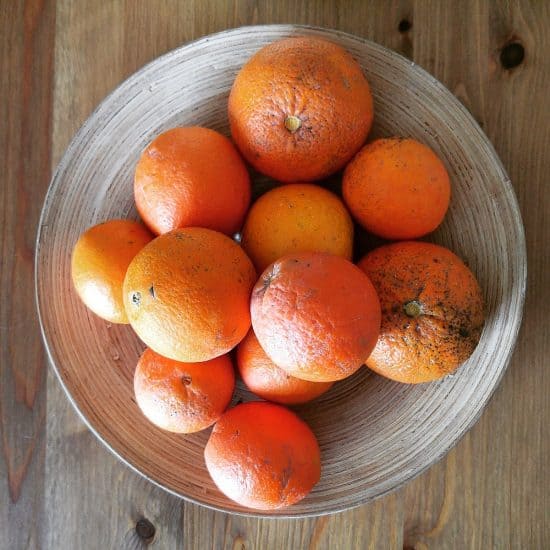
https://treadingmyownpath.com/wp-content/uploads/2017/09/Zero-Waste-Privilege-Treading-My-Own-Path.jpg 666 1000 Lindsay (Treading My Own Path) https://treadingmyownpath.com/wp-content/uploads/2019/06/logo.png Lindsay (Treading My Own Path)2017-09-14 12:00:212019-03-14 11:42:00Is Zero Waste Only for the Privileged? (And Does It Matter?)

A Beginner’s Guide to Sauerkraut (+ Fermented Vegetables)

43 Comments/in Recipes, Zero Waste/by Lindsay (Treading My Own Path)

Today, I’m talking cabbage. (Stay with me…it gets better, I promise!) Now cabbage and I, we have a bit of a love-hate relationship. I like cabbage, but it arrives in the veg box every week, reminding me that there’s still last week’s cabbage in the fridge refusing to go bad.

(Of course, I can’t put a perfectly good cabbage in the compost. If it happened to accidentally go bad…well, maybe I could justify it, but cabbage is stubborn!)

In fact, cabbage simply refuses to go bad, which actually makes it a rather good zero waste vegetable. (It shrivels a little and the outer leaves go brown, but peel those leaves back and there’s still perfectly good cabbage underneath.) Plus it grows at a time of year when many other more delicious vegetables do not.

If you want to eat seasonal and you live anywhere except the tropics, cabbage is going to feature on your menu. But cabbage week in, week out; it can wear a bit thin.

That, my friends, is why we need to embrace sauerkraut.

Sauerkraut is fermented cabbage. That might not sound delicious, but it’s a tangy, crunchy, super healthy vegetable that’s tastier than the name suggests. Sauerkraut contains millions of good bacteria, so is like taking probiotics, but without the packaging. Sauerkraut also lasts for ages in the fridge.

I’ve kept sauerkraut in the fridge for a year. Fresh cabbage might seem to last forever, but it won’t last a year.

The good news is, whilst fermenting sounds hard, it is actually very easy. Plus you don’t actually need any specialised equipment. Sure, there’s all kinds of fancy gadgets out there, but you can get going with a glass jar and a tea towel. Oh, and some cabbage ;)

That said, you don’t actually have to make sauerkraut with only cabbage. You can mix cabbage with other vegetables like onion, carrot and beetroot.

But let’s not get distracted thinking about all the wonderful potential! Let’s start at the beginning.

Some Fermentation Basics

Fermentation is a process that uses good bacteria and yeast to transform a product. By fermenting, we crowd out the bad bacteria with good bacteria, which changes the flavour and texture, but also helps lengthen the shelf life of the product. For example, yoghurt is fermented milk: whereas fresh milk will last in the fridge for up to a week, yoghurt might last a month.

Fermenting is anaerobic, meaning without oxygen. (Although confusingly, some foods are actually fermented with oxygen, such as vinegar.) In my experience of making sauerkraut, this “without oxygen” rule doesn’t need to be absolute. By removing oxygen we create conditions for the good bacteria to multiply, and these prevent the bad bacteria getting a hold and spoiling the food.

Fermentation has been used for centuries as a way of preserving food, prior to refrigeration. People were fermenting long before air-lock attachments and special fermentation jars were invented. This specialist equipment can help, but isn’t necessary.

I make sauerkraut a few times a year, and I simply don’t see the need to buy specialised equipment when it works without.

Because we are dealing with bacteria, we need to be careful not to be too over-zealous with the cleaning. I’d avoid using an anti-bacterial hand wash or chopping boards, for example. Clean is good, sterile not so much.

How to Make Sauerkraut (No Fancy Equipment Required)

I’m a big believer that you don’t need fancy equipment. I don’t use any, and I’ve been making sauerkraut and other fermented vegetables for over 4 years. If you’re a professional, that’s different, and with certain ferments, it can be crucial. But for sauerkraut, I personally don’t believe that it is.

Ingredients:

Cabbage;
1/100th weight of cabbage in salt.

So if the cabbage weighs 1 kg, use 10g salt. Basically, divide the weight by 100. (It is possible to eyeball it, but when starting out it helps to measure.)

Equipment:

A large bowl;
A glass jar that you can fit your fist into (or if you have large hands or small jars, you’ll also need a wooden rolling pin);
A weight that fits inside the glass jar (I use a smaller glass jar filled with water);
A tea towel.

Method:

I’ve included a lot of photos before to give you a really clear idea of what each stage is meant to look like.

Remove the core of the cabbage (the stalky white bit), and chop the cabbage into strips. Weigh the cabbage, put into a large bowl and sprinkle the salt on top (the amount is calculated based on the weight of the cabbage – 1 kg cabbage equals 10g salt).

Massage the salt into the cabbage with your hands, and the salt will begin to draw the water out of the cabbage. This is what you want to happen. Massage for 10 – 15 minutes until the cabbage looks like it has shrunk.

At this stage I always add a tablespoon of cumin seeds. I love the flavour it gives. You can keep yours plain, add cumin or go crazy with the spices. At the beginning, I’d suggest keeping it plain until you learn what flavours you’re meant to be looking out for.

Notice how the cabbage appears to have shrunk. (If you taste it at this point, it will taste like salty cabbage, not sauerkraut.)

Next you need to start packing the cabbage into the jar. Choose a jar that’s going to have room for the juices to expand because they will. Ideally find one that you can fit your hands into, but if not, a rolling pin will work.

Put a few tablespoons of cabbage into the jar, and press down as hard as you can. You want to squeeze out any remaining liquid. Keep adding the cabbage and pressing, and you’ll start to see the liquid rising above the cabbage.

This is important as the liquid helps keep the oxygen away from the cabbage, and creates the right conditions for fermentation.

Once you’ve put all the cabbage in the jar, add any liquid remaining in the bowl into the jar. Do not add any other liquid.

The cabbage will probably sitting slightly under the water level. To compact it down and thereby raise the liquid level, use a weight. I use a smaller jar that fits inside my large jar, or a bottle (I fill it with water to make it heavier).

If there’s any floating or escaped bits of cabbage, poke them under the liquid. Next, I cover with a tea towel.

The bottle on top is pressing the cabbage below the water line and excluding oxygen, and the bottle restricts the amount of jar entering through the lid. For me, this is enough.

If you’d like to put a lid on the jar (and it fits), this will exclude oxygen better. However, it has its own drawbacks. In the fermentation process, carbon dioxide gas will be released. Unless you remember to open the lid at intervals to allow the gas to escape (called “burping” the jar), your jar could explode. Won’t happen with a tea towel!

(That’s why you can buy fermentation valves that allow carbon dioxide to escape without letting in oxygen. For some things, like cider making, it is very important. For sauerkraut and lactic acid fermentation, it is less critical.)

Every day, check your cabbage. You’ll start to notice bubbles forming. I tend to press the weight down to squeeze out the bubbles, and also check for any floating bits. If there’s cabbage floating on the surface, it is in contact with air (oxygen), so needs to be submerged or removed.

After 1 day (see the bubbles starting to form both on top, and within the cabbage layers):

And after 3 days:

How quickly and how much it bubbles will depend a lot on room temperature. If your jar is narrow or filled to the top it can be helpful to place in a bowl as it might bubble over!

This is a different batch, but shows how much it can bubble (and I’ve seen more than this!):

I tend to keep my sauerkraut on the kitchen counter, covered with a tea towel (to also exclude light) until the bubbling subsides, which takes 1 – 2 weeks.

Some people like to leave their sauerkraut on the counter for several weeks or even months to increase the good bacteria (it will also taste more sour). In my view, it doesn’t really matter, and once in the fridge fermentation won’t stop, it will just continue very very slowly.

When the bubbling subsides, the sauerkraut should be crunchy and taste sour (but delicious). You may see a white film, this is kahm yeast and is harmless. I’ve never had an issue with mold, but if you see anything multi-coloured or blue, that batch might be better in the compost.

When you’re ready to place in the fridge, you can remove the cabbage/sauerkraut from big jar and put into something more practical. The less surface area the better, so choose a smaller jar. At this stage it is fine to place a lid on the jar.

Other Fermentation Ideas

You can ferment most veggies and even fruits, but they have varying levels of difficulty. If you’re a beginner, stick to hard veggies like beetroot and carrot, or use softer vegetables like onion as part of the vegetable mix, but not all of it.

That said, I’ve had success fermenting chillies, and I’m sure capsicums would work well also.

My personal favourites are carrot, onion and white cabbage with cumin seeds – taken from a South American ferment called curtido.

I also like beetroot and purple cabbage together because the colour is fantastic.

I made an amazing turmeric ginger sauerkraut once that tasted like piccalilli, but I’ve never been able to recreate the flavour combination since.

Fermentation is a great way to preserve vegetables, and it a healthier option than pickling: the food is literally “alive” with good bacteria (there’s not heat process to kill them) and there’s no added sugar.

Plus it means I get to keep my cabbage in the fridge for literally months, without feeling the slightest bit guilty about it!

Now I’d like to hear from you! Do you ferment vegetables? What are your favourite flavour combinations? Have you had any disasters? Are there any other tips you’d like to add? Are you tempted to give this a go, or does the idea still scare you a little? Please tell all in the comments below!

[leadpages_leadbox leadbox_id=123a865e9839c5] [/leadpages_leadbox]
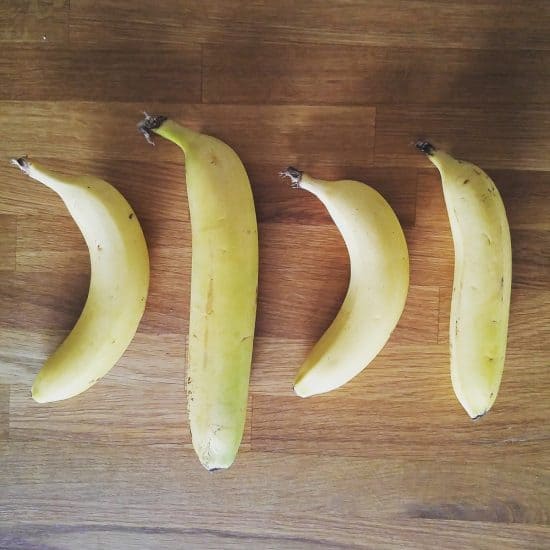
https://treadingmyownpath.com/wp-content/uploads/2017/09/picked-cabbage-sauerkraut-fermented-vegetables-less-waste-kitchen-zero-waste.png 1759 2640 Lindsay (Treading My Own Path) https://treadingmyownpath.com/wp-content/uploads/2019/06/logo.png Lindsay (Treading My Own Path)2017-09-07 13:24:372020-05-20 12:12:32A Beginner’s Guide to Sauerkraut (+ Fermented Vegetables)

10+ Practical Ideas for Eco-Friendly Plant Pots

18 Comments/in Permaculture Gardening, Zero Waste/by Lindsay (Treading My Own Path)

I started my plastic-free life back in 2012 and my gardening life long before that. When it comes to plastic-free gardening, though, I’m still a relative newbie. I lived in an upstairs apartment for my first few zero waste years, so there was no garden to practice with.

I’ve been living in our new place, complete with garden, for over a year now, and there’s been plenty of opportunity to learn. I’ve come to realise that whilst plastic-free might be the goal, there is so much “waste” plastic that can be reused in the garden, that I’m more focused on zero waste (and reusing) than plastic-free.

I’d rather use what exists than purchase new “zero waste” items.

I thought I’d share some of my plastic-free and zero waste gardening tips, beginning with eco-friendly plant pots.

Choosing Eco-Friendly Plant Pots when Growing from Seed

The best way to avoid waste is to grow from seed. Saving your own seeds, and swapping seeds with others, is the best way to source seeds. However, it isn’t always practical. If you’re establishing a new garden, like I was, you’ll probably need to buy seeds.

However, before you go shopping, I’d recommend looking for local gardening groups and seed swaps, just in case. A few of our local libraries even offer seeds to “borrow” – the idea is that once you’ve planted them and have your own seeds, you return these to the library.

Some seeds can be sown directly in the ground, but most need planting into trays or pots before planting out.

Toilet rolls

Toilet rolls are the perfect size for seedlings, and you can fold one end over to make a base. However, if you have a productive garden, getting enough can be a challenge!

If you need more, Buy Nothing groups and Gumtree are a great way to find them. Similarly, if you don’t need your own, they are a great way to offload them to someone who does. Save them up until you have enough to entice someone to make the trip, and give them away.

It sounds bizarre, but if you look you’ll see that old toilet roll tube trading is a real thing! ;)

Newspaper Pots

My favourite way to make seedling pots is folding them, origami-style, using old newspaper (you can find DIY instructions for making seedling newspaper pots here). There’s no tape and no glue, no tools required and it takes less than a minute to make one.

I love these as, unlike toilet rolls, there’s no need to store them. Grab a couple of old newspapers and make everything you need in half an hour.

You can buy tools to make newspaper pots. They are usually made of wood, and to make the pot the newspaper is wrapped around a cylinder and pressing into an indented base (here’s an example of a wooden paper potter). Personally I think they are unnecessary, and as a minimalist I like to keep my tools to essentials only.

Wooden Seedling Flats

These are wooden boxes that are not compartmentalised, used for seed-raising. They are filled with soil and seeds sown, which can be transplanted once they’ve germinated.

Seedling flats can be made from softwood (like pine) or hardwood. If looked after properly and maintained, they can last several years. The most eco-friendly option are those made from reclaimed timber and offcuts.

Soil Blockers

Soil blockers are metal presses that allow you to press soil together to make cells to plant seeds without any other material. I first heard of soil blockers via Milkwood, and whilst I love the idea, I’m yet to give them a go. A friend has recently purchased one so I’m keen to test it out and will keep you posted.

Purpose-Bought Compostable Pots

It’s worth noting that ‘compostable’ is not the same as ‘biodegradable’. Compostable means it will break down in a compost bin or soil into humus (natural material) with no toxic residue. Biodegradable means it will be broken down by bacteria under certain conditions (often tested in a lab).

A ‘biodegradable’ label does not guarantee it will be broken down into constituent parts, only that it will break down small enough that it cannot be seen. It does not guarantee there will be no toxic residue.

There are a lot of pots that fall under the “compostable” category. The most eco-friendly ones are natural and made of waste materials like coconut coir or aged cow manure. Less environmentally sound ones are made with brand new wood fibre, and/or peat moss (removal of peat moss has been linked to global warming).

Whatever they are made from, they are designed to be single-use. They require energy to manufacture, package and transport. If we can use what we already have, that is a more eco-friendly option.

They are more durable than newspaper or toilet rolls, so are a good option for growing seedlings to sell or where they need to look more professional.

Purpose-bought Biodegradable Pots

Biodegradable (but not compostable) pots are often made with PLA plastic, also called corn starch or plant-based plastic. This is a polyester made from plant material rather than fossil fuels like traditional polyester.

Some PLA pots will state that they are compostable, but this will usually refer to composting under controlled conditions. They should state the test standard used and be “certified compostable.” Without the certification, the claim is meaningless.

These pots are a more eco-friendly alternative to traditional fossil-fuel based plastic pots. It should be possible to reuse them a few times before they begin to break down.

Personally, if a pot says biodegradable but does not say compostable, or is made of PLA plastic, I would avoid it unless absolutely necessary.

Things I don’t recommend:

Eggshells might look cute, but they are ridiculously impractical to fill. I found the same with egg boxes, and they are so absorbent they dry out the soil, but if you don’t live in a hot climate, they might work. On the downside, too cold and damp and they will encourage mold growth.

Terracotta pots aren’t great for seedlings as the roots can attach to the clay and get damaged in transplanting. Brand new compostable seedling punnets might sound green, but they seem a waste of resources when there are so many other options to use.

Transplanting Seedlings to Bigger Pots

Sometimes seedlings need to be transplanted into bigger pots before heading out to the veggie patch.

Reusing Seedling Trays/Plastic Pots

I’m a big fan of re-using what we have. We don’t use plastic at home, but I often find plastic plant pots thrown out on verge collection day, and I collect them to re-use. Plastic yoghurt pots, milk bottles and other plastic containers that can all be re-used to make plant pots.

Plastic that has been used with soil is difficult to clean and won’t be recycled. That’s fine if you intend to reuse the plastic as plant pots again and again. If there’s a choice, it is better to choose plastic that isn’t recyclable over plastic that is, and aim for as many re-uses as possible.

Plastic that is left in the sun will also begin to photo-degrade (break down into smaller pieces). They will last better in cooler, shadier conditions.

Potting On (Transferring Plants from Small Plant Pots to Bigger Plant Pots)

Seedlings eventually grow up, and either go into the garden or need bigger, more permanent homes. Whilst it’s easy to find small pots in various sizes, as the size goes up the opportunities become more limited. Here I’ve focussed on some of the biggest options, which are big enough to plant a small tree.

Terracotta Pots

I’ve found that terracotta pots aren’t great for small plants that I intend to repot as the roots get damaged, but they are a great plastic-free option for bigger plants, bulbs or annuals. We got these pots from the verge when our neighbours moved to Queensland.

One thing to note about terracotta – it is porous, which means in hot summers it can wick moisture out of the soil. One solution is to paint or glaze on the outside or the inside, to maintain the moisture of the soil, or choose pots that are already glazed.

Wine Barrels

I love wine barrels. They look beautiful and rustic, and are a waste product of the wine industry, but they are also very expensive to buy. These two wine barrels were purchased several years ago, but now they’d cost more than $100 each. Great for a feature, but not practical if you are on a budget or need more than one.

Wine barrels can be stained or varnished to help protect them from the weather, but ultimately the wood will break down. In Perth with its long dry summers, a wine barrel receiving haphazard (or no) care should last several years. In wetter climates I’d expect they’d need more management.

Olive Barrels

Olive barrels are big 190 litre food-grade plastic barrels that olives are imported in. They cannot be re-used by the import/export industry, so they are a waste product. Yes they are plastic, but they are second-hand. Much as I hate plastic, I love re-use,. Most terracotta pots for sale in WA are imported from Italy, whereas these barrels are already here. They are also extremely low cost – one barrel costs around $25 and can be cut in half to make two pots.

I would always choose the orange barrels, which are food grade. The blue ones are chemical barrels and most originally contained pesticides and fungicides, or other chemicals. They also tend to buckle in full sun, whereas the orange ones do not.

I’ve made all my olive barrels into wicking beds, meaning they have a hole at the side rather than the bottom, and a reservoir below the soil to hold water. This means the soil can wick water from the reservoir in summer, so the plants need less watering. Because a container needs to be fully waterproof to do this, it is difficult to do without plastic.

Upcycled Things

Honestly, it is only your imagination that will restrict you when it comes to finding eco-friendly plant pots. I’ve seen garden beds and plant pots made of old toilets, sinks, bathtubs, metal tins, plastic clam-shells and much more.

Just because it isn’t round and sold in a garden centre, it doesn’t mean that you can’t grow something in it!

Now I’d love to hear from you! Do you have any other suggestions to add to this list? Do you have any “not-to-do”s or things to avoid? What’s the craziest thing you’ve ever seen used as a plant pot? And more importantly – did it work or was it a fail?! Please share your thoughts in the comments below!

[leadpages_leadbox leadbox_id=1429a0746639c5] [/leadpages_leadbox]
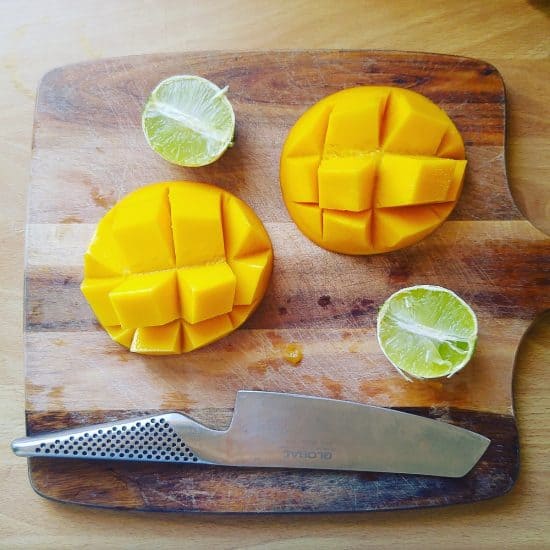
https://treadingmyownpath.com/wp-content/uploads/2017/08/Eco-Friendly-Plant-Pots-Permaculture-Treading-My-Own-Path.jpg 665 1000 Lindsay (Treading My Own Path) https://treadingmyownpath.com/wp-content/uploads/2019/06/logo.png Lindsay (Treading My Own Path)2017-08-31 13:40:112019-12-20 10:02:1910+ Practical Ideas for Eco-Friendly Plant Pots
Page 11 of 21«‹910111213›»

Pages

  • 9-tips
  • Birthday book reviews
  • Books
  • Cheatsheets and checklists
  • Every Blog Post I’ve Ever Written
  • Food Waste Challenge
  • Hoarder Minimalist Progress Tracker
  • Instagram
  • Join the mailing list
  • One More Step…
  • Real Food and Recipes
  • Thank you – 3 day food waste challenge
  • Thanks for joining!
  • The Less Waste No Fuss Kitchen Bonus Vault
  • Treading My Own Path Gift Voucher
  • Zero Waste + Plastic Free Living in Perth, Western Australia
  • Home
  • Quotes and facts
  • Resources
  • About
  • Infographics
  • Work with me
  • Minimalism / Simple Living
  • Plastic-free living
  • Upcoming events
  • Zero Waste
  • Explore
  • Blog
  • Less Stuff Book
  • The Less Waste No Fuss Kitchen
  • Thank You
  • Disclaimer & Copyright
  • Privacy Policy

Categories

  • About Me
  • Changemaking
  • Chemical-Free Living
  • Climate action
  • Community
  • Decluttering
  • DIY Skincare
  • Energy
  • environmental guilt
  • Ethical Living
  • Garden
  • growing food
  • Health & Wellness
  • How to…
  • Less Stuff
  • Living With Less Waste
  • Minimalism
  • Money-Saving
  • Musings
  • Out & About
  • Permaculture Gardening
  • Plastic Free July
  • Plastic Free Living
  • Real Food
  • Recipes
  • Simple Living
  • Sustainable Food
  • Thrift
  • Transport
  • Uncategorized
  • urban permaculture
  • Water
  • Zero Waste

Archive

  • November 2022
  • July 2022
  • April 2022
  • March 2022
  • February 2022
  • March 2021
  • February 2021
  • January 2021
  • December 2020
  • November 2020
  • October 2020
  • September 2020
  • August 2020
  • July 2020
  • June 2020
  • May 2020
  • April 2020
  • March 2020
  • February 2020
  • January 2020
  • December 2019
  • November 2019
  • October 2019
  • September 2019
  • August 2019
  • July 2019
  • June 2019
  • May 2019
  • April 2019
  • March 2019
  • February 2019
  • January 2019
  • December 2018
  • November 2018
  • October 2018
  • September 2018
  • August 2018
  • July 2018
  • June 2018
  • April 2018
  • March 2018
  • February 2018
  • January 2018
  • December 2017
  • November 2017
  • October 2017
  • September 2017
  • August 2017
  • July 2017
  • June 2017
  • May 2017
  • April 2017
  • March 2017
  • February 2017
  • January 2017
  • December 2016
  • November 2016
  • October 2016
  • September 2016
  • August 2016
  • July 2016
  • June 2016
  • May 2016
  • April 2016
  • March 2016
  • February 2016
  • January 2016
  • December 2015
  • November 2015
  • October 2015
  • September 2015
  • August 2015
  • July 2015
  • June 2015
  • May 2015
  • April 2015
  • March 2015
  • February 2015
  • January 2015
  • December 2014
  • October 2014
  • September 2014
  • August 2014
  • July 2014
  • June 2014
  • May 2014
  • April 2014
  • March 2014
  • February 2014
  • January 2014
  • December 2013
  • November 2013
  • October 2013
  • September 2013
  • August 2013
  • July 2013
  • June 2013
  • May 2013
  • April 2013
  • March 2013

Treading My Own Path

Privacy / Disclaimer

Sign up to the newsletter

Website by Órla Larkin

Lindsay Miles is an educator, speaker, author and passionate zero waste/plastic-free living advocate helping others live more meaningful lives with less waste and less stuff. She has been sharing ideas, tips, tricks and strategies on her website Treading My Own Path since 2013. Her first book, Less Stuff, was published in 2019 and her second, The Less Waste No Fuss Kitchen was published in June 2020. Originally from the UK, Lindsay now lives in Perth, Western Australia.

Lindsay Miles
© 2024 Lindsay Miles | ABN 84 679 541 090
  • Link to X
  • Link to Youtube
  • Link to Instagram
  • Link to Mail
  • Link to Facebook
Scroll to top Scroll to top Scroll to top

This site uses cookies. Cookies enable me to personalise your experience on this site so I can improve my content and communications.

I'm okay with that

Cookie and Privacy Settings


How we use cookies

We may request cookies to be set on your device. We use cookies to let us know when you visit our websites, how you interact with us, to enrich your user experience, and to customize your relationship with our website.

Click on the different category headings to find out more. You can also change some of your preferences. Note that blocking some types of cookies may impact your experience on our websites and the services we are able to offer.

Essential Website Cookies

These cookies are strictly necessary to provide you with services available through our website and to use some of its features.

Because these cookies are strictly necessary to deliver the website, refusing them will have impact how our site functions. You always can block or delete cookies by changing your browser settings and force blocking all cookies on this website. But this will always prompt you to accept/refuse cookies when revisiting our site.

We fully respect if you want to refuse cookies but to avoid asking you again and again kindly allow us to store a cookie for that. You are free to opt out any time or opt in for other cookies to get a better experience. If you refuse cookies we will remove all set cookies in our domain.

We provide you with a list of stored cookies on your computer in our domain so you can check what we stored. Due to security reasons we are not able to show or modify cookies from other domains. You can check these in your browser security settings.

Other external services

We also use different external services like Google Webfonts, Google Maps, and external Video providers. Since these providers may collect personal data like your IP address we allow you to block them here. Please be aware that this might heavily reduce the functionality and appearance of our site. Changes will take effect once you reload the page.

Google Webfont Settings:

Google Map Settings:

Google reCaptcha Settings:

Vimeo and Youtube video embeds:

Privacy Policy

You can read about our cookies and privacy settings in detail on our Privacy Policy Page.

Privacy Policy
Enough is Enough Free ebook for Subscribers front cover

Join our community and you’ll receive free new content every week and a downloadable eBook “Enough is Enough” to help you take the next steps!

Enough is Enough eBook

Please send me the eBook!

Send my eBook link to:

By downloading the eBook you agree to my Privacy Policy.

I hate spam as much as you do, and I promise to keep your email address safe. I will not share or sell your personal information, ever. You can unsubscribe at any time.

This form collects information I will use to send out the free eBook, new content once a week and an occasional newsletter (with other stuff I think you’ll find useful such as events).

Loading Comments...