
Permaculture Principles for Modern (Zero Waste) Living

Have you heard of permaculture? Founded by Bill Mollison and David Holmgren in the 1970s, permaculture was the development of agricultural ecosystems intended to be sustainable and self-sufficient. The term came from “permanent agriculture.”

Let me tell you, it’s actually about a lot more than gardening.

Since the 1970s, the idea has expanded and grown, as has the movement. At its core it is a ‘systems thinking’ approach, and the design principles can be applied to anywhere where sustainability is the focus.

But many people would describe permaculture as a “philosophy” – a set of guidelines to live by. Many people would describe zero waste in the same way. Both have the idea of fair share, not taking or using more than we need, not wasting resources or people.

Because of this, I think permaculture principles (and ethics) are just as relevant for plastic-free (and zero waste) living. They are relevant to people living within cities, and without so much as a pot plant to their name.

But many people without gardens simply don’t know enough (or anything!) about it.

Let’s change that! I’d like to introduce the permaculture principles, and their relevance (as I see it) to the zero waste movement.

Permaculture Living: The Three Ethics

At the centre of the movement are three ethics: people care; earth care; and fair share. I would argue that anybody who believes in sustainability believes in these three ethics.
Permaculture Living: The 12 Principles (And How They Relate To Zero Waste Living)

The 12 principles of permaculture, developed by David Holmgren in 2002, are described as “thinking tools”. Used together, they can enable us to re-design both our environment and our behavior in a world of less energy and resources.

They are guiding principles for an ethical lifestyle.

Observe and Interact.

To me, this is about taking the time to look around us, to explore our surroundings and learn from others. We often learn good habits from others, or we find answers simply by watching and thinking.

By asking questions, seeking out information and being open to learn, we can come up with solutions that work for us.

Catch and Store Energy.

To me, this is about efficiency. Making the most of things when they are abundant, and being able to use them when they are not.

We think of energy as electricity or power, but it’s just as true for water and food, and the energy embedded in resources. From a zero waste perspective, maximising the use of anything is encouraged.

I like to think of reusables as “caught and stored energy”. An item, build to last and used forever. Rather than single use items that require energy to make, energy to ship and then are gone from usefulness forever. Wasted energy.

Obtain a Yield.
In gardening terms, this principle is pretty obvious. Actually, it should apply to everything we do. Money is another obvious yield, but it goes deeper. We don’t have to be paid for something to get pleasure from it. Yield can also mean enjoyment, satisfaction, motivation, and fulfillment.

When we love to do something, the pleasure of simply doing it can be its own reward.

There is a danger of doing things that bring us no pleasure, satisfaction nor other reward: they ultimately leave us burned-out, demotivated, resentful and frustrated.

That’s not sustainable.

Apply Self Regulation and Accept Feedback.

Permaculture looks at this from a systems perspective, but I think it’s just as relevant for individuals.

None of us are perfect. We strive to do the best we can. When we receive feedback telling us there is a better way, or pointing out something we hadn’t thought of before, we can begrudge and feel judged and not take action; or we can embrace the challenge to improve ourselves a little more.

Use and Value Renewable Resources and Services.

This is definitely a principle that underpins both the plastic-free and zero waste movements. Most plastic is made from non-renewable fossil fuels, and recycling options for all plastics are limited (and result in downcycling).

The zero waste movement embraces a circular economy, and aims to see nothing sent to landfill.

Both movements value choosing materials that are natural, renewable, reusable, recyclable and biodegradable.

Produce No Waste.
My favourite principle! Clearly the zero waste movement is built around “produce no waste”, but permaculture has a different (broader) perspective.

Whilst permaculture recognizes there is a bigger system, the zero waste movement can lean towards individualism.

In permaculture, reusing and repurposing other people’s waste is a huge part of reducing our impact and use of resources. The zero waste movement celebrates individual action and achievement: it focuses on reducing personal landfill waste, but doesn’t always recognize that waste is still produced upstream.

Personally, I think they both have a place, and I think both ideals can learn from the other.

Design From Patterns to Details.

This principle recognises the value in observing before doing, and the importance at looking at the bigger picture before making choices.

From a zero waste/plastic-free perspective, I see the patterns as “habits” and details as “stuff”. Rather than deciding to embrace a low-waste lifestyle and then spending hours choosing the best mason jars to equip the pantry with, it is better to look at our habits first.

Take time to look for the patterns, and then decide what fits best.

It’s another way of saying: take time, observe first, and do second.

Integrate Rather Than Segregate.

Integration is important for any community. It’s what glues community together, and it’s what creates a movement. To get the best outcomes, we need to work together.

There is no ‘them’ and ‘us’. There is only ‘us’.

Whether we teach, motivate, encourage or provide support, communities are best when we embrace networks, share freely and collaborate.

Community is strong in both permaculture and zero waste, and for many of us, that’s the best part.

Use Small and Slow Solutions.

Bigger isn’t always better. Small and slow solutions are at the heart of the zero waste movement. Taking time, making do, thinking creatively; embracing local and seasonal.

Use and Value Diversity.

There is never a “one-size-fits-all” approach. There is rarely a single way to do anything. There are different voices and different perspectives, and different ways of doing things, even when the outcomes are similar.

We connect with different stories, and everyone has something to add.

Use Edges and Value the Margins.

In permaculture, we talk about the interfaces between things being where the most valuable, diverse and productive elements lie. The edge of a pond, lake or river; or the edge of the forest where the trees meet the grassland.

In zero waste, I think of these “edges” and “margins” as the parts that are often seen as waste – things like offcuts or scraps. Yet they have just as much potential and are just as valuable – it often just takes a little creative thinking.

Creatively Use and Respond to Change.

“Vision is not seeing things as they are but as they will be.” Both the permaculture and zero waste movements are build around a desire to do things differently; to do things better than the “status quo” of overconsumption and exploitation.

Both embrace creativity, not at an artistic level but at a solutions-based, practical and ideas level. Looking at the system, and creating new ways to do things better. Seeing things that aren’t working, and coming up with better ways.

It isn’t about having all the answers, or creating change on a global scale. It’s about being creative with what we know and what we see, and doing things differently.

For me, both permaculture and zero waste living offer practical solutions for those of us that feel dissatisfied with the current ways of the world, and want to  create a more positive future. Neither are perfect, but they enable us to do things differently, and encourage those that follow to go one step further.

Now I’d love to hear from you! Is permaculture new to you or old news? How do you think the permaculture principles compare to zero waste living? Which principles do you personally see as the most important – or do you think all of them? Do you have any personal principles that you live by? Anything else to add? Please share your thoughts in the comments below!

[leadpages_leadbox leadbox_id=1429a0746639c5] [/leadpages_leadbox]
Behind the Scenes: What ACTUALLY Happens to Recycling

I love a good tour of a recycling facility or a landfill site. Asking the question “where does our rubbish and recycling actually go?” is one thing, but to actually go and have a look? That’s a completely different experience.

Recycling is presented to us as a green, clean solution – but the truth is, it’s stinky, resource-intensive and run by markets. Meaning, if it’s not cost-effective to recycle, then it won’t be recycled. If no-one wants to buy the stuff that we’re collecting for recycling, then it won’t be recycled.

My first visit to a recycling centre (which has the technical name of Materials Recovery Facility, or MRF – pronounced “murf”) was back in 2012. I’d just taken part in Plastic Free July, and was working hard to reduce my plastic and choose glass, paper and cardboard instead.

That MRF visit changed my perspective on waste almost as much as Plastic Free July did.

Because it didn’t look like how recycling looks like in the brochures.

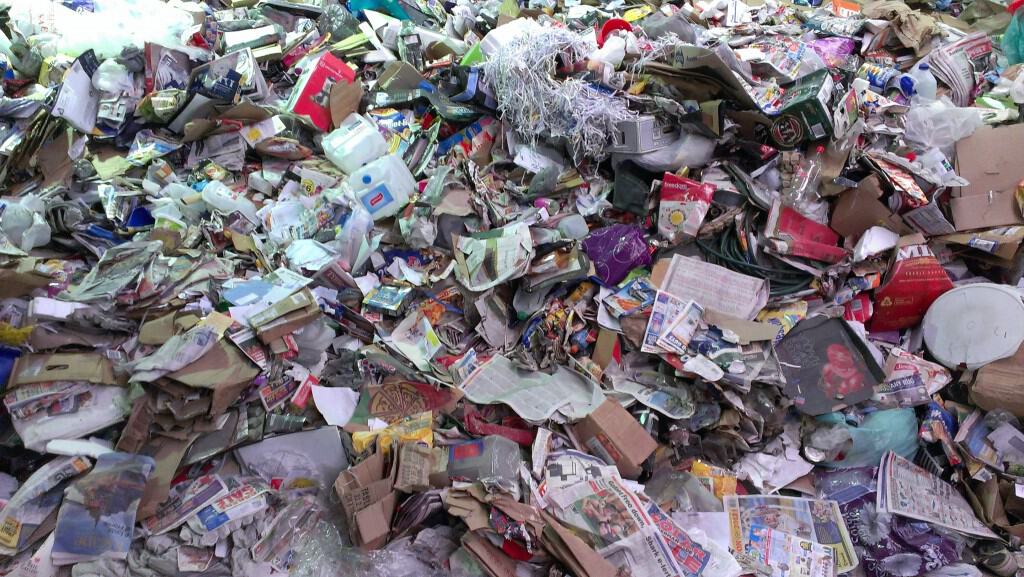
Because it was kinda stinky and gross, and there was so much of it.

Because the guy showing us around was hell-bent on telling us: if we can’t sell it for good money, we send it to landfill.

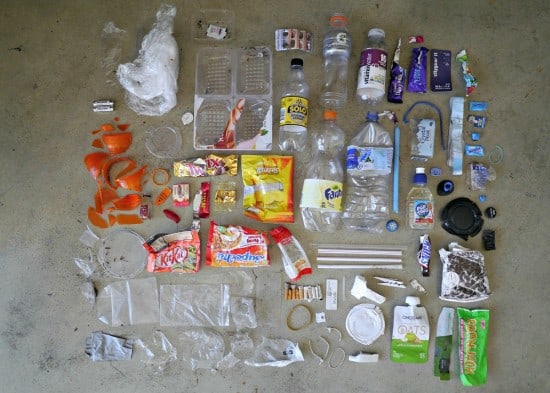
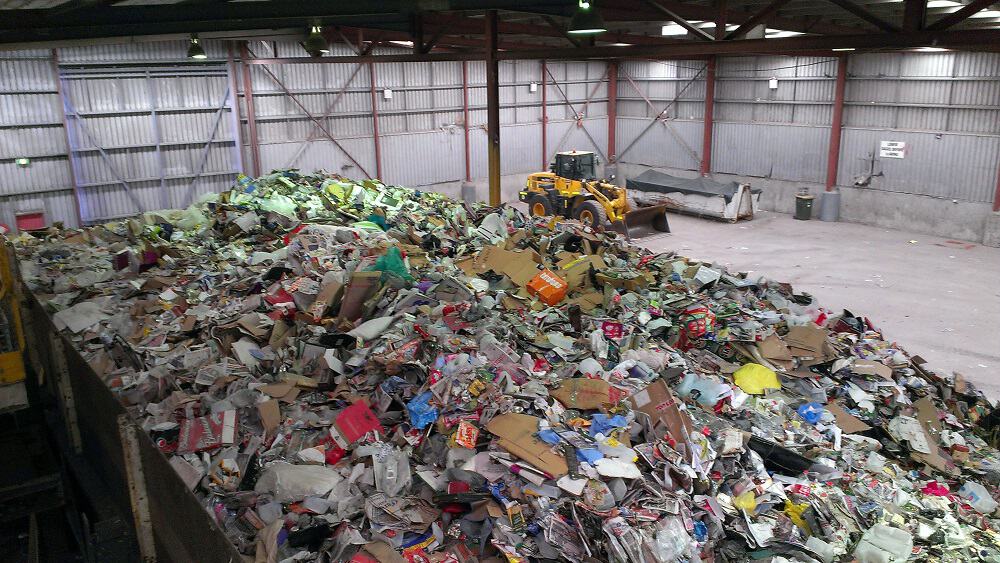
This was the recycling from just a few suburbs collected in a single afternoon.

Visiting that MRF challenged my perceptions of recycling. It wasn’t green, or clean. It was a business, and it was running for profit. If landfill was a cheaper option than recycling, then the resources were landfilled. The ones that were recycled were baled into containers and shipped overseas for processing.

Everything went overseas for processing. None of that happened in Perth.

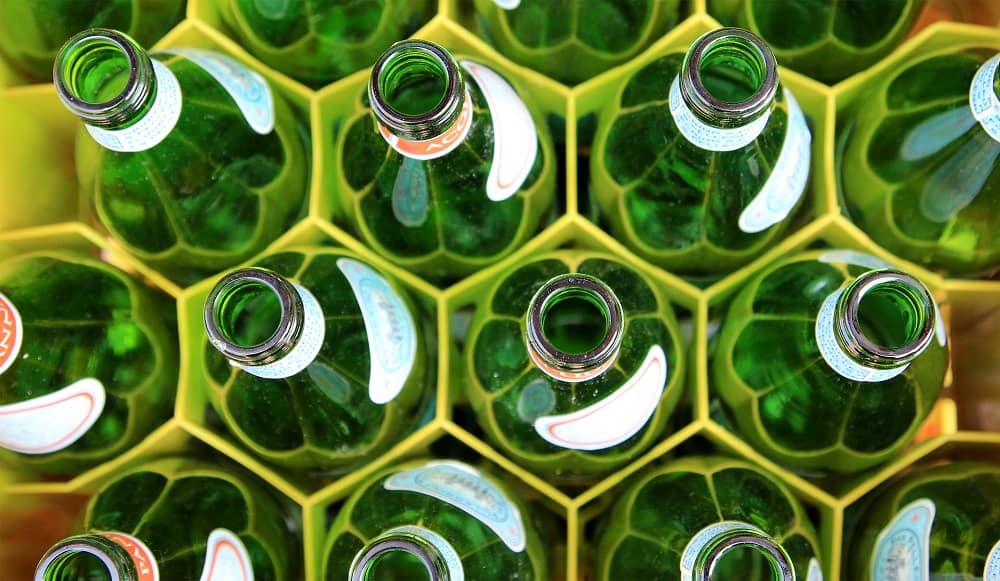
The biggest revelation for me was that glass is not recycled at all in Perth. Some MRFs sell glass to be crushed into road base (which I personally don’t consider to be recycling), but at this MRF, all glass was landfilled.

(Five years later and this is still true: glass is still not recycled in Perth, nor it seems, on the east coast of Australia.)

That visit to the MRF changed the way I viewed waste completely. There I was, choosing glass over plastic, only to find out that all that glass was heading to landfill.

That was not what I had expected.

That was my realisation that it wasn’t just plastic I needed to refuse, it was all packaging. I hadn’t heard of “zero waste” back then, but that visit was the start of my zero waste journey.

I’ve been pretty obsessed with waste ever since, and I’ve been to plenty of MRFs and other waste recovery places to find out exactly what goes on. I thought I’d share a few of these insights for those of you who can’t make it to one.

What Goes on at a Materials Recovery Facility (Recycling Centre)?

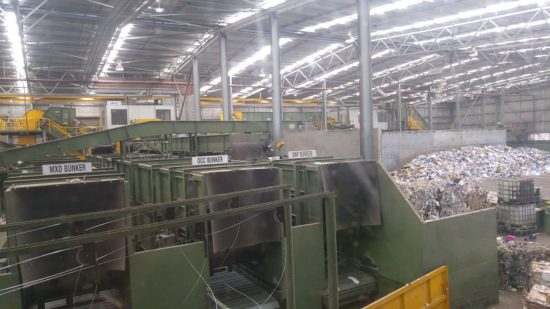
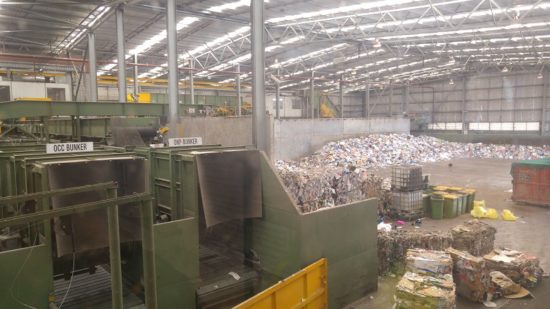
This is one of several recycling facilities in Perth. This facility services 5 councils. It cost $20 million to build.

The recycling is dumped on the floor by the recycling trucks, and from there is loaded onto a conveyor belt and the various recycling streams are sorted.

First the cardboard and paper is separated by spinning rollers into mixed paper, old corrugated cardboard and old newspaper (the three structures labelled in the picture below).

The glass is sorted by a tremel, crushed and used for road base. The steel is separated by a magnet, the plastic is sorted by an optical eye that can differentiate PET, HDPE and mixed plastic, and these are separated. An eddy current is used to separate the aluminium.

The resulting materials are baled and loaded into containers for shipping overseas: China, Malaysia or Indonesia. The recycling facility works on 3-month contracts with these purchasers.

What happens once these materials arrive overseas is a grey area. The companies have standards and agreements to adhere to for recycling and processing the waste, but there are also reports that most of the plastic is burned as a cheap alternative to fossil fuels.

What Happens with Commercial Composting?

Commercial composting can use various different “wastes” but for households, there are two main types of collection – those that use a dedicated food organics and garden organics bin (FOGO – they do love acronyms in the waste industry!) and those which compost the general landfill bin.

This facility composts the landfill bin. This means a much higher level of contamination.

Residents tend to put things in their landfill bin that they are told they cannot recycle. That makes sense, yes? But it means plastic, broken glass, pottery, broken electronics and all kinds of other stuff gets mingled in – and sent here for composting.

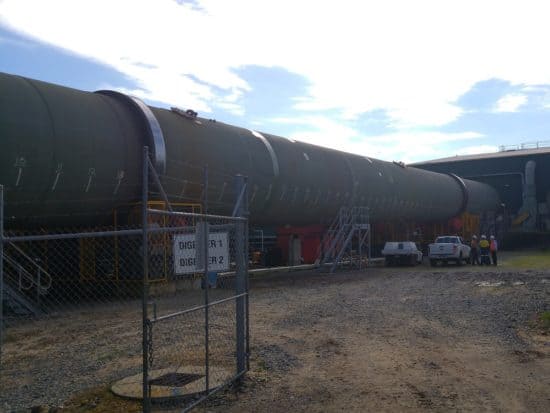
The first job is when the landfill waste arrives here is to remove as much of the big contaminants (bicycle wheels, gas bottles, large plastic items) from the waste. This is sorted with a big truck. Then it’s loaded into the composting machines, called digesters. They are 67m long, and there are 4 of them at this facility.

The “waste” is rotated in the digester for 3 days before being deposited in a large warehouse (the size of two soccer fields) to mature. It’s turned every few days by a machine, and cooled using giant fans to circulate air.

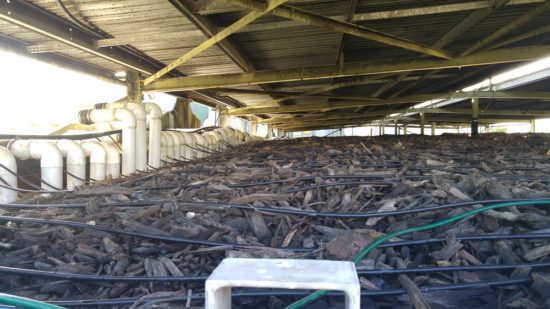
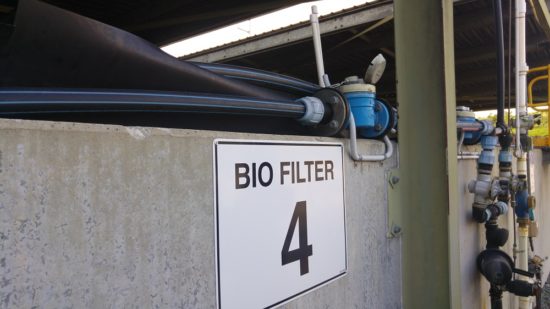
To prevent odours, the digesters have these enormous biofilters, made of tanks filled with water and wood chips. There are four of these: one for each digester. The air is sucked out with a vacuum filter.

The compost is then sieved and screened to remove metal, plastic, glass and other pieces, and transported for further processing. Because it still has high levels of contaminants, it is only suitable for agricultural use.

Commercial composting facilities that accept dedicated food and garden organics bins have much lower levels of contamination and produce a higher grade compost.

Is This Typical? Is This What Happens to MY Recycling?

The truth is, every recycling facility is different. Some are much more high-tech than this, and some are much lower tech. Some use hand-pickers (real people who separate rubbish and pick out contaminants) and others rely solely on machinery.

Commercial composters are also different, and processes vary. Some councils don’t utilise these services at all, and simply landfill the contents of the landfill bin.

No two Materials Recovery Facilities are exactly the same. (Even where the machinery is the same, the contractors might be different, the ability to sell resources to markets is different, volumes will differ, and operating costs – meaning profitability -will be different.) If you are even the slightest bit interested in waste and where it goes, I recommend visiting your local one. Many (but not all) are open to the public. Contact your local council or waste contractor, and ask if they run tours.

Even if they don’t, there might still be an opportunity to have a look. Ask the question!

No Recycling Facility has 100% Recycling Rates

Recycling is always subject to contaminants, error and changes in the market. Someone putting the wrong thing in the wrong bin can contaminate a whole load (think asbestos and hazardous waste).

Markets change all the time. The value of plastic fluctuates with the price of oil. If oil prices are low, there’s less incentive for manufacturers to use recycled plastic as new plastic will be cheap. If oil prices are high, it’s more expensive to ship low-cost materials overseas for processing.

Councils often encourage us to put things into our recycling bins to get us into good habits. Or, they might prefer non-recycables to go to a recycling facility for sorting and removal, rather than putting them through a commercial composter (where they can do more damage). Or they think it is just too confusing to go into details, and we’ll get overwhelmed if they don’t make it really simple for us.

Acceptance of a material into a recycling bin is not a confirmation that the material will be recycled. It just means that it is the preferable option: to establish good habits, reduce contamination elsewhere, and give us faith in the recycling system.

Recycling Uses Huge Amounts of Energy

Recycling takes a huge amount of resources. Trucks need to collect those recycling bins from our streets, drive them to sorting facilities (and sometimes they get taken to a transfer station first, meaning two road trips) and then heavy machinery is required to sort the different streams. Then the materials need to be baled, loaded into containers and shipped to their final destination – which is often overseas.

Once overseas, there’s more processing and transportation.

Yes, recycling helps reduce new materials from being mined out of the ground. Yes, it uses less energy overall than making new things. Yes, it definitely keeps things out of landfill and keeps materials in circulation longer.

Recycling is definitely preferable to not recycling.

But recycling is not a perfect solution. 

Recycling is not a get-out-of-jail-free card.

Refuse, rethink, reduce, reuse and repair – they all come before recycling.

Much as I’d love to live completely waste free, we don’t live in a circular economy. Many things are not designed for reuse. I still produce recycling – everyone does. I still receive letters in the mail, purchase the odd thing in paper or cardboard, buy wine in glass bottles on occasion, and  find plastic packaging entering my home.

But I try to keep my recyclables to a minimum. If I can refuse something, then I will.

I pop those things I can’t (or choose not to) avoid in my recycling bin and I hope for the best.

Before I embarked on my zero waste lifestyle, I would see my full recycling bin as a badge of honour for being the responsible eco-citizen. Now I see anything that enters my recycling bin as a waste of resources, a failure of my imagination, a flaw in the system.

Most importantly, I see these things as something to work at improving for next time.

It is fantastic that recycling exists. It saves all those resources from landfill, and gives them the opportunity for reuse. We will always need recycling, but we mustn’t rely on it, or think of it as the solution.

Recycling is a great place to start. But it’s a terrible place to stop. We can do so much better.

[leadpages_leadbox leadbox_id=1429a0746639c5] [/leadpages_leadbox]

How I Feed My Dog Without Plastic

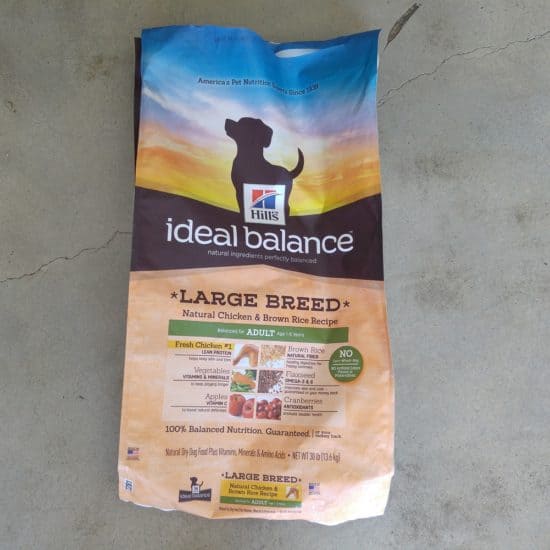
You may remember that my Plastic Free July pledge this year was to stop buying dog food in plastic, and start making it myself. Aside from the plastic, I didn’t love that the brand that suited our greyhound best was imported from the USA, I didn’t love that it was supporting industrial agriculture, and I didn’t love that it was highly processed.

These are all things I try to avoid, and I was very conscious that buying this was against so many things I believe in.

Believe me, we tried other brands. We tried all of the Australian ones, and several other high quality ones. Whilst he ate them all with equal vigour (our boy loves his food), we noticed other effects: fat depositing around his neck, weight gain, loose stools, and one brand that led him to go to the bathroom four times every single day.

Not to mention, all the brands left his skin very itchy. Sometimes he would nibble at his legs so much his skin would bleed.

Enough is enough. I had to at least try homemade dog food.

Our greyhound Hans came to live with us a year ago. It was time to stop making excuses, and start knuckling down and getting the plastic-free dog food happening.

 Getting Started with DIY Dog Food

The internet can be an overwhelming place, and full of contradictory information as to what is best. My three main concerns were:

  • How would I know how much to feed him? (Wet food is very different to dry food.)
  • How would I ensure he was getting all the nutrients he needed?
  • How would I know that the food was safe?

Before I go any further, disclaimer. I am not a vet, nor am I an animal dietitian. This is not professional advice nor a recommendation. This is what I am exploring for our dog based on my own research and am sharing for information purposes only. Please do you own research or consult a professional.

How Much Do I Feed My Dog?

There are plenty of guidelines for feeding dogs wet or homemade food on the internet – and of course, they are all slightly different! I realised that if I underfed or overfed him, it would eventually become apparent with changes in his weight, energy levels and appearance.

Hans weighs 30kg, and he’s being fed 800g – 1kg of food per day.That seems to fit within most recommendations.

How Do I Ensure My Dog Gets All the Nutrients They Need?

I worried about this for a while, before realising that there are plenty of commercial pet foods that fall short here. Dog nutrition wasn’t even considered a few decades ago. Not forgetting, there are plenty of people who do not consume all the nutrients that they need.

In natural habitats, dogs are scavengers. They don’t get two meals a day fed to them out of a bowl. They might not get two meals a day.

That’s not to say I don’t want to do my best. But it gave me some perspective.

I looked into nutritional supplements to add to homemade dog food, but many of the recommended ones are not available in Australia.

I looked at the labels to discover the ingredients, did some research into the nutritional benefits, and opted to make my own.

How Do I Know My Homemade Dog Food Is Safe?

That was the easiest one to answer, because there is plenty of information on the internet regarding ingredients that are safe for dogs, and those that are not.

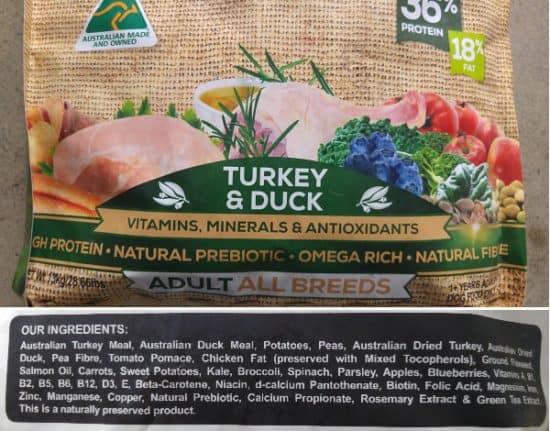
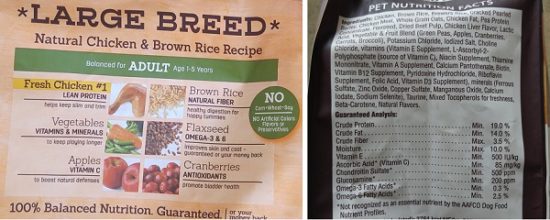
The second thing I found helpful was to look at the ingredient lists on the dog food I was buying, and try to mirror these ingredients in the dog food I was making.

Half the ingredients are things commonly available: carrots, sweet potato, rice. Other ingredients had unpronounceable names. For these, I asked the internet:

  • What is [insert name of unpronounceable ingredient]?
  • What foods contain [unpronounceable ingredient]?

Then, if I wasn’t sure, I’d ask: is [food containing unpronounceable ingredient] safe for dogs?

It turned out that these ingredients were either preservatives or a component/vitamin/mineral found in many natural foods.

In terms of toxicity, or malnutrition – these things become apparent over time. We are keeping a close eye on Hans and if we notice any change in his appearance or behaviour, we will consult a vet.

DIY Homemade Dog Food – Vegetable Component

Dogs need protein, fat, minerals and vitamins. Dogs don’t actually need carbohydrates at all. Carbohydrates like white rice and corn are  typically used in commercial dog foods as a filler, because they are cheap. But they offer little nutritional value.

For several months before I embraced the DIY dog food, I tested various ingredients on our greyhound. I’d add a small amount to his bowl along with his kibble. He gobbled everything up. And I mean everything.

I’ve heard that greyhounds can be fussy eaters. Not our boy!

The vegetable component has three parts, in equal proportions.

1. Protein component: 33%

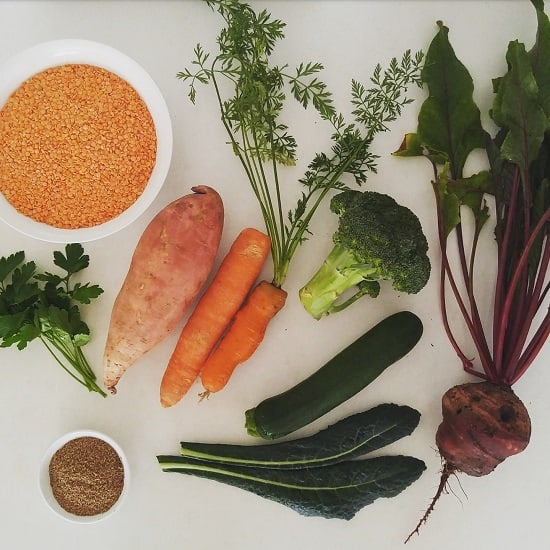
Rather than use carbohydrates as a base, I use lentils. They are cheap but contain protein and vitamins. Typically I use red lentils as they are quick to cook. I soak for 30 mins, rinse thoroughly, and boil in a pan for 30 minutes. Once they have cooled I blend to a puree.

Red lentils are my preferred choice, but I have also used green/brown lentils, puy/French lentils, chickpeas and black beans. (Chickpeas and black beans require much longer soaking and cooking times.)

2. Sweet Potato or Pumpkin Cooked Vegetable Component: 33%

Sweet potato is a good vegetable to give dogs, because it contains beta-carotene, a pre-cursor to vitamin A. It also grows well in Western Australia and is available all year round.

Occasionally I use pumpkin (butternut squash or Japanese pumpkins) as an alternative.

I grate in my food processor, then steam for 12 minutes until cooked, and blend together with the lentils.

3. Raw Vegetable Component: 33%

This tends to be mix of whatever is in the fridge or the garden, but typically is 50% raw carrots and 50% of a mix of green leafy vegetables, beetroot, brassicas (broccoli, cauliflower), zucchini/courgette and cucumber.

These are blended together raw, and then mixed with the lentils and orange vegetable components.

DIY Dog Food – Vegetable Fats

I add a tablespoon of oil (olive oil or coconut oil) to every meal, and/or 1 tablespoon of ground flax seeds. Hans is also a huge fan of both peanut butter and tahini so I sometimes stir this through his food as a treat.

DIY Dog Food – Animal Products Component

Hans gets a fair amount of protein from the vegetable component of his diet, but we also add fish, eggs and other animal products.

Sardines: 4-5 per Week

Rather than feed Hans fish oil or supplements, it makes sense to me to feed him whole sardines. He eats whole sardines (head, guts and all) and he loves them.

Eggs: 2-3 per Week

Several of our friends have egg-laying chickens, so we source our eggs directly from them rather than buying commercially produced eggs. I also save the eggshells, wash, dry and grind them into a powder, and add a tablespoon along with a raw egg mixed in with his food.

Chicken Necks: 4 a Day

We’ve got a system with our butcher now where we drop off a big container, and when he gets chicken necks in, he fills up the container and gives us a call to collect. I was terrified of giving Hans chicken necks at first because I’d read that dogs can swallow them whole. Of course, the first time I gave him one, he swallowed it whole. And the second one. Naughty boy!

Now I have to hold them at either end and feed them by hand to ensure he bites in the middle and chews before swallowing.

Other Meat

I’m still finding my way with this one. I’m still exploring the various butchers and trying various options, and I don’t have an answer… yet. Hans is happy with whatever he gets, so it’s up to me to find a waste-free, sustainable and local option that I’m happy with.

DIY Dog Food – Nutritional Supplement

I make up a supplement to add to the dog food to give it an extra nutritional punch. I looked at a number of supplements (both available for purchase and DIY recipes), looked up the nutritional content of each ingredient, and made my own based on that, along with what ingredients I could find.

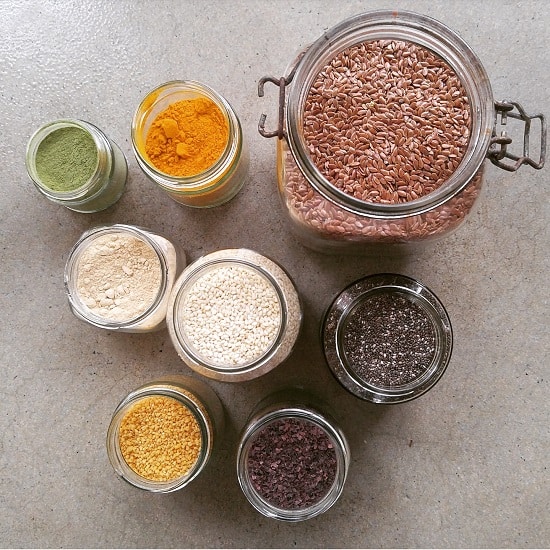
The ingredients I use: ground flax seeds, ground sesame seeds, chia seeds, barley grass powder, lecithin, turmeric, maca powder, and seaweed (either dulse flakes or wakame).

(I realise these ingredients might sound very foreign! I’ve been able to find most of them in bulk at The Source Bulk Foods, who have 35 stores across Australia. The only one they don’t stock is wakame. They also sell other things like brewer’s yeast and other green powders which can be used instead/as well as. Outside of Australia, I’d try a health food shop.)

I’m still playing around with quantities of each ingredient, and also how much to use.

DIY Dog Food – Progress so Far

So far, we have been DIYing it for about 7 weeks. As with all new habits, getting into a routine is the hardest part. We’ve also had to pretty much empty our freezer of our food to fit in Hans’ food!

I can’t report back regarding cost yet, as we are still finding our way. I hope to do an updated post in a few months with actual recipes and costs involved.

The Positives:

Hans loves his new food! He gets much more excited now we’re serving up fresh food than he did with kibble (although he still thought kibble was pretty darn fantastic.)

I feel better about what I’m feeding him. I just feel more comfortable knowing his food is natural and not made in a factory somewhere overseas.

His energy levels are unchanged.

His stools are much better! Which is very helpful when you’re trying to pick them up with newspaper and take home to compost ;)

He has completely stopped itching. Whatever it was that was irritating his skin in the kibble, it’s no more. Hurrah!

The Negatives:

Hans has lost a bit of weight. Actually, we think he might have been a little overweight before (something that is VERY hard to tell with a greyhound). Lots of people have commented on how good he looks and how good his coat looks. But we are keeping an eye on him to ensure he doesn’t get too skinny.

We now have a new friend (or should I say trip hazard) in the kitchen. Whereas he never showed much interest before, now he knows that his dinner comes from there, he is like a constant companion. And if you open the fridge door – there he is beside you!

Did I just hear the pantry door open?

Now I’d love to hear from you! This is all new to me, so I’d love to hear from your experiences. Do you make your own dog food, and if so, what ingredients do use use? What lessons have you learned? If you want to give it a go but are unsure where to start, what are you stuck on? Are you a vet and do you have any (off-the-record) advice? Anything else to add? Please leave a comment below!

[leadpages_leadbox leadbox_id=1429a0746639c5] [/leadpages_leadbox]

Plastic Free and Taking the Challenge One Step Further

For most of us, living with less waste begins as a personal journey. As we start to discover more about the issues caused by waste, particularly plastic, and the options and alternatives, most of us begin wondering how we can get others involved. Whether it’s our families, our friends, our colleagues, the local school, the local cafes or shops, we want to spread the message and bring others with us on the journey.

Today’s post is about what you can do to take that step: to take the ‘living with less waste’ message out of our homes and into the community.

Host a Movie Screening

A movie screening is a great way to get people together to raise awareness of the issues, and start a discussion about solutions and alternatives.

One of the first things I did after signing up to Plastic Free July for the first time back in 2012 was attend a community screening of the plastic documentary Bag It. Even more than signing up to the challenge, that documentary changed my life. In a little over an hour I’d gone from feeling fairly relaxed about my plastic use to realizing that plastic was a huge problem but with so many solutions – and something that I could do so much about.

Movie screenings can be as big or as small as you like. Anything from:

  • borrowing a DVD from the library and showing it to a few friends and family;
  • Getting a community screening license from a distributor to show a movie in a public place such as a community hall or function room;
  • Using community screening platforms such as Tugg, which allows you screen documentaries in cinemas, through selling tickets in advance. The model works a little like crowdfunding – if not enough tickets are sold, the screening is cancelled.

If you’d like some inspiration for a good documentary to show, my top 10 list of documentaries might be a useful starting point.

Host a Plastic-Free Morning Tea or Supper

Invite others in your local community, workplace or school to attend a waste-free morning tea or supper, where all of the food has been purchased and prepared without single-use packaging.

You can invite community members to accept the challenge and bring a dish without packaging, or you can prepare or source it all yourself to ensure no sneaky plastic makes its way in.

Inviting someone to speak is a great way to engage the group with some of the solutions. Here’s some ideas:

  • Invite a local organisation to talk about the great waste reducing initiatives they’ve adopted;
  • Invite a local eco store to attend to talk about some of the products they sell and their benefits;
  • Invite someone who lives in the in the local area to share the story of how they reduced their own waste.

Set a table with some reusable alternatives to talk about, and give everyone the chance to share their ideas and ask questions. The idea is to get everyone thinking, and talking…and then acting!

Host a Litter Pick-Up or Beach Clean-Up

A litter pick-up is a powerful way to get others fired up to take action. Connecting others to places where litter ends up brings attention to the scale of the problem, and taking action by removing the litter goes a huge way towards protecting the ocean. Removing litter from the environment is also a positive reinforcement of the impact we can have when we work together.

To organise a litter pick up, set a date and time, gather necessary equipment (gloves, tongs, buckets, bags or old pillowcases to collect the litter) and start promoting it to your community. Offering a (plastic-free) morning tea is a great way to reward those who turn out to help and another way to continue to conversation.

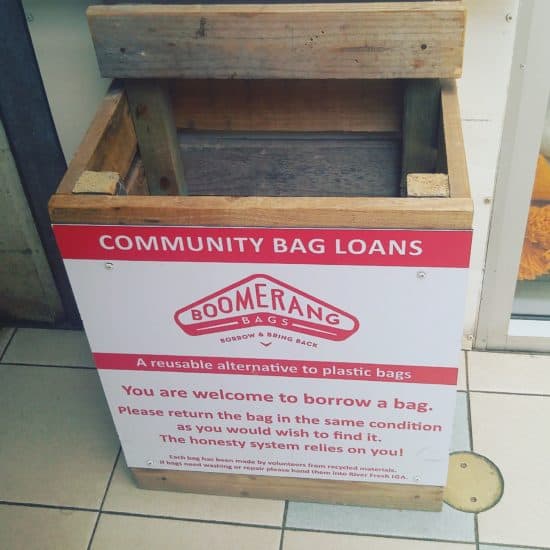
Join (or Start) a Local Boomerang Bags Group

In an ideal world we’d all remember our reusable bags – but everyone forgets sometimes, right? Boomerang Bags was set up to reduce plastic bags by providing free bags for shoppers to borrow and bring back. But even better than providing bags, Boomerang Bags is all about communities getting together to volunteer to sew their bags, out of freely donated old fabric.

Before a group launches, they need to make 500 bags. (Nobody wants to launch and then run out of bags in the first weekend!) Boomerang Bag depositories are placed in shopping centres, and then the public are free to take and then return as required.

You can find out more about Boomerang Bags here, including where the current groups are and how to start your own group.

Get your Local Cafe (or Business) Involved

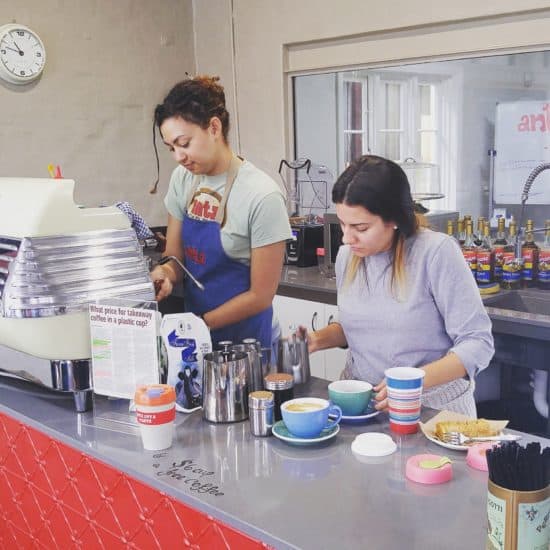
If your local cafe doesn’t give a discount for reusable coffee cups, your local store insists on giving plastic bags to everyone, or your local bar dishes out plastic straws with every drink, have a chat to them to see if they are willing to do something about it. You never know if you don’t ask!

Asking a local cafe, store or business to take part in Plastic Free July is a great way for them to be part of a global challenge and test customers’ receptiveness to charges or discounts, no longer offering single-use items and other initiatives.

Find out if there are other local initiatives that they can be a part of. Responsible Cafes is an Australian volunteer-run organisation which supports cafes who offer a discount to customers who use reusable cups. They have posters for display, and information that cafes can share with their customers. Plus all cafes that sign up are placed on a map, allowing locals to support the cafes near them who are doing the right thing.

Now I’d love to hear from you! Have you taken zero waste or plastic-free living into your community, and if so, how? Have you been to any great community events? Are there any other ideas you’d like to add to this list? Any of these you’re planning to adopt? Please tell me your thoughts in the comments below!

[leadpages_leadbox leadbox_id=1429a0746639c5] [/leadpages_leadbox]
6 Plastic-Free Alternatives for Shampoo and Conditioner

Last week I wrote about hair washing with bicarb and vinegar, and I promised all the non-believers that I’d follow up with a post about other alternatives to plastic bottles of shampoo and conditioner.

Here it is: more ideas to wash your hair without plastic.

This post contains some affiliate links. You can read more at the end of the post.

1. Bicarb and vinegar.

I know this might be a bit of a bold one to start with, but I want to say that it’s worth considering! No, it doesn’t work on everybody’s hair, but it’s honestly worth a try. You won’t smell like fish and chips, promise.

I tend to use rye flour rather than bicarb because the pH is closer to the skin’s pH, and it makes my hair softer, but the principle is the same for both. Here’s the instructions.

Moving on…

2. Shampoo and conditioner from bulk stores.

Not all bulk stores have a non-food section, but many do. Bulk stores with a focus on waste reduction (such as my local store The Source Bulk Foods) usually stock these products, and you can buy bulk shampoo, conditioner and other products in your own containers.

Health stores often stock bulk personal care products too, so if you don’t have a bulk store locally, check out any health stores close by.

3. Bar shampoo and conditioner.

Many people who are trying to reduce their plastic use make the switch from liquid shampoo to solid shampoo because of the reduction in packaging. In recent years the number of options have exploded, which means you can find one that will suit your hair type and budget.

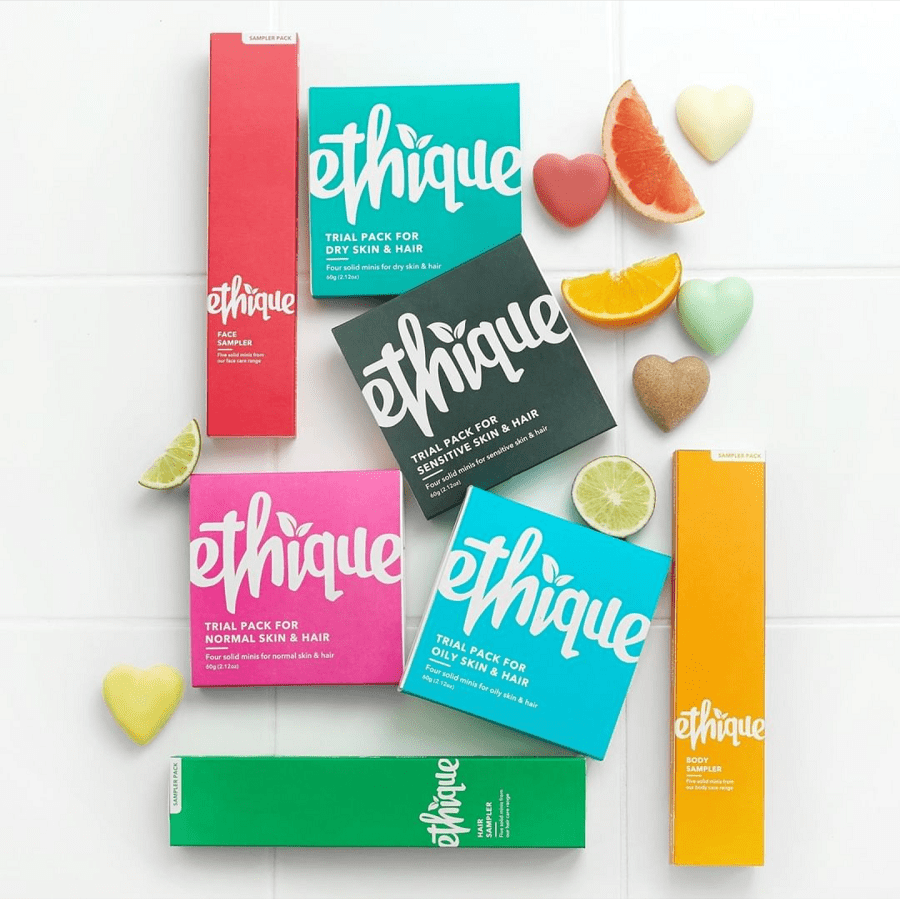
If you’re in Australia or New Zealand, Ethique products are definitely the most popular option with my readers. This New Zealand company packages everything plastic-free.

You can order direct from their website, but if you’re looking for deals or offers you’re better off trying Biome, Flora & Fauna or Nourished Life, who all stock a good range and often have deals.

If you’re in the UK, &Keep is a great online store with an excellent range of plastic-free products and they stock a really good selection of solid shampoo and conditioners.

Lush Cosmetics is another option if you prefer to shop on the high street, with stores across the world (including Australia, USA and UK).

There’s also heaps of micro businesses at local markets (I’ve seen several here in Perth) and online via Etsy. Whilst I can’t recommend anything in particular (I wash my hair with bicarb and vinegar, remember?!), I do love supporting local and independent businesses, and it’s great to find someone in your neighbourhood making products.

4. Shampoo and conditioner in refillable bottles.

I don’t recommend purchasing shampoo and conditioner in glass (or other non-plastic containers) as a zero waste option unless they are going to be refilled. Recycling is such an energy intensive process, and there are so many other alternatives, that I truly see it as a last resort.

Rather than recycling the bottles, some companies will allow you to return your bottles for cleaning and refilling. This means you buy a product from them, and can return your empty when purchasing a new one. You don’t actually refill the container yourself, the company takes it away, cleans it, and refills on the production line.

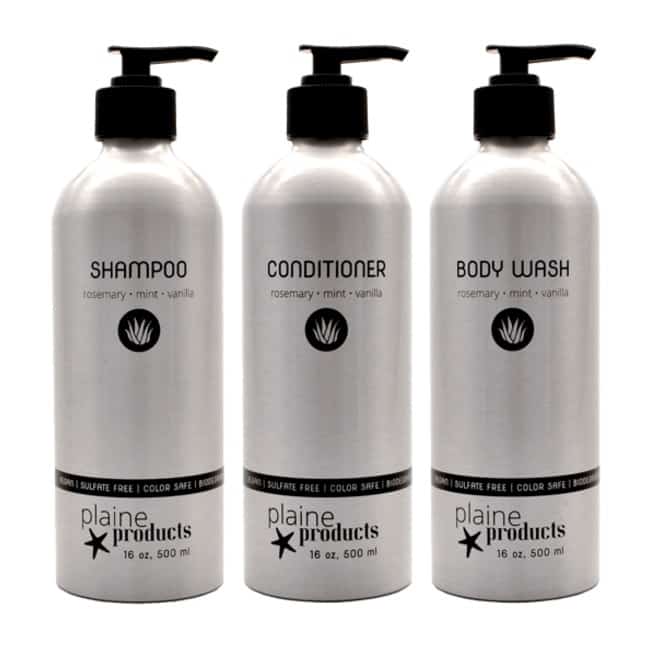
Whilst these companies are not easy to find, they do exist. Plaine Products in the US is an excellent example: they allow customers to return bottles for refill and reuse. I think this is something we will begin to will see more and more of.

(This isn’t to be confused with companies collecting containers back for recycling – such as Lush’s black pot recycling scheme. Recycling takes far more energy than simply washing and reusing.)

If you buy from someone who makes their own, ask if they can refill your containers. Before switching to bicarb and vinegar I purchased shampoo from a small business called Earth Products in refillable, returnable bottles that I provided. The owner didn’t sell refills as such, but was happy to refill my bottles when she made a new batch. I simply had to drop my bottles off in advance.

5. Soap Nuts

Soap nuts are often touted as a a laundry detergent alternative, but recently I met a lady on a course I was running who washed her hair with soap nuts. Soap nut shampoo? I was intrigued.

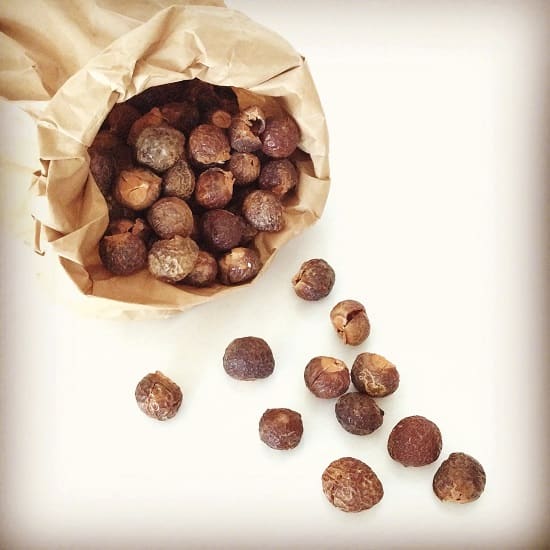
Soap nuts are dried brown wooden berries, slightly sticky, that have a saponin content. I’m always keen to try new things, so I gave them a go. I followed Monique’s instructions:

Place 9-10 soap nuts in a jug and pour over 500ml of boiling water. Allow to sit overnight. Remove the soapnuts from the liquid (they can be reused several times) and store the liquid in the fridge until ready to use.

I filled 1/4 measuring cup with the liquid and used in place of shampoo. It doesn’t foam like shampoo. I finished with vinegar rinse like usual. My hair felt soft and clean. I’m at day 3 now, and my hair could do with another wash, so it doesn’t last as long as bicarb vinegar, but definitely works better than plain water (for me).

6. Shampoo and conditioner in glass.

As I mentioned above, from a zero waste perspective I recommend the other alternatives over choosing glass unless it’s going to be refilled. Of all the options, it’s the more wasteful one. There’s a huge carbon footprint associated with transporting glass, not to mention that shampoo is 70-80% water. Then the glass has to be collected and recycled.

However, we’re not talking about zero waste, we are talking about plastic-free. I definitely purchased non-refillable products in glass at the beginning of my plastic-free journey, and sometimes these choices are important stepping stones to better ones down the track. If you’re not ready for bicarb or bar shampoo and don’t have access to bulk stores, this might be a good step.

If you do decide to look for products packaged in glass, try to find products made locally first. They will have a lower footprint. Try crafts markets and farmers markets, or investigate health stores to see if they stock locally made products.

Now I’d love to hear from you! Do you have an eco friendly solution for washing your hair? Any other method you’d recommend? Any experiences with any of these that you’d like to share? Please tell us your thoughts in the comments below.

[leadpages_leadbox leadbox_id=1429a0746639c5] [/leadpages_leadbox]

(Disclaimer – this post contains affiliate links, meaning if you click a link and choose to make a purchase, I may be compensated a small amount at no extra cost to you. I only recommend products and businesses whose commitment to creating zero waste and plastic-free solutions I believe in wholeheartedly.)

How I Wash My Hair with Bicarb and Vinegar

Most people are a more than a little intrigued when I tell them I wash my hair with bicarb and vinegar. (The ones that aren’t? They either say, me too. Or they raise their eyebrows in slight alarm!)

Then of course, everyone wants to know the specifics. How does it work? How is it applied? How often do I need to wash my hair? All great questions. If this has been puzzling you, today I’m going to share some answers.

If you’re really not up for trying it yourself, I’ve also shared a post on alternative plastic-free hair shampooing options. But before you head over there, why not read this anyway – you might be pleasantly surprised!

Washing My Hair With Bicarb and Vinegar

I’ve been washing my hair with bicarb (sodium bicarbonate, also called bicarbonate of soda or bicarb soda) and vinegar since 1st June 2014. I wrote a blog post about it at the time, along with my reasons why (aside from avoiding the plastic bottles). Three years later, I’m still using it, although I often use rye flour as an alternative to bicarb (I’ll talk about this later).

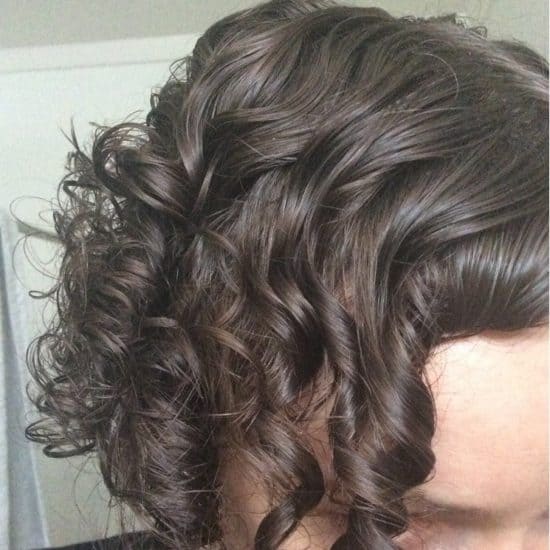
Here’s a picture from the first washes back in 2014…

…and here’s one from this week.

I’m definitely a convert.

So how does it work?

How much of each (bicarb and vinegar) do you use?

I have slightly-shorter-than-shoulder-length hair, and I use between a teaspoon and a dessert spoon of bicarb per wash. This is my shampoo replacement. I use 1/8th cup of white vinegar, diluted to a cup with warm water, as my conditioner replacement.

How do you apply bicarb and vinegar to your hair?

I mix the bicarb with a small amount of water to make a watery slurry (bicarb is water soluble). I apply to my hair, rub in (you wont be able to feel it like you can regular shampoo) and then rinse off with warm water.

I pour the vinegar/water mix over my head slowly, rub in, and then rinse off as I would regular conditioner.

I towel dry my hair as normal.

What containers do you use to store them?

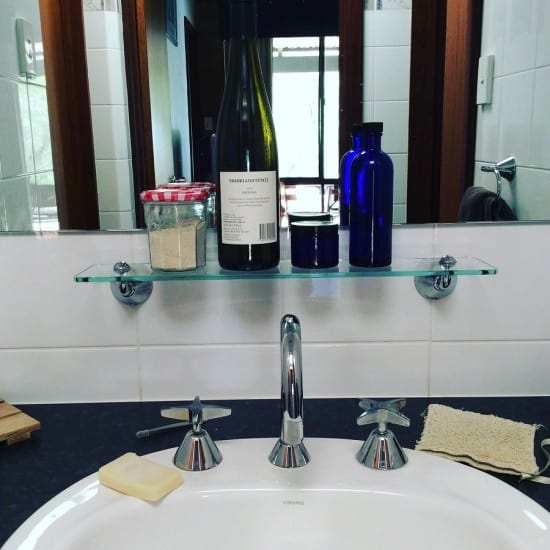
I don’t keep them in the shower. I keep a jar of bicarb under the sink, and a bottle of white vinegar under the sink too. After trying various bowls and cups, I now use my stainless steel measuring cups in the shower. I was never particularly worried about breakages, but it could happen. I also find it easier to pour from the measuring cups than a regular cup or bowl.

A friend of mine tried bicarb and vinegar hair-washing, and kept the diluted vinegar ready in a bottle in the shower. I don’t do this because I learned the hard way that vinegar + hot water is a much more pleasant experience than vinegar + cold water. I would only do this if I lived somewhere so hot I wanted a cold shower.

Aren’t you meant to use apple cider vinegar?

I use regular white vinegar. I know that apple cider vinegar is commonly cited as the vinegar to use, and I’ve tried it, but I prefer white vinegar. I find apple cider vinegar leaves my hair duller. Apple cider vinegar is slightly less acidic than white vinegar, but I’m diluting 1:8 times with water, and rinsing off after a minute or less.

Don’t you smell of vinegar?

Actually, no. If you’re worried about smell, white vinegar dissipates almost instantly upon rinsing. Apple cider vinegar will take a little longer. The first time I ever tried this I was paranoid that I smelled like fish and chips, but I think it was just that my hair is much closer to my nose than anyone else’s.

If you’re really worried about smell, or miss the fragrance of traditional shampoo, you can add a 1-2 drops essential oil to the vinegar before applying.

How often do you wash your hair?

I wash my hair every 3-5 days. Not so much because my hair gets greasy, but because the curls start to look straggly. If it’s only been 3 days, I might omit the bicarb step and just do the vinegar rinse.

Will my hair fall out?

There was an article going around the internet, stating that using bicarb and vinegar to wash your hair will make it fall out. I’ve written my thoughts on that here. There’s no reason why using bicarb or vinegar to wash hair would cause hair loss.

After 3+ years, I still have a full head of hair.

You mentioned rye flour. How does that work?

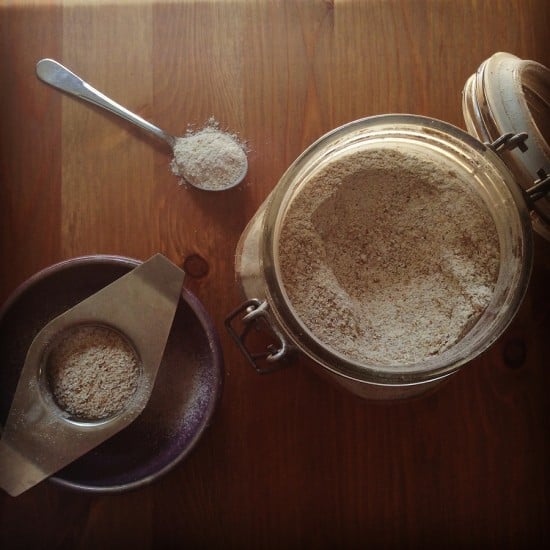
Instead of using bicarb, I’ve also used rye flour to wash my hair. Bicarb is a salt, and is mined from the ground. Rye flour is ground from rye, a plant. Sustainable speaking, rye is probably the more eco-friendly option. It also leaves my hair much shinier than bicarb. Plus, as it’s not water soluble, it mixes with water to form a paste which is much easier to apply to your hair.

On the down side, if you aren’t careful you can end up with huge flakes of rye flour that look like brown dandruff. Believe me, discovering chunks of flour falling out of your hair as you ruffle it is quite alarming.

To reduce this, you can sieve the flour before you use it (a tea strainer will likely have the finest mesh). Also, post washing, be sure to towel dry your hair really well. And never ever apply to dry hair, or you will end up with a flour crust on your scalp!

Anything else?

If you’re switching from regular shampoo, your hair will take some time to adjust. Regular shampoo tends to strip oil from the scalp, so the skin compensates by making more oil. Some people find when they first use this that they have oily hair for a few days, or even a few weeks. Push through!

Ultimately though, this isn’t for everybody. It works particularly well on people with curly hair. If you’ve tried for a few months and you still don’t like it, maybe it’s not for you. Don’t worry, there are plenty of other options.

If you haven’t tried it, I definitely recommend you give it a go! There’s something very satisfying about personal care products that come from the pantry and with single ingredients.

Can I tempt you?!

Now I’d love to hear from you! Have you tried the bicarb and vinegar method? Do you love it? Did you hate it? Are you tempted to give it a go? Please share your thoughts in the comments below!

[leadpages_leadbox leadbox_id=1429a0746639c5] [/leadpages_leadbox]
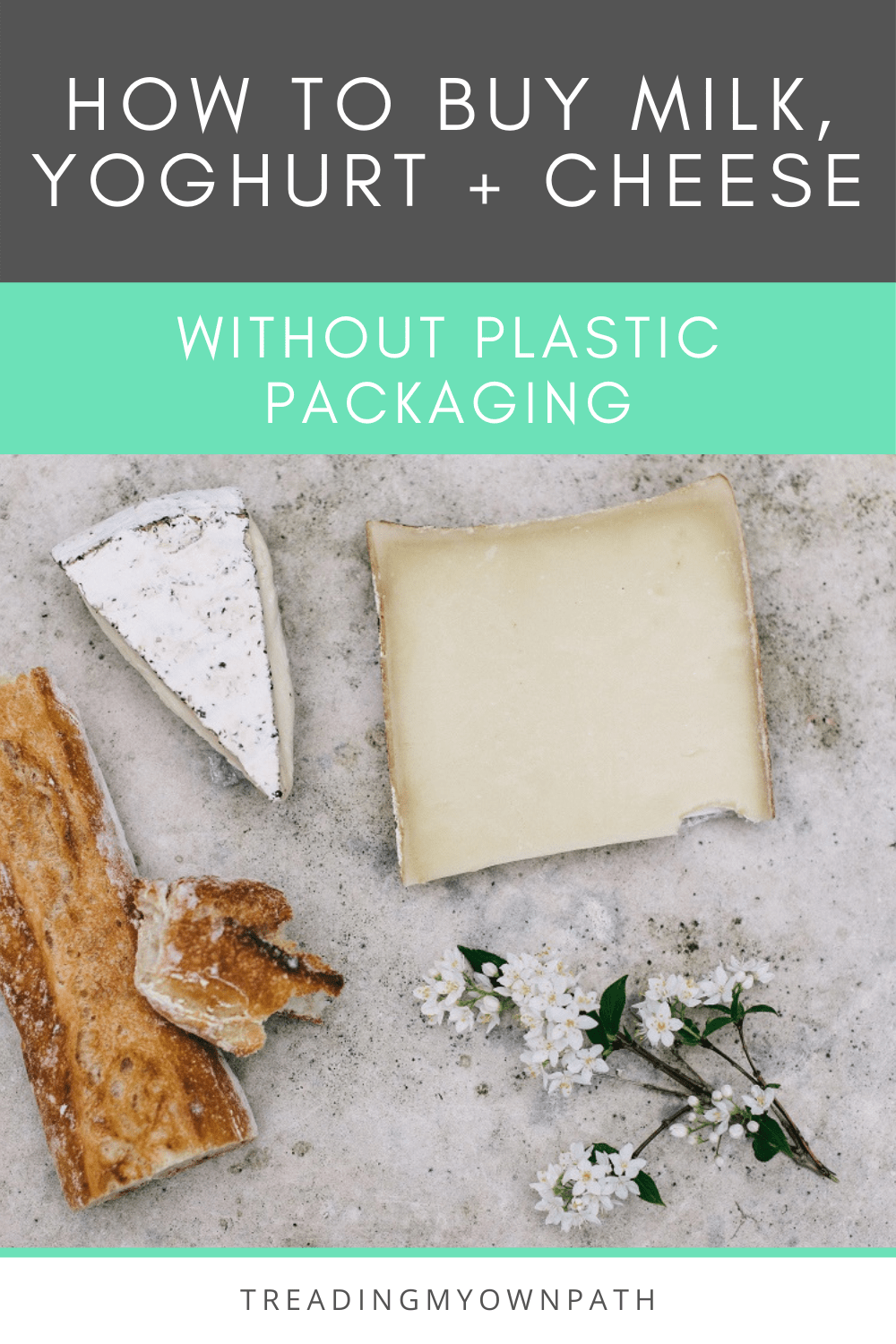
How to Buy Milk, Yoghurt and Cheese without Plastic

When it comes to dietary staples, some things are very easy to find without plastic or single-use packaging, and others, not so much. Fresh fruit and vegetables? Easy. Fresh bread? Ditto. Milk, cheese and yoghurt? Not so much.

One of the most common questions I receive during Plastic Free July is “where do I find milk (or cheese, or yoghurt) without plastic?” I faced this struggle at the beginning of my own plastic-free journey back in 2012.

(Today I choose a plant-based diet, as do many zero wasters. That, however, is a conversation for another day. Not everybody is ready – or interested – to cut out dairy products from their diet, and I respect that. I have no interest in trying to persuade anyone otherwise. The question is – can these products be sourced without plastic? And the answer is yes.)

If you’re looking to find milk, cheese or yoghurt without plastic, here are my solutions.

Buying Milk Without Plastic

You’re unlikely to find milk in bulk or milk in glass at the supermarket. But that doesn’t mean that it isn’t available in your area.

The first places to look would be independent grocery stores, farm shops and health food shops. If you don’t see anything, ask the question – they may not stock any themselves but they may know where does stock it. Alternatively, they may know which brands are plastic-free – and if you know who makes it, it will be far easier to track it down.

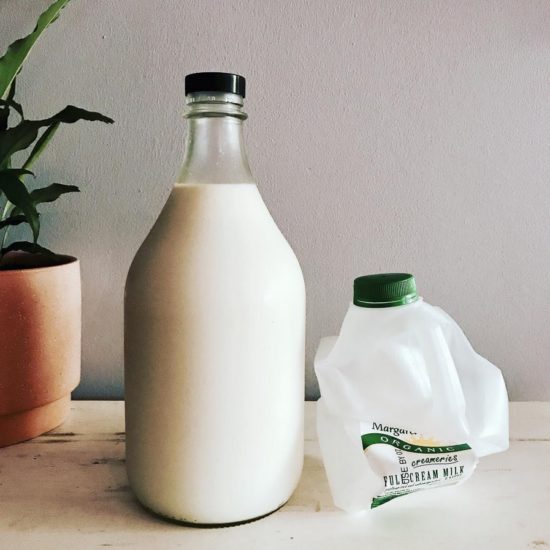
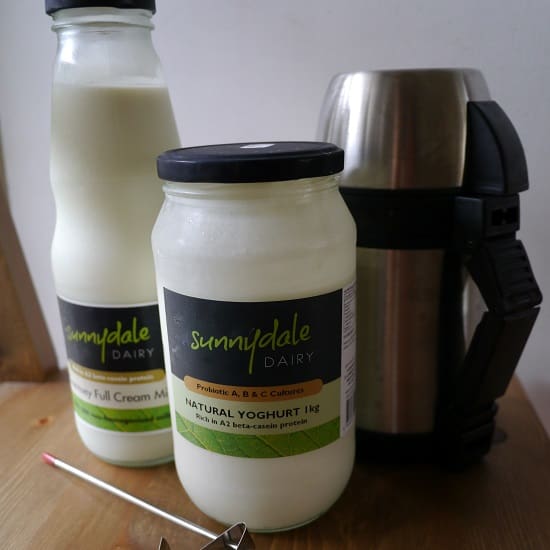
In Perth, there are four different brands which sell milk in glass: Sunnydale, Grumpy Farmer, Over the Moon Organics and Bannister Downs. They can be found at IGA stores and independent grocers like the Boatshed and Farmer Jacks. No one store sells all four brands, so you have to do your homework and check out all the stores.

Secondly, try Farmers Markets and farm gates. Some farmers sell milk directly to customers and use a refill system, dispensing with single use bottles altogether. This is fairly common in New Zealand.

Thirdly, you could look for hobby farmers and people who keep their own milking animals. I live in a city, and I have friends (who live in the city also) who keep goats, and other friends who keep a milking cow. I know that might be a step too far for many, but if you really want a solution, don’t rule this option out. These things are more discoverable by word of mouth, but social media is a good place to start.

Something I did was supplement my dairy milk with nut milk. I realised that it was much easier to find cashews or almonds in bulk than it was to find dairy milk in glass, so I began to use nut milk with cereal and in baking. Making your own nut milk is really simple, and you can find instructions for making DIY cashew milk and almond milk here.

Buying Yoghurt without Plastic

If you can find milk in glass, there’s every chance that you will also be able to find yoghurt and cream in glass too. I have seen yoghurt for sale in glass and also in ceramic pots in supermarkets. However, I’d recommend looking in independent grocers, health food stores and farm shops for more options.

If you can’t find it, you might like to know that yoghurt is actually very easy to make yourself. All you need is milk and a yoghurt starter culture (which actually is just a tablespoon of live yoghurt). A thermometer is useful, but it’s possible to manage without. You definitely do NOT need any fancy gadgetry, such as a yoghurt maker. A glass jar wrapped in a tea towel will be fine. Here’s my DIY tutorial for how to make your own yoghurt. Homemade yoghurt will typically last 3-4 weeks in the fridge.

If you can’t find yoghurt in glass, consider buying the biggest tub rather than the individual pots and portioning it up yourself. That will create less waste overall. If you like flavoured yoghurt, you can make it yourself by blending a little sugar and fruit with plain yoghurt.

Buying Cheese without Plastic

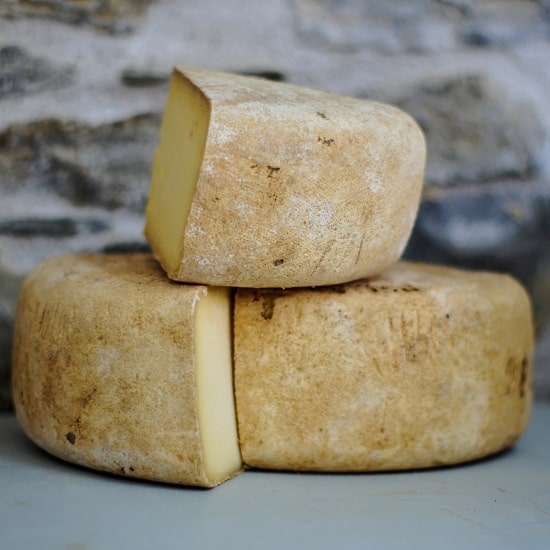
Cheese is the easiest of the three dairy products to find without plastic. Most supermarkets will have a deli section, but if not, look for local independent stores, farmers markets, specialist cheese shops and other grocers.

Some  deli counters will have paper to wrap cheese, so you can ask for no plastic. Many will let you bring your own containers.

Some types of cheese are sold in brine (mozarella, feta) or by weight without packaging (ricotta, cream cheese). These are the easiest types of cheese to buy without packaging, simply by bringing your own containers. Smile, act confident and tell the person behind the counter than you’d like to use your own containers as you are avoiding single-use plastic.

Often, your success hinges on the way you do it. Acting like you do it all the time boosts the confidence of the person behind the counter to accept your request. Also, stating what you’d like to do rather than asking adds another degree of conviction. “I’d like to” is much more convincing than “is it okay to..?” If they say no, act surprised, but if they are truly insistent, don’t push. Almost everyone will say that’s fine.

It’s worth mentioning why (no single-use plastic) because staff won’t necessarily realise why, and will wrap your lovely container in gladwrap for “protection” – or pop it in a bag!

Many types of cheese are bought in large wheels or blocks, and will be pre-cut and wrapped by the store to save time. If you can only see pre-wrapped cheese behind the counter, ask whether you can have a piece cut fresh from the block, or whether you can leave your containers there for when the next batch is cut.

Some pre-packaged cheese can be found wrapped in wax rather than plastic. Most of these waxes are made from paraffin (which is sourced from petroleum). Studies have shown that paraffin wax can be broken down in the presence of Rhodococcus sp so if you do buy these cheeses, try composting the wax.

If you’re still having no luck, consider buying the biggest block of packaged cheese you can find (it will mean less packaging overall). Cheese freezes really well, so you can, freeze what you don’t need straightaway.

Bagged grated cheese is all packaging and very little product, so avoid these products and grate your own from the block when you get home. (A food processor with a grater attachment is very useful if you use a lot of cheese. If you’re less fussy, whizzing it through the food processor will also work.) The same is true for cheese slices – it will take less than 30 seconds to slice a block and save lots of packaging, as well as money.

Something else to consider is making your own. Ricotta, mozzarella and halloumi are all incredibly simple to make using milk, and your cheese will be ready in 1 – 3 hours. Labne, a soft cheese made from yoghurt, is also super easy to make. If you’re not confident to make your own, look into cheese workshops in your area.

Still Stuck?

If you feel like you’ve exhausted all these options and you still don’t have a solution, don’t stress. Look at choosing products with the least amount of packaging overall, and ensure that whatever packaging you do choose is recyclable in your local area.

Remember, there are so many ways to reduce our waste in all areas of our life. Milk, cheese and yoghurt are just three things that we consume. There are plenty of other things to work on!

Don’t let not finding these items without plastic be a reason to give up altogether. Much better to focus on the 97 other things that we can change than stress about the 3 that we can’t.

Now I’d love to hear from you! Is this something you struggle with, or not? What solutions have you found? Have you had a go at DIY and how have you found it? Do you have any DIY tips to share? Anything else to add? Tell all in the comments below!

[leadpages_leadbox leadbox_id=140b48fc6639c5] [/leadpages_leadbox]

A Plastic-Free Future? It’s Already Happening (Here’s Proof)

When we think about the kind of world we want to live in, and then look around us in the present, the difference can feel worlds apart. It can seem impossible to imagine how we will ever make progress, from where we are to where we want to be.

Yet when we start to look closely, we discover that these new ways of thinking are being acted out, all around us. There are groups, businesses and organizations changing the old story by doing things a different way. They are visions, or “pockets” of the future” except they are happening now, in the present.

These “pockets of the future” remind us that change is possible, and that it is already taking place. These examples provide a framework for others to follow, and take the next steps.

When we talk about plastic-free or zero waste living, and the circular economy, we can see plenty of gaps in the system.

We might take our own bags – but what about all the produce arriving in the store in single use packaging? What about those of us who don’t live near bulk stores? What about convenience?

These are simply missed opportunities, and innovative people are plugging those gaps with solutions. I wanted to share a few ideas to give you hope that momentum is building. Change is coming.

How Stores are Addressing Single-Use Packaging

I’ve had this conversation more times than I care to remember when talking about zero waste or plastic-free living. Someone asks: what about the fact that most bulk stores receive goods in packaging, and that packaging the stores receive isn’t reusable?

Whilst that’s mostly true, a huge amount of waste eliminated when stores buy in bulk and allow customers to use their own containers.

Now, stores and businesses are stepping up to the challenge and trying to implement reusable and returnable options for their suppliers.

The Source Whole Foods Victoria Park (WA) – Kombucha

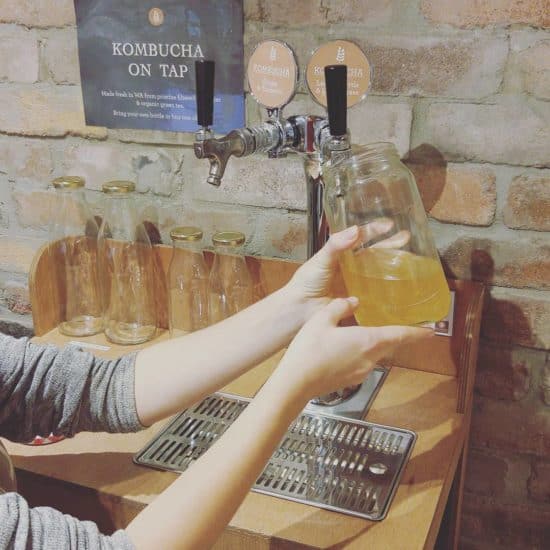
My local bulk store The Source Whole Foods (in Victoria Park, WA) recently started selling kombucha on tap. I’m not really a kombucha drinker, but I love the story behind this product. They have three flavours, which are delivered in stainless steel drums by a local producer in the south-west. Once empty, the drums and switched with full ones, and the empties are returned for cleaning and refilling. Zero disposable packaging.

Not all items that get delivered to bulk stores come packaging free. Many products get delivered in big 20kg sacks or drums, but these cannot be returned to suppliers for refilling. However, many bulk stores that care about zero waste are now starting to have these conversations with their suppliers, to see what options there are to reduce waste at the level upstream.

It’s beginning to happen.

Dunn & Walton Doubleview (WA) – Milk

Dunn & Walton is an organic store in Doubleview, Perth with an excellent cafe and deli. They receive their milk in bulk from Margaret River, and decant into glass bottles which their baristas use. They have saved more than 5,000 plastic bottles from landfill by doing this.

Coffee culture is a big deal in Australia, but almost every cafe uses plastic bottles and tetra paks. For plant-based milks, there’s the DIY approach which cafes are increasingly adopting. The Raw Kitchen in Fremantle is one of a growing number of cafes here in WA offering homemade non-dairy nut milk instead of the carton tetra-paks which typically end up in landfill.

Dunn & Walton Doubleview (WA) – Takeaway

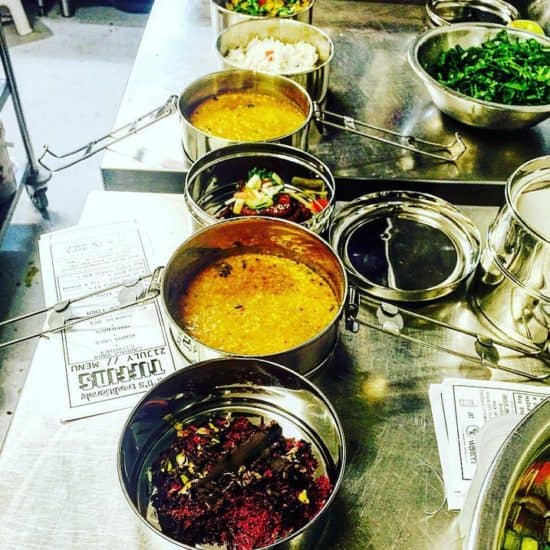
Dunn & Walton also run a tiffin night on Thursday evenings, with gluten-free, vegan Indian takeaway food made by the supremely talented Arti of Arti’s Traditionals. Tiffins are stainless steel, stackable lunchboxes suitable for transporting hot food, typically Indian food.

At Dunn & Walton, customers can buy a reusable stainless steel tiffin on the night, or they can bring their own reusable containers from home, but there is no single-use disposable packaging available as an alternative.

More and more takeaway shops are willing to let customers bring their own containers, but most customers still have the option. Tiffins are not a new idea – millions of people use them every day in India. But they are not commonly seen in Australia… yet.

Coffee Cups to Go (and Come Back)

Reusable coffee cups aren’t new, although they are definitely becoming more mainstream. However, reusable coffee cups rely on us remembering to bring them – what if we forget? What about those people who like to text their coffee order ahead? Having a reusable cup doesn’t work in that instance.

Well, people are beginning to think about ways to get round that.

The Freiburg Cup (Germany) – Borrow and Return


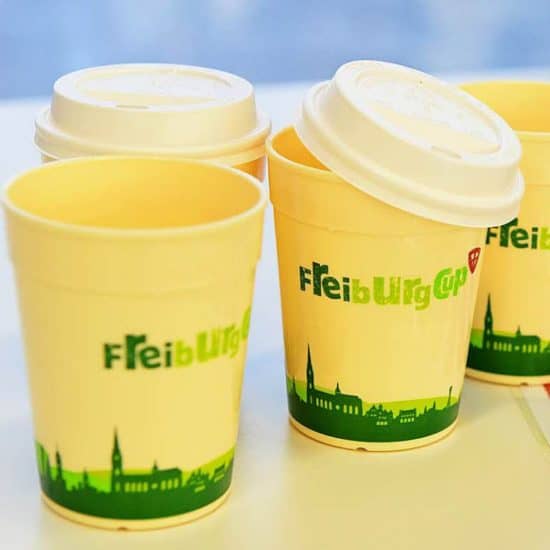
I first read about the Freiburg (it’s in Germany) reusable coffee cup scheme earlier this year. When a customer buys a coffee from one of the 72 registered outlets, they can choose a reusable cup (made of dishwasher-proof plastic) by paying a small deposit. This reusable cup can be returned to any of the outlets for washing and reusing.

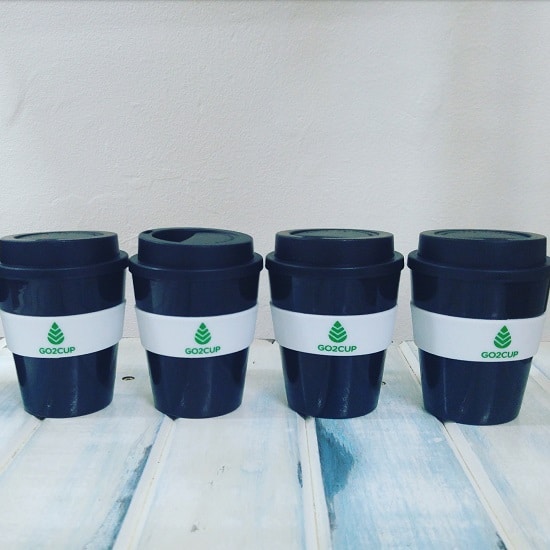
Go2Cup (Perth) – Reusable Coffee Cups to Borrow

When I read about the German scheme, I thought it sounded great. I wondered how we could introduce it here. Then I discovered that somebody (Daniel Grosso of Go2cup) is already getting out there and starting it, right here in Perth :)

Go2cup is slightly different to the Freiburg system, and in my view, slightly better. The Freiburg Cup still has a disposable lid, and the scheme is limited to cafes. Go2cup uses fully reusable cups (the lids are also reusable), and has expanded beyond the cafe market. It is also working with events, Farmers Markets, and businesses.

Cups are provided for patrons to use, and these are returned for washing.

Schemes like this allow people to forget their reusables and still refuse the single-use option. I’m sure these ideas will be adopted more widely in the future.

Reusable Bags (to Borrow and Bring Back)

People forget their reusable bags sometimes. Or they pick up more than they intended, and don’t have enough reusables to manage. Rather than resort to picking up plastic bags, there’s another solution – borrowing bags.

Boomerang Bags and Morsbags (Worldwide)

Boomerang bags are reusable shopping bags made by members of local communities, using donated and second-hand materials. Once a stash has been sewn, these are deposited outside stores for anyone to borrow, and bring back.

Forgotten your reusable bags? No problem!

Boomerang Bags started in Queensland, Australia, but have spread across the globe. Morsbags is another reusable bag initiative, founded by Claire Morsman (hence the name) with a similar ethos, in the UK. Before I moved from the UK to Perth in 2011, I worked in a building that had Morsbags hanging in the hallway for anyone to borrow at lunchtime.

Returnable and Refillable Packaging from Online Sellers

There are countless companies out there selling products in recyclable packaging. What is better than recyclable, though, is reusable. That’s where the zero waste movement wants us to head.

Obviously, taking our own containers to bulk stores means refillables. But not everyone lives close to bulk stores. And not all bulk stores sell the whole range of products.

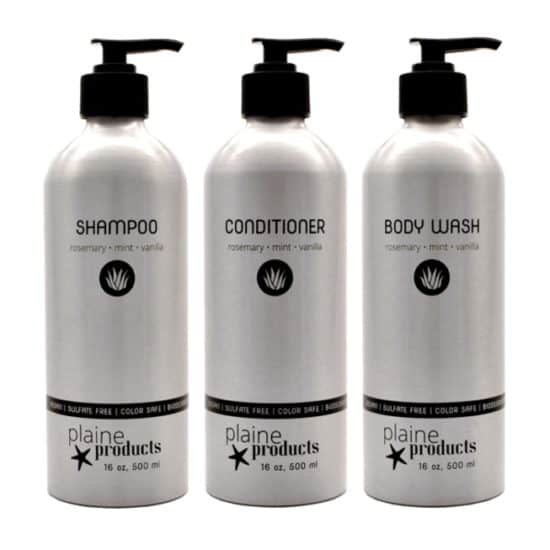
Plaine Products (US)

Plaine products are a US company doing things a little differently. They sell shampoo, conditioner and body wash in recyclable aluminium bottles. Better than simply offering recyclable bottles, they offer a full ‘return and refill’ scheme.

Other companies allow customers to return bottles for recycling. But returning them for refilling is pretty new.

When you receive your order you also receive a return shipping label. When the product’s empty, the pumped is switched with a refill cap, the label is placed on the original box and the product is shipped back – and Plaine Products covers the shipping fee.

I’m lucky enough to have access to plenty of bulk stores, and I prefer to shop local over shopping online. But I do live in a city with plenty of options. For those people who rely on online shopping, this is a much more sustainable option than single-use packaging.

We don’t have a zero waste or circular economy – yet. But innovation is happening all the time, and good ideas are being spread. Schemes like this give me hope for a world without waste.

Now I’d love to hear from you! Were any of these new to you? Do have experiences with using any of these – good or bad? Do you know of any other innovative ideas tackling waste upstream? Any other initiatives you’d love to see happening? Any other thoughts? Please share below in the comments!

[leadpages_leadbox leadbox_id=1429a0746639c5] [/leadpages_leadbox]
(Disclaimer – I am an affiliate for Plaine Products, meaning if you click a link and choose to make a purchase, I may be compensated a small amount at no extra cost to you. I only ever share organisations and businesses whose commitment to creating zero waste and plastic-free solutions I believe in.)

7 Plastic-Free Alternatives to Food Wrap

I’ve always found cling-wrap (or glad wrap, or clingfilm, as you may call it) to be unbearable. Even before my plastic-free days, I couldn’t bring myself to use it. I found that it was either unbearably sticky, and would stick to everything except the one thing I actually wanted to wrap, or the opposite: it was so ridiculous non-sticky that it would stick to nothing at all, and definitely not the thing I wanted to wrap.

It gives me great pleasure then, to share with you some alternatives for clingwrap. Let’s rid ourselves of the frustration, and the cursing, and the inner torment. Nobody needs that kind of stress in their lives! (Or is that just me?!)

Of course, the plastic is completely unnecessary too. If you’re not with me on the frustrations, hopefully you are there on the plastic-reducing ;)

As with all single-use plastic items, there are plenty of alternatives. Here’s 7 of my favourites.

7 Plastic-Free Alternatives to Food Wrap

1. The Bowl on the Plate

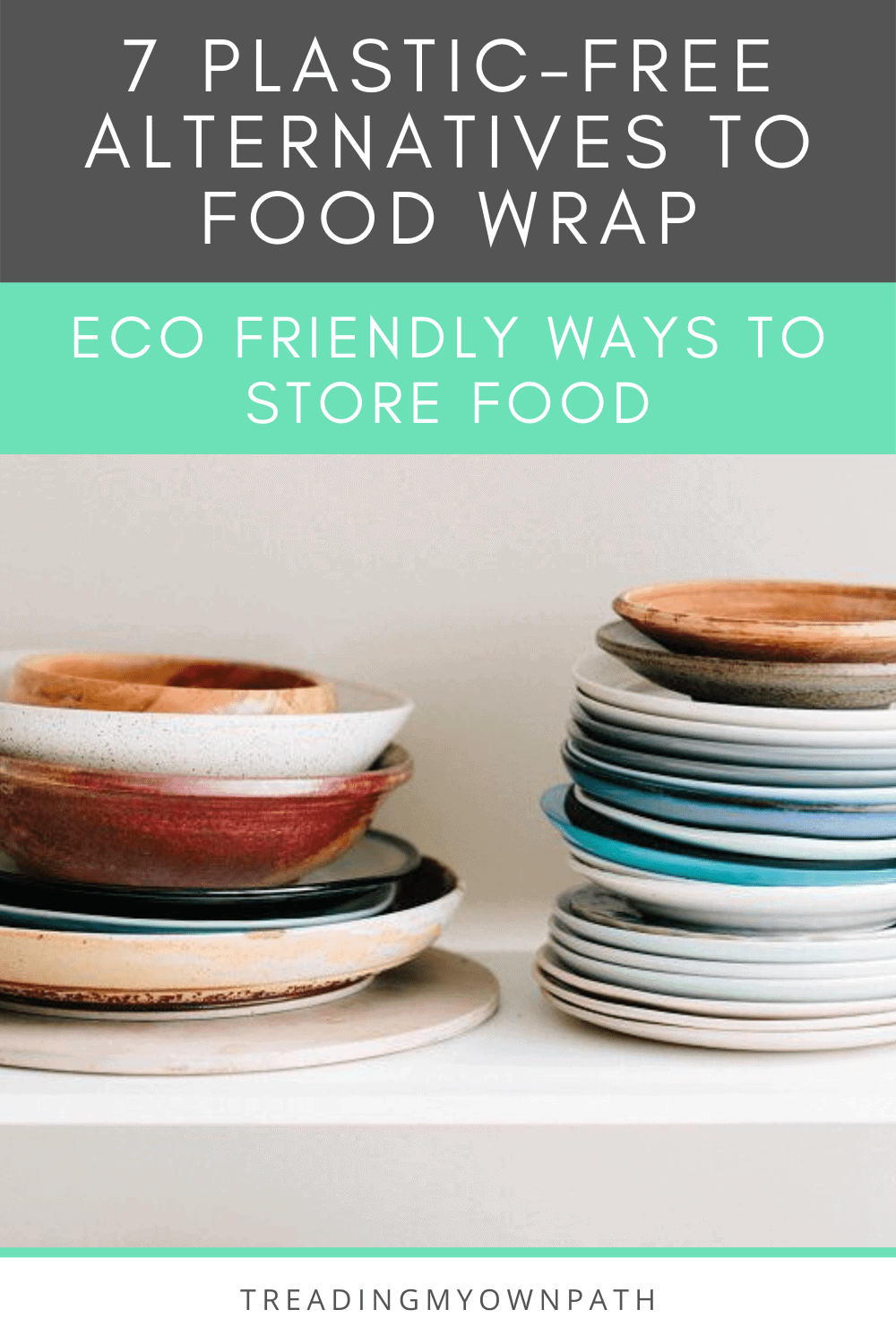
I love this option. I love it because it’s simple, doesn’t require any more stuff and suits my laziness. Provided whatever-the-leftovers-are can fit in a bowl, then a plate can go over the top. Job done.

I don’t believe that everything needs to be airtight in a fridge, and the plate-on-the-bowl method is good enough. We don’t have any problems with anything smelling in our fridge, but if that’s something you’re concerned about, popping a small jar of bicarb can help reduce fridge odours.

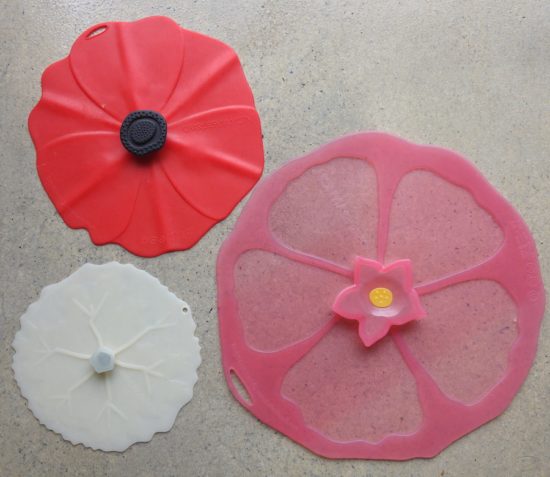
2. Silicone Lids

Silicone lids are a fancy alternative to putting a plate on a bowl, but have the bonus of being able to form a seal. They are also heat-tolerant so can be used on hot pans.

Silicone is technically not plastic, and seems to last much longer than plastic. It also seems to be more resistant to heating and high temperatures. On the downside, silicone isn’t recyclable. I’d only opt for silicone if I knew I’d use it regularly, and consider it a purchase for life.

I have 3 silicone lids of varying sizes that were a gift from my mum (similar to this lilypad silicone cover). I do find them useful, and I use them regularly, but I don’t think they are a kitchen essential unless you are a clingwrap fanatic ;)

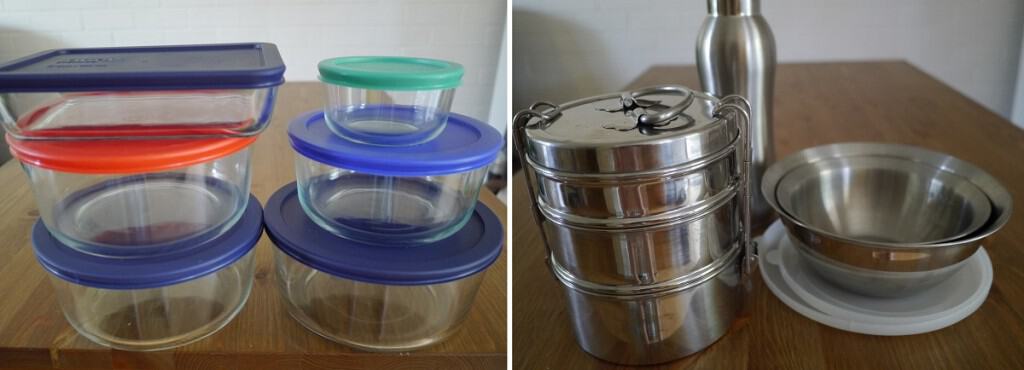
3. Storage Containers (Tupperware, Pyrex, Glass or Stainless Steel)

Rather than wrapping a baking dish with cling-wrap, I prefer to decant my leftovers into glass Pyrex storage containers. Any storage container would work, but Pyrex is what I have the most of.

The great thing about Pyrex (and to some extent, stainless steel) is that it is oven-proof, so if you want to re-heat the leftovers the following day, simply remove the lid and pop in the oven. Putting the original container back in the oven tends to bake on the food, making it much harder to clean.

Whilst I don’t recommend buying new plastic storage containers, if you’re new to plastic-free living or zero waste, you might already have a heap of old ones – in which case, use them. Over time you’ll be able to repurpose and donate and they will eventually break, and you can replace with better alternatives.

4. Glass Jars

Glass jars are the mainstay of the zero waste movement, and for good reason – they are useful for almost everything! Glass jars are great for most leftovers. We use them for chopped veggies, roasted veggies, pasta sauce, curry or dahl, rice, sauces… anything that doesn’t have a structure (so layered lasagne might not work great).

The great thing about glass jars is there’s never a shortage, and they are easy to come buy for free. They also come in every imaginable size, and are particularly helpful for portioning food.

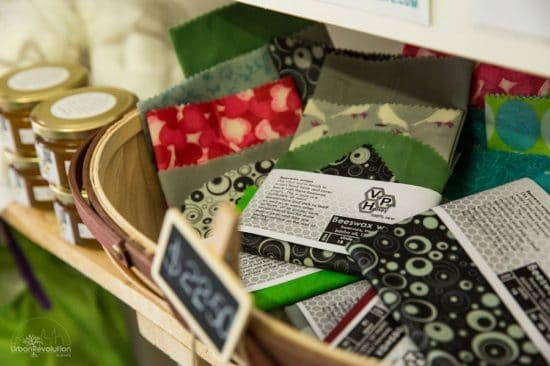
5. Beeswax (and other Wax) Food Wraps

Beeswax wraps, made by by neighbours at Vic Park Honey and sold by my friend Jo in her Urban Revolution store.

Beeswax food wraps are made from cloth that has been coated in beeswax, often with extra additives like jojoba oil and pine rosin (colophony) to make them supple. They can be used in place of cling wrap to cover bowls and wrap food.

Vegan food wraps that use soy and candelilla wax (rather than beeswax) are also coming onto the market.

With both types, they are only suitable for hand washing and not machine washing (the wax will melt at high temperatures). They are not suitable for meat or fish, or wrapping hot food. In time the wax may be lost but they are very easy to re-coat.

In my experience, beeswax food wraps are expensive to buy and cheap to make. If you’re on a budget, I’d recommend making your own. By making your own you can choose the sizes that are most practical for your needs, too. However, if you’re not the crafty type or don’t have the time, supporting local independent businesses is just as good.

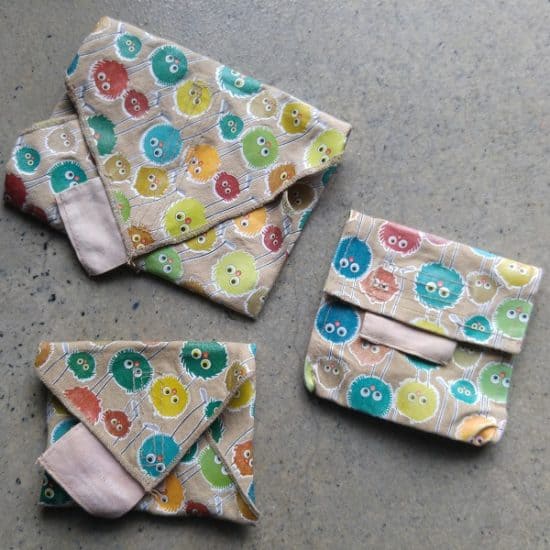
6. Sandwich Pockets

Sandwich pockets are made of fabric that has been coated to make it waterproof. In contrast to beeswax and other wax wraps, these are machine washable. The coating is often some kind of plastic, but on the plus side, they are reusable and will not need to be recoated.

The fabrics and coatings vary brand by brand. I would avoid PVC as this plastic contains phthalates, which are known to be detrimental to human health. Some use polyester and others use plant-based plastic which are stated to be biodegradable when they wear out. I’ve had 4myearth sandwich pockets (the ones in the image – which are cotton with a plant-derived plastic lining) since 2012 and they have lasted very well.

These sandwich pockets will help retain moisture and prevent food drying out, but they do not seal and are not airtight, so are better for short term use.

7. Parchment Paper and/or Foil

Not a zero waste option, but a plastic-free option nonetheless. Both can be used to wrap items individually, or they can be used together. Wrapping meat or fish in paper and then foil is recommended as a way to freeze these without getting freezer burn.

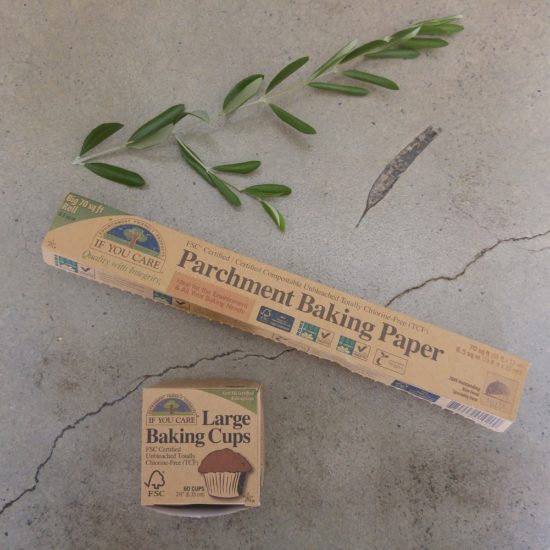
I use the If You Care brand of parchment paper – it is FSC-certified and unbleached. It has a silicone lining but is certified compostable, and I have successfully composted this paper at home. They also produce 100% recycled aluminium foil.

Aluminium foil can be washed and reused before being recycled. If you’re careful, you will be able to wash and re-use foil a number of times before recycling it. Yes, it can be recycled – save it up until you have enough to form a ball about the size of an Easter egg and pop it in your regular recycling bin.

Now I’d love to hear from you! Clingwrap: friend or foe?! Which of these solutions is your favourite? Any other solutions to suggest? Anything you’ve tried that didn’t work that you want to warn us about? Anything else to add? Tell all in the comments below!

Disclaimer: This post contains some affiliate links which means if you click a link and choose to purchase a product, I may be compensated a small amount at no extra cost to you. The links are included to give you more information about some of the products that I own and use. As always, I’d always suggest making do and shopping second-hand before buying new.

Plastic Free July: I’ve Made My Pledge, What’s Yours?

When it comes to making a positive contribution in the world, nobody can do everything, but everyone can do something. How big or how small that something is, well, that depends. It depends on so many things: the time we have available, our family commitments, energy levels, where we live, the resources available to us, and more.

Better to make just a single change than to do nothing, simply because others are doing more and we feel that our contribution is small and insignificant. Millions of small contributions add up to make a huge positive impact.

If we can only make one or two changes, then let’s go ahead and make those changes, and be proud of what we are doing.

But let’s not get complacent.

Usually I say: whatever we can do, that is enough. And I do believe that to be true. But I also think there’s a time and a place to re-evaluate and ask ourselves the question: is there something more that I could do?

I think Plastic Free July is the perfect opportunity.

I first took part in Plastic Free July in 2012. (The challenge, if you’ve somehow missed hearing about this great campaign, is to refuse all single-use – or even better, all – plastics for the month of July.) Of course, that first year was a challenge for me (but isn’t that the point?!). The second year wasn’t without its trials. But by the third year, I’d pretty much got my plastic habit under control.

I had two choices. I could sit there smugly, applauding myself on how far I’ve come. Or I could look at my current routines and habits, ask myself: is there any room for improvement?

Guess what?! Unsurprisingly, there is always room for improvement! Nobody’s perfect. Firstly there are always the exceptions that can be tackled. Then there’s the stuff that was too hard or not possible last year – maybe something has changed since then?

Even when things seem good enough, there is always room to adjust and do things slightly better.

When we fostered and later adopted our greyhound last July, I wrote about whether we could have a dog and be zero waste. My biggest challenge was and still is dog food. We have been buying the big 20kg plastic bags of dog food. I’d love to make my own, but when I first looked into it, I ended up feeling overwhelmed. I put it on the backburner.

On the backburner is where it is still sitting.

At the time, it wasn’t a cop-out. Having a dog was something completely new to both myself and my husband, and we needed time to adjust. But 11 months on, it’s fair to say it’s time to revisit this.

Buying processed dog food, made from industrially produced meat, produced overseas, and sold in a plastic bag; that pretty much goes against everything I believe in and everything I want to support.

It was a good short-term solution. But it’s in danger of becoming a longer-term one, because I’ve let myself get complacent.

So for Plastic Free July this year, I am setting myself the challenge to start making my own dog food. We are lucky that our greyhound is the least fussy eater on the planet. I’m a little bit terrified of the extra responsibility, but I can read and research – and I have enough common sense.

By the 1st July, I’ll have something in place.

It might not work. It might be a terrible disaster. Our greyhound might suddenly become the world’s fussiest eater, or it might not agree with him (greyhounds have sensitive stomachs), or it might take so much time to source the ingredients and make that it simply isn’t practical.

But I will never know unless I try.

Isn’t that what a challenge is all about?

Talking of challenges… now I’m going to challenge you.

If you’re new to living with less waste, then I’d recommend giving Plastic Free July a go this year.

If you’ve been pursuing the plastic-free lifestyle for a while, I’m going to challenge you to look at everything you currently do, and find just one more thing to try, to revisit, or improve. Plastic Free July is one month: that’s 31 days to give something a go. That’s 31 days to build a new habit, research alternatives and try something new.

At the end of the 31 days, you might decide that it was all a bit too hard, and you’re not ready. That’s okay, if you tried and gave it your best shot. However… you might find that these new habits aren’t nearly as hard as you thought, and you’ve made a change that you know you will stick to. How great would that be?

There’s never a bad time to embrace change, but the great thing about doing it in July is that there will be plenty of other people embracing making changes too. When I say plenty, I mean a lot. In 2016 over 1 million people took part, and 2017 is set to be even bigger. There’s nothing like doing a challenge with others to feel motivated, and being part of a movement only makes that even greater.

The other important step to making changes is to tell others what you’re planning. I’ve told you my Plastic Free July goal, and now it’s your turn. In the comments, take a minute to pledge your commitment for the month of July. Shout it loud and proud! Let’s see what positive changes we can bring about this July and onwards :)

Seriously, I want to hear from you! Is this your first Plastic Free July and if so, are you taking the no single-use plastics pledge or the no-plastics-at-all pledge? Are you returning for another year and what would you like to change this year for a month? Are there any sneaky bad habits you’d like to shake once and for all? Anything else you’d like to add? Declare all in the comments below!

[leadpages_leadbox leadbox_id=1429a0746639c5] [/leadpages_leadbox]