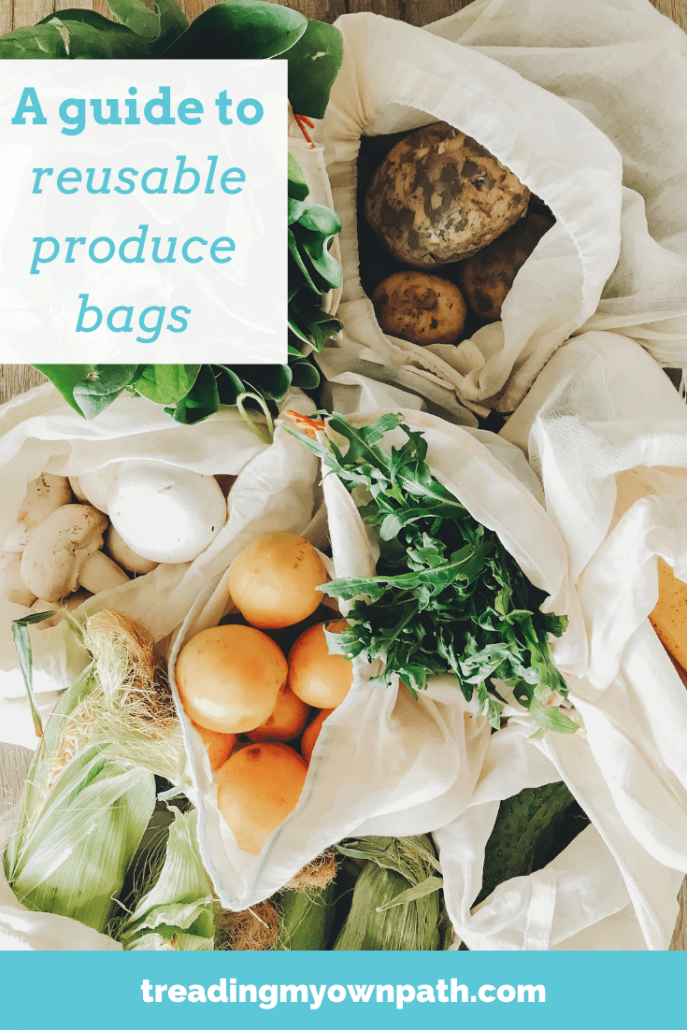
A guide to reusable produce bags

When it comes to tackling single-use plastic bags, it isn’t just plastic shopping bags that we want to be replacing with better, reusable alternatives. Plastic produce bags (the extremely thin, colourless, clear bags we see in the fruit and veg aisles at supermarkets) are just as problematic – difficult to recycle, very difficult to reuse and a huge contributor to litter.

Yet the conversation always seems to be around shopping bags, and the produce bags are left out.

Which is a tragedy! There are just as many solutions for replacing single-use produce bags with reusables as there are for shopping bags. Yet it’s something that isn’t on many people’s radar when they are starting out.

It certainly wasn’t on mine.

Fortunately, it is now. I want to share some of the alternatives to single-use plastic produce bags, the pros and cons of different options, as well as a few things you may like to consider.
This post contains some affiliate links. You can read more about what this means at the end of the post.

Reusable produce bags – some initial things to consider

There are plenty of options with reusable produce bags. Here’s a few things to consider:

Homemade versus purchased

Homemade is always cheaper, and there’s the option to choose the exact size that you need. If you want bags that last and don’t need to be mended continually, an overlocker generally produces better (longer-lasting) results than a regular sewing machine.

The flipside of homemade is needing access to a sewing machine, and knowing how to sew.

If you do know how to sew, produce bags make great gifts.

Second-hand fabrics

Second-hand fabric is an option for making reusable produce bags, and ready-made produce bags that used second-hand fabric are also available. Fabric includes old net curtains, tablecloths, sheets and old bedding. Choose a fabric that is machine washable and can go through a hot wash (rather than the handwash cycle).

Although mosquito netting seems ideal for produce bags, most mosquito nets are impregnated with pesticides, so not desirable for use with food.

Choosing the fabric type

Different fabrics have different properties. Mesh or net bags are lightweight and see-through, but are rarely made of natural fibres. They’re also not suitable for flour and fine powders.

Cotton cloth is natural but not see-through, and is slightly heavier. (Not all stores have the ability to take off the weight of the bag on the scales, so heavy bags will cost more.) Not being transparent will slow down the checkout operators, so be mindful of using too many of these bags on a busy day.

In practice, it can be useful to have different types for different things.

Reusable produce bags – different options

Personally, I have a combination of homemade and purchased reusable produce bags, and made of different materials.

As much as I recommend making do and using what we have where possible, I also know that sometimes we need shortcuts.

If sewing if definitely not your thing (and you don’t have a relative or friend to persuade to do it for you!) then here are some ready-made solutions.

Mesh fabric produce bags

If you haven’t heard of it or used it before, Etsy is an online marketplace where people who know how to make things sell these things to those of us who do not (or do not have the time). There are plenty of sellers on the platform who make reusable produce bags out of old curtains and tablecloths (as well as sellers who use new fabric, if that’s your preference).
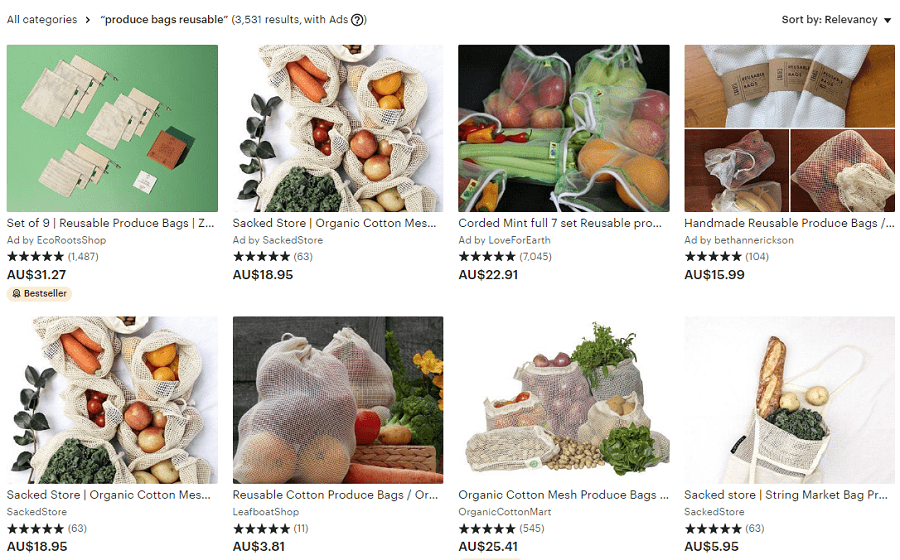
If the second-hand approach appeals to you but you just don’t have the time or inclination, I’d recommend looking on Etsy for reusable produce bags made of upcycled fabric.

There’s no one Etsy seller I recommend, instead I’d suggest browsing and finding the seller that is closest to your home to minimise the packaging and transport footprint.

Recycled PET Plastic Mesh Bags

Some people don’t love the idea of going plastic-free and then buying reusables made of plastic. When I first went plastic-free back in 2012 I was the same. But then I looked into it a little more and adjusted my view.

If we stopped using plastic today, and didn’t make anything else made of plastic, there is still a huge amount of plastic already in existence. Legacy plastic, I call it. From a resource perspective, it makes sense to be using this to make resources rather than leaving it somewhere to sit for all eternity.

PET is the plastic that water bottles is made from. It’s hard wearing and durable. The PET plastic bottles can be recycled into a mesh that is used to make reusable produce bags. These bags have a much lower carbon footprint than other “new” bags because they are made from 100% recycled material.
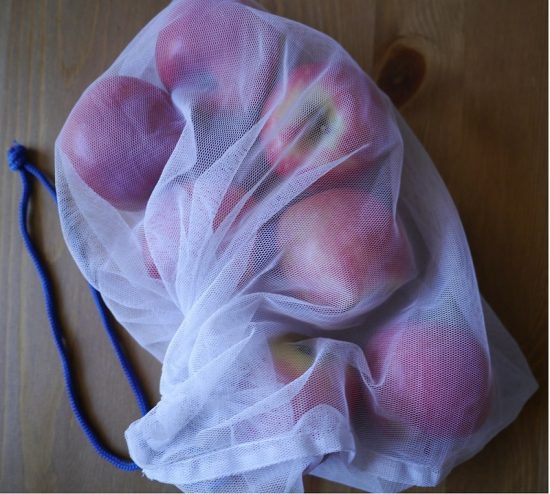
I have a set of Onya bags that I purchased for my first Plastic Free July back in 2012. They may not be as white as they were when I purchased them, but they function as good as new. (Which cannot be said for my biodegradable ones, which have, well, biodegraded and needed some stitching up).

Mesh bags are great for fruit and vegetables, loose salad leaves (the produce can be washed in the bag) and loose bread rolls.

Cotton Produce Bags

Cotton bags are great for all the things that mesh bags aren’t: powders and flours. I have a set made out of an old bed sheet. The advantage of these is that they can be repaired easily, and composted at the end of their life.
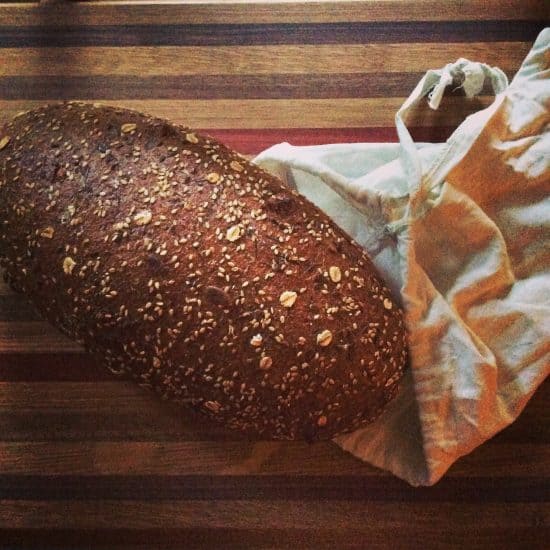
It’s possible to buy new cotton reusable produce bags: I’d recommend looking at your local bulk store as they will often stock them.

I’d always recommend supporting a local brick-and-mortar store where you can, but if this isn’t an option, they can easily be found online.

If you’re further afield here’s a list of independent online plastic-free and zero waste stores.

Bulk reusable food bags

These reusable produce bags are a fairly new idea, and are designed for bulk store shopping (as opposed to fruit and veg shopping). Whilst reusable produce bags are very easy to transport, they aren’t ideal for storing food.
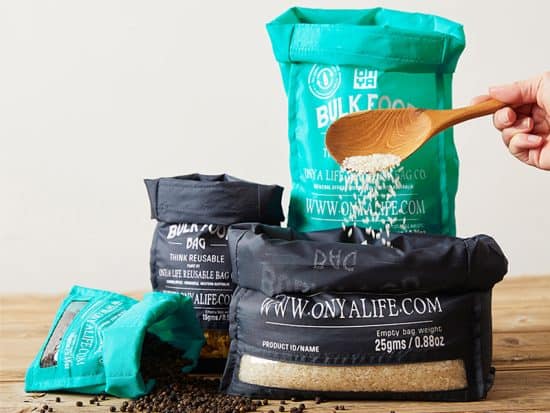
Onya Life launched these bulk bags in 2019 (made of recycled PET, which I talked about above) as a lightweight alternative to glass jars. They can be labelled and are suitable for food storage.

They are not something I’ve used, but I think they are a great alternative for those of us who don’t want to carry huge amounts of glass jars on our shopping trips, or have to decant everything into said glass jars when we get home.

Other options: making do

Before rushing out and buying anything new, have a think about what you might already have at home. Many bulk stores accept glass jars for refilling, so consider taking jars rather than bags, if that is practical. A pillowcase makes an excellent cotton bread bag. Laundry bags are a mesh alternative to mesh produce bags – and they are definitely machine washable.

If you do decide to buy something, just be sure that it is something that you will use. Reusables that sit in the back of the cupboard are not a good use of resources!

The best reusables are the ones you use often.

Now I’d love to hear from you! What reusable options do you use? Do you have one preference, or do you use a combination? If you sew, do you have fabric types you recommend and any to avoid? Are there any other alternatives or DIY hacks that you can suggest? Please share you thought in the comments below!

[leadpages_leadbox leadbox_id=140b48fc6639c5] [/leadpages_leadbox]

Disclaimer: this post contains some affiliate links which means if you click a link and choose to purchase a product, I may be compensated a small amount at no extra cost to you. I only ever recommend products I have used, companies I trust or those that are regularly recommended to me by you, my readers. Making do and buying second-hand are always my first recommendations.

5 tips to get prepped for Plastic Free July (and living with less plastic)

Plastic Free July comes around on the 1st July and for the entire month of July, millions of people across the globe try to avoid as much single-use, unnecessary and wasteful plastic as they can. It’s a pretty amazing movement, built on the idea that we can all do something, and if we all do something, that can bring about huge positive change.

To say I’m a fan of Plastic Free July is a bit of an understatement. I first took part in 2012 and I’ve written about it every year since. It changed my entire world view and led me down the path to zero waste and working in the waste education space. (And in a wondrous circle of events, led me back to working on the Plastic Free July campaign and being on the Plastic Free July Foundation board.)

Who knew refusing a few plastic bags could have such a considerable life impact?!

To get ready for Plastic Free July this year, I thought I’d share a few lessons I’ve learned along the way.

First up – sign up!

If you’re taking part in Plastic Free July this year, sign up to the official campaign! You’ll find the form over at www.plasticfreejuly.org. (If you haven’t done so, head over there and do it now. I’ll wait. Yep, I’m still here. Done? Great!)

Signing up means that you’re counted, and that matters. Plastic Free July works with businesses and government organizations across Australia and beyond, and being able to say “people care about this issue. This is how many people signed up to Plastic Free July this year” is powerful in influencing future policy.

The recent WA plastic bag ban here in Australia came about in part because of the success and interest in Plastic Free July.

We all want positive change, and when we join together we create a movement… and movements drive change.

Don’t stress about the “stuff”

Over the next 31 days there will be lots of plastic-free wares on display, as people share things they find and companies share things they sell. Be careful not to get too overwhelmed in the “stuff”.

If we will use something often and can see the value in owning it, it is a good purchase. If it is shiny and plastic-free and on sale, that isn’t such a great reason to buy the thing.

Of course, reusables are the way we avoid the single-use disposables. I have reusables that I love and carry with my every day. But I didn’t buy them all in the first four weeks.

There is no such thing as a standard plastic-free “kit”. The things I carry around with me won’t be things that everyone needs. There are other things that other people consider a necessity that I don’t.

Pay attention, see what is around, check out different products but don’t feel like you need to buy anything today. (If you’d like to see what’s in my handbag, I’ve shared it – but only to give you ideas. It is not a shopping list!)

The thing about change is that it’s hard, and buying stuff is easy. Yet we buy things and feel like we made progress. It isn’t about the stuff. It’s about new habits.

If you do decide to buy something, ask yourself honestly: do I need it? (This is not the same as want!) Will I use it? Is it worth it?

Get one thing, make it a habit and then move onto the next thing. The less money you spend during Plastic Free July, the more you’ll enjoy the challenge. Promise.

Be gentle with yourself

In the same way that we don’t learn to play the guitar overnight or lose 10kg overnight or learn Spanish overnight, we do not go plastic-free overnight! Finding solutions take time. Creating new habits take time.

Allow yourself time… to look, to learn, and to make mistakes. When you go to the supermarket, allow extra time to walk up and down the aisles with new eyes and see what is there that you never noticed before.

Take time to look and find out if there are bulk stores, farmers markets or health food shops locally, and go see what they have to offer.

When you’re leaving home in the morning, take a few extra minutes to check you’ve planned for what you’re doing… will you need a reusable coffee cup? Water bottle? Shopping bag?

f you run out of time, or forget, don’t beat yourself up. Change is a process.

Be gentle, and give yourself time.

Set yourself reminders

We don’t remember everything in the beginning. We haven’t developed those habits. They will come in time – in the same way that you never leave your house without your shoes or keys, eventually you’ll add reusables to the list.

But in the short term, help yourself out! Write yourself little notes and pop them by the front door, or by your shoes, or the keys. Put them on the dashboard of the car. Put reminders in your phone.

Create visual cues whilst your subconscious is still working on memorising your new habits.

See mistakes or problems as opportunities and dilemmas

When we start, we make mistakes. (Hey, 7 years down the track I still make mistakes! Just less, hopefully!) Don’t see this as failing.

See it as an opportunity to learn and do things differently next time.

In the old days of Plastic Free July we used to encourage people to collect all their mistakes and plastic purchases and keep them in a “dilemma” bag. It’s not something we talk about today, but many people still find it useful.

The dilemma bag is a way to keep your plastic during the month, and rather than feeling bad about it, use those items as where to try to implement change.

Keep what you accumulate, and then one thing at a time, begin to look for alternatives. Whether it was because you got caught out unawares (how could you plan differently next time), or a product you couldn’t find plastic-free (are there other shops you could investigate) or it was simply because you had a bad day (and we all have those too!), use these dilemmas as clues for doing things differently next time.

Want more tips?

There’s plenty more about living with less plastic in the blog archives, but to stop you feeling overwhelmed at where to start I’ve put together a brand new free eBook with 9 tips for living with less plastic. I’ll also send you my latest posts (published weekly) with more thoughts on living with less waste.

I’ve talked about reusables a little in there, but I’ve also talked about some other simple swaps you might not have considered.

If it’s your first Plastic Free July then I wish you a fun and enjoyable challenge, and if you’re returning for another year then I hope that this year is your best yet. As always, be sure to share your tips and tricks and wins and a-ha moments with us!

We are in this together! Happy Plastic Free July!

A Guide to Plastic Straw Alternatives (+ Encouraging Venues to go Straw Free)

When it comes to reducing our personal plastic use, and also tackling plastic pollution, it’s not a case of targeting everything at once. For most people that’s overwhelming and a recipe for giving up.

A more realistic approach is choosing one thing to focus on, or maybe a couple of things, and work towards making these changes before embarking on the next thing.

Rethinking single-use plastic items (and particularly plastic packaging) is a great place to start. These kinds of items always feature in the top 10 items found in beach clean-ups and litter pick-ups. They create a litter problem because they are lightweight and easily escape into the environment.

They are also items that are easy to avoid or replace. There are usually multiple solutions.

One of the top 10 items found in litter pick-ups and beach clean-ups is plastic straws. When we are trying to reduce our plastic footprint – and encourage others to do so – tackling plastic straws is an easy first step.

Plastic Straws are Not Recycled

One plastic straw might seem small, but it’s the quantity that is used that causes the issue. It is estimated that Americans use 500 million plastic straws daily.

Typically plastic straws are made from polypropylene (PP, plastic #5) or less commonly, polystyrene (PS, plastic #6). Polystyrene isn’t always the white, fluffy looking stuff – that’s actually expanded polystyrene. Straws use the non-expanded type, which is also used for coat hangers and bread tags, is coloured (or black) and looks nothing like the white version.

Plastic straws aren’t easily recycled. Partly this is because they are made from a plastic that isn’t commonly recycled. They are also too small and light to be separated successfully with machinery at the Material Recovery Facilities.

Even when polypropylene and polystyrene is recycled, it’s generally mixed with virgin (new) plastic to maintain the quality, so it’s not a closed loop.

Plastic Straws Can Be Refused

The great thing about plastic straws is that they can be refused. It’s literally as simple as ordering a drink and saying “no straw, please”.

Reusable Straw Options Exist

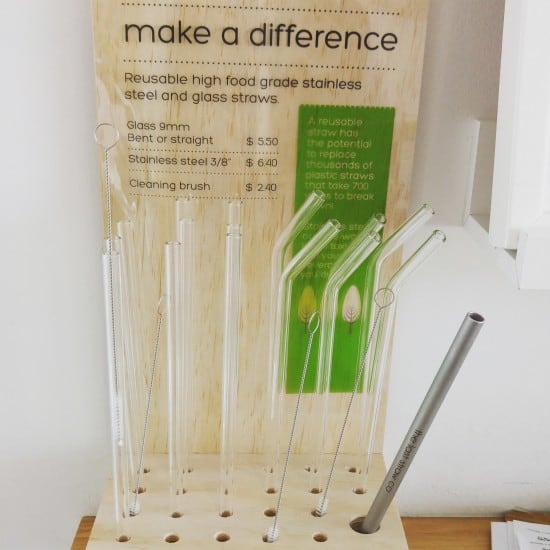
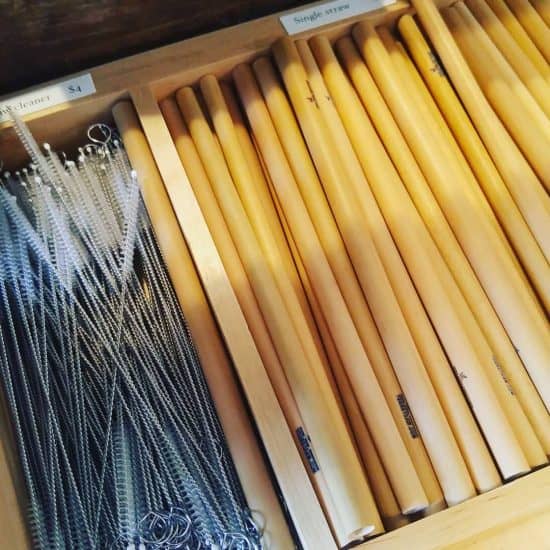
Reusable straw options exist, in glass (toughened glass that is similar to that used in Pyrex), metal (usually stainless steel) and bamboo. Different lengths and widths are available; which one is best is personal choice.

Personally I like the feeling of glass over stainless steel, but I do carry a stainless steel straw in my reusable cutlery set as it fits.

Cleaning brushes are just as readily available to remove debris.

(If you’d like to invest in a reusable straw, you might find my worldwide list of independent ethical online stores useful.)

Increasingly, venues are providing reusable straws for their customers rather than single-use disposables. These tend to be glass or stainless steel which can be sterilized. As with all kitchenware, these will be cleaned thoroughly and sanitized between customers.

Venues Can Provide Single-Use (Plastic-Free) Straws

Banning plastic straws is not the same as banning straws altogether. Banning plastic straws does not mean discriminating against people who need to use straws because they are elderly, frail or have mobility issues.

Banning plastic straws doesn’t mean that those few drinks that really work better with a straw (frozen drinks or fresh drinking coconuts) are off the menu.

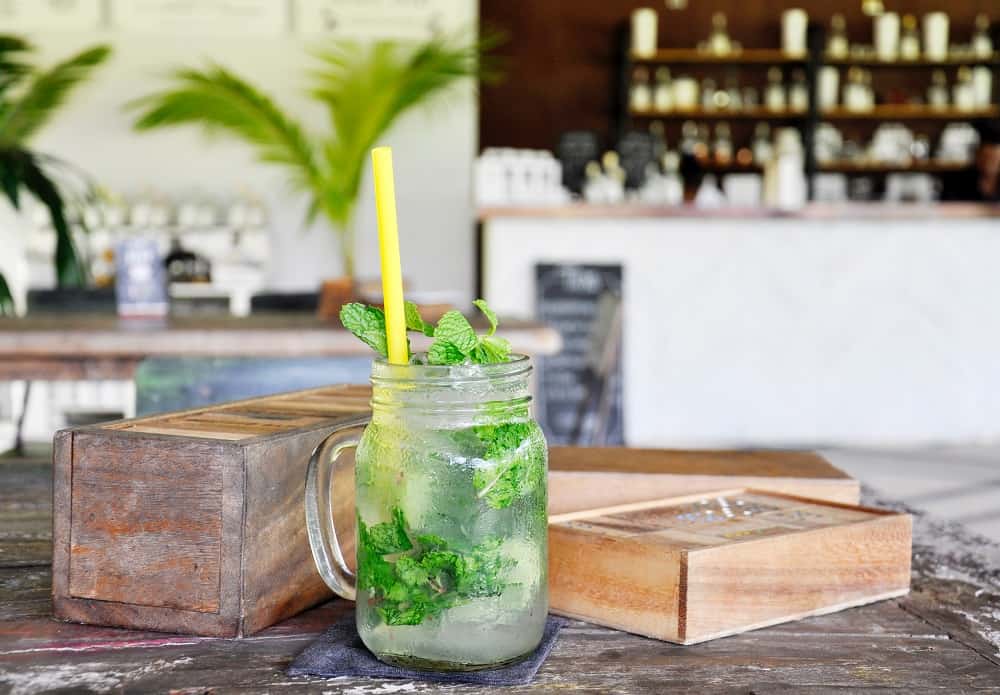
Single-use alternatives that are plastic-free include FSC-certified paper straws, bamboo straws and straws that are literally made from straw. (Straw – that’s what straws were made from until plastic took over. Hence the name!)

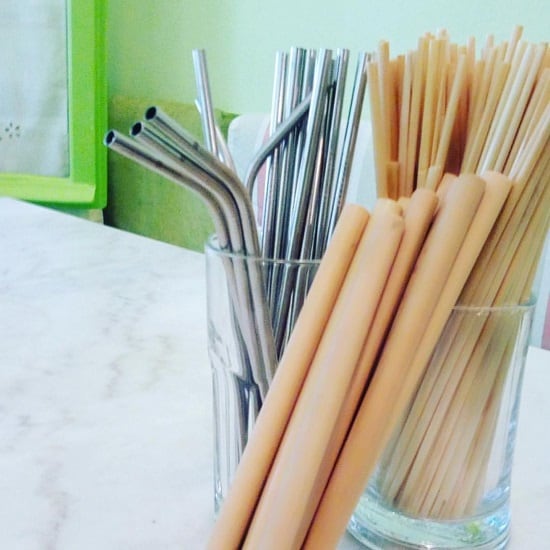
Some venues provide multiple options: this cafe in Paros, Greece offers both bamboo and stainless steel reusables for its customers, as well as single-use straw straws.

Single-Use Straws by Request Only

Many venues are beginning to recognize the waste and litter created by straws, replace their plastic straws with non-plastic alternatives, and/or offer straws by request only. Venues deal with hundreds or thousands of customers every day, so one venue deciding to go straw free can have a real impact.

As individuals, we can change our own personal habits, but we can also try to encourage our local cafes, restaurants and food vendors to join the movement. Consider approaching your favourites and asking if they’d consider removing plastic-straws.

There are a number of groups working to encourage more businesses to get on board. Three that map out participating vendors are:

The Last Plastic Straw (USA)

The Last Straw (Australia)

Straw Wars (UK)

Tackling Plastic Straws is a Conversation Starter to the Wider Issues of Plastic

The thing I love about the plastic straw problem is that solving it really requires very little effort on our part. It doesn’t require changing habits or even remembering to bring reusables. It starts with saying “no thanks”.

But at the same time, it’s a powerful way to begin the conversation with people who might not know about the plastic pollution issue, or who haven’t given much thought to the burden of single-use plastic.

Every time we say “no thanks”, we have an opportunity to talk about why. We can talk about why we are avoiding single-use plastics – whether it’s to use less resources, to reduce litter, to protect the oceans, for health reasons, or because we simply love a challenge. We can talk about the alternatives to single-use plastics. We can share success stories and examples.

We have the power to change our own habits, and we have the power to influence others. We can influence by leading by example, and we can influence by beginning conversations. That’s how we spread ideas; that’s how ideas become movements; and that’s how we bring about change.

Plastic straws are just the beginning. That is exactly where we need to start.

Now I’d love to hear from you! Do you use a reusable straw, or simply go without? If you prefer reusables, do you have a favourite type? Are there any cafes near you that offer straws only on request, or offer reusables for customers? Have you noticed the awareness rising over the last few months? Please share your thoughts below!

[leadpages_leadbox leadbox_id=140b48fc6639c5] [/leadpages_leadbox]

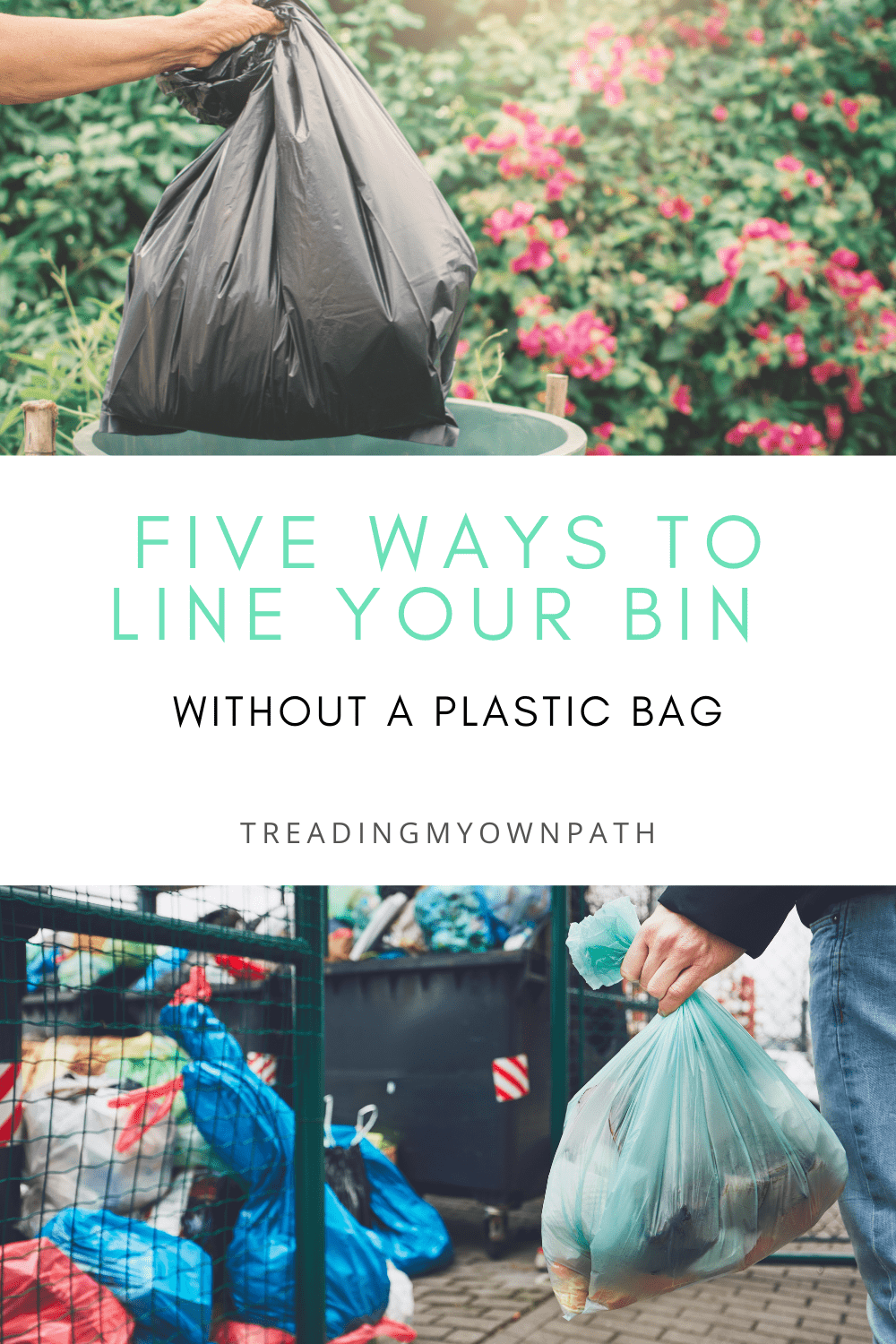
5 Ways to Line a Bin without Plastic Bags

With plastic bag bans increasing, and the awareness around the issue of plastic pollution growing, it seems that plastic bags are on the decline. Which is great news, except it begs the question… what is a good alternative to use to line the rubbish bin?

How to line a rubbish bin without a plastic bag is one of the questions I’m most frequently asked.

As with many of these plastic-free dilemmas, there is more than one solution.

How To Line a Rubbish Bin Without a Plastic Bag

1. Use No Liner At All

This might not work for everybody, and it usually isn’t the first step, but have you considered not using a liner at all, and simply rinsing out the bin between uses?

The first question to ask is: what is actually going into my bin? Is there food scraps and stinky stuff? Or is it just dry, clean non-recyclables like plastic packaging and mixed-material products?

Typically the average household bin is made up of 40% food waste. That’s the wet, gross bit that makes our bin icky. If you can separate your food scraps and dispose of them separately, there might be no need for a bin liner.

If you’re not ready to set up a compost bin, find out if there’s anyone in your area who already has, and who is willing to accept their neighbours (i.e. your) food scraps. There’s a free directory at sharewaste.com.

If you’d like to set up a worm farm (these are great for small spaces and can be kept on balconies or indoors) you can DIY your own with old polystyrene boxes or invest in a purpose-built version like the Hungry Bin.

If you already compost or worm farm, but still produce meat and fish products that you don’t want to compost, you can actually bokashi them (here’s some info about how bokashi bins work). The resulting fermented bokashi contents can go in the compost.

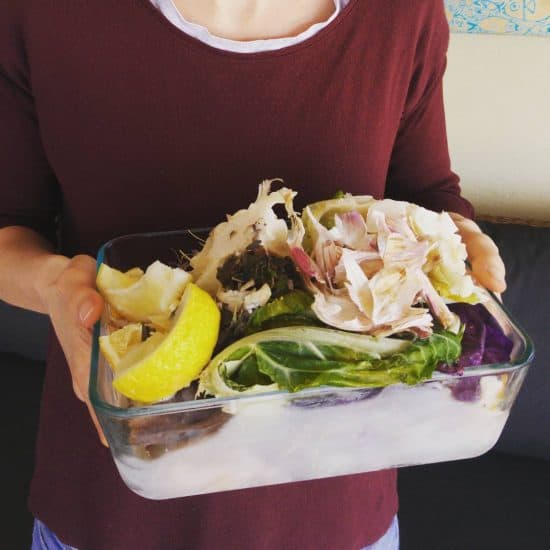
Whilst you’re getting a food waste recycling system set up – or if you just don’t have the energy for this at the moment – and you have space, consider using a large yoghurt tub with a lid / lidded bucket to collect food scraps and keep in the fridge or freezer until bin day, and empty these directly into the external bin.

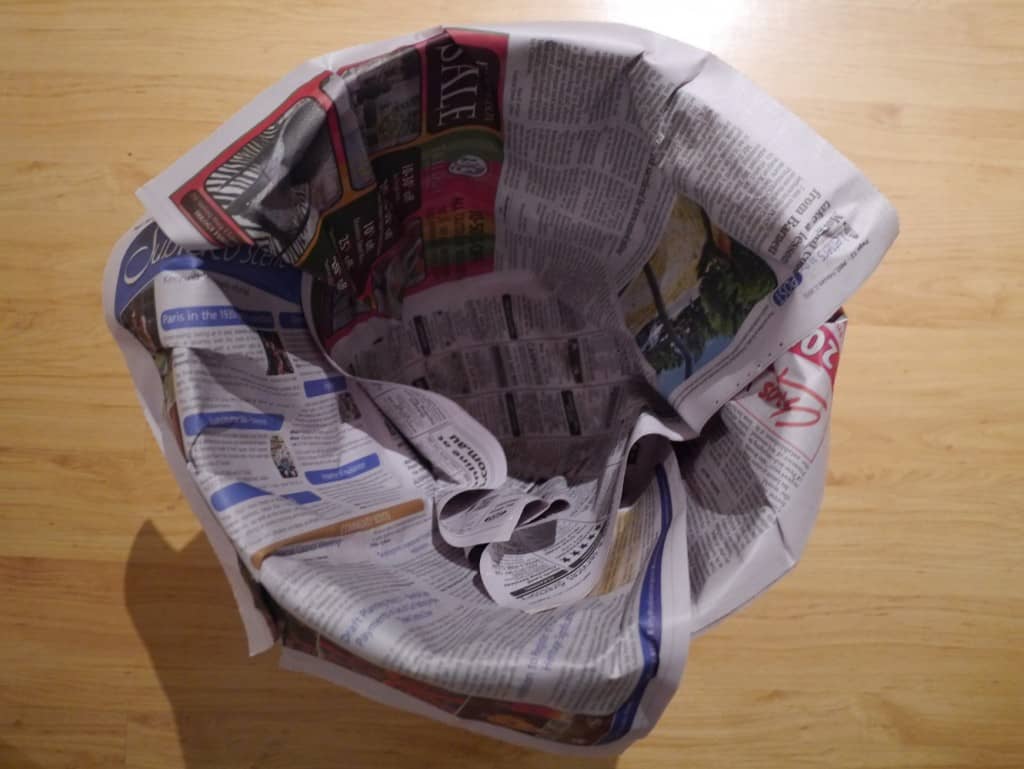
2. Line Your Bin with Newspaper

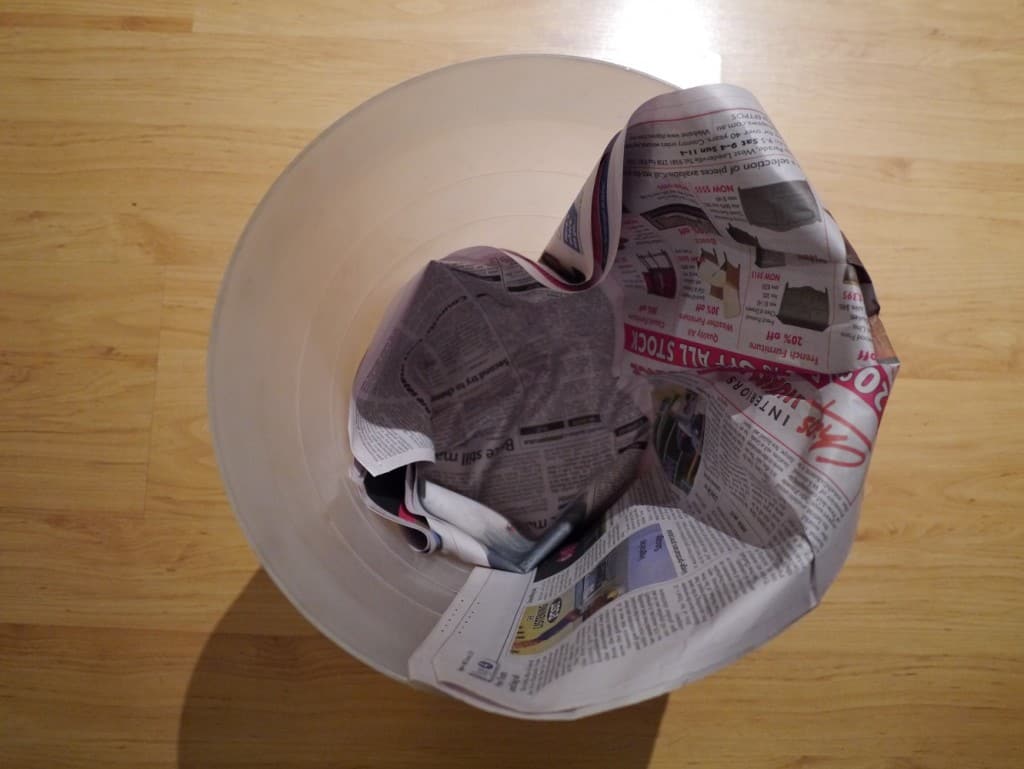
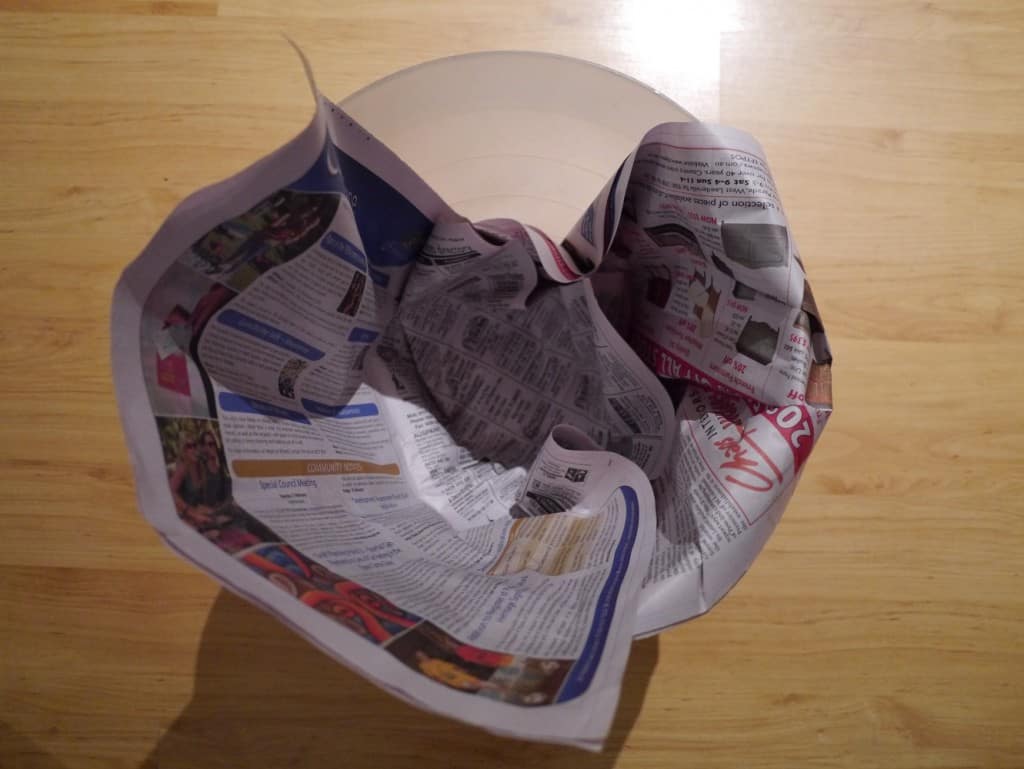
When I first went plastic-free in 2012, I switched from using plastic bags to line my bin to using newspaper. I received a free community newspaper in the letterbox every week. If you don’t get the newspaper yourself, ask friends and family, neighbours, workplaces or cafes.

This is how I did it:

Using old newspaper means repurposing something already in existence, and no new plastic is consumed.

(This is how I started; next I focused on how to recycle my food waste to reduce the wet stuff, and then I went liner free.)

3. Line Your Bin with Other Repurposed Materials

If you have large paper bags, old cardboard boxes or other packaging, consider using these to line your bin (or to replace your bin). You might find it possible to empty the contents into an external bin and reuse the vessel again.

With all paper and cardboard, it is better to recycle than to compost, and to compost rather than to landfill. However, repurposing something that has already been used is better than buying something new.

4. Line Your Bin with Certified Compostable Bio-Based Bags

Something I often wonder about purchasing brand new bin liners: why would I buy something brand new with the sole purpose of putting it in the bin?

But I did it myself in the past, and we all start our journey somewhere. If you’re not ready to compost your food scraps, don’t think the newspaper method will work for you, and really want to use a purpose-designed liner, then certified compostable bio-based bags are worth considering as a transition step.

The labels “certified compostable” and “bio-based” are important. Plenty of products exist that say “eco friendly” and “green” but don’t (or can’t) back up their claims. If you want a better option than fossil-fuel based plastic, look for these two terms:

Bio-based means made from plants, not fossil fuels. Sometimes they are called plant-based, cornstarch or PLA. They are still plastic, but not made from fossil fuels.

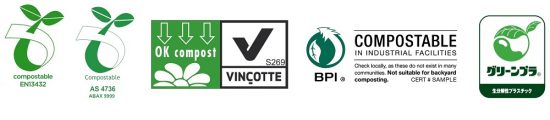
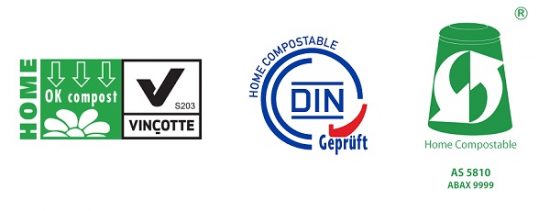
Certified compostable means that the product has been tested and is proven to break down in hot composting conditions. Certified home compostable means the product will break down in a home compost bin.
To ensure the bags you pick are certified compostable, look for these logos:

However, certified compostable does not mean they will break down in the environment, or in landfills, and no compostable plastic has been shown to break down in the marine environment. They are just as capable of creating litter and harming wildlife as regular bags. As with all single-use items, they use a lot of resources to manufacture versus their useful life. Their main advantage is that they reduce our dependence on fossil fuels.

Avoid oxo-degradable and oxo-biodegradable bags, as these are plastic bags made with fossil fuels that have an additive which means they break down more quickly than regular plastic bags – into microplastic. These are considered by many to be worse for the environment than regular plastic bags.

5. Line Your Bin with Recycled Plastic Bin Liners

If you really need to use plastic, then consider using recycled plastic. The higher the recycled content, the better.

There is so much plastic already in the world, and only 10% of it has ever been recycled. The more we can do to re-use what exists, and stop producing new plastic, the lower the environmental burden will be.

Plastic bags were only actually invented in the 1960s. We managed before, and we can manage again.

Now I’d love to hear from you! What do you use to line your bin, and how has that changed along the years? Do you have any other tips to add? Or another challenge you’d like some tips dealing with? Please share your thoughts in the comments below!

A Zero Waste Backpacking Trip: What I Packed

Tomorrow I’m setting off to France on my big walking-across-Spain adventure. I’m hiking to Santiago de Compostela (in Spain) from the town of St John Pied-de-Port in France. It’s 800km in total, along the Camino Frances (most commonly known as the Camino de Santiago).

I’m expecting it to take about 5 weeks.

The biggest difficulty (well, aside from walking 800km of course, but I’m putting that to the back of my mind right now so it doesn’t seem so far!) is figuring out what to pack.

Particularly as a minimalist, who needs to keep warm at the top of the mountains and cool on the lowlands, believes in packing light, can’t face the idea of needing anything single-use on the way, would rather not buy anything new and doesn’t have time to source everything second-hand…

As always, there’s a balance, and there’s compromise.

A Zero Waste Backpacking Trip Across Spain

Using What I Already Have

I’m a big believer in using what I already have where I can. Interestingly, the things I already own and don’t own were a little random. I already own a pair of decent hiking boots, a backpack and a silk sleeping bag liner (purchased back in 2002 and still going strong).

No need to replace these.

On the other hand, I don’t actually own any t-shirts, any jumpers with full length sleeves, or a raincoat.

(I’ve been saying I’ll buy a raincoat since I moved to Perth in 2011. I think I believed Perth was the land of the eternal sunshine. It’s no UK, but I was definitely a little over-optimistic.)

Although I already have a bunch of reusables, I did get some new ones that I think are more appropriate for what I need.

Brand New versus Second Hand

I try to buy as much as I can second-hand, but when you’re looking for specific items it can be more of a challenge. I’m confident it can be done. On this occasion though, I did not have the time (or the patience) to source everything second-hand.

I visited a few second hand stores and had some success. I also spent a great deal of time searching online, with less success.

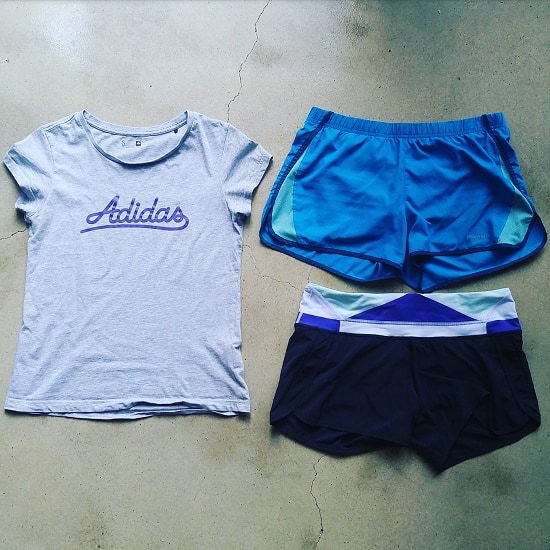
I found two pairs of shorts, a t-shirt and a lightweight dress second-hand. I was also able to borrow two walking poles.

The difficulty of browsing online was that I had no real idea of the quality or fit of many of the brands on offer. (Plus most things take 2 weeks to reach the west coast from the east coast via mail, so second-hand online shopping means allowing a considerable amount of time.)

The range was also pretty small. In the end I accepted I’d have to buy more new than I’d have preferred to.

Natural Fibres versus Synthetic Fibres

I’m always torn between wanting natural fibres but also needing to be practical, not to mention the ethics of different materials.

Waxed cotton is waterproof but super heavy; lightweight rain jackets are 100% synthetic. Products like down can be harvested by cruel methods; synthetic fleece is the worst fabric for shedding microfibres into the ocean.

The raincoat I purchased was made by Patagonia, who are well known for and committed to pursuing sustainable practices. The outer is made from 100% recycled nylon. Whilst I hate buying synthetic fabrics, I do take comfort in knowing it is made from recycled material over virgin plastic.

(For those in the US, Patagonia offer Worn Wear, which is an online store selling pre-loved Patagonia wear. I love this option, but it is not currently available in Australia.)

In my quest for a lightweight jumper I purchased a down vest. I’ve been against down since watching the Earthlings documentary; they show undercover footage of geese being stripped of their feathers whilst fully conscious. But at the store I was told about ethical down, wild harvested once the geese leave their nests (they shed down to insulate their eggs), and I felt more comfortable with this.

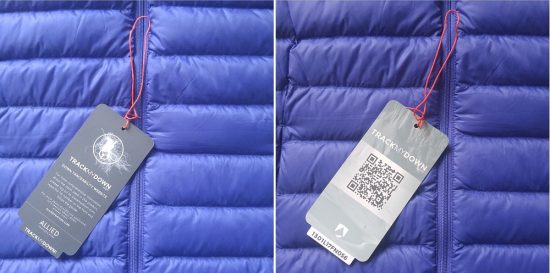
Each down product the store sells has a tracking number for traceability.

Having tracked my ID at trackmydown.com I discovered that the down in my vest is 100% duck down from China, which is a by-product of the meat industry. No birds are live-plucked according to their auditing process. Not exactly the wild-harvested down I was told about though (which does exist, but is much harder to find).

This down is certified Responsible Down Standard. Auditing and certification is better than not, and changing any industry with improved animal welfare and greater transparency is a good thing. Being a part of the meat industry, I do have mixed feelings.

The few other things I purchased were merino wool, which is lightweight and breathable. A pair of leggings (Macpac), a bra (Icebreaker), a t-shirt with no seams across the shoulders (much better for carrying a backpack) (Icebreaker) and a long-sleeved thermal (Kathmandu).

I checked all the brands with the Behind the Barcode 2018 Ethical Fashion Report, which assesses supplier relationships, policies and worker empowerment for different companies and grades performance.

Icebreaker was graded A+, Patagonia was graded A, Kathmandu was graded A, and Macpac was graded B.

Okay, so here is my confession: I purchased a pair of brand new nylon trousers. Not recycled nylon. Yes, I’m cringing too. We all have moments of weakness. In my defence, I was pretty tired of shopping by this point.

Total weight of clothes (including everything except hiking boots): 2.4kg.

Packing Reusables

It is very important to me that I avoid single-use disposables wherever possible. It is also important that I avoid plastic where I can. I want to travel light, yet all of the lightweight reusable solutions seemed to be plastic.

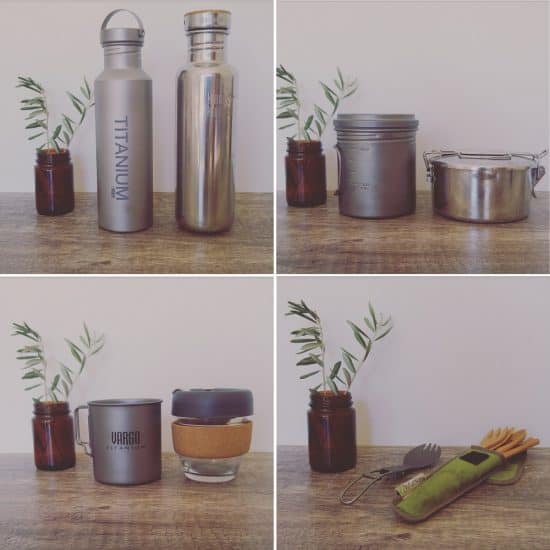
I knew that titanium is a lightweight metal sometimes used in camping and hiking gear, and I wondered if titanium reusables exist. It turns out they do! I found a reusable water bottle, leakproof container, spork and travel mug at Vargo Outdoors, who specialise in titanium equipment and accessories.

I’ve compared them with my regular reusables to give an idea of weight difference. Clearly they are not exact swaps, but they serve the same purpose.

The Vargo water bottle weighs 120g, compared with 240g for the Klean Kanteen bottle (it’s a slightly smaller volume, being 650ml as opposed to 800ml).

The Vargo BOT (which is what Vargo call their reusable container) weighs 136g, versus 295g for the stainless steel container. Despite owning a few stainless steel containers, none of mine are actually leakproof. The Vargo BOT is leakproof, so I can use it as a second water bottle if required.

The Vargo travel cup weighs 61g, versus 222g for the KeepCup. Clearly they are quite different (the KeepCup has a lid, and an insulated band). But I don’t want to take (breakable) glass with me on this trip.

The Vargo spork weighs 17g, and the bamboo fork and spoon (part of my To-Go wear set) combined weigh 17g (with the knife, chopsticks and the case it’s more). So they weigh the same, but the bamboo fork isn’t very easy to eat with – I tend to only use the spoon, which doesn’t work for everything. I love how small the titanium spork packs down.

Additionally, I’ve packed a single Onya produce bag, my 4myearth food wrap, and a lightweight reusable tote bag.

The total weight of my reusables: 452g.

Toiletries

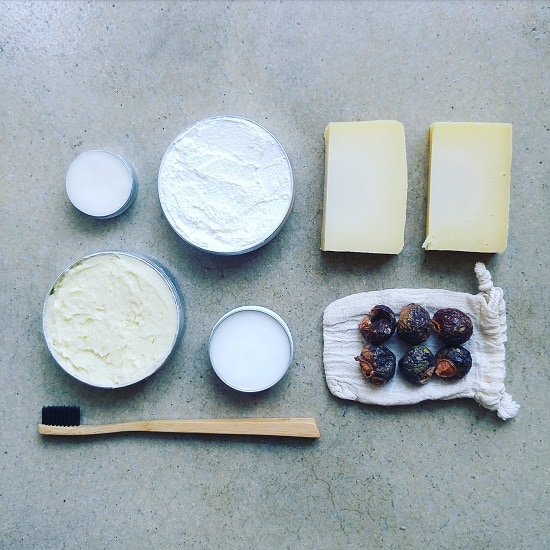
I keep my toiletries pretty simple at home, so this wasn’t a challenge. Bar soap, a bamboo toothbrush, a pot of DIY sunscreen, a pot of DIY cold cream, a pot of homemade toothpaste and a pot of DIY deodorant.

I also packed 6 soap nuts for laundry, my Diva cup (reusable menstrual cup), and a hankie.

Total weight: 521g.

The Final Pack

My final pack weighs 5.8kg. This includes every single thing thing except my hiking boots, but clearly I’ll be wearing some of the clothes. I was aiming for less, but it’s still manageable.

I’m going to go through everything one more time before I leave, so I still might be able to shave some weight off.

And that’s it! Tomorrow I head to the south of France to begin the walk into and across Spain.

Here’s to five weeks of walking. I’ll report back from the other side on how it all went :) Wish me luck!

[leadpages_leadbox leadbox_id=1429a0746639c5] [/leadpages_leadbox]

When Is A Plastic-Free Aisle Not Plastic-Free?

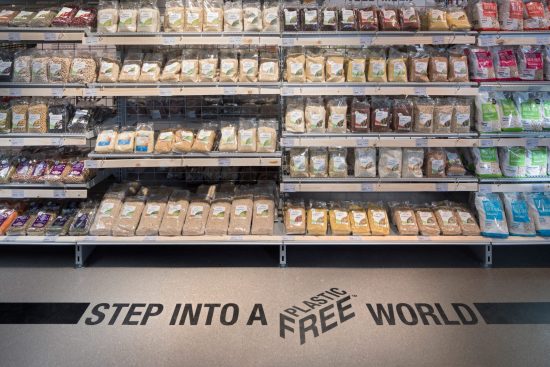
A supermarket aisle in the Netherlands made headlines last month, because it was the “world’s first plastic-free aisle”. I saw the headline, but I didn’t bother to read much further, expecting to see the kind of thing so many times before – neatly laid out rows of bulk bins, where customers can use paper bags or fill their own containers and thus avoid plastic packaging.

It was only when a reader shared one of the articles with me and asked for my thoughts that I actually looked at what was behind the headlines.

What I saw was not what I thought I’d see.

This is what the “plastic-free aisle” looked like:

No. Not what I was expecting either.

If there’s one thing that makes me mad, it’s misleading claims and incorrect science. (Okay, that’s two things, but close enough.) Seeing this aisle set alarm bells ringing in my curious mind.

Let’s look at the details.

The PLASTIC FREE™ Aisle: What Does It Really Mean?

The “plastic-free aisle” is more correctly called the PLASTIC FREE™ aisle. Specifically, it is a collaboration between Dutch supermarket chain Ekoplaza (who own 74 organic supermarkets in the Netherlands) and an environmental campaign group called A Plastic Planet. The clever branding was designed by London graphic design studio Made Thought.

The PLASTIC FREE™ name is a figurative trademark, meaning the stylisation and graphic design of the logo are protected. There is no scientific meaning attached to the name or trademark; it’s more like a brand name.

On their website, A Plastic Planet describes the two groups of materials they call PLASTIC FREE™:

“Bio-Materials: Materials include wood pulp, plant cellulose, food waste, grass, algae, and mushrooms. These materials can be made into trays, punnets and clear, flexible films that look and behave like conventional plastic but can be composted into biomass. A Plastic Planet supports compostable plastics that comply with the necessary certification standards: EN 13432 or OK Home Compostable.”

“Other Materials: Metal, paper, carton board and glass are also plastic free.”

In short, the PLASTIC FREE™ logo does not include uncertified biodegradable plastic, but does include certified compostable plastic.

Often companies who use compostable plastics try to distance themselves from conventional plastics by referencing their plant-based origins (using terms like cornstarch or sugar-based). Or they describe themselves as plastic-like, rather than saying they are plastic. However, compostable plastic is classified as plastic #7 on the ASTM International Resin Identification Coding System (RIC), which is used to identify plastic resins.

Find out more about compostable plastics here.

The Issues That The PLASTIC FREE™ Aisle Doesn’t Address

Certified compostable plastic is different to fossil-fuel based plastic in some ways, but not all. It is not without issues, either.

1. The Language is Confusing (and Potentially Misleading)

The language of plastics, bioplastics and compostable plastics is confusing for many. A Plastic Planet do a good job of outlining what they mean and don’t mean by PLASTIC FREE™ on their website.

But most people glimpsing the headline or even heading to the store won’t be visiting the website.

Even on the website, there’s some confusing inormation. For example, they feature a video with a supplier holding a green meat tray and saying that in 12 weeks, the tray will disappear. That’s impossible science. Compost, degrade, dissolve, evaporate – call it what it is. Nothing disappears.

The stories about the first PLASTIC FREE™ aisle in the media are not always accurate, either, as different meanings and interpretations are made.

Some reporting claims that all the plastic packaging is 100% compostable. Technically, products certified to EN13432 and Ok Home Composting standards are required to break down by a minimum of 90%, not necessarily 100% (the remainder is “residue”).

This matters, because people believe we have a perfect solution, which is not the case.

2. Plant-Based Compostable Plastic Still Creates Litter

One of the big issues with certified compostable plastic is that it is certified compostable under composting conditions. That is not the same as out in the open environment.
Certified compostable packaging is just as capable of causing litter, blocking a drain, suffocating an animal or being mistaken for food as a regular plastic packaging.

3. Compostable Plastic Doesn’t Break Down in the Oceans

No compostable plastic to date has been shown to break down in the marine environment.

As plastic packaging is lightweight, floats, blows in the wind and can be carried by animals, it ends up in the ocean. Compostable plastic is no different to regular plastic in these properties.

4. Compostable Plastic Needs to Be Composted

Compostable plastic needs to be composted to break down, but consumers are often not aware of this. Landfills do not have composting conditions.

Additionally, some commercial composting facilities do not permit compostable plastics, because they do not run their cycles long enough to actually break down the plastic.

As an example, if a green meat tray takes 12 weeks to break down, but the composting cycle only runs for 10 days, the resulting compost will still have green meat tray plastic pieces throughout.

Unless there are systems in place for consumers to compost their own packaging, or companies to accept this packaging for commercial composting, there’s limited value in selling products in compostable plastic.

5. It Doesn’t Reduce Resource Consumption

Whatever it’s made from, single-use packaging is still single-use packaging. On this scale, single-use packaging is a huge waste of resources.

Growing huge amounts of food (sugar, corn, tapioca) with the sole purpose of synthesizing it into packets so that food items can be neatly displayed with predetermined portions in perfect rows in the supermarket? The land, energy and carbon footprint of that is huge.

When there’s so many people in the world who don’t have enough to eat, there’s also an ethical question around using land and food on this scale to create packaging.

What A Plastic-Free Aisle Should Really Look Like

The answer to the problems of too much packaging, plastic in the ocean, litter and carbon emissions isn’t a different type of single-use packaging.

The answer is moving away from single-use packaging.

The answer is in the return of return-and-refill schemes, container deposits, bulk stores… and just not wrapping every single thing in a package regardless of whether it is actually necessary.

Plastic-free aisles already exist. Bulk stores around the world are demonstrating that real plastic-free aisles are possible. Milk is being sold from dispensers and bottles refilled. Fruit and veg shops are stocking produce without plastic.

The Source Bulk Foods has pioneered the plastic-free aisle in Australia, with more than 40 stores, and have recently expanded into New Zealand and the UK.

Plenty of fruit and veg stores (such as my local Swansea St Markets) have shown that it’s perfectly possible to sell fruit and vegetables without needing to package them.

Even my local (Coles) supermarket has a bulk aisle. Okay, so they haven’t ditched the plastic bags just yet, but it’s progress.

The answer isn’t trying to tweak the current system. The answer is in changing the system. Recognising that single-use packaging in any form is a waste, and trying to find solutions that mean no packaging at all.

The question then, is how do we make bulk stores and return-and-refill systems more accessible (location, practicality, affordability) to the masses?

Solutions already exist. Real solutions that focus on rethinking, reducing and reusing.

That’s where the focus needs to be. The more that these kinds of stores and practices are supported, the more they will grow, the more people they will reach, and the more change will happen.

If we really want to tackle the plastic pollution problem, this is what we need to be working on.

Now I’d love to hear from you! What does a plastic-free aisle look like to you? How do you feel about compostable plastic packaging? Do you have access to commercial composting facilities in your area? Where would you like to see change? Anything else to add? Please share your thoughts below!

[leadpages_leadbox leadbox_id=1429a0746639c5] [/leadpages_leadbox]

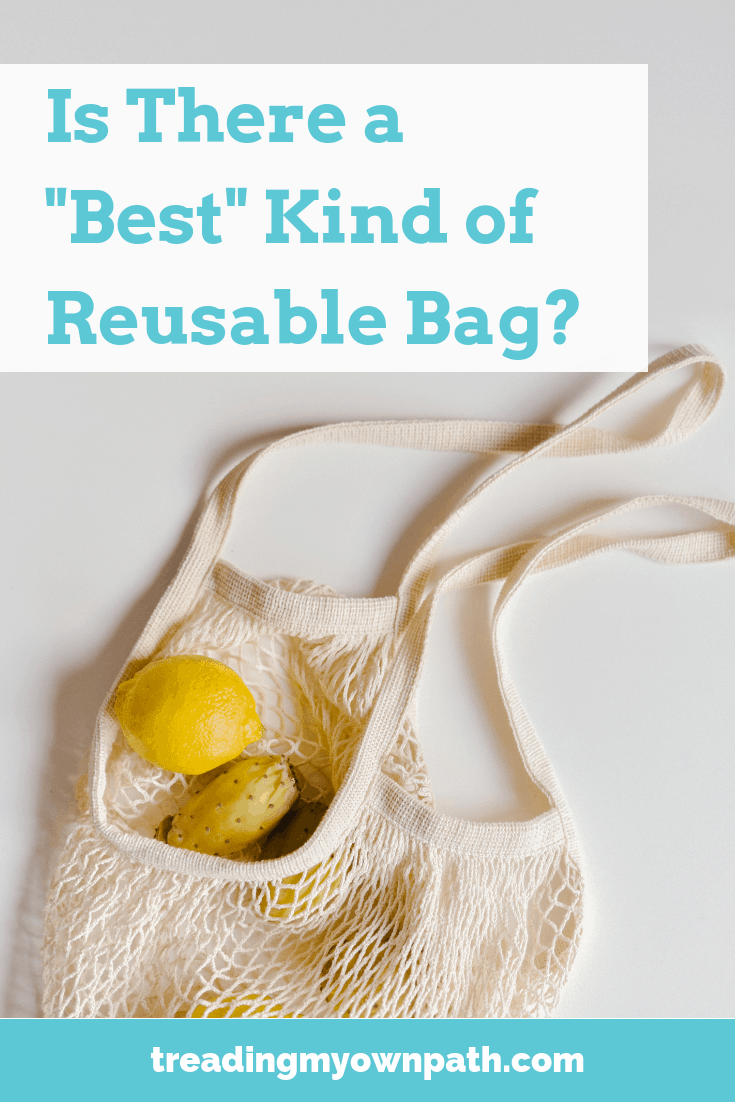
Is There a “Best” Kind of Reusable Bag?

With more and more councils, states and countries around the world introducing plastic bag bans, the conversation is finally moving towards reusable bag options. Not a moment too soon, either!
Yet as with all things, there’s plenty of different options out there, and the choice can be overwhelming.

Different people have different opinions about what’s best. Whether that’s upcycled or Fair Trade, recycled, organic or vegan, or what the energy footprint is, we all have different priorities in our quest to live a little lighter.

So no, I don”t think there’s one “best” option. But I do think there are lots of “good” and “better” options when it comes to ditching the single-use disposables with something a little more environmentally friendly.

Reusable Shopping Bags: Zero Waste and Plastic-Free Alternatives to the Plastic Shopping Bag

I’ve highlighted some of my favourite options below, along with a couple more I think are best avoided.

Reusable Shopping Bags – Using What We Have

It goes without saying that the most environmentally friendly option is using the thing that we already have. Most of us have reusable shopping bags.

If we don’t, we’ve probably got old plastic bags from previous shopping trips. Don’t forget about backpacks, holdalls or other bags we might own.
Reusable shopping bags do not need to have been purpose-designed for that specific task. If it has handles and a compartment for shopping, it’s likely good enough.

Reusable Shopping Bags – Borrowing (Boomerang Bags and Mors Bags)

You know those times when we find ourselves at the shops unexpectedly? Or we arrive with a list and then remember we need a few more things? Those times when we either don’t have a reusable bag, or don’t have enough?

Schemes like Boomerang Bags and Mors bags tackle exactly that problem. They recognise that most of us have reusable bags, but we also forget them sometimes. So they provide bags for us to borrow.

These schemes run on the power of community: to source second-hand fabric, sew into bags and leave in strategic locations where shoppers might need to borrow bags. The idea is that shoppers borrow bags, use them, and then return them ready for the next person.

No money is exchanged for the borrowing, although bags can sometimes be purchased to help cover expenses (such as screen-printing labels and providing cups of tea to volunteers).

(If sewing is your thing and you’ve been wondering how you can increase your impact, these groups are always on the look out for enthusiastic new volunteers!)

Reusable Shopping Bags – Upcycled Options

Shopping bags made out of repurposed fabric (think tablecloths, sheets, coffee sacks) is a great low-waste option that makes something good out of something that already exists.

Local markets are a great place to find creative craftspeople in your local area who make and sell reusable bags. If this isn’t an option for you, online marketplace Etsy is a great way to connect with sellers a little further afield. There’s plenty of options in terms of material, shape and size.

Reusable Shopping Bags – Recycled PET

Buying shopping bags made out of plastic can seem a little contradictory for anyone pursuing the plastic-free lifestyle. However, there’s a big difference between making bags with brand new virgin plastic and making bags with recycled PET plastic.

PET is the plastic that drinks bottles are made of. Even if we stopped making plastic drinks bottles tomorrow, there’s a heck of a lot of those plastic bottles already in existence in the world.

Recycling this plastic into a usable (and reusable) product seems a better solution that letting it languish in stockpiles all over the world. PET is also the most recyclable plastic there is.

From a lifecycle analysis point of view, these plastic bags have the lowest footprint of all reusable bags. They don’t demand new resources. Being plastic, they are also lightweight, hard-wearing and incredibly strong.

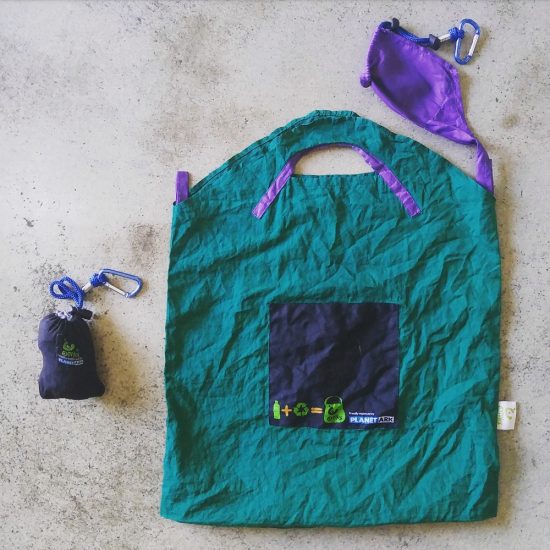
This (extremely well used and hence rather crumpled) recycled PET Onya bag is over 5 years old. It fits into a tiny stuff sack (you can see what it looks like packed down on the left – that’s a second bag).

From a waste perspective, yes they are still plastic. They can’t be composted at the end of their lives.

As much as I’m a fan of natural materials, I also know that our plastic legacy is something we need to deal with. Recycling PET plastic into reusable bags seems to be a good way to make good of a material already in existence.

In a perfect world we wouldn’t be having this conversation. But alas, the world isn’t perfect. The road to zero waste is full of compromise.

Reusable Shopping Bags – Cotton/Calico, Hemp and Jute

Natural fibres are a popular choice for reusable bags. They are typically hard-wearing and can be composted at the end of their useful lives. You’ll never see a reusable cotton shopping bag stuck up a tree as you might a plastic bag.

Of the three commonly used natural fibres, cotton is the most water- and chemical-intensive crop to grow. Organic cotton has a smaller eco footprint than regular cotton. For a lightweight, fold-up bag that fits in a handbag, cotton bags tend to be the most practical.

Jute and hemp are both considered more environmentally friendly than cotton, but the bags tend to be bulkier.

There’s a billion places to buy these kinds of bags. The supermarket would be my last choice. I’d much rather support a charity doing great work with my purchase. Or a small business. Or an independent chain. We vote with our dollars, so choose well.

(If you’d like to support independent eco-conscious businesses, here’s my list of worldwide online stores.)

Reusable Shopping Bags – The Ones to Avoid

With so many great options out there, there are a number of less-than-great options that are better avoided. Sometimes we end up with these things before we realise there are better options. Emergencies happen. If that’s you, don’t despair.

Use what you have, and next time, you can choose better.

Reusable Bags to Avoid – Thicker Plastic Bags

Some stores are replacing single-use plastic bags with reusable thicker plastic bags (usually polyethylene), often for a small charge.

These bags are made either partly or wholly of brand new, virgin plastic. They may contain some recycled material – if so, the bag should specify the amount.

These are heavier duty, but despite often being called “Bags for Life” they are estimated to be used an average of 5 times. Not single-use, but not much of an improvement. They are prone to splitting, and the handles also stretch when the contents are heavy.

These bags still present a litter problem when they inevitably end up in the environment.

Reusable Bags to Avoid – Non-Woven Plastic “Green” Bags

These bags are commonly sold in supermarkets and are called “green” bags more because they tend to be the colour green rather than because there is anything environmentally friendly about them. Although they appear to be made of fabric, they are actually made of plastic. Polypropylene (plastic number 5), to be specific.

They are much thicker than single-use plastic bags, and consequently need to be used many more times to be beneficial to the environment. In fact, a study suggested they need to be used 104 times to be environmentally positive. Truthfully, they tend to fall apart long before they are used that much. They are also bulky and cumbersome.

If you already have these bags, use them as long as you can. When they reach the end of their life, consider replacing with something better.

There’s plenty of reusable options when it comes to shopping bags, but the main consideration is whether it will work for you. There’s never one right choice. Sometimes, it’s different choices for different situations.

Regardless of material, the best reusable is always the one that actually gets reused.

Now I’d love to hear from you! What is your favourite type of reusable bag? Do you have a preference for different materials? Is there an product or brand not mentioned that you’d recommend? Anything else to add? Please share your thoughts in the comments below!

[leadpages_leadbox leadbox_id=140b48fc6639c5] [/leadpages_leadbox]

(Disclaimer – I’m an affiliate for Onya, which means if you click the link and choose to make a purchase, I may be compensated a small amount at no extra cost to you. I have been using their products since 2012: I’d only ever recommend something I have tried myself or that has been recommended to me by you, my readers. As always, my first suggestion is to use what you have or choose second-hand before buying anything new.)

Biodegradable Plastic: Is It REALLY Eco-Friendly?

If there’s one environmental claim that makes me nervous when I see it printed on plastic-like products and packaging, it’s “biodegradable”. Why? Because without context, this label is vague and potentially misleading.

A one-word label like this tells us nothing about the true biodegradability of a product. What does it biodegrade into? Toxic or non-toxic? How long does the process actually take?

Yet companies plaster it on their products in an effort to make us believe they are more eco-friendly. As customers, we gravitate towards these products, as we want to make better choices.

Of course, some companies are diligent and can back up their biodegradability claims with real evidence. But others are not.

For the average shopper, it’s hard to pick out the good claims from the bad ones.

This post will help make some sense of it all.

What Does “Biodegradable” Mean?

Biodegradation is a chemical process in which materials are metabolised into water, carbon dioxide, and biomass by microorganisms. Depending on the material, toxic residues may remain.

The process of biodegradation is influenced by a number of conditions, including temperature, humidity, oxygen levels, presence of bacteria and time.

But what does “biodegradable” mean when it’s printed on packaging, or on the label of a product?

There is actually no single common understanding or definition of “biodegradable”, so different companies will mean different things when they use this label. That makes it pretty confusing for us.

We might assume that if a product is labelled “biodegradable”, it will be non-toxic, it will break down in home compost bins, and / or it will break down quickly.

But this isn’t necessarily the case.

The good news is, if a product is truly biodegradable, the company should be able to provide details supporting this claim.

And by details, I mean scientific evidence. Not anecdotal claims by the company CEO that they put it in their home compost bin and it “disappeared”.

Real data, based on actual laboratory tests.

Biodegradable Standards: What They Are and What They Mean

Because there are no defined understanding around what “biodegradability” means, certification schemes have been developed based on scientific standards and testing.

Certification is a way for companies to back up the claims they make about the biodegradability of their packaging and/or their products with scientific data.

Whilst voluntary, these schemes are attractive to companies wanting to demonstrate environmental responsibility and safety of their products.

As consumers, knowing that the packaging / product is certified gives us piece of mind, and helps us make better purchasing decisions.

These are the standards to look out for.

Standards for Biodegradable Plastics:

There are a number of different standards for biodegradable plastics, with different certification schemes established by different certification bodies. There is currently no standard with a clear pass/fail criteria for the degradation of plastics in sea water.

Standards for home composting:

These standards are awarded to products that will break down in home composting systems.

Look out for these numbers stated on the product or packaging:

Australian AS 5810 “Biodegradable plastics – biodegradable plastics suitable for home composting”.

Belgian certifier Vinçotte had developed the “OK compost” home certification scheme, requiring at least 90% degradation in 12 months at ambient temperature.

Labels proving home compostability are Vinçotte’s OK Compost Home, the DIN-Geprüft Home Compostable Mark and the Australasian Bioplastics Association (ABA) Home Compostable logo.

Standards for industrial composting and anaerobic digestion:

These standards apply to products that will break down in industrial composting facilities or anaerobic digesters within a stated timeframe. (This is not the same as home composting, and these products may not break down in home compost bins.)

Look out for these numbers stated on the product or packaging:

European Standards EN 13432 / 14995 (13432 applies to packaging only, 14995 applies to plastics generally);

The Australian standard AS 4736 which additionally includes an earthworm test;

ASTM D6400 is the US standard with clear pass/fail criteria;

Japan has no accepted standard, but certification scheme GreenPla is widely used.

Labels proving compostability in industrial facilities are the ABA Compostable Seedling logo, the Vinçotte OK Compost logo, the DIN-Geprüft Industrial Compostable Mark, and the Biodegradable Products Institute (BPI) Compostable logo.

The catch with these products is that not everybody has access to industrial composting facilities. Even when they do, the timeframes required to break down these products (typically 90 days) are often much longer than the timeframes these facilities use per composting cycle. In short, these products may not biodegrade at these facilities and some facilities will not accept them.

Biodegradable Products Aren’t Perfect

Even where a product is certified as biodegradable, that doesn’t mean it is 100% biodegradable.

For example, for a product to comply with EN 13432 / EN 14995 standards, at least 90% of the organic material must convert into CO2 within 6 months in controlled composting conditions; and after 3 months’ composting and subsequent sifting through a 2mm sieve, no more than 10% residue may remain (as compared to the original mass).

The Japanese certification scheme GreenPla specifies the minimum level as only 60%.

“Biodegradable” doesn’t mean there are no heavy metals or toxic chemicals present. Each certification standard has its own permitted levels of metals including copper, nickel, cadmium, lead, mercury, chromium and arsenic: US standard ASTM D6400 has the highest permitted levels.

And if there’s no commercial composting facility in your area, it will likely end up in the bin.

Where possible, it’s always better to avoid packaging altogether.

Is “Biodegradable” Labeling Regulated by Law?

With no mandatory standards on biodegradability: however, there are guidelines about how the term “biodegradable” (and other environmental labels) can be represented so that they do not mislead consumers.

In Australia, the Trade Practices Act (1974) requires businesses to provide consumers with accurate information about goods and services. Businesses that make claims such as biodegradable on their packaging must ensure these claims can be substantiated. It’s the law.

Being able to substantiate claims is particularly important if the claim predict future outcomes, such as whether plastics will biodegrade or within a certain timeframe and under certain conditions.

Claims about biodegradability must:

  • Be honest and truthful;
  • Detail the specific part of the product or process referred to by the claim;
  • Use language the average member of the public can understand;
  • Explain the significance of the benefit but not overstate it;
  • Be able to be substantiated.

In Australia, the ACCC (Australian Competition and Consumer Commission) has taken action against a number of companies making misleading claims about biodegradability, including supermarket chain Woolworths.

Biodegradable Plastics: A Summary

Companies make unsubstantiated claims about biodegradable products all the time, sometimes deliberately but sometimes because they have a limited understanding of what it really means. Certification schemes are one way for us as consumers to pick out the good guys from the shady ones.

A product saying it’s “biodegradable” should specify what percentage the biodegradable content is, how long it take to break down, what it will break down into, and what conditions it needs to do so. (That’s what the certification labels are telling us.)

Look for products labelled “Home Compostable” first.

Bear in mind that even products that can be composted industrially may still end up in landfills, and  biodegradable plastics do not break down in the marine environment. A plastic bag will still look like a jellyfish to a sea turtle, whether it’s certified biodegradable or not – and biodegradable does not mean digestible.

If biodegradable packaging ends up as litter, it can be just as destructive and harmful as conventional packaging.

Certified biodegradable plastics are better than non-biodegradable ones, but they are not the perfect solution. Refusing, reducing and reusing are always better options, where we can.

[leadpages_leadbox leadbox_id=1429a0746639c5] [/leadpages_leadbox]

Is “Zero Waste” Even Real?

For me, living zero waste means trying to create as little waste (and that includes recycling) as possible. Refusing single-use items, avoiding plastic, reducing what I purchase, and choosing items that are well made and designed to last.

For bigger, one-off purchases I try to find what I want second-hand.

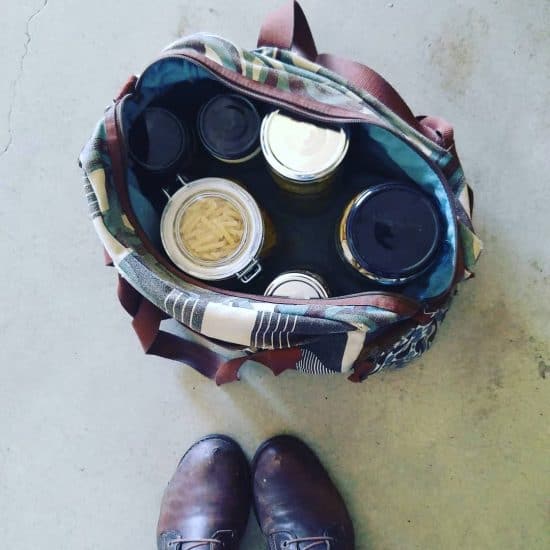
For the regular, consumable things that I purchase week-to-week (think groceries, personal care products, cleaning products), I try to buy unpackaged. This means unpackaged fruit and veg from the grocer, bringing my own containers to the deli and a reusable bag to the bakery, and my own jars or reusable produce bags to the bulk store.

This way I can buy what I need without bringing home any unnecessary packaging. It means I’m not sending anything from my weekly shop to landfill: everything I purchase, I consume.

Zero waste. At least at my end.

Or is it?

What Does Zero Waste Actually Mean?

Zero waste is both a lifestyle choice and an industrial design term. Whilst they both have the same philosophy – elimination of waste to landfill / incineration – what that looks like in practical terms is a little different.

Zero waste needs to be a whole systems approach, looking at production of goods in terms of systems and design. It looks at everything, from the materials selected, how they are sourced, how they are processed, how they are transported, how they are used, and how they are re-used.

For zero waste, products need to be created in a way that allows them to be reused, not disposed of. This is the idea of the circular economy.

The circular economy is the goal, but it is not the reality. Yet.

Zero waste as a lifestyle is all about what we can do as individuals. Typically, we aren’t designing our own products. We are the end users. Our power is in choosing the most ethical, sustainable options that we can when we need to make purchases.

Supporting the companies doing the right thing, and boycotting those that do not.

These options aren’t always perfect. But they are better.

So when I say that my weekly shop is zero waste, I mean that none of the products I purchased came in single-use packaging. There is nothing going to landfill. I didn’t create any packaging waste in the process.

That’s not to say that there was no waste anywhere in the process.

That’s not to say the farmers didn’t use plastic when growing, harvesting or packing their crops.

That’s not to say suppliers didn’t use plastic to transport their goods.

There will likely be waste somewhere (and possibly, in many places) in the production and distribution of these goods.

But reducing waste at the end point – the point where we, as concerned citizens and empowered communities, can vote with our dollars about the kind of world we wish to see – that’s a start.

It’s an important start.

The zero waste movement is about doing what we can. A step in the right direction is better than no steps.

How can we take the second step without taking the first?

Zero Waste Progress Comes Before Zero Waste Perfection

It makes me sad that people sometimes dismiss the zero waste movement because they want to see perfection. They cannot see the value in zero waste progress.

Why does it have to be all-or-nothing?

I purchase my groceries packaging free from The Source Bulk Foods, an Australian bulk store which encourages shoppers to bring their own containers and refuse packaging. I describe this way of shopping as zero waste.

More than once, some cheerful soul has popped up in a comment to inform me that it isn’t zero waste because there will be waste created upstream.

I don’t dispute this statement.

I just think it’s the wrong place to be focusing.

I know that, prior to my 2012 plastic “epiphany”, I would go to the supermarket and buy all my groceries packaged in plastic.

I would buy individual pots of yoghurt, and “fun size” chocolate bars, and single serve drinks, and pre-wrapped cereal bars.

Occasionally I would go to the bulk store for spices, and when I did I would take a fresh plastic bag off the shelf, and buy my two teaspoons of spice using that bag.

{Cringe.}

I don’t shop this way any more, and I haven’t since 2012. Bulk stores are what enabled me (and countless others) to change this. They provided a solution by making package-free groceries accessible. Without them, avoiding single-use packaging would be much harder.

I’d like to tell you that the bulk stores receive all their bulk goods in reusable, returnable containers. I’d like to tell you that they don’t generate any waste. But that’s not the case.

Yet.

I mentioned the circular economy earlier. As I said, we’re not there yet. Bulk stores are enabling us (the grocery shoppers) to purchase without waste. They create waste so we don’t have to (and create far less than if each of us purchased these same products in packaging week after week).

Less, but not zero.

Bulk stores now need to work with their suppliers to find ways of receiving goods without single-use packaging.

The good news is, that’s beginning to happen.

As more and more of us support bulk stores, and demand for this kind of shopping grows, there’s more incentive for (and more gentle pressure on) bulk stores to start the conversations and take that next step.

If demand is there, it will begin to happen more and more.

We take the first step, and they take the next step.

Moving towards a more sustainable future with a circular economy and true zero waste.

That’s the future. Maybe the near future, but maybe not. In the meantime, I’ll continue to play my part and support these businesses choosing the better option. Yes, I’ll buy my groceries packaging-free, and I’ll say my shopping is zero waste.

Even though I know that bulk stores do create waste. Suppliers create waste. Farmers create waste.

Am I saying that zero waste isn’t real? If we’re talking about it on a technical level on an economic scale, in terms of definitions and what-not, then it would be fair to say that zero waste isn’t real.

But I don’t want to talk about it like that, because I don’t think about it like that. For me, the meaning of zero waste isn’t how it’s characterized in dictionaries or interpreted by textbooks.

For me, zero waste is about values, ideals and beliefs. It’s a guiding principle for the choices I make. Choices that help create a better, fairer, more sustainable future for people and the planet.

Whether or not it technically exists, zero waste is very real.

Let’s not get bogged down in the minutiae. Technical details don’t matter. What matters is that we do our imperfect best, support those companies taking the next step where we can, and champion better solutions where we see them.

Small steps, in the right direction, together.

Whether we believe in zero waste or not, we all have a part to play. Waste is something we all have control over, and can do something about. So let’s do something about it.

Now I’d love to hear from you! What does zero waste mean to you? Do you use the term yourself, or steer well clear, and why? Has your understanding and perception of zero waste changed over time? In a good way, or a not so good way? Anything else to add? Please share your thoughts in the comments below!

[leadpages_leadbox leadbox_id=1429a0746639c5] [/leadpages_leadbox]

Why “Guilt” Has No Place in the Zero Waste Lifestyle

Why do I love the plastic-free and zero waste lifestyle? Well, there are lots of reasons, but a big one is this: knowing that every single day I can make a difference and have a positive impact. Every single day I have the potential to create waste, and the opportunity to avoid it.

We all do.

This is something we can all be excited about, and embrace.

There are so many things in the world that are out of our control. Decisions we have little or no influence over. Policies or actions we cannot change. Despite this, we do have the ability to look at our own personal choices.

We all have some influence, even if it is at the household level. We have control of our own personal actions, and we can do the best we can.

We can choose carefully, considerately, and deliberately. We can do our best.

And that is something to feel really good about.

Which means that embracing the plastic-free and/or zero waste lifestyle should be something we feel good about.

Yet all too often, those good vibes are mixed in with something else.

Guilt.

How is it that doing something good can make us feel guilty?

Because it shouldn’t. Yet it does.

For me, I think guilt comes from falling short of “perfect”.

We can strive for improvement. We can aim for better. Indeed, setting goals and working towards improving has plenty of positives.

But it can also be exhausting. We all have our limits.

Most of us will hit these limits long before we reach “perfect”. If perfect even exists.

There’s a gap between wanting to be perfect, and coming up short. This is where guilt sets in.

When it comes to living plastic-free and zero waste, guilt isn’t helpful. We want to feel good about the actions we take and choices we make. Feeling good is the best way to keep going.

Feeling guilty can be paralyzing; like it’s all too hard. Guilt can lead us to think it’s-not-good-enough-so-why-bother-anyway.

That’s not what we want at all! Something is better than nothing. Trying is better than not trying. However imperfect it may be, bothering is most definitely better than not!

Guilt is a topic I keep coming back to. I’ve talked about how being perfect is an illusion. I’ve talked about how it is important to share all the bits of zero waste living, not just the best (photogenic) bits.

There’s another aspect of guilt that I think we need to talk about. How we support one another in our imperfect choices, and the things we say. We have the power to encourage, and we have the power to deflate.

What we say, and how we say it.

It’s so easy, when we’re excited or passionate about a topic, to trip up on this. However well-meaning our intentions are. For example, someone tells us about their newly purchased reusable. And we point out that there’s a better or more ethical version. Or we tell them that it’s easy to find that same item second-hand.

We’re excited to share our knowledge. We’re excited to encourage the next steps.

But it can leave the person feeling judged and inadequate. It can make the person feel unsupported. It implies that they fell short… and that can mean guilt.

It’s not the intention, but it can be the outcome.

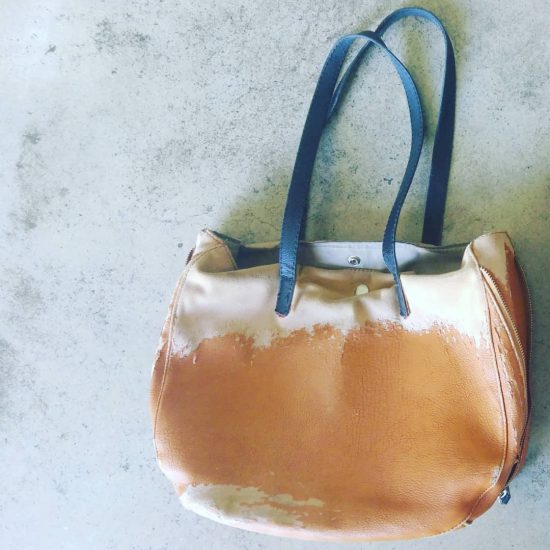
I had this experience recently when I threw away my old bag. I received a couple of comments, obviously well intentioned: Couldn’t I have coated the bag in wax? Couldn’t I paint it? Couldn’t I cover it with new fabric?

By this point, the bag was already in landfill. I immediately felt guilty. Guilty for not trying harder to salvage the bag.

And then I thought… no. I try really hard to reduce my waste. I rarely send anything to landfill. (This bag is the most I’ve sent to landfill in years.) I share my tips and insights, and encourage others to reduce their own waste. I do a lot already. I know I’ll never be perfect, and I never said I was perfect.

No, I should not feel guilty for not learning to sew, or researching fabric paint (that comes plastic- and packaging free).

No, I should not feel guilty for discarding one old, worn out thing; and buying one new thing in its place.

No, I should not feel guilty for not being perfect, or not putting up with something that has really served its purpose.

The point is, I did the best I could.

Don’t we all do the best we can?

In which case, shouldn’t we be cheering one another on?

Any change in the right direction is a positive, however small and imperfect it might be. When others make changes, it shouldn’t matter if it’s not the change that we would make. Let’s celebrate their achievements. There’s no need to point out the “better” choices.

There are so many people in the world oblivious to the impact of plastic on the environment, unaware of the resources wasted with single-use items, too wrapped up in the culture of convenience to realise how much it’s harming the planet. Let’s not rebuke those taking steps to do something better.

Judgement and guilt-tripping is not going to inspire anyone to keep trying. Encouragement and inclusiveness, that’s much more motivating.

Let’s be kind. We’re all in this together. We must celebrate the wins. Applaud the steps in the right direction. Cheer on any decision that’s an improvement on the previous one.

In my view, the plastic-free and zero waste lifestyles are all about encouraging others to make better choices. And any step in the right direction is better than no steps at all.

Let’s not berate others for how far they’ve got to go. Let’s celebrate how far they’ve come.

[leadpages_leadbox leadbox_id=1429a0746639c5] [/leadpages_leadbox]