• Link to X
  • Link to Youtube
  • Link to Instagram
  • Link to Mail
  • Link to Facebook
Join the community and receive a free EBOOK
Treading My Own Path | Less waste, less stuff, sustainable living
  • ⌂
  • About
  • Work with me
  • Upcoming events
  • Books
    • The Less Waste No Fuss Kitchen
    • Less Stuff
  • Resources
    • Printables
    • Infographics
    • Quotes and facts
  • Explore
    • Minimalism
    • Plastic-free living
    • Real Food and Recipes
    • Zero Waste
  • Blog
  • Click to open the search input field Click to open the search input field Search
  • Menu Menu

Zero Waste Week…The First Day

27 Comments/in Living With Less Waste, Plastic Free Living, Zero Waste/by Lindsay (Treading My Own Path)

I have declared this week Zero Waste Week, and I am attempting to generate no waste at home. This means NO landfill rubbish and NO recycling (in case you’re wondering why no recycling, I wrote this post explaining why recycling isn’t the green solution we’re led to believe).

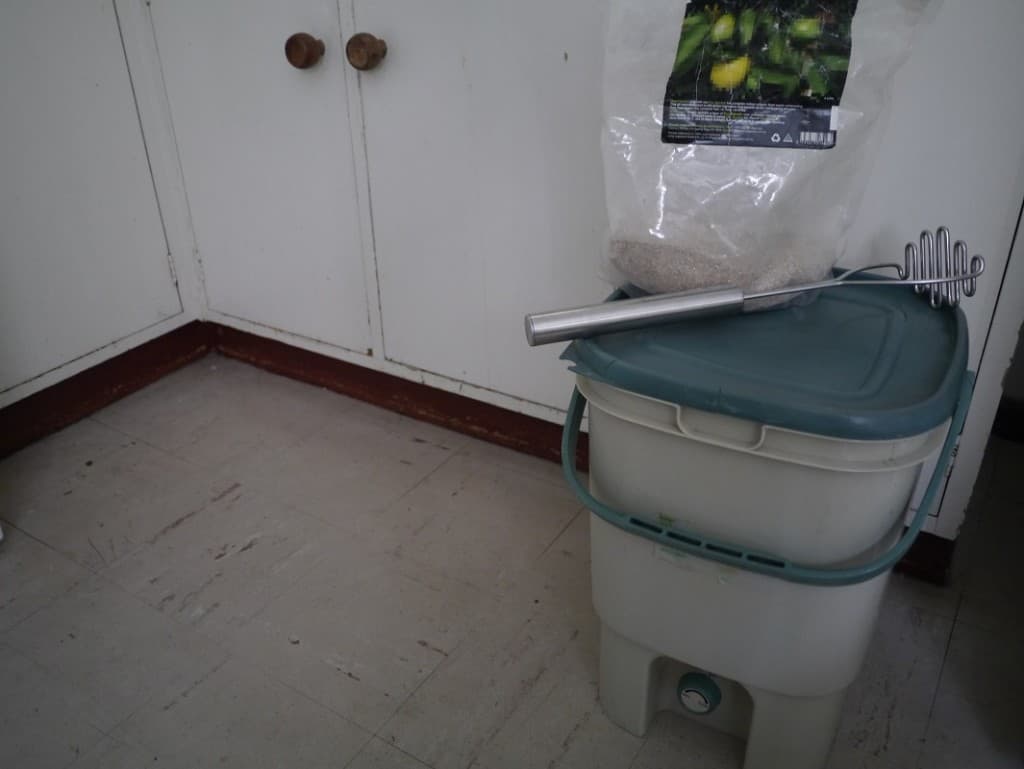
So at the weekend I dusted off the bokashi bin that was donated to me by a friend rather more months ago than I’d like to admit, on the condition that I blogged about it. Better late than never! Most of my food scraps go to my worm farm, but lemon peel, onion skins, eggshells and other bulky fruit and veg waste usually go in the bin (the worm farm is pretty small) – and I lament not being able to compost.
Installed Bokashi Bin

Bokashi bin installed in the kitchen. The donated bokashi mix comes in plastic – if this is something I want to keep up with, I’m going to have to learn how to make my own!

Not any more! Or at least, not this week. I’m going to give the bokashi bin a go (I will write a blog about it once I’ve used it for a while and can offer some wisdom!) and see how that works out for me.

So here is my bin system emptied and ready to go on Monday morning:

The Clean Bin Project

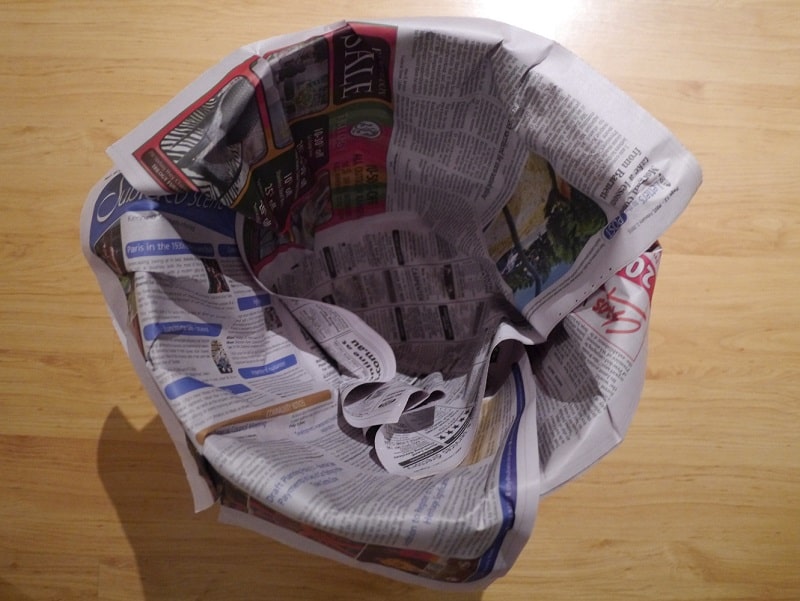
The black metal bin is for recycling. The paper-lined bin is for food waste – I lined it out of habit. We use the community newspaper to line once it’s been read. If it doesn’t need changing, then it doesn’t count as waste! The small caddy is scraps for the worm farm, and lined with Who Gives A Crap? toilet paper wrappers (read about that here). The bokashi bin is the shiny new addition to the line-up.

And we’re off!

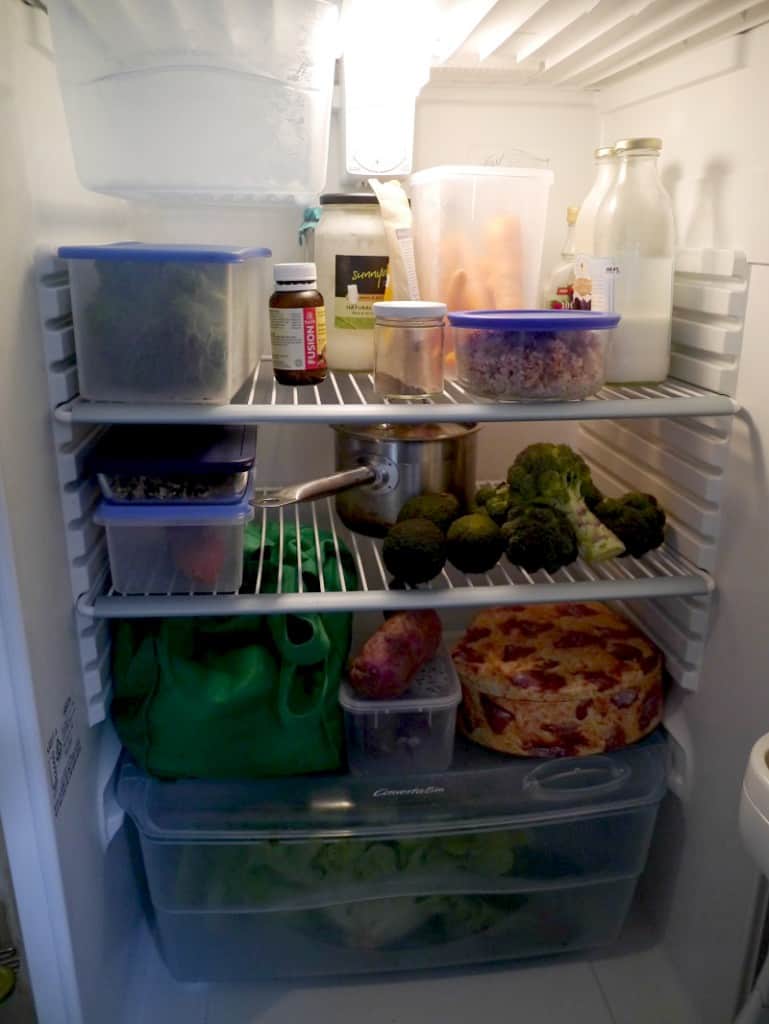
I thought it might be useful to give you some context as we start the week, so here is a picture of my fridge:
Monday Fridge

Our vegetable box was delivered last Thursday (we currently get one large box a fortnight) so there’s still some fruit and left. The saucepan contains soup, the tin contains a cake and the glass Pyrex containers hold leftovers. The milk bottles actually contain cashew milk which I made on Monday morning (the recipe is here).

Note: yes, some of my veggies are in plastic containers! Slowly but surely I’m replacing them with glass and stainless steel, but sometimes I still have to use the plastic ones. I never use them for leftovers, only raw veg that will be washed, peeled and cooked.

I can’t really take a picture of our pantry as we no longer have one since the move! At some point we will get something, but for now half of my jars are living in a storage crate, which doesn’t make for good photos.

The pantry did need some restocking though, so yesterday morning I headed to Fremantle. Before shopping I met a friend for coffee (dine-in of course!); fortunately the shop only print receipts on request so I was still waste free.

I headed to a different shop to pick up some things – using my own bags. They didn’t print receipts unless requested either. I reused paper bags that I brought from home: I’m reusing until they disintegrate/get stained/turn gross, and then they will go to the worm farm.
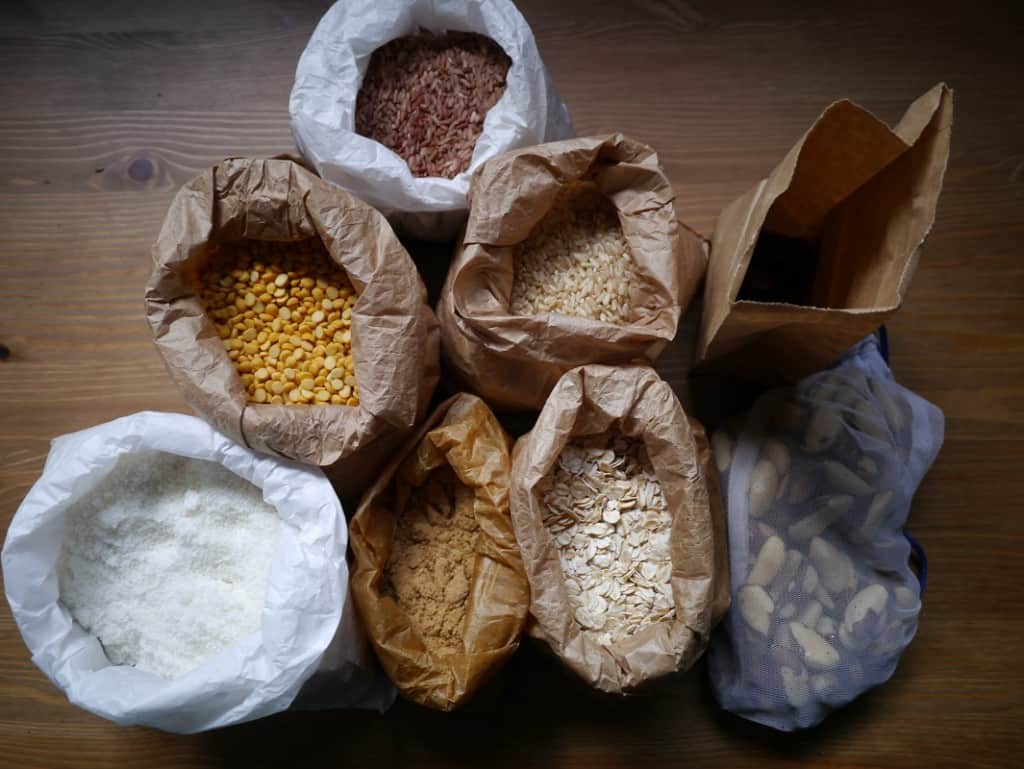
groceryshopping day 1

Once home, these get stored in glass jars…except the brazil nuts and coconut, which got turned into cake.

Cake Prep
Cake

I used greaseproof paper to line the tin (I don’t always, but for this cake it’s necessary). I tend to clean my paper and reuse it if I can (as much because I’m too lazy to cut new circle shapes every time); usually I only get a couple of uses and this was the second go. If I can’t salvage the paper, it will go to the worms.
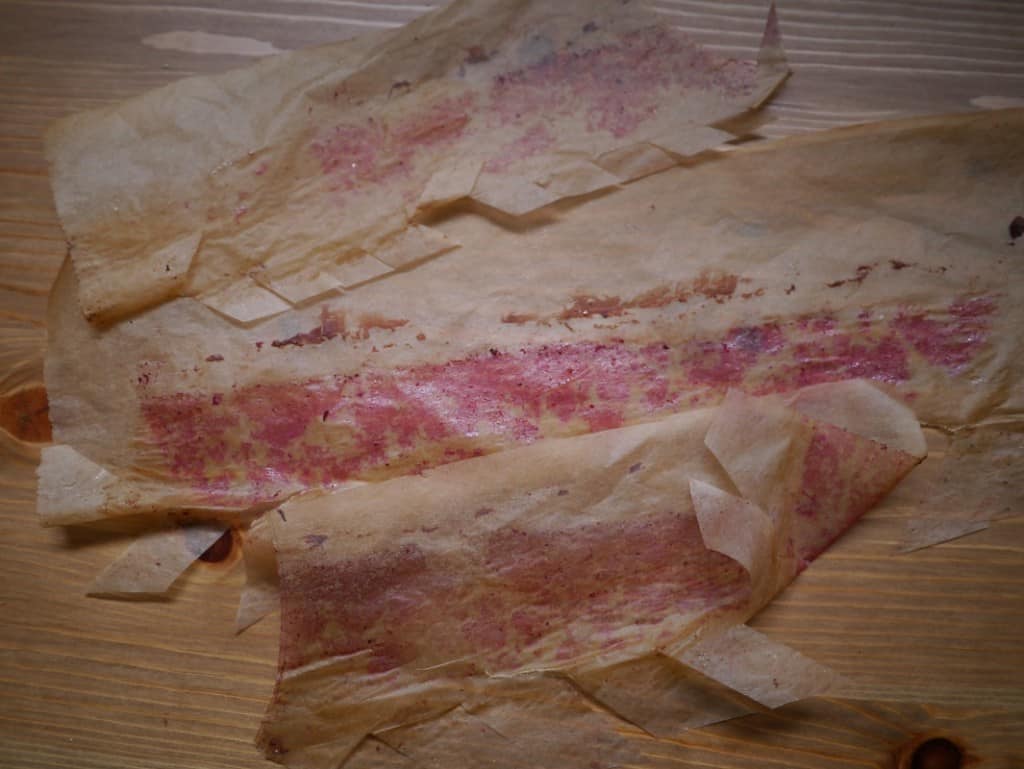
Cake paper

The Dilemma

I needed to go to the Post Office to send two parcels, and for this I received a receipt. My dilemma is this: it’s a thermal till receipt (you can tell because it’s slightly shiny and sort-of slippery) and thermal till receipts are coated with BPA. I’ve talked about why BPA is bad before, and it’s often recommended that we don’t recycle thermal till paper as it ends up as toilet paper, food packaging or even napkins, and these become contaminated with BPA.

Some people argue that because it is such a small amount it doesn’t contaminate the waste stream significantly. I have to confess, I currently recycle my receipts. But put them in the worm farm? Hmhm…I’m not sure I want to do that. So whether it goes to landfill or to recycling, it’s still in the waste pile.

I think I need to get into the habit of refusing receipts, and leaving them in the shop!Thermal Receipt BPA

What I’ve learned so far…

  • It feels good getting the bokashi bin going. I hate throwing all that food waste in the bin, especially as it’s mostly organic and I’ve heard that organic waste makes better compost!
  • My default action is definitely to go for the bin! When I sweep the floor, or wipe food from the counters I head for the bin rather than the worm farm,and this is making me think twice.
  • I need to start training myself to refuse till receipts. Practice makes perfect! We definitely have far too much paper in our house.
  • I have a feeling that the worm farm is going to struggle with the extra waste (particularly cardboard) and I’m going to have a think about whether I can steathily install a compost bin in the lawn area at the front of our building.

So far so good! I’m midway through Tuesday and nothing has gone disasterously wrong yet…but will it continue to go swimmingly as the week progresses?

I’ll keep you posted!

[leadpages_leadbox leadbox_id=1429a0746639c5] [/leadpages_leadbox]

https://treadingmyownpath.com/wp-content/uploads/2014/06/empty-bin.jpg 601 800 Lindsay (Treading My Own Path) https://treadingmyownpath.com/wp-content/uploads/2019/06/logo.png Lindsay (Treading My Own Path)2014-06-10 15:57:572017-09-01 15:48:21Zero Waste Week…The First Day

A Challenge: My (Upcoming) Zero Waste Week

19 Comments/in Living With Less Waste, Plastic Free Living, Zero Waste/by Lindsay (Treading My Own Path)

I’m always talking about waste. I hate waste – it’s such a…well, a waste. Plastic-free and zero waste; these are two of the ideals that I aspire to at home. The plastic-free thing I’ve pretty much got sussed these days, excluding the occasional no-option-but-to-get-it-with-some-kind-of-plastic-included or the arghh-there’s-sneaky-plastic-underneath-the-cardboard purchases. But zero waste? How am I doing with that?

When I first started living without plastic two years ago, the first challenge was to find alternatives packaged in glass, paper, tin and cardboard. It was easy enough, but the amount of recycling I was producing went through the roof! This was because I hadn’t actually cut down on my packaging as such, I’d just changed the materials my goods were packaged in – and these were a lot bulkier and heavier than the plastic had been. I may have cut out the plastic – but I didn’t feel much more sustainable.

Then there’s my love of simple living and my interest in minimalism. I like living in a small space, but I have a tendency towards hoarding. I hate waste, remember?! This means I hate to get rid of things. Storing things that might be useful needs space though, and creates more housework, clutter and time spent complaining about the mess. My conclusion: if I can’t get rid of things easily, I realised I needed to prevent them entering the house in the first place! And yes, that includes packaging.

When I found out that only 20% of the glass that is put into recycling bins in Perth is actually recycled (as roadbase – the rest goes to landfill) – well that was the final straw. It made me realise I needed to rethink packaging altogether, and my zero waste dream began.

Zero Waste Dreaming

I’ve made some great progress since those days. I made a worm farm to deal with most of my food scraps; I shop at the bulk bin stores (bringing my own bags, jars and bottles) and I use returnable containers as much as possible (this post is all about my progress towards a zero waste kitchen). We finally got a junk mail sticker for our letterbox to stop receiving all of those unnecessary catalogues.

Despite our progress, however, our recycling bin seems perpetually full. We also still need a bin for the kitchen, because the worms just don’t eat all the food scraps we produce. Partly because we produce too many, but also because they don’t like onions, citrus peel and eggshells. Fusspots.

I thought an audit of our waste might be useful, to see what we’re actually chucking away and to see if there’s anything we can do about it. Sometimes it’s good to question our habits, and see if we can make changes. If I can reduce our waste permanently as a result, then that would be great.

So next week I’ve declared zero waste week.

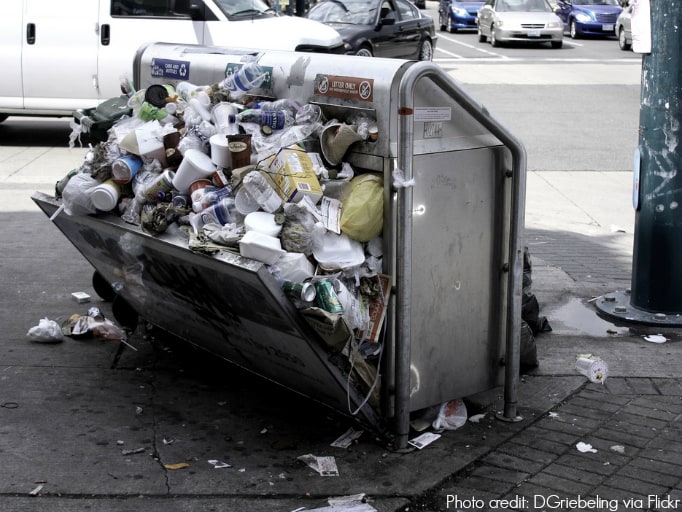
Open Trash by DGriebeling via Flickr

The goal is to attempt to produce zero waste for the week. Waste is anything that leaves the flat. This means rubbish (landfill) and recycling. Recycling is still waste, and we should all be trying to recycle as little as possible! Food waste given to the worms in the worm farm does not count as waste. In the interests of hygiene I can’t just refuse to empty my bin should it need emptying, so every day, starting from Monday, I’m going to record what (if anything) gets discarded. By Sunday I’ll have compiled a Wall of Shame with a list of all the things that I couldn’t deal with myself and had to dispose of…and that will give me some new goals to work towards!

It’s always nice to have company, and I’d love it if you joined me! I’ll be updating my progress on Facebook and Twitter, and if you want to give it a go I’d love you to share your stories too! Of course you can comment here as well, and if you just want to sit back and watch I’ll write another blog post once it’s over. But that would be boring!

What do you say? Want to give it a go? C’mon, it’ll be fun! Who’s with me?!

[leadpages_leadbox leadbox_id=1429a0746639c5] [/leadpages_leadbox]
https://treadingmyownpath.com/wp-content/uploads/2014/06/Bin-Noir-by-Jes-via-Flickr-800px.jpg 593 800 Lindsay (Treading My Own Path) https://treadingmyownpath.com/wp-content/uploads/2019/06/logo.png Lindsay (Treading My Own Path)2014-06-05 14:11:262017-09-01 15:47:59A Challenge: My (Upcoming) Zero Waste Week

Mobile phones: When Second-Hand Just Isn’t Good Enough

34 Comments/in Ethical Living, Living With Less Waste/by Lindsay (Treading My Own Path)

I’ve decided that I need a new phone.

Need, I hear you say? Do I actually need a new phone?

Good question.

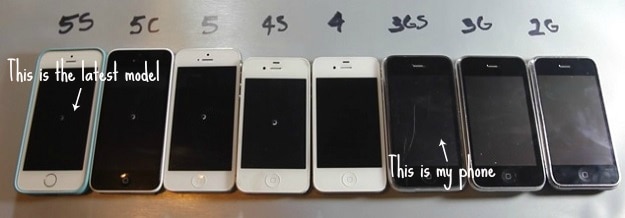
My current phone is an iPhone 3GS. I purchased it as a refurbished phone in January 2010. In phone life, that’s old. iPhone have released 8 different models since they launched, and the iPhone 3GS was the 3rd one they released. Since then, they’ve updated the iPhone 5 times, each model being better than its predecessor.

iPhone Comparison

Yet in real life, four years is not old, and the fact that I’m thinking about replacing it seems ridiculous!

If it ain’t broken, don’t fix it.

Or so the saying goes. And whilst on a basic level my phone still functions – it can make and receive calls, the battery still works – it has some problems. It deletes my entire contacts list at least once a month. It crashes at least once a day. The software is corrupted, so I cannot update to a new operating system, nor restore the original settings.

This means that I can’t download new apps, update existing ones or generally use my phone as a smartphone. This is annoying. I realise there are more pressing problems in the world. I know there are people who would argue that a mobile phone is just for making calls, and all this smartphone stuff is unnecessary.

However, I find my smartphone useful. Not having a car, I use public transport a lot and I like being able to check my email, manage my blog and read the news via my phone. We don’t have a television, so my smartphone helps me stay in touch with what is going on in the world. If I didn’t have a smartphone, of course I’d manage. But what I find particularly frustrating is having a smartphone, but one that doesn’t really work properly. That is the worst possible combination!

What are the options if it IS broken?

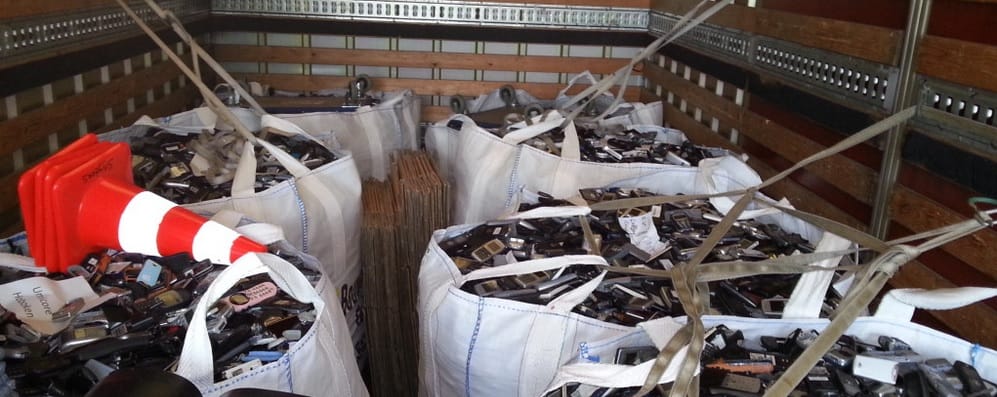
I really don’t want to buy a new phone. More virgin materials, more unnecessary plastic packaging, and another step on the consumer treadmill. Having to research where the phone was manufactured, where the minerals were mined and whether the workers are fairly paid. And goodness, they’re expensive! A new unlocked sim-only phone (without a contract) costs almost as much as a computer! Then again, it is a computer. A very small one.

Second-hand isn’t a perfect solution though, particularly with mobile phones. I don’t want to buy anything stolen or damaged, and there is no security and a lot of money lost if something goes wrong. Then again, I’ve bought enough electronic items second-hand, as have many people I know, and none of us have ever been ripped off.

The bigger issue, for me, is that I want a high-tech, up-to-date mobile phone. Whatever I buy, I want it to last at least another four years! This means finding a phone that has been released fairly recently. There are plenty for sale, but they aren’t for sale because their owners have seen the light and have decided smartphones aren’t for them; instead they’re selling so they can get another new smartphone. They want to sell their iPhone so they can buy the latest Samsung, or sell their Samsung because they want the latest HTC.

Is this really any better than me buying a new phone in the first place? The consumer treadmill goes on, and I’m still contributing.

Surely there must be a better way?

Buying new – with a difference

What I want is a smartphone with social values. Wishful thinking?

Actually, no.

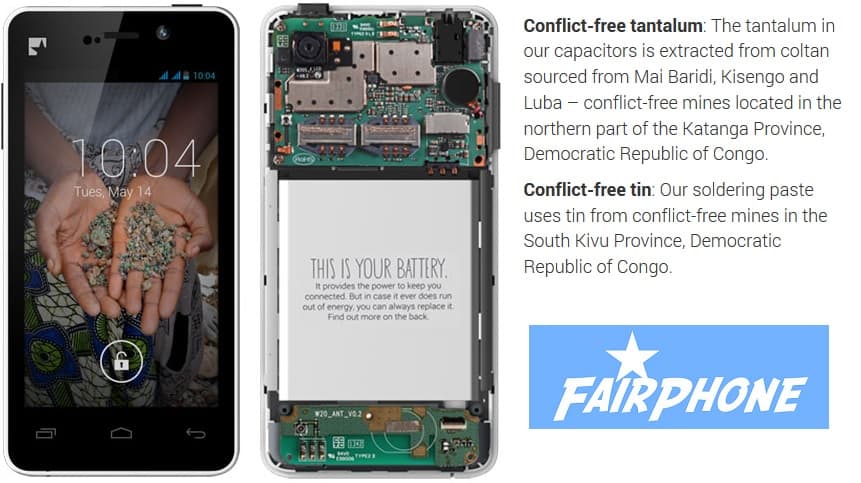
Fairphone

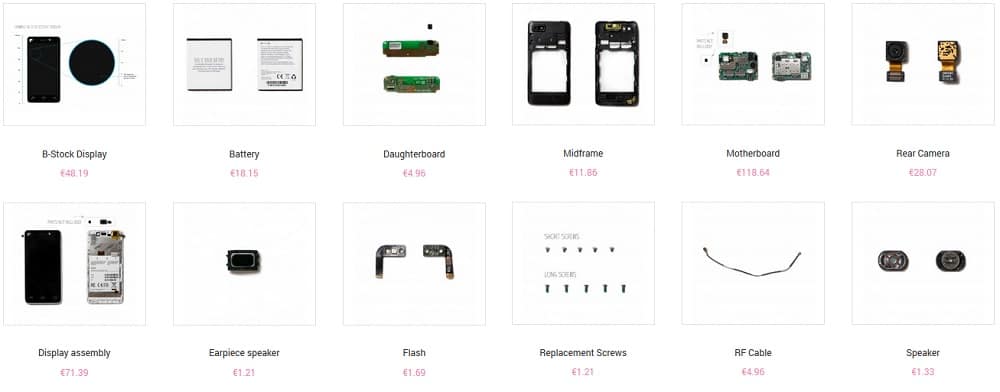
Social values, environmental responsibility and fair trade are the thinking behind Fairphone, a mobile phone with a difference. Different because they are all about opening up the supply chain, using conflict-free minerals and ensuring workers are fairly paid, and designing a phone that can be used, repaired and recycled responsibly. yes, repaired. They sell spare parts on their website, and have teamed up with iFixit to offer repair guides so people can fix their own phones. No built-in obsolescence here!

Fairphone Spare Parts

When I say “spare parts”, I’m not just talking about the battery and the headphones either!

Here’s what they believe:

Mining: We believe in conflict-free, fair resources that put people first. We’re starting with conflict-free minerals from the DRC that support families, not armed militias.

Design: We’re making phones that are built to last using open, responsible design. We want consumers to have true ownership of their phones, including how they use and configure them.

Manufacturing: Factory workers deserve safe conditions, fair wages and worker representation. We work closely with manufacturers that want to invest in employee wellbeing.

Lifecycle: We’re addressing the full lifespan of mobile phones, including use, reuse and safe recycling. We believe that our responsibility doesn’t end with sales.

The people behind Fairphone don’t think of the Fairphone as a phone, they think of it as a movement. Their vision is to start new relationships between people and their products by showing where stuff comes from and how it’s made. They want us to make informed decisions about what we buy.

Fairphone’s first phone was launched a year ago as a crowdfunding campaign with a target of selling 5,000 phones. They smashed their goal and 25,000 people pre-ordered the Fairphone.

A year later and they’ve just announced a new batch of 35,000 phones available for ordering (NB they currently only deliver within Europe). Last time round, I wasn’t quite ready to switch my dying iPhone. This time, I am. I’ve placed my order, and shipping is expected to begin in July.

The most sustainable mobile phone is always going to be the one you already have. But the Fairphone seems like a pretty good second choice.

[leadpages_leadbox leadbox_id=1429a0746639c5] [/leadpages_leadbox]
https://treadingmyownpath.com/wp-content/uploads/2014/05/Old-mobile-phones.jpg 397 997 Lindsay (Treading My Own Path) https://treadingmyownpath.com/wp-content/uploads/2019/06/logo.png Lindsay (Treading My Own Path)2014-05-27 11:27:412017-09-01 15:46:46Mobile phones: When Second-Hand Just Isn’t Good Enough

My minimalist living space (I’d like to show you around…)

43 Comments/in Living With Less Waste, Minimalism, Simple Living/by Lindsay (Treading My Own Path)

I often refer to the “tiny apartment” that I live in, and I’ve been thinking for a while that it would be nice to take some pictures and, well, invite you round for a (virtual) look.

But then I didn’t, because the flat was never quite tidy enough. Despite my constant quest to have less stuff, there always seems to be stuff cluttering up the place. It’s not that we have a great deal of stuff, but we also don’t have huge amounts of furniture or cupboard space to hide all our stuff like other people do. It’s a constant reminder to us that we have too much.

Another thing that put me off was that despite me calling our home the “tiny flat”, I realise that it is far bigger than many other “tiny” homes. In fact, there is a tiny house movement, and if you know anything about that you will realise that our flat in no way qualifies. Tiny homes are seriously tiny, and our apartment is palatial in comparison. I didn’t want to face the wrath of readers outraged that I have been making fraudulent claims all this time!

Lastly, I’m well aware that our flat is never going to be photographed for House Beautiful (or whatever those glossy home magazines are called). My eye for style goes as far as to recognise that some decor does indeed look pretty and stylish, and our flat has nothing like that in it.

We don’t have strategically placed cute retro teapots, or a surf board (why is it that every house I’ve seen photographed recently, no matter how far from the ocean, has a surf board?), or candles and flowers in all the corners. We don’t have quirky vintage antique stuff, we have old (and in some cases a bit tatty) stuff.

But then I got a grip on myself, and thought, so what? I like my house. Do I care that my house isn’t a interior designer’s dream? No. I like it. We like its simplicity. I like not having to dust all those quirky vintage nick-knacks.

Does it really matter that our flat isn’t the smallest house ever? Not at all. We are happy with the amount of space we have, so why would I compare it with other far smaller houses? They may be cleverly designed, inspiring and beautiful, but they would be too small for us at this stage in our lives. We need a space that we can live in, not one that impresses others with its tiny-ness.

Does it matter that it’s a bit messy and full of stuff? Well…I’d rather it wasn’t, or course… But we still invite our friends round, so why wouldn’t I take photos and invite my virtual friends round too? It’s just stuff, and it really shouldn’t have the power to influence my decisions!

So here’s the tour. It’s our attempt to live simply with less stuff; we have had some successes, but there are still plenty of areas we’d like to improve. It is a journey, and one that we’re always working on.

The Living Space

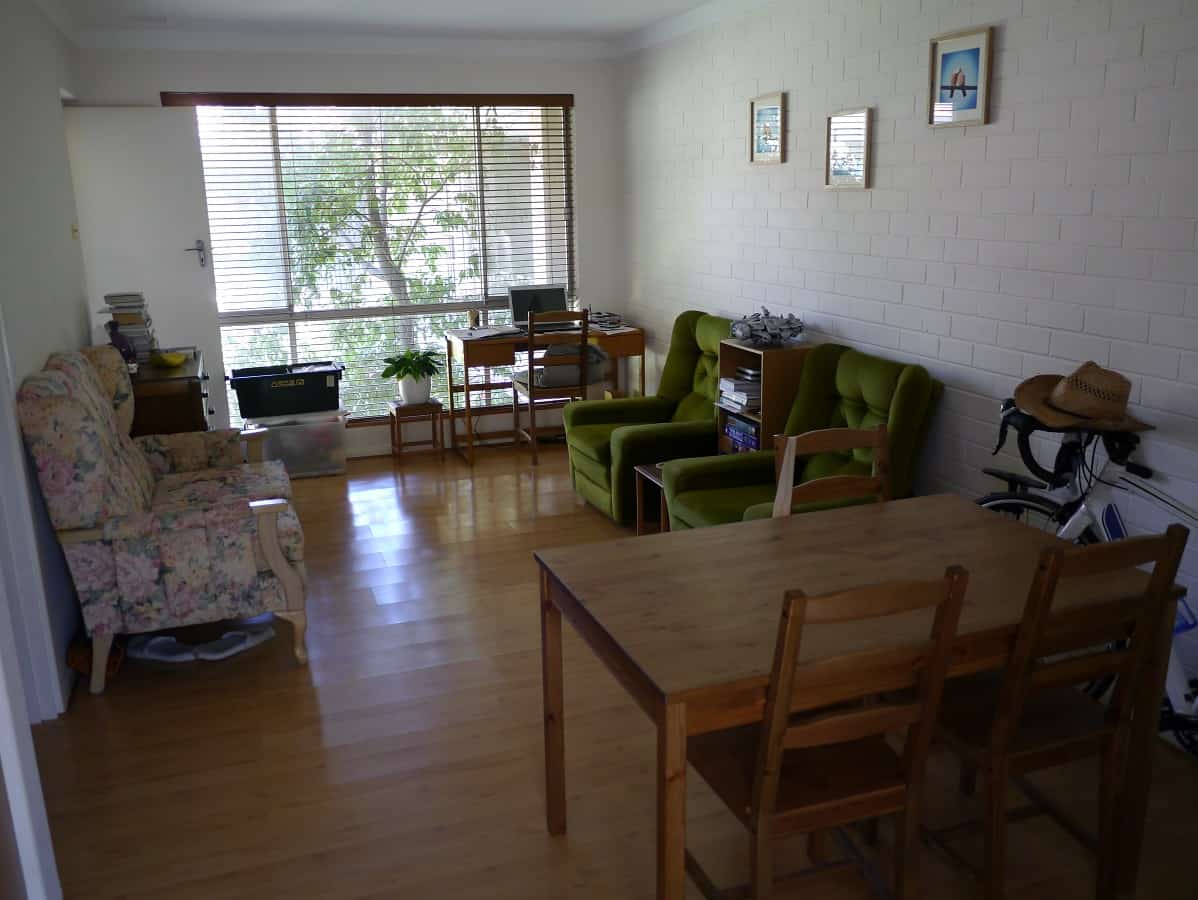
When you walk through the front door, you immediately step into the living space. There’s no porch or entrance hall. Our flat is pretty much a square, so from the front door you can see right the way through to the other side.

Livingspacefinal Livingspace2 LivingspaceothersideThere’s no storage aside from what furniture we have, which means lots of things can’t be put “away”, as there is nowhere to put them. My bicycle lives next to the dining table, and our broom sits next to the fridge.

Booksalternative
Bookscloseup

This is our entire book and DVD collection. We don’t own a single DVD, and of this little stack of books, three are actually loans from friends. Who needs books and DVDs when you can borrow what you want from the local library?

Books are a minimalism success; my desk, however, is not. On a typical day, it looks something like this. That’s not to say that I’m not organised, because I actually know what’s on all those little bits of paper and always notice when they get moved. I just have a terrible habit of writing on the back of old receipts and old envelopes, and they accumulate. Mess and clutter are not healthy though, and I need to go paperless to get things a bit more zen in my litter corner of the room.

Messydesk

The Bedroom

It’s a bit more zen in here. There’s no space for any furniture in the bedroom, although we’ve had to squeeze my boyfriend’s bike into the small amount of spare space that we do have.

Bedroom Bedroom2 Fortunately we have an enormous built-in wardrobe…

closetcombined…and it is full to the point of almost overflowing! Yes, we have far too many clothes. No, they’re not all mine! Yes, I do have far too many pairs of shoes. Yes, they are all mine. Definitely an area I need to work on. But progress is being made. I’ve given clothes to the charity shop, and I’ve downgraded others to kitchen rag status. Last year I only bought a handful of items, and so far this year I’ve bought none. I don’t intend to buy anything else until my collection has at least halved. This is my compromise to myself, because I don’t want to send stuff to landfill, and there’s a lot in there that is too worn for the charity shop to take.

The Bathroom

Bathrooms in rented apartments are generally nothing to write home about, and ours is definitely no exception.bathroomsmallThere’s not too much clutter, but we do have a ridiculous amount of towels. (This isn’t even all of them – there were some hanging out on the line when I took the picture!) I’m reluctant to get rid of them; the charity shop won’t be able to sell them for much and I don’t want to send them to landfill. So another compromise – as they wear out they won’t be replaced. Right now, they (just about) fit into the space we have, and so they can stay.

towels

The Kitchen

I would love a bigger kitchen as I spend a huge amount of time here (you may have noticed that I like to cook?!). Learning to manage with what space I have has been hard, but I think it’s been good for me. Oh, and don’t judge us – we rent this flat and did not choose the lime green/acid yellow tiles ourselves!

Kitchen1 Kitchen2I’ve been able to keep the cupboards pretty orderly, and I only keep the things that we use regularly.

cupboard1
Cupboard2
Cupboard3

The pantry, however, is a different story! No matter what I do, I cannot seem to empty it out. I am pretty good at finding things in there, but my boyfriend does not fare so well, unless he knows there is a jar of chocolate spread… (I also don’t label the jars – surely everyone knows the difference between ground turmeric and ground cumin? Or rapadura sugar and soft brown sugar? They don’t? Oh. No wonder my boyfriend is reluctant to cook!) It’s cluttered, and awkward, and there’s been a few near-misses with almost smashing glass jars. But my love of food (and the bulk produce stores) means it never gets any less full. Any tips greatly appreciated!

PantryThose jars to the left of the pantry are there because they don’t fit in the pantry. Definitely a sign that I have too much in there!

Outside

We have a small space outside, which houses our two worm farms and various gardening-related bits and pieces I collected from verge collections. I then discovered we don’t get any sunlight so we can’t grow anything much here, sadly.

balconySo that’s the tour. I hope you’ve enjoyed looking around. I’d love to hear what you think, and if you have any tips for those areas that I need a bit of help with, please share them below!

[leadpages_leadbox leadbox_id=1429a0746639c5] [/leadpages_leadbox]
https://treadingmyownpath.com/wp-content/uploads/2014/02/livingspace2.jpg 900 1198 Lindsay (Treading My Own Path) https://treadingmyownpath.com/wp-content/uploads/2019/06/logo.png Lindsay (Treading My Own Path)2014-02-28 15:33:542017-09-01 14:41:11My minimalist living space (I’d like to show you around…)

Less than two weeks to go…

9 Comments/in Living With Less Waste, Out & About/by Lindsay (Treading My Own Path)

Exciting times…the Less is More Festival 2014 is less than two weeks away! There will be more than 23 presenters facilitating 30 unique workshops talking all things sustainable lifestyle-related. There will be drop-in sessions for hands on activities like deodorant and toothpaste making and sewing, there will be eco movie screenings, and for the first time there will be a whole day of kids activities too! It’s going to be awesome! Read more

https://treadingmyownpath.com/wp-content/uploads/2014/02/fb_banner_lim_851x340px.jpg 314 851 Lindsay (Treading My Own Path) https://treadingmyownpath.com/wp-content/uploads/2019/06/logo.png Lindsay (Treading My Own Path)2014-02-09 12:48:312014-02-23 21:06:18Less than two weeks to go…

Going Plastic-Free in Asia (Part Two – all the other plastic)

11 Comments/in Living With Less Waste, Plastic Free Living/by Lindsay (Treading My Own Path)

My goal was to travel around Thailand for four weeks without consuming any single use plastic. It’s what I do at home, so why should anything be different whilst I was away? I’ve already talked about how I avoided using disposable water bottles, which I thought would be the biggest battle. But there were other contenders.

The plastic straw

Thai people love straws. I thought the straw problem was bad in Australia, but there is a whole other level of straw-dependence over there. Every single drink seems to come with a straw. Of course the obvious smoothies and cocktails come with plastic straws. But less obvious drinks come with them too. If you buy bottled water to take away, it comes in a plastic bag and with a straw. If you buy a tin of fizzy pop, a straw is neatly tucked under the ring pull. Even tins of iced coffee and beer come with straws. It seems that the cultural norm is to drink your drink with a straw. Everyone does it.

Except, we didn’t want to use plastic straws.

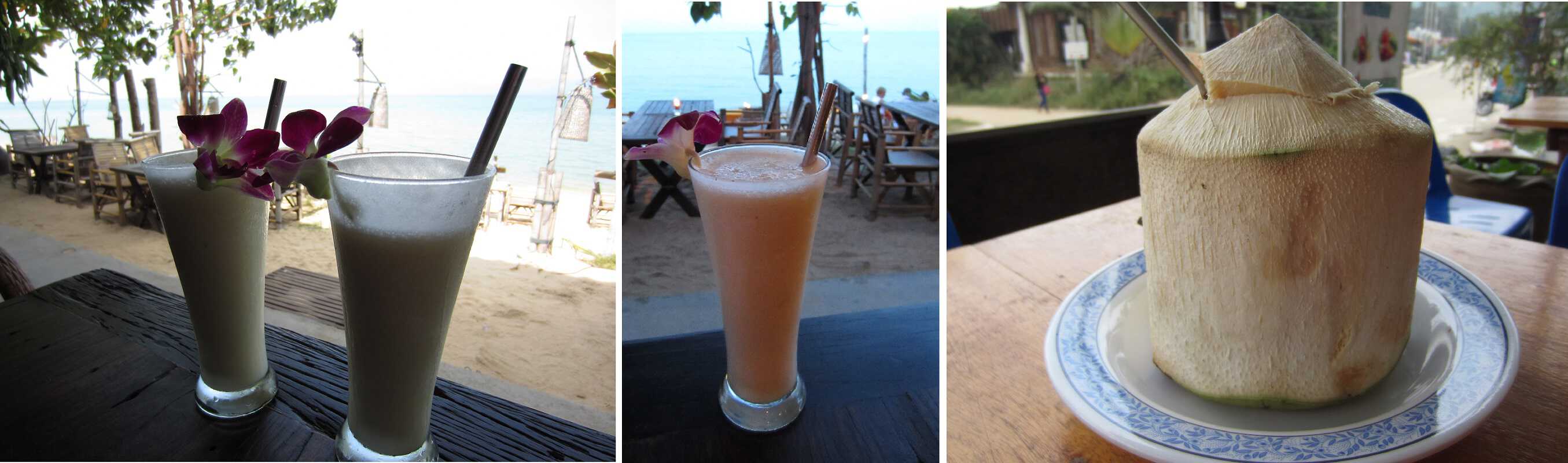
I don’t know how to say “please don’t give me a plastic straw” in Thai. Fortunately, this didn’t matter, because I’d brought a stainless steel reusable straw with me from home. It was the single most used item on the trip. Whenever I purchased a drink, I’d whip out my straw and demonstrate that I had one, and no straw would come with the drink. I’m sure they all thought I was a crazy Westerner, but at least I was keeping to the local custom!

There were a couple of occasions where the staff forgot (there were two times that I can remember) and brought me a straw. I handed them back immediately unused, hoping that the straws would be washed and reused, but of course, they went in the bin. So usually I’d watch as staff prepared my drink, and if I saw any hands heading near the straws I’d run over, flailing my arms in the air until they panicked and handed the straw-free beverage over. I may have looked mad, but it worked.

straws

Our stainless steel straws in all their glory!

The plastic bag

The plastic bag is the other obvious contender, and you’d be forgiven for thinking it would be pretty easy to avoid these. Just say no when you buy something, right? But there were a couple of complications.

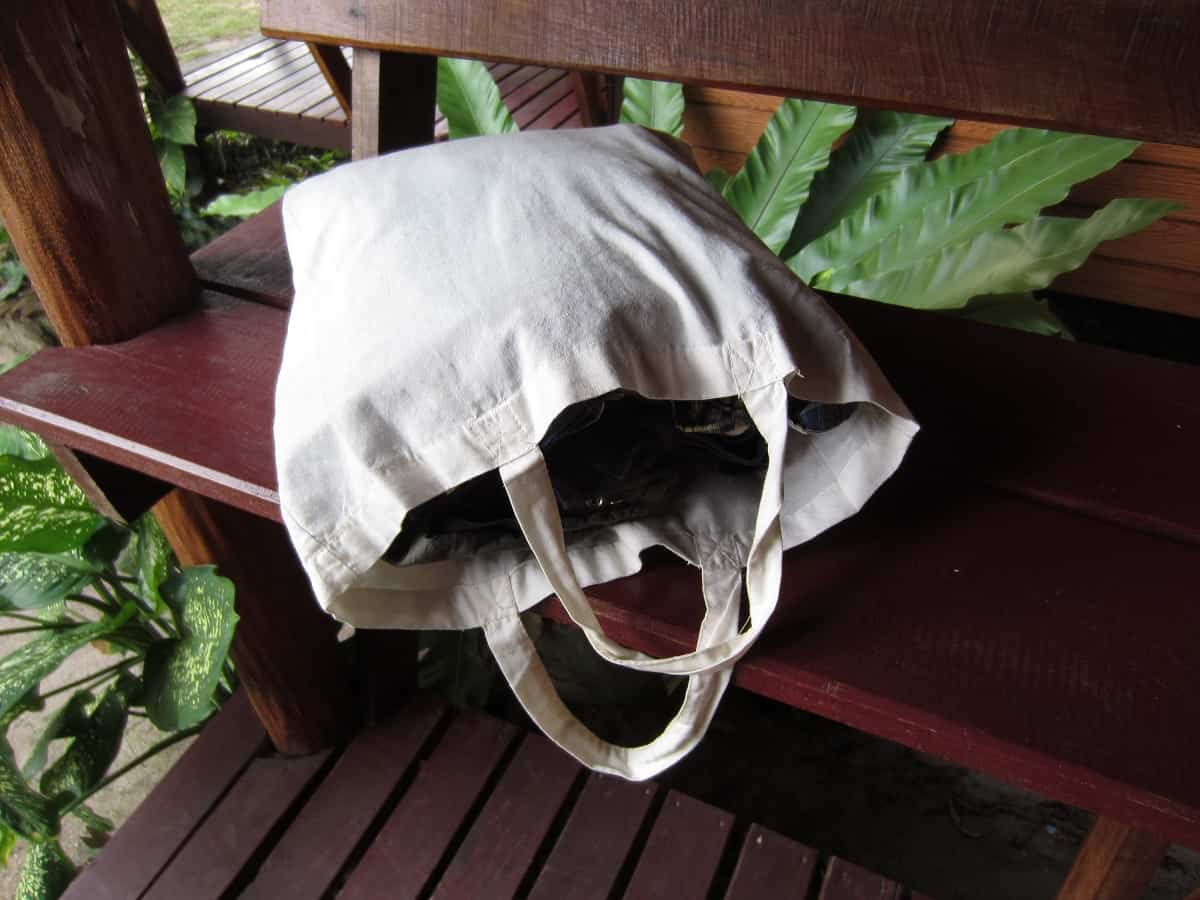
The first was laundry. In Thailand self-serve laundromats aren’t very common, and instead people offer a private laundry service where you pay by weight. You drop your laundry off and pick it up 24 hours later, smelling fragrant, neatly pressed… and folded in a plastic bag. It’s not like we could not use a bag altogether, because we’d have ended up dropping our underpants and socks all the way down the street. Fortunately we had brought a calico bag with us and we were able to use this instead.

laundry

Our freshly washed, neatly pressed laundry in the calico bag I’d brought with us. Plastic free!

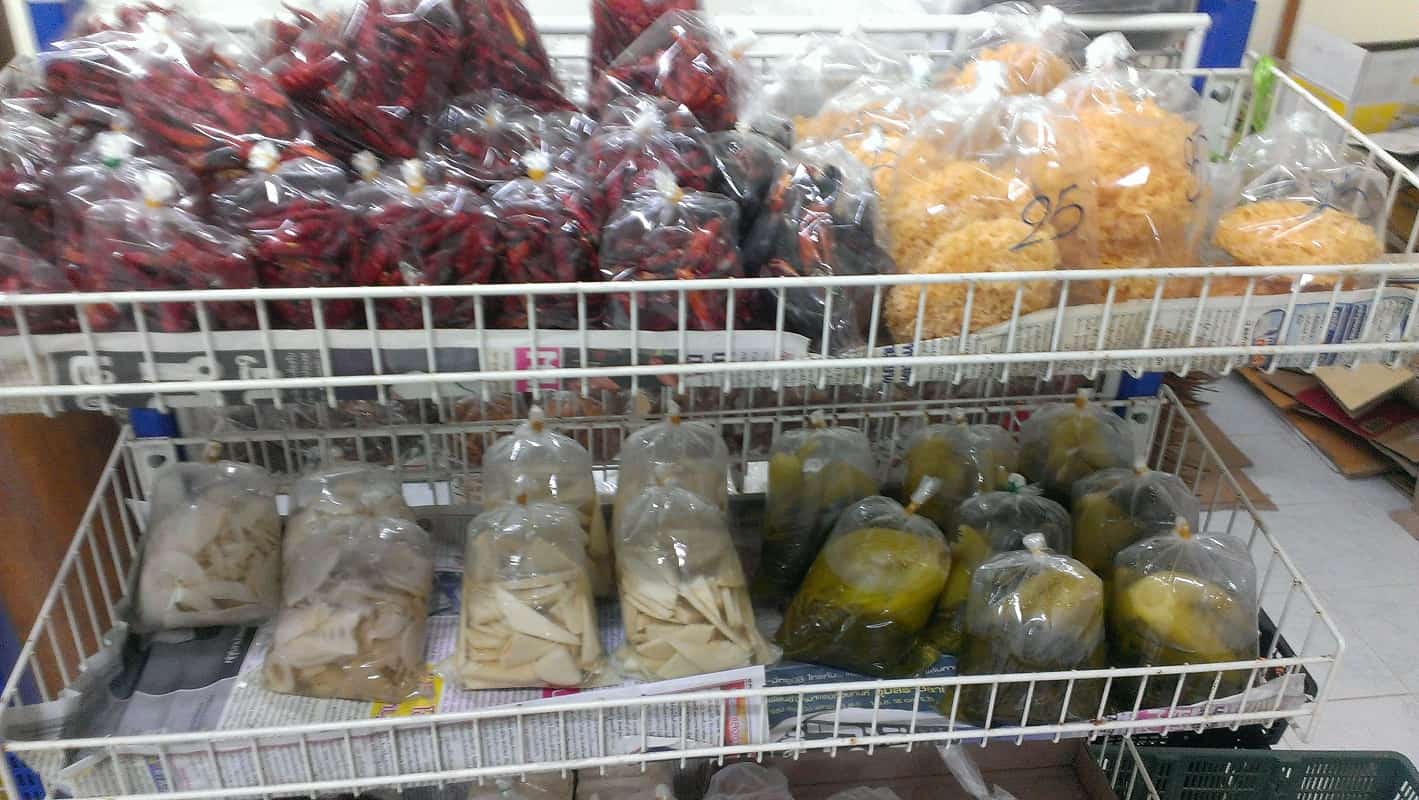
The second was that Thai people used plastic bags as a vessel for food and drink. Literally. They pour cold drinks, hot soups, curry, sauces, coconut milk, you name it, into plastic bags, seal them up, and send you on your way.

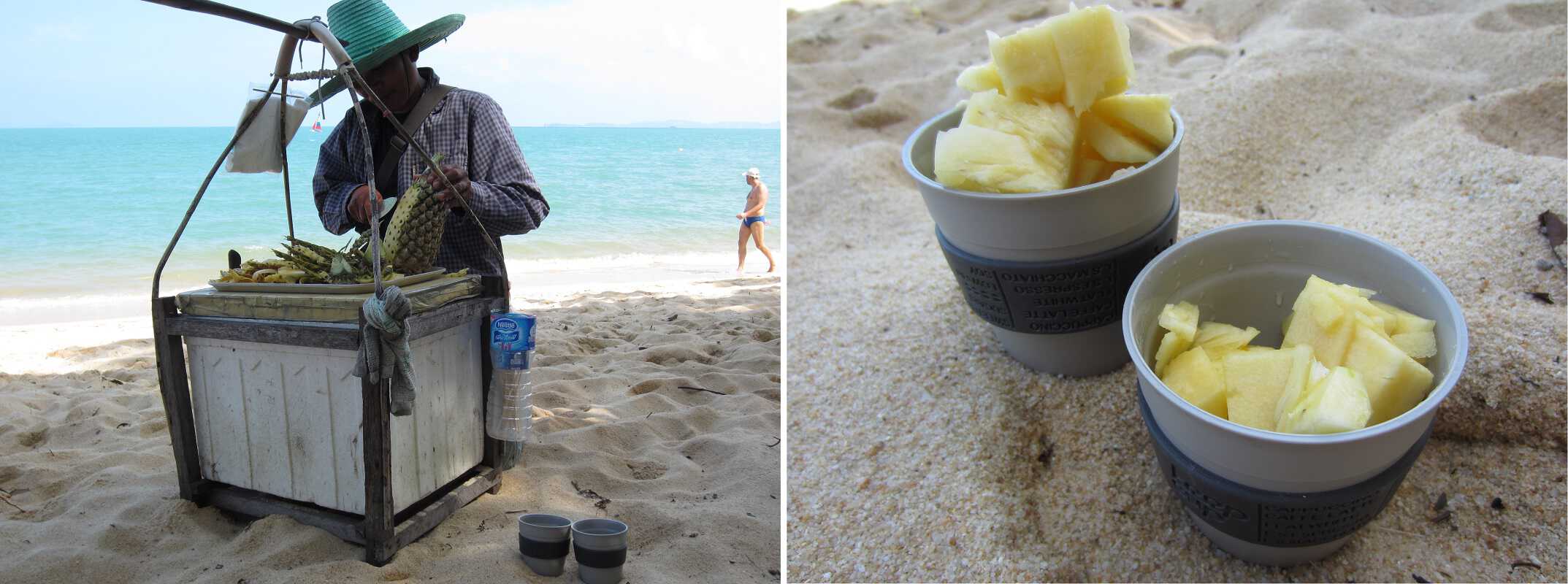
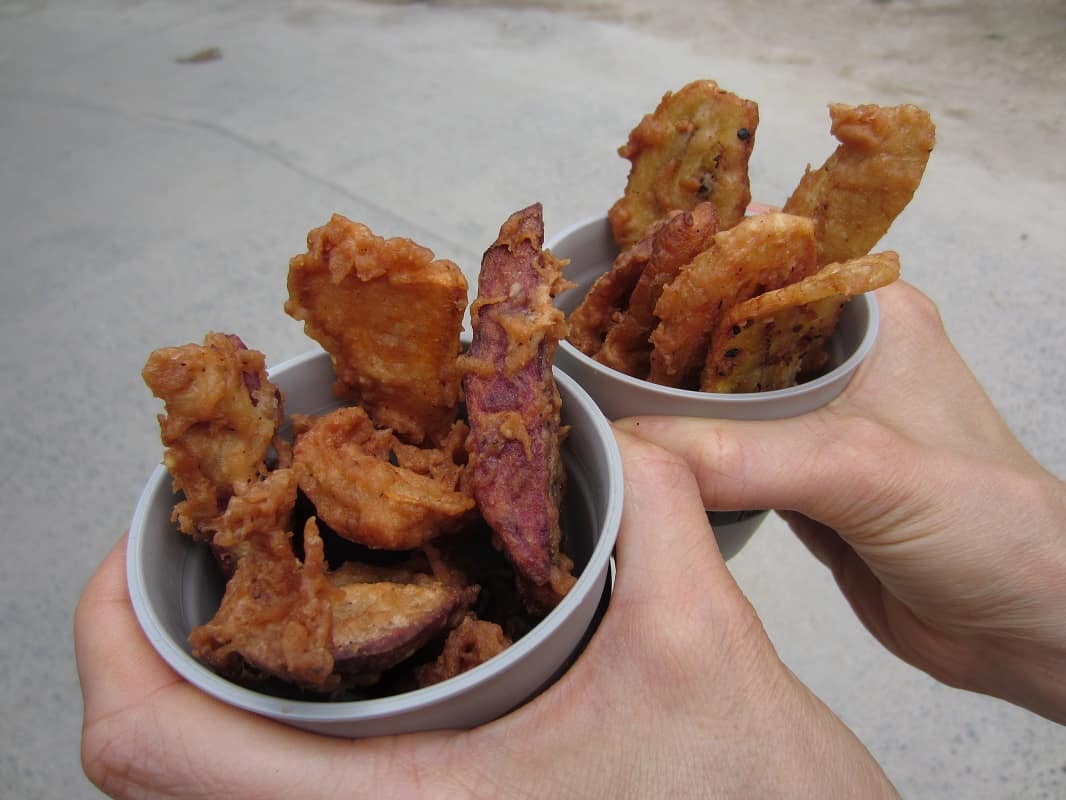
plasticbagsThere’s no way I’d want to eat or drink anything served that’s been transported and stored in a plastic bag, even if I hadn’t given up plastic. Fortunately, our KeepCups served as containers for food, so the few times we bought something as takeaway, we didn’t need to use plastic bags.

deepfried

Battered, deep-fried sweet potato and banana – so delicious! We used our KeepCups rather than any disposable packaging.

The most important place to avoid plastic is at the beach. There are no bins so the options for rubbish disposal are taking it home, leaving it there or burying it. Of course, with the last two, it’s only a matter of time before it gets washed out to sea. Best to avoid disposable plastic altogether!

pineapple

Other Disposables

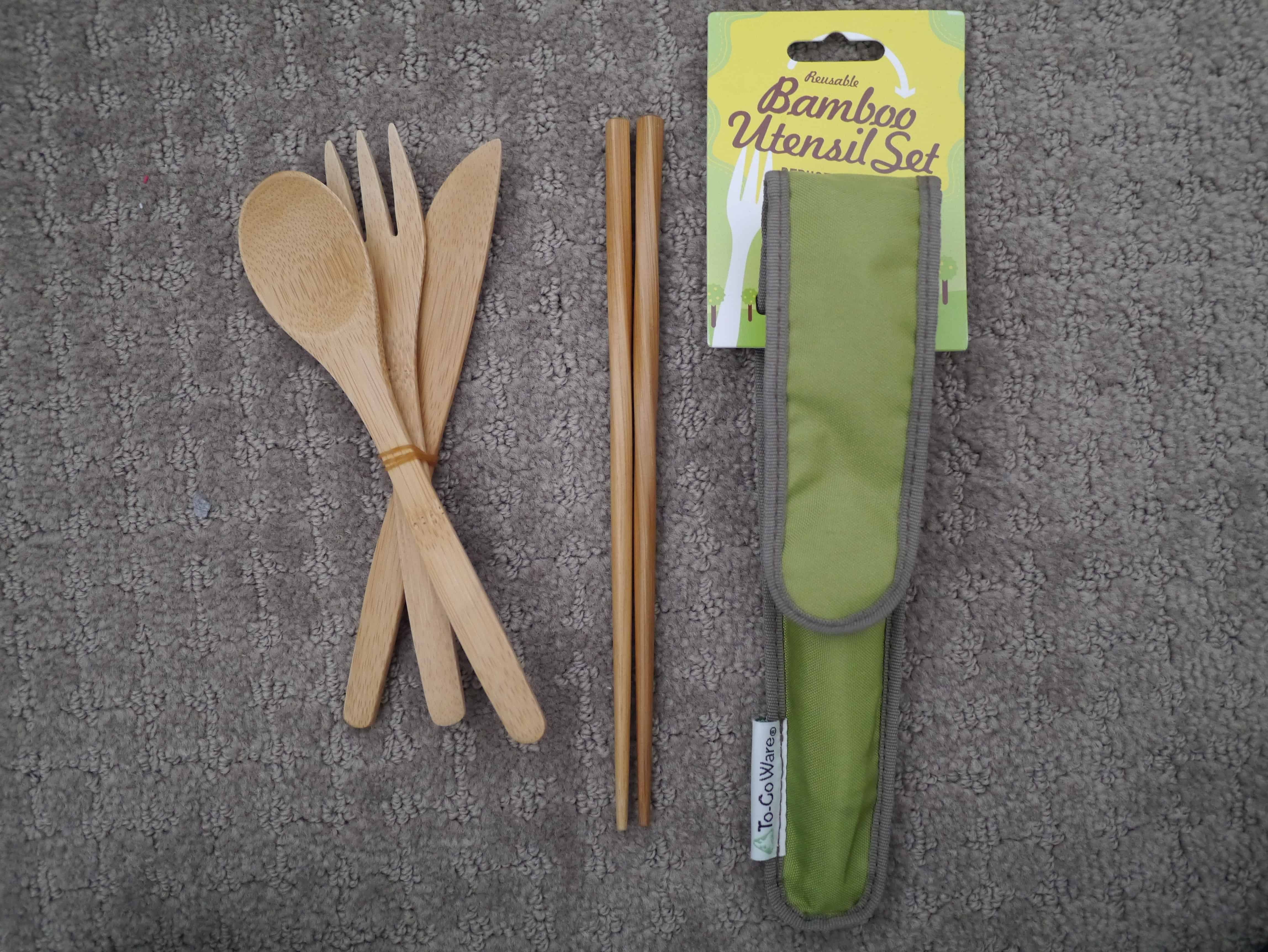
The main other disposable plastics that we were faced with were styrofoam trays (for takeaway food items) and plastic cutlery (for takeaway food items). We avoided using plastic cutlery by taking our own re-usable bamboo cutlery. The spoon was useful for ice cream and getting all the tasty coconut meat out of the drinking coconuts once they were empty, and I even managed to skin and chop up a whole mango with the knife!

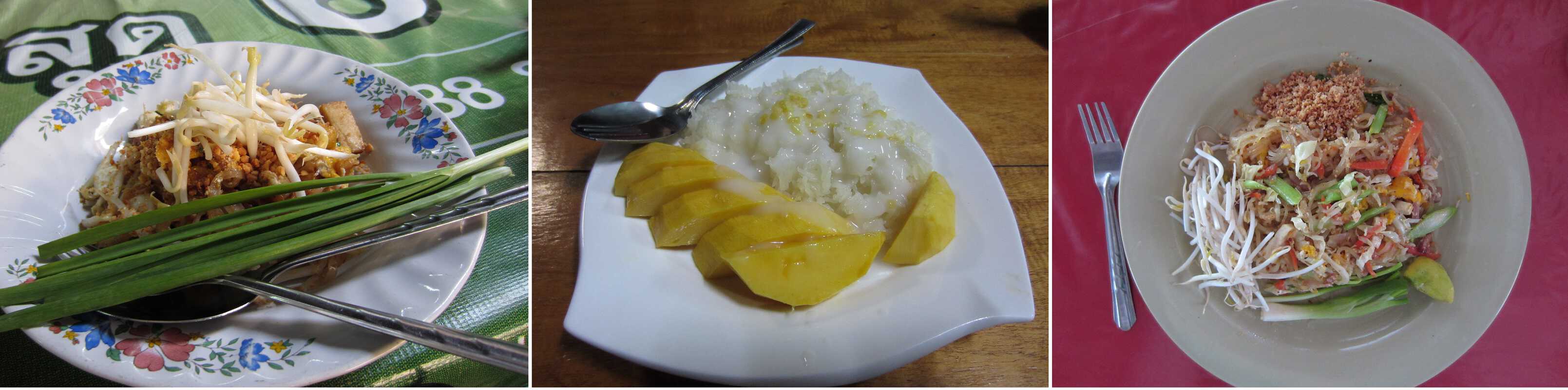
cutleryAs for styrofoam, and any disposable food packaging, we avoided this by choosing to dine in rather than get takeaway. The food was fresher, we got to sit down and use metal cutlery and it looked so much more appetizing on a plate rather than stuffed in a plastic bag or cling-wrapped in styrofoam.

food

Imagine eating any of these out of a plastic bag… and yes the option was available!

Tips for Keeping Plastic-Free

There was a lot of plastic to avoid as so much stuff was packaged this way, but keeping plastic-free didn’t mean going without, it just meant looking a little bit harder for what we wanted.

I took a reusable straw, a reusable cutlery set, a KeepCup (which is a coffee cup with a lid that can double up as a small container), a cloth bag and my water bottle. All of these were invaluable. The only additional thing I’d take if I went back is a small sealable plastic container (Tupperware or similar), because the KeepCups were a little too small for most food.

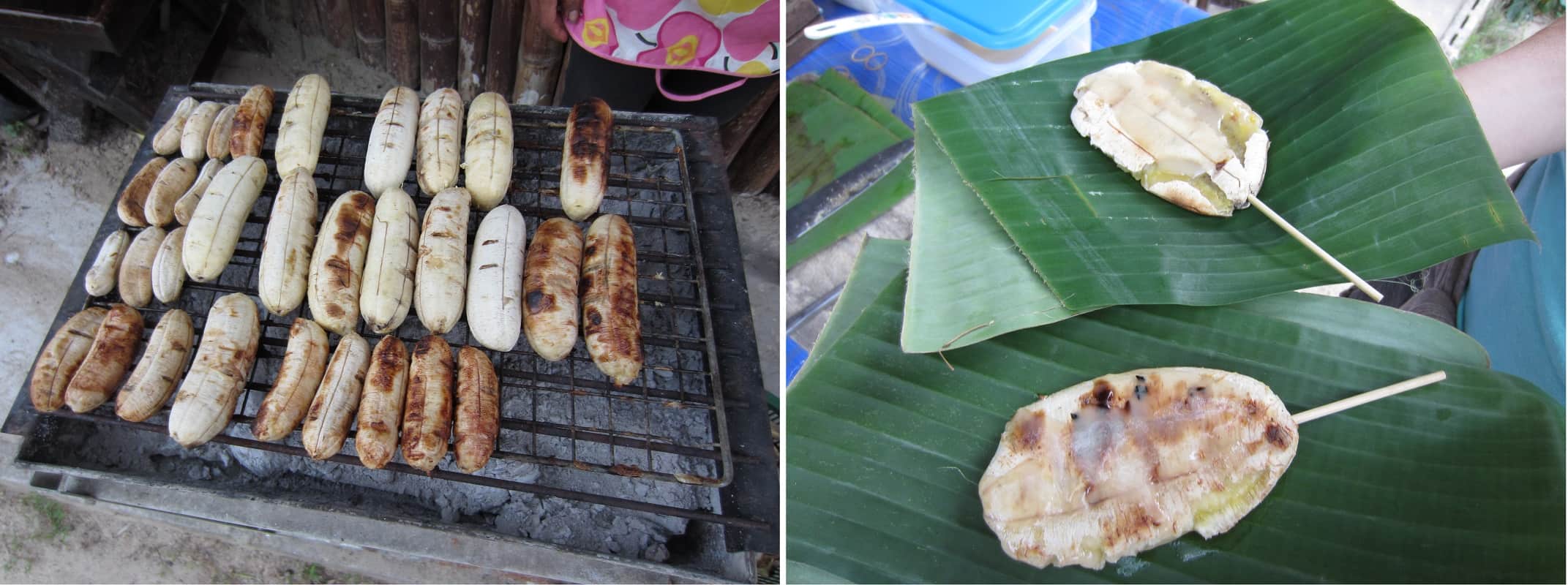
bananasAmongst all the plastic out there, there were plastic-free options, which were exciting to find! These bananas were barbequed, pressed and smothered in coconut sauce, and then served on banana leaves. Plastic-free definitely makes things taste more delicious!

[leadpages_leadbox leadbox_id=1429a0746639c5] [/leadpages_leadbox]
https://treadingmyownpath.com/wp-content/uploads/2014/01/pineapple.jpg 800 2147 Lindsay (Treading My Own Path) https://treadingmyownpath.com/wp-content/uploads/2019/06/logo.png Lindsay (Treading My Own Path)2014-01-10 13:06:102017-05-12 21:32:33Going Plastic-Free in Asia (Part Two – all the other plastic)

Going Plastic-Free in Asia: Plastic Water Bottles

26 Comments/in Living With Less Waste, Plastic Free Living/by Lindsay (Treading My Own Path)

I’ve spent the last 18 months committed to avoiding unnecessary plastic. My food shopping is almost entirely plastic-free, and I especially don’t buy bottled water. Why would I, when safe drinking water comes out of my tap?

In Asia, however, the water that comes out of the tap is not safe to drink. The locals don’t drink it, and tourists shouldn’t either. When we decided to spend four weeks holidaying in Thailand at the end of last year, I really wanted to keep our plastic-free commitment and avoid buying bottled water in disposable containers. A holiday is no reason to throw our values and beliefs out the window! I just wasn’t sure how achievable it would be.

Turns out, I shouldn’t have worried! With a little bit of effort, avoiding using endless plastic drinking bottles on holiday was easy!

No expensive equipment required

Before we went away, I had a brief look at the water filters, water treatment tablets and other gadgets on the market. There’s plenty of options out there, from UV filters that zap bugs and parasites, to physical filters to remove debris, to the traditional water purification tablets. However, it’s not super straightforward. Ideally you need a bug-destroying filter and a physical filter, and the UV filters need recharging and will eventually run out. The traditional tablets involve using nasty chemicals so aren’t ideal for daily use. Plus these fancypants gadgets have fancy price labels too, and it didn’t feel right to buy more stuff that we’d use for such a short amount of time. If we had been going away for several months, or going into the wilderness maybe it would have been a worthwhile investment, but we weren’t.

And actually, we managed just fine without.

Be prepared

We didn’t buy any new gadgets, but we did take our two metal water bottles, two KeepCups and our two reusable collapsible plastic bottles – things we already had at home. I wouldn’t go anywhere in the Australian summer without taking my water bottle, so it made complete sense to take it with me.

bottles

It was a wise decision: all three were used regularly and if I went back, I’d take them all again. The bottles were useful right from when we arrived at the airport – both Perth and Bangkok airports had water filters once we’d passed through security so we could refill our empty bottles.

Make it a priority

Like most things to do with waste, it all comes down to convenience. There’s often an alternative way, even though it may require a little more effort than the conventional way. It’s all about priorities. So we prioritised, and made finding safe drinking water the first thing we did when we moved on to somewhere new.

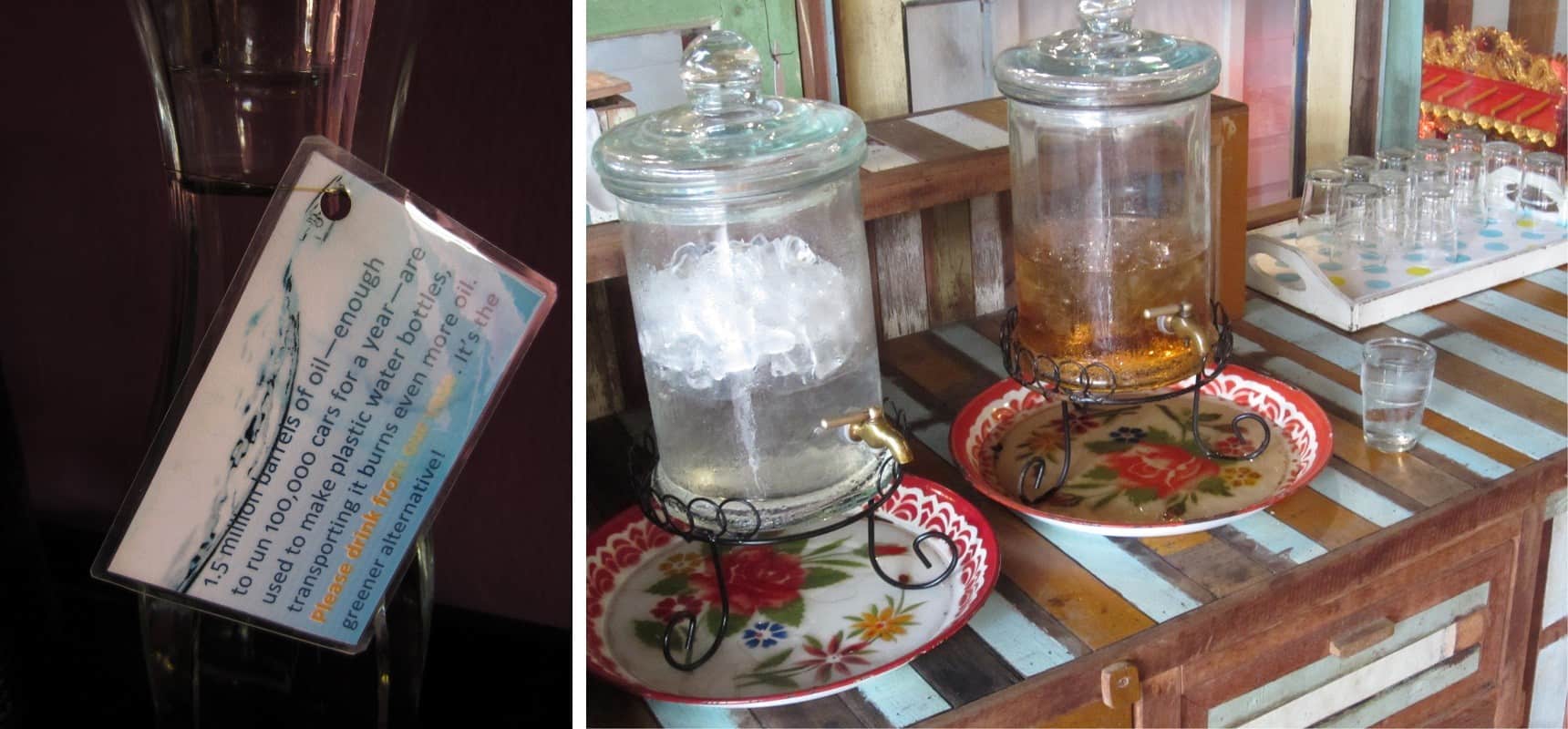
We didn’t have too much planned when we jetted off, but I had booked our first night and last night accommodation in Bangkok, and I’d researched places that appeared to have genuine environmental policies and a focus on sustainability. This paid off: both places offered plastic-free drinking water, and we were able to refill our bottles hassle-free.

waterhotel

Find out what the locals do

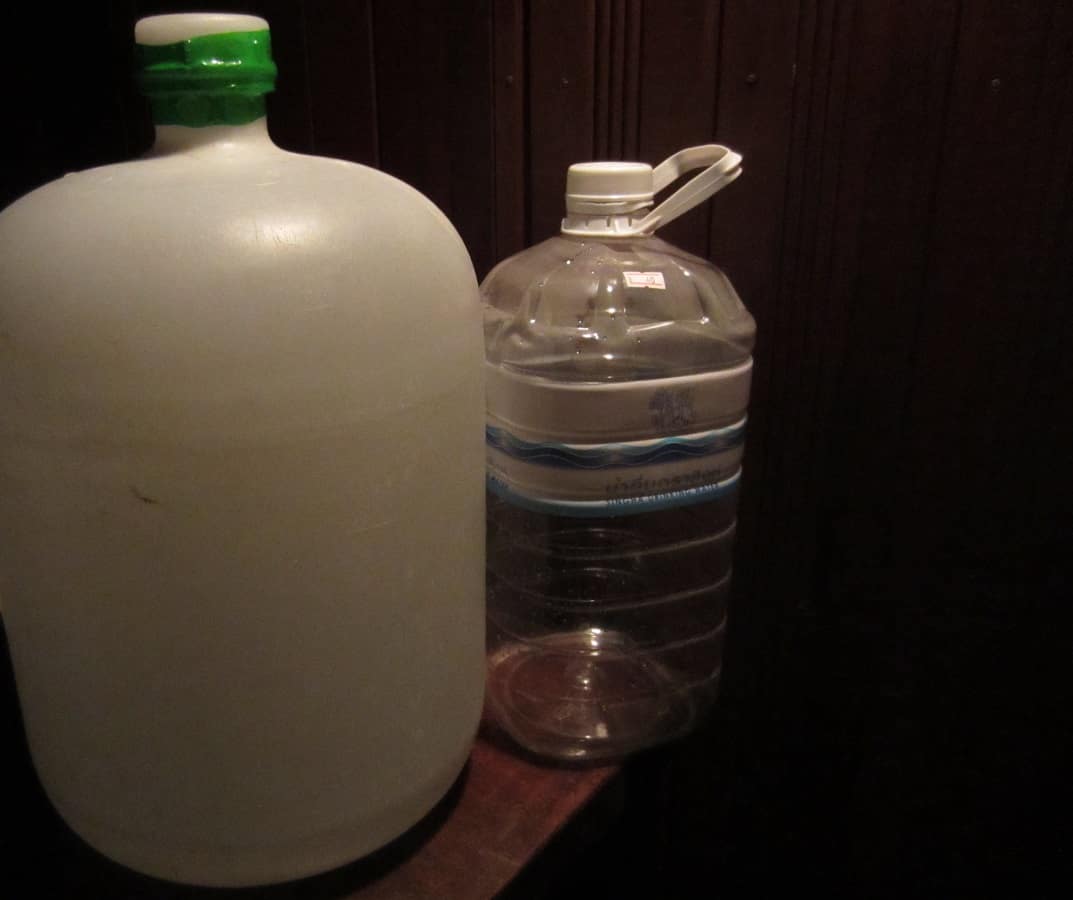
Locals don’t drink the tap water, but they don’t all guzzle mineral water from plastic bottles either. So what do they do? In Thailand (at least in the places we visited), companies deliver treated water in big 20 litre drums to households and businesses, and the containers are returned for refilling once they are empty.

waterrefillsThese containers aren’t marketed to tourists, and the empty containers need returning to the seller, so some retailers were reluctant to part with them. The first place we found would only let us fill up our own containers using their funnel, so we purchased one plastic 6 litre water container and used this for refills. This was our only plastic bottle purchase of the trip! There was no way we would have managed without it, either. We used this to decant the water into our little drinking bottles so we didn’t end up spilling it everywhere.

The second place we needed to use these, we found a seller willing to give us our own bottle by paying a deposit, which we got back once we returned the empty container.

water8

20-litre water drum with the 6-litre water bottle we had to buy. Still, that purchase meant we didn’t have to buy any more plastic bottles on our trip.

Look for alternatives

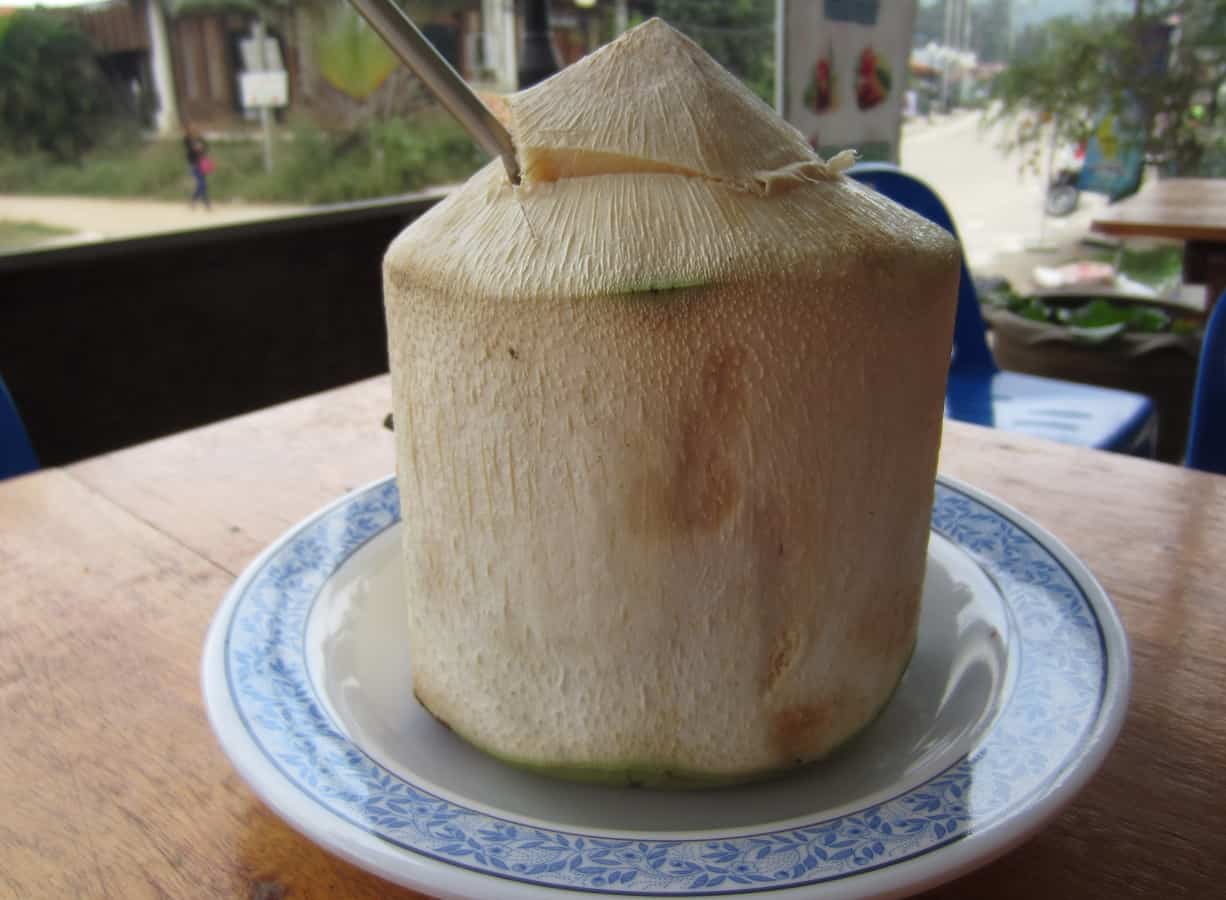
If our water bottles were empty and we were away from our base and unable to refill them, we found we still had options, and there was no need to reach for the plastic. One alternative which comes in completely biodegradable packaging is drinking coconuts. They are very hydrating, refreshing and good for you, and in Thailand, they are available everywhere.

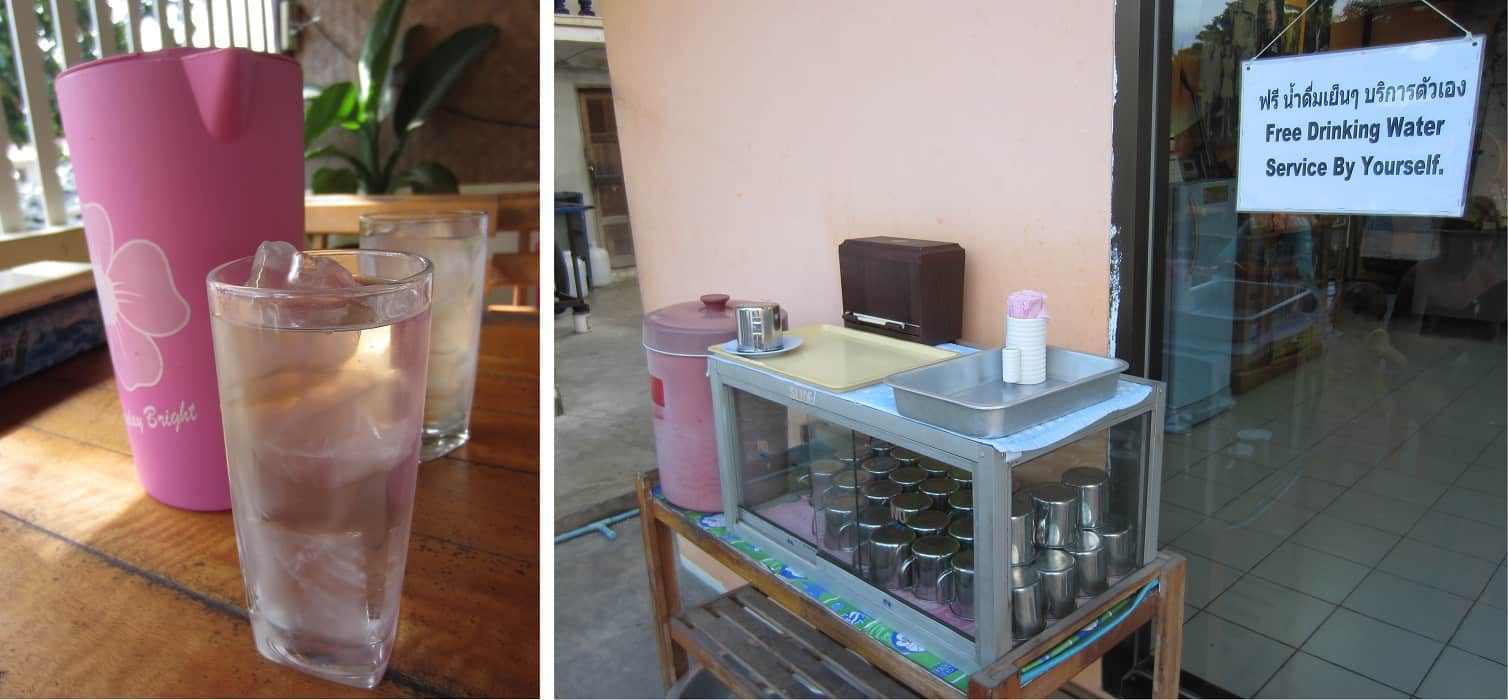
coconutLots of the cheaper Thai restaurants (which catered predominantly for locals rather than tourists) offer drinking water free of charge to patrons. We’d look out for restaurants with this service and try to use them where we could.

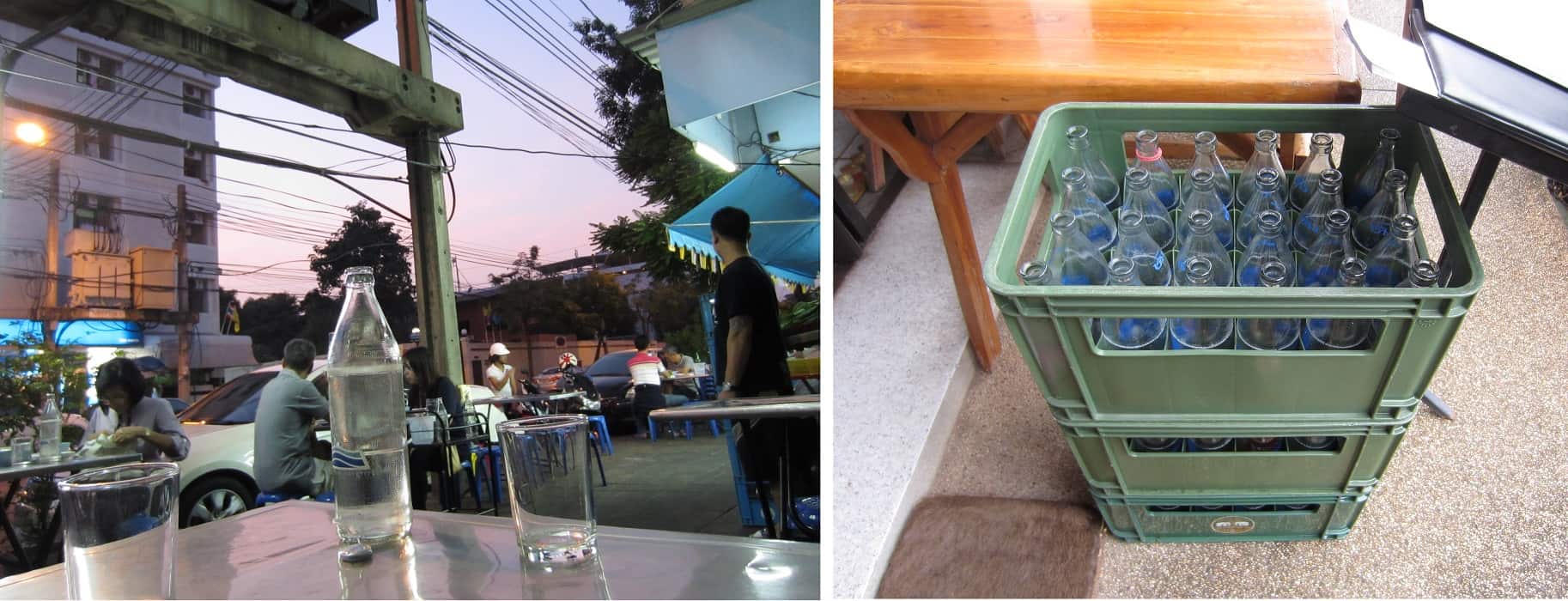
waterfreeWe discovered that a few restaurants sold water in glass bottles that are returned to the manufacturer for refilling. We did talk about buying water at these restaurants to fill up our water bottles if we ran out, but in the end we didn’t need to.

waterglassbottles

We did also see some water vending machines on the streets which filled empty containers. Our only issue was that the instructions were written entirely in Thai and we couldn’t understand how they worked. If we hadn’t found any other alternatives, we’d have popped some coins in the slot to see what happened, but as it turned out, we didn’t need to use these. It’s good to know that alternatives exist, though.

Reap the Rewards

We were completely prepared to pay extra in order to avoid using plastic; we figured it was worth it to limit our impact on the environment. Usually, a higher cost is something that we have to accept for “doing the sustainable thing”. Actually, it ended up being much cheaper! The 20 litre drums of water cost less than a dollar to buy, and many places charged more for a 500ml bottle of water, particularly outside of Bangkok. It was great not to contribute unnecessarily to landfill and keep our plastic-free pledge, and awesome to save money in the process!

Two people, four weeks away, and only one plastic bottle (reused several times before being responsibly recycled). Going plastic-free is just as possible abroad as it is at home if you put your mind to it!

[leadpages_leadbox leadbox_id=1429a0746639c5] [/leadpages_leadbox]
https://treadingmyownpath.com/wp-content/uploads/2014/01/waterhotel-e1389162073718.jpg 800 1720 Lindsay (Treading My Own Path) https://treadingmyownpath.com/wp-content/uploads/2019/06/logo.png Lindsay (Treading My Own Path)2014-01-08 15:58:232017-09-01 14:22:30Going Plastic-Free in Asia: Plastic Water Bottles

Holiday packing: the battle of minimalism vs sustainability

3 Comments/in Living With Less Waste, Minimalism, Simple Living/by Lindsay (Treading My Own Path)

In less than 12 hours, I’ll be on my way to the airport for a month-long break overseas. It’s not my first trip abroad, or course, but it is the first time since I really started embracing the sustainability path. The last time I went overseas I hadn’t taken part in Plastic Free July (or given up plastic), I wasn’t passionate about reducing waste, I’d never heard of simple living and i thought minimalism was a furniture/design style.

Fast forward 18 months, and all of these things have become really important to me. I don’t want my ideals to go out of the window just because I’m going on holiday, although it would be much easier to take a break from all of that too.

I have decided to pack as lightly as I can. Having been on numerous trips where I’ve taken far too much and cussed as I’ve had to haul heavy luggage all about the place, this is something I’ve been working on for years. Read more

https://treadingmyownpath.com/wp-content/uploads/2019/06/logo.png 0 0 Lindsay (Treading My Own Path) https://treadingmyownpath.com/wp-content/uploads/2019/06/logo.png Lindsay (Treading My Own Path)2013-12-06 13:41:232014-02-23 21:02:33Holiday packing: the battle of minimalism vs sustainability

What I’ve been up to…

4 Comments/in Health & Wellness, Living With Less Waste, Out & About/by Lindsay (Treading My Own Path)

Do you ever get yourself into a situation, and wonder how on earth it was that you ever agreed to get involved in the first place? This time last week, that was me. You may have noticed (from the distinct lack of personal photographs on the blog) that I’m not a particular fan of having my picture taken. So how was it that I agreed to be photographed last Monday morning wearing a pair of overalls, sitting in a knitted (yarnbombed) wheelbarrow, clutching a live chicken?

Well…

Let me tell you about the Less is More Festival. Read more

https://treadingmyownpath.com/wp-content/uploads/2019/06/logo.png 0 0 Lindsay (Treading My Own Path) https://treadingmyownpath.com/wp-content/uploads/2019/06/logo.png Lindsay (Treading My Own Path)2013-12-02 09:14:202014-02-23 21:02:49What I’ve been up to…

Twenty-four trees

2 Comments/in Energy, Living With Less Waste, Musings/by Lindsay (Treading My Own Path)

So we’re off to Thailand in just over a week for a long-overdue rest and holiday. We’re flying there. You don’t need to tell me that flying is not a very sustainable form of transport. When I lived in England I was very disapproving of flying. Then I met my partner, an Australian, and moved out here, and it changed my perspective a little.

The first thing I had to reconsider was that wherever in the world we lived, one half of our family would be the other side of the world. Neither of us are prepared to never see our families again in order to try to combat climate change. Have you heard of food miles? Well there’s another concept, called “love miles”, which is the distance that we need to travel in order to see our friends and family and loved ones.

Before flying existed, or until it became affordable for the masses, most people would marry and remain within their communities and wouldn’t need to travel very far. I’m sure in the future, indeed I hope in the future, that flying will become so unaffordable or undesirable that this becomes the case once again, as people re-embrace their local communities. In the meantime, it is very cheap and easy to fly anywhere in the world and for most people, our love miles are pretty high.

The other thing I discovered when I moved here is that Australia is very far away from everything (and everyone) else. Even the other side of the same country is a few hours by flying, or a few days by driving. Having lived all my life in Europe, I have been spoiled. I could travel by boat or by train, or even drive, and reach numerous different countries in a matter of hours. I didn’t need to fly to see ancient ruins, buzzing modern cities, and beautiful rural landscapes, or to visit snow-capped mountains or golden beaches. I love experiencing different cultures; it makes me feel more connected to the world and travelling inspires me. In Europe it’s at your fingertips; here in Australia, it is not.

So I’ve come to accept that, living in Australia, I will probably need flying in my life, at least in the short-term.

What does this mean for the environment?

I was wondering, how much carbon will I be generating by flying to Thailand? And what can I do about it? I plugged all the info into a carbon calculator. My flight will generate 1 tonne of C02. Each way. And I’m going with my partner. So we’re generating 4 tonnes of C02, according to the calculator.

The website suggests that to offset this amount of carbon, I can pay $90, which will plant 24 trees.

I’m not really a fan of carbon offsetting. I feel like it’s a capitalist response to an environmental problem – paying money to alleviate guilt, or buying your way out of a situation. I feel like it benefits the wealthy, who can afford to pay to offset their travel more than others. I’m not completely convinced that it is the best way to help the environment. It seems so…detached. I have heard stories and worked at places that are involved with tree planting and investigated carbon trading, and my experience is that these organisations are committed to plant trees irrespective of whether they get funding by these schemes, although of course the money helps. But does it actually mean more trees get planted? Or does it mean that organisations can free up other funds to spend elsewhere? These carbon trading schemes are often run as businesses, too – so not all the money is going straight to tree-planting. I don’t like that aspect, either.

I may feel like these schemes are a little flawed, but that’s not to say that they aren’t still worthwhile. For people who are cash-rich, or time-poor, they offer a solution. And they’re making the concept of offsetting your flights easy and available to the general public. But I’m not going to be paying $90. I am, however, thinking about these 24 trees. I want to do something which I feel more accountable to. Ideally I’d like to plant my own trees. I’m wondering if there’s a local tree-planting scheme that I can get involved with (either when I’m in Thailand or back home). If that’s not possible, I hope to find a not-for-profit group to donate to where the money will go directly to local tree planting – trees that I can see.

Of course, not flying is still the best option, and I don’t intend to to be flying regularly. We don’t intend to go back to the UK every year, for example. I’ve also made a commitment not to use budget airlines, because I think that they are even more unsustainable than the bigger airlines. I don’t think flying should be cheap, and if governments didn’t allow airlines to avoid paying tax and fuel duty, it wouldn’t be. But as I now realise that I will be taking more flights over the coming years than I have in the past, I need to come up with some way of mitigating my cost to the environment in the best way that I can.

Starting with twenty-four trees.

https://treadingmyownpath.com/wp-content/uploads/2013/11/trees.jpg 900 1221 Lindsay (Treading My Own Path) https://treadingmyownpath.com/wp-content/uploads/2019/06/logo.png Lindsay (Treading My Own Path)2013-11-28 08:45:422017-08-30 22:07:53Twenty-four trees
Page 8 of 12«‹678910›»

Pages

  • 9-tips
  • Birthday book reviews
  • Books
  • Cheatsheets and checklists
  • Every Blog Post I’ve Ever Written
  • Food Waste Challenge
  • Hoarder Minimalist Progress Tracker
  • Instagram
  • Join the mailing list
  • One More Step…
  • Real Food and Recipes
  • Thank you – 3 day food waste challenge
  • Thanks for joining!
  • The Less Waste No Fuss Kitchen Bonus Vault
  • Treading My Own Path Gift Voucher
  • Zero Waste + Plastic Free Living in Perth, Western Australia
  • Home
  • Quotes and facts
  • Resources
  • About
  • Infographics
  • Work with me
  • Minimalism / Simple Living
  • Plastic-free living
  • Upcoming events
  • Zero Waste
  • Explore
  • Blog
  • Less Stuff Book
  • The Less Waste No Fuss Kitchen
  • Thank You
  • Disclaimer & Copyright
  • Privacy Policy

Categories

  • About Me
  • Changemaking
  • Chemical-Free Living
  • Climate action
  • Community
  • Decluttering
  • DIY Skincare
  • Energy
  • environmental guilt
  • Ethical Living
  • Garden
  • growing food
  • Health & Wellness
  • How to…
  • Less Stuff
  • Living With Less Waste
  • Minimalism
  • Money-Saving
  • Musings
  • Out & About
  • Permaculture Gardening
  • Plastic Free July
  • Plastic Free Living
  • Real Food
  • Recipes
  • Simple Living
  • Sustainable Food
  • Thrift
  • Transport
  • Uncategorized
  • urban permaculture
  • Water
  • Zero Waste

Archive

  • November 2022
  • July 2022
  • April 2022
  • March 2022
  • February 2022
  • March 2021
  • February 2021
  • January 2021
  • December 2020
  • November 2020
  • October 2020
  • September 2020
  • August 2020
  • July 2020
  • June 2020
  • May 2020
  • April 2020
  • March 2020
  • February 2020
  • January 2020
  • December 2019
  • November 2019
  • October 2019
  • September 2019
  • August 2019
  • July 2019
  • June 2019
  • May 2019
  • April 2019
  • March 2019
  • February 2019
  • January 2019
  • December 2018
  • November 2018
  • October 2018
  • September 2018
  • August 2018
  • July 2018
  • June 2018
  • April 2018
  • March 2018
  • February 2018
  • January 2018
  • December 2017
  • November 2017
  • October 2017
  • September 2017
  • August 2017
  • July 2017
  • June 2017
  • May 2017
  • April 2017
  • March 2017
  • February 2017
  • January 2017
  • December 2016
  • November 2016
  • October 2016
  • September 2016
  • August 2016
  • July 2016
  • June 2016
  • May 2016
  • April 2016
  • March 2016
  • February 2016
  • January 2016
  • December 2015
  • November 2015
  • October 2015
  • September 2015
  • August 2015
  • July 2015
  • June 2015
  • May 2015
  • April 2015
  • March 2015
  • February 2015
  • January 2015
  • December 2014
  • October 2014
  • September 2014
  • August 2014
  • July 2014
  • June 2014
  • May 2014
  • April 2014
  • March 2014
  • February 2014
  • January 2014
  • December 2013
  • November 2013
  • October 2013
  • September 2013
  • August 2013
  • July 2013
  • June 2013
  • May 2013
  • April 2013
  • March 2013

Treading My Own Path

Privacy / Disclaimer

Sign up to the newsletter

Website by Órla Larkin

Lindsay Miles is an educator, speaker, author and passionate zero waste/plastic-free living advocate helping others live more meaningful lives with less waste and less stuff. She has been sharing ideas, tips, tricks and strategies on her website Treading My Own Path since 2013. Her first book, Less Stuff, was published in 2019 and her second, The Less Waste No Fuss Kitchen was published in June 2020. Originally from the UK, Lindsay now lives in Perth, Western Australia.

Lindsay Miles
© 2024 Lindsay Miles | ABN 84 679 541 090
  • Link to X
  • Link to Youtube
  • Link to Instagram
  • Link to Mail
  • Link to Facebook
Scroll to top Scroll to top Scroll to top

This site uses cookies. Cookies enable me to personalise your experience on this site so I can improve my content and communications.

I'm okay with that

Cookie and Privacy Settings


How we use cookies

We may request cookies to be set on your device. We use cookies to let us know when you visit our websites, how you interact with us, to enrich your user experience, and to customize your relationship with our website.

Click on the different category headings to find out more. You can also change some of your preferences. Note that blocking some types of cookies may impact your experience on our websites and the services we are able to offer.

Essential Website Cookies

These cookies are strictly necessary to provide you with services available through our website and to use some of its features.

Because these cookies are strictly necessary to deliver the website, refusing them will have impact how our site functions. You always can block or delete cookies by changing your browser settings and force blocking all cookies on this website. But this will always prompt you to accept/refuse cookies when revisiting our site.

We fully respect if you want to refuse cookies but to avoid asking you again and again kindly allow us to store a cookie for that. You are free to opt out any time or opt in for other cookies to get a better experience. If you refuse cookies we will remove all set cookies in our domain.

We provide you with a list of stored cookies on your computer in our domain so you can check what we stored. Due to security reasons we are not able to show or modify cookies from other domains. You can check these in your browser security settings.

Other external services

We also use different external services like Google Webfonts, Google Maps, and external Video providers. Since these providers may collect personal data like your IP address we allow you to block them here. Please be aware that this might heavily reduce the functionality and appearance of our site. Changes will take effect once you reload the page.

Google Webfont Settings:

Google Map Settings:

Google reCaptcha Settings:

Vimeo and Youtube video embeds:

Privacy Policy

You can read about our cookies and privacy settings in detail on our Privacy Policy Page.

Privacy Policy
Enough is Enough Free ebook for Subscribers front cover

Join our community and you’ll receive free new content every week and a downloadable eBook “Enough is Enough” to help you take the next steps!

Enough is Enough eBook

Please send me the eBook!

Send my eBook link to:

By downloading the eBook you agree to my Privacy Policy.

I hate spam as much as you do, and I promise to keep your email address safe. I will not share or sell your personal information, ever. You can unsubscribe at any time.

This form collects information I will use to send out the free eBook, new content once a week and an occasional newsletter (with other stuff I think you’ll find useful such as events).

Loading Comments...