
• Link to X
  • Link to Youtube
  • Link to Instagram
  • Link to Mail
  • Link to Facebook
Join the community and receive a free EBOOK
Treading My Own Path | Less waste, less stuff, sustainable living
  • ⌂
  • About
  • Work with me
  • Upcoming events
  • Books
    • The Less Waste No Fuss Kitchen
    • Less Stuff
  • Resources
    • Printables
    • Infographics
    • Quotes and facts
  • Explore
    • Minimalism
    • Plastic-free living
    • Real Food and Recipes
    • Zero Waste
  • Blog
  • Click to open the search input field Click to open the search input field Search
  • Menu Menu

Plastic recycling: What Those Numbers Actually Mean

9 Comments/in Living With Less Waste, Plastic Free Living/by Lindsay (Treading My Own Path)

With Plastic Free July just around the corner, I thought it might be helpful to talk about plastic recycling, and why it’s not all it’s cracked up to be. Recycling gives the impression that you can consume something, and then dispose of the packaging in a responsible manner, free of all guilt. But whilst recycling is a great last resort when the only other option is landfill, it should be remembered that it is the LAST resort. Have you ever heard the mantra ‘reduce, reuse, recycle’? There’s a reason that ‘recycle’ comes last! Now there’s a new mantra that is gaining popularity. This one goes ‘REFUSE, reduce, reuse, repair, recycle’. And that is what Plastic Free July is all about. Rather than worrying about disposing of plastic packaging responsibly, ask the question: do I actually need it in the first place?

If you’ve been happily consuming all that plastic because you know that you’ll recycle it responsibly when you’re done, maybe this post will change your mind. I used to be the same. But once I started to understand what plastic recycling actually meant, I began questioning everything I bought and I drastically reduced the plastic in my life.

So here is a guide to the different types of plastics, what they are used for and what they are recycled into – if they can actually even be recycled.

Let’s dispell a couple of myths!

Firstly, if you’re under the impression that your old plastic bottles can be recycled into shiny new plastic bottles, unfortunately you’re wrong! Plastic isn’t technically recycled, it’s downcycled, meaning it’s used to create a product of inferior quality and productivity. So whilst glass can (in theory) be recycled an infinite amount of times, plastic can only go through two or three cycles.

Secondly, just because you see the ‘recycling arrow’ on your plastic packaging it doesn’t mean that it’s actually recyclable. The arrow is meaningless. The number tells us what the plastic is made from, and so you can work out if it can be recycled. Just because plastic has the potential to be recycled, it doesn’t mean that your local council actually recycles it, either.

Plastic recycling – a guide to the numbers

If you don’t want to read this list (I’ll take no offence!) allow me to summarise it here. The majority of plastic products are not commonly recycled, and when they are, the major product is plastic ‘wood’ and garden furniture. Now I don’t know about you, but I’ve never seen any attractive plastic recycled garden furniture, and I definitely have no desire for fake plastic wood products. Considering how much plastic gets recycled each year, that’s a LOT of plastic garden furniture. So rather than helping the environment by recycling your plastic, you’re actually adding more eyesores to public spaces everywhere!

If you do want to know more about what different types of plastics there are, whether they can be recycled and what they become, read on.

1. PET or PETE: polyethylene terephthalate

This is the plastic used to make clear bottles for soft drinks and water, plastic food jars for sauces and condiments.

Recycled into: bottles for cleaning products and non-food items; egg cartons; fibres/textiles (carpet, fleece, filling for winter coats).

2. HDPE: high-density polyethylene

This is the opaque plastic used to make milk bottles, oil/vinegar bottles, ice-cream tubs, bottles for toiletries and cleaning products.

Recycled into: recycling and compost bins; pipes; crates; flower pots; outdoor furniture.

3. PVC: polyvinyl chloride

This is the clear plastic used as food wrap, some squeezy bottles. Also used in flooring, plumbing pipes and hoses, children’s toys.

This is not commonly recycled, but can be used for: pipe, floor coverings.

4. LDPE: low-density polyethylene

This is used to make cling-film, most squeezy bottles, food bags and plastic carrier (shopping) bags.

This is not commonly recycled, but can be used for outdoor furniture; fence posts; tubing.

5. PP: polypropylene

This is the plastic used to make dairy food containers such as yoghurt pots and cheese containers, margarine containers, Tupperware and other plastic food storage boxes, and medicine bottles. Most plastic bottle tops are made out of this.

This is not commonly recycled, but can be used for outdoor furniture and planters.

6. PS: polystyrene

This includes colourless, transparent polystyrene and expanded polystyrene, which is more commonly known as styrofoam. This is used for takeaway food containers, hot beverage containers, food produce boxes and deli packaging.

This is not commonly recycled and predominantly makes two products, insulation and plastic ‘timber’. To recycle it has to be mixed in with new ‘virgin’ polystyrene.

7. Other

This includes polycarbonate, polylactide, bioplastics made from corn starch, acrylonitrile styrene, and acrylonitrile butadiene styrene. Products made from these include high quality kitchen plastics, CDs, toys such as Lego, protective helmets, toothbrushes, the outer covers for electrical equipment such as printers, and medical storage containers.

These are not commonly recycled (and obviously depend on the material), but can be made into plastic ‘timber’ products.

[leadpages_leadbox leadbox_id=1429a0746639c5] [/leadpages_leadbox]
https://treadingmyownpath.com/wp-content/uploads/2013/05/plasticsymbolsjpg.jpg 359 2105 Lindsay (Treading My Own Path) https://treadingmyownpath.com/wp-content/uploads/2019/06/logo.png Lindsay (Treading My Own Path)2013-06-26 15:30:362017-08-30 21:17:30Plastic recycling: What Those Numbers Actually Mean

Plastic Free July is almost upon us!

11 Comments/in Living With Less Waste, Plastic Free July, Plastic Free Living/by Lindsay (Treading My Own Path)

plastic-free-july-logo-banner-lge

This year’s Plastic Free July challenge is almost upon us, with just a little over two weeks to go. Plastic Free July, in case you don’t know what it is, is a challenge that runs every year which encourages people to give up disposable plastic for the month of July. (If you think that sounds too hard, you can also commit to a week or even one shopping trip instead.)

What do I mean by disposable plastic mean anyway?

This is the stuff you use just once, or a couple of times, and then throw away. Obvious items include plastic shopping bags, plastic bottles, plastic food packaging in general (cellophane wrapping, polystyrene trays, plastic tubs, bottles and yoghurt pots, even tetra-packs) and a lot of cosmetics and toiletries packaging. But there’s loads of less obvious stuff out there too. Like, for example, when you buy a new pair of socks and they are hanging on the rack with a little plastic hook? That little hook is gonna go straight in the bin.

What’s the purpose of Plastic Free July?

Well, there’s actually a few. On an individual level, it makes participants vastly more aware of how much disposable plastic is in our lives. It also encourages people to look at what plastic they use and see if they can find alternatives to any of it, so maybe after July, some new habits are formed.

But also, by bringing your own bags to the shops, or taking your own containers to the fishmonger, or refusing a straw, people can also send messages to retailers and businesses, and also their staff and other customers. This sends the message to the wider community that there is another way, and create awareness at this level too. The more people that demand change, the more businesses will listen.

Of course, it also means vastly less plastic is consumed in the month of July, which means less plastic going to landfill and less plastic ending up in our rivers and oceans where it harms wildlife. And less fossil fuels are wasted making new disposable plastic that is destined for the same journey.

Plus it’s a great way to find out about businesses that are already doing great things to help the environment – either cafes with zero waste policies, or companies that make stainless steel water bottles or reusable cloth vegetable bags – and also charities, community groups and other organisations that are campaigning for change.

So Plastic Free July is about creating awareness, reducing waste and inspiring change.

Why am I so passionate about Plastic Free July?

I took part in Plastic Free July last year for the first time, and it was a life-changing experience. Seriously. I always thought of myself as pretty green and sustainable, but once I started looking at how much plastic I was consuming, I realised there was so much more I could do. So after July I committed to permanently avoiding buying disposable plastic packaging.

But it wasn’t just that. Once I started looking at all that plastic-wrapped food, I realised that it’s all processed, and mostly junk. The more processed the ‘food’, the more plastic packaging. Once I stopped buying that stuff, I instantly felt better and healthier, and it made me start to look at what I was eating to make the connections between food and health. We all know that you need to eat well, but often we choose to ignore it when we’re busy, for the sake of convenience. Taking part in Plastic Free July made me reconnect with the issue. I also learned to cook new things so I could make fresh, wholesome versions of the things I could no longer buy, so I didn’t have to go completely without.

The same goes for skincare. I used to buy products that were readily available in the supermarkets, and never really considered that they contained preservatives, irritants and carcinogens. Yep, carcinogens. (If you wanna see what’s in the products you’re using, check out the Skin Deep database here which contains 64,000 products. It’s an eye-opener.) Once I started looking for cosmetic products in glass I began to find natural products that didn’t contain any of that nasty stuff. Now I know the alternatives I wouldn’t dream of buying those mass-produced synthetic chemical cocktails to put on my skin. (I’ve also started learning how to make my own.)

The Plastic Free July challenge also led me to small, independent businesses and local producers, and changed the whole way I shopped. Which is great because I’d much rather be supporting these types of businesses rather than the big multinational companies with their inferior products and questionable ethics. I just needed that extra push, I suppose.

What else? Well I learned a great deal about waste and pollution, and found out about a number of charities and individuals doing amazing work, including 5 Gyres, who campaign against plastic pollution, and the fantastic Beth Terry, who gave up plastic completely in 2007, and whose blog contains a wealth of information regarding plastic-free living.

Through Plastic Free July I was also able to really connect with my local community, and meet so many people who live just down the road and have the same concerns as me. It’s great to know I’m not the only one that cares – and sometimes it can feel a bit like that!

So there’s a lot more to Plastic Free July than giving up a few plastic carrier bags!

Want to get on board?

Sign up! You’ve still got two weeks to prepare for it, and if you want to know more have a look at the Plastic Free July website which has loads of information, links and suggestions for dilemnas you may have. You can choose which challenge you want to sign up to, and if there’s something that you absolutely cannot avoid that comes in plastic (like medication!) just keep the packaging in a ‘dilemna bag’ for the end of the month.

And if you’re still not sure, have a look at the website anyway… you’ve still got a couple of weeks to change your mind!

[leadpages_leadbox leadbox_id=1429a0746639c5] [/leadpages_leadbox]

https://treadingmyownpath.com/wp-content/uploads/2019/06/logo.png 0 0 Lindsay (Treading My Own Path) https://treadingmyownpath.com/wp-content/uploads/2019/06/logo.png Lindsay (Treading My Own Path)2013-06-12 15:23:502017-08-30 21:10:52Plastic Free July is almost upon us!

My latest shower accessory

8 Comments/in Living With Less Waste, Simple Living/by Lindsay (Treading My Own Path)

Last week my boyfriend and I went to a Water Smart workshop, which was about both the issues Perth is facing with water demand and supply, and how to use water sustainably. On the way home, my boyfriend commented that he wasn’t really motivated to make any changes to our lives, because water didn’t seem as important as other things, like power or transport. I was inclined to agree. I think greywater systems and rainwater tanks are fantastic, but we don’t own our own house, so this is something for the future. It is something I’d definitely do in the future, but it’s probably a long way off, and not relevant to us now. Read more

https://treadingmyownpath.com/wp-content/uploads/2019/06/logo.png 0 0 Lindsay (Treading My Own Path) https://treadingmyownpath.com/wp-content/uploads/2019/06/logo.png Lindsay (Treading My Own Path)2013-06-07 20:35:342013-06-14 17:02:54My latest shower accessory

My new minimalist living space (the confessions of a hoarder)

9 Comments/in Living With Less Waste, Simple Living/by Lindsay (Treading My Own Path)

I decided to take a week off from writing the blog in order to clear some space in my life (both the tiny flat that I live in, and also my schedule) and create some order. Now I would like to return triumphantly with reports of dazzling success, a new minimalist living space and feelings of serenity and calm.

Alas, that isn’t exactly what happened.

Last week I set myself the challenge of ridding myself of 100 things I no longer wanted/needed/used by the end of the month. I was committed. I was willing. I hadn’t decided what 100 things, but that was just a minor detail. To make it even easier, the weekend was a long weekend with a public holiday, so an extra day for sorting.

But despite my best efforts to sit on the sofa whilst willing the decluttering to miraculously begin, berating the general lack of action, and chastising my boyfriend every time he settled down to read a book/magazine for not helping, we didn’t manage to clear out anywhere near as much as I’d hoped.

We managed to fill a box with stuff to take to the charity shop. We also managed to get rid of two wastepaper baskets of recycling. I wish I could say it was a commendable effort, and a good first attempt, but in three days, I think I should have managed a bit more. I think I should have managed a LOT more. I like the idea of the stuff being gone, but actually doing the tasks that make it happen is another thing altogether.

100thingsjpg

This one box was the result of three days of sorting. I think it demonstrates quite well how most of the ‘sorting’ actually consisted of (me) moaning about the sorting, and (me) talking about how great it would be once the sorting was actually done, rather than actual genuine sorting. We (actually, no, my boyfriend did that) did put an additional couple of things on eBay and Gumtree, but actually, they’d fit inside this box too, so no extra points for those.

And that’s the thing. It’s me that’s stopping the process. I just can’t get rid of anything! Every time my boyfriend threw something in the bin I scurried over and fished it back out. He tested a drawer full of pens and threw the ones in the bin that didn’t work, but even then I was tempted to get them back out and test them myself just in case one of them could be saved. Why?! We have a million other biros that work and we don’t need those either.

And then on Monday evening when we went to bed, I said that I wished we’d got it all finished, and he looked at me in amazement, and said “but it’s not a job that’ll be finished and then you’re done. It’s a job that you’ll always need to keep coming back to.”

What?!?!?!? How can that be true?! Surely I can spend three days sorting out my things and then I will rejoice in my clutter-free space and will never need to declutter again? What if I declare never to buy or acquire anything ever again? What does he mean, I’m going to have to go through this all over again in a few months time?!

Of course, he’s right. Maybe some people could do it, but I am never going to be a true minimalist. I’m probably never going to be close! I hate waste too much. I have three pairs of shoes in my closet that I haven’t worn for over a year – in fact two of them I haven’t worn in two or three years. But I can’t bring myself to get rid of them.

I think when people accumulate stuff, and the stuff starts to get in the way of their lives, they have two choices. They either get a bigger house, or more storage, in order to assimilate their possessions and not have to really think about them. Or they decide to have a clear-out, in which case they have to face up to the money they’ve wasted, the dreams that never quite came true (even though you bought the book on paper maché crafts or the home candle-making kit or whatever new hobby, you just never quite got round to it), and the emotions which come with that (be it guilt, anger, resentment, or simply frustration at having too much stuff). Maybe some people really don’t care, they happily just chuck it all in the bin and head back to the shops to get a load more shiny new stuff, but for me, I find this second option really confronting.

What it means, though, is that on the public holiday weekend, whilst friends of mine are spending a few days relaxing in the beautiful Margaret River region down south and having a glorious time, I am at home fishing things out of the dustbin. That is the consequence of my having too much stuff. And it’s rubbish – literally.

So I’ve decided I need to rethink my challenge in order to actually make some progress. I think it’s going to be easier for me if I break my goal of 100 things down into bite-size chunks. I’m going to commit to getting rid of 5 things every day for the next 20 days. That will take me to the 24th June. Hopefully if I’m on a bit of a roll, I’ll be able to keep going until the end of the month.

I think spending a few minutes every day is a much better option than dedicating three days to achieving greatness, and then feeling miserable about my lack of achievement. And as that didn’t work anyway, I’m not going to spend another weekend floundering.

So, small steps. I’m off to find my five things to get rid of today. Wish me luck!

[leadpages_leadbox leadbox_id=1429a0746639c5] [/leadpages_leadbox]
https://treadingmyownpath.com/wp-content/uploads/2019/06/logo.png 0 0 Lindsay (Treading My Own Path) https://treadingmyownpath.com/wp-content/uploads/2019/06/logo.png Lindsay (Treading My Own Path)2013-06-05 14:25:392019-04-08 10:04:59My new minimalist living space (the confessions of a hoarder)

Recycled sculpture: the Castaways sculpture awards at Rockingham

2 Comments/in Living With Less Waste, Out & About/by Lindsay (Treading My Own Path)

This weekend I went to Rockingham for the last day of the Castaways Sculpture Awards 2013. The exhibition runs for 9 days on the Rockingham foreshore and aims to raise the profile of recycling and environmental sustainability through art. All exhibits must have a recycled component. Read more

https://treadingmyownpath.com/wp-content/uploads/2019/06/logo.png 0 0 Lindsay (Treading My Own Path) https://treadingmyownpath.com/wp-content/uploads/2019/06/logo.png Lindsay (Treading My Own Path)2013-05-20 16:57:362013-05-27 15:33:11Recycled sculpture: the Castaways sculpture awards at Rockingham
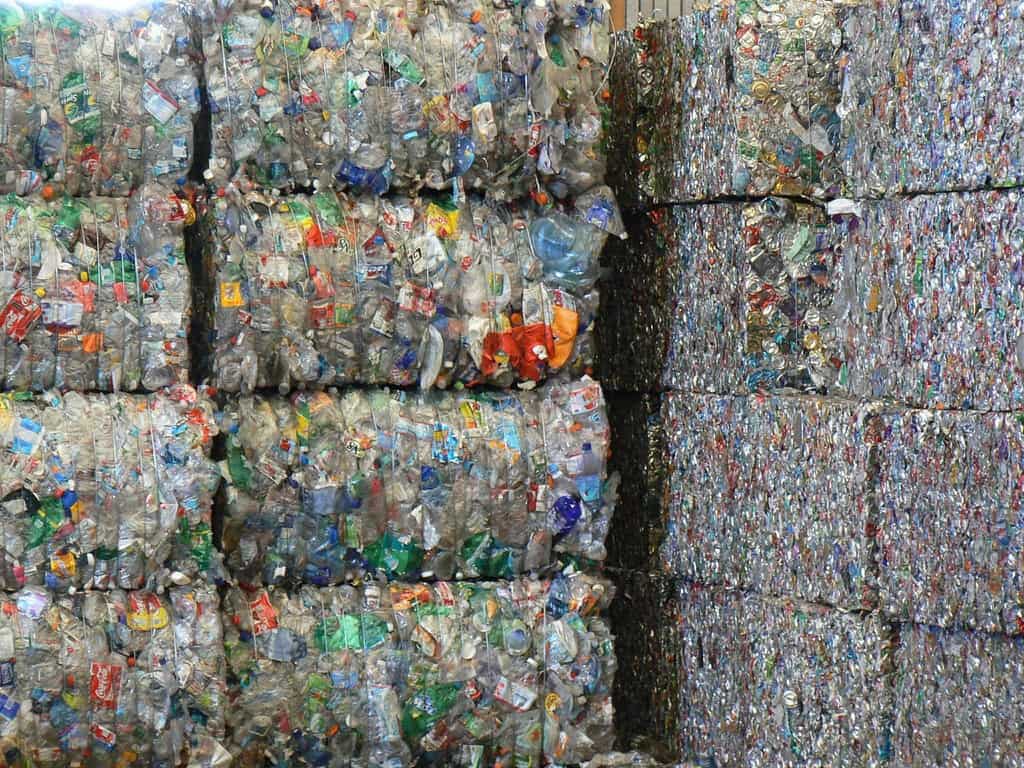
Cover Image: Bales of Recyclables, Walter Parenteau via Flickr

Plastic is rubbish: why waste valuable resources on single-use throwaway items?

9 Comments/in Living With Less Waste, Plastic Free Living/by Lindsay (Treading My Own Path)

I don’t like plastic. I avoid buying it and I talk a lot about plastic-free living on the blog, so I thought it might be useful to provide some background information on plastic, and some of the reasons why I decided to give it up in the first place. There’s so many reasons why plastic is bad (for our health, for the environment, for our sanity) and I’m not going to talk about them all now. I’ll stick to just one – waste.

Plastic is made from non-renewable fossil fuels, either oil or natural gas. It doesn’t just come from the magic ‘plastic factory’. And the problem with this is that once the non-renewable fossil fuels run out, we don’t have any more. But it’s not even the running out that matters. The problems will begin when production hits its maximum rate, because after this oil prices will increase and production of oil-based industries (transport, agriculture, production) will begin to decline, and continue to do so. And if you think that’s way in the future, think again. It’s happening now. Some people think it may have already happened (in 2006). Have you noticed the prices of fuel at the petrol pumps seem to be on an ever-upward spiral?

oil production

This graph shows the discovery of oil deposits and oil production over time. I found it on Wikipedia but if you search the internet for ‘oil production’ images you’ll find hundreds of similar graphs.

There are, of course, people who claim that peak oil (which is what it’s called, by the way – the point of maximum production) will never happen, or at least for a long long time. But whether they’re wrong or right isn’t the point. Both sides agree that oil and fossil fuels in general are a valuable resource that we rely on to keep civilization going. In fact, we are completely dependent on them.

So if oil is such a valuable commodity, why are we using it to make cheap, single-use, disposable and throwaway items?

spoon

Design: Centre for Artistic Activism

There’s no doubt that plastic can be useful, for example in healthcare, medicine and construction. The problem is that it’s become totally ubiquitous and is used for everything – and a lot of these uses are completely unnecessary and a waste of a valuable resource.

The other important thing to remember is that every little bit of plastic ever produced since that first piece is still around. This stuff doesn’t decompose, instead it creates huge amounts of landfill – or worse, makes its way to the oceans where it’s unwittingly ingested by unsuspecting sea life.

So why not cut down the amount of rubbish we sent to landfill and save the fossil fuels for the stuff that we actually need like fuel? Why not stop using fossil fuels so wastefully to make disposable items that we’re just gonna throw away?

But what about plastic recycling?

Plastic recycling is a bit of a con. It makes us feel better about our consumption, because we can put our empty plastic containers in the recycling bin and feel that they will be magically transformed into new plastic containers. But that isn’t what happens. Plastic isn’t technically recycled, it’s downcycled. This means it’s made into a product with inferior quality or functionality. Secondly, not all plastic is equal, and different plastics are processed differently. For some types it is very difficult to make back into useful products. Thirdly, just because plastic has the potential to be recycled, it doesn’t mean that your local council actually recycles it. What happens to your plastic depends on the number on the bottom, written inside what is thought of, ironically, as the recycling arrow.

plasticsymbolsjpg

Some of the numbers you find on the bottom of plastic containers, which tell us what type of plastic the container is made of and whether/how it will be recycled.

There are 7 types of plastic, which are numbered 1 – 7, and not all are commonly recycled. (Technically 1 – 6 are different specific types, whereas 7 is a collection called ‘other’.) It’s easy to assume that if there’s a recycling arrow on the bottom of a container then it will be recycled, but actually only types 1 and 2 are commonly recycled. My local council collects types 1,2, 3 and 5. Any other type of plastic collected in my area is heading to landfill. You can check with your local authority to find out which types they will recycle.

Think it’s not too much of an issue? Here’s some figures for you.

  • In the USA in 2010, 31 million tons of plastic waste was generated and only 8% of plastic was recycled. Source: US Environmental Protection Agency
  • Just under half of this plastic (14 million tons) was food containers and food packaging. Source: US Environmental Protection Agency
  • In Australia in 2007, almost 4 billion lightweight single use plastic bags were used. Almost 3 billion of these came from supermarkets. Source: Australian Government
  • In Australia in 2002, 50-80 million of these bags became litter in the environment. Source: Australian Government
  • The amount of petroleum used to make a single plastic bag could drive a car 11 metres. Source: Australian Government
  • In the UK, 3 million tonnes of plastic waste is generated every year. 11% of household waste is plastic, and 40% of this is plastic drinks bottles. Source: University of Cambridge
  • In the UK in 2005, 414,000 tonnes of plastic waste was recycled (around 20% of total plastic waste). Of this, 324,000 tonnes of plastic was exported to China, over 8000km away, for recycling. Source: WRAP UK

So a large part of this plastic problem comes from food and drink packaging, which has been driven by our desire for ‘convenience’ and made us into a ‘throwaway society’. But it doesn’t need to be like this – a lot of this packaging is avoidable, and with very little effort. Whilst I don’t want to list of all the things you can do (it would triple the size of this post! – so I’ll save it for another time), most of the solutions are really quite simple. Taking your own bags to the supermarket reduces the need for disposable plastic bags; using tap water (you can treat it with a water filter to remove the chemicals) and carrying a water bottle from home stops the need to buy bottled water; and buying your fruit and vegetables loose rather than prepackaged in cellophane wrap and polystyrene trays cuts out heaps of wasteful and unnecessary packaging. And just refusing to buy things that are ridiculously over-packaged.

Let’s face it. Plastic is rubbish.

ThatsAWrap_Banner_550px

Cover Image: Bales of Recyclables, Walter Parenteau via Flickr

[leadpages_leadbox leadbox_id=1429a0746639c5] [/leadpages_leadbox]

https://treadingmyownpath.com/wp-content/uploads/2015/08/Bales-of-Recyclables-Walter-Parenteau-via-Flickr.jpg 768 1024 Lindsay (Treading My Own Path) https://treadingmyownpath.com/wp-content/uploads/2019/06/logo.png Lindsay (Treading My Own Path)2013-05-10 13:40:432017-08-30 17:53:46Plastic is rubbish: why waste valuable resources on single-use throwaway items?

Sustainability and ceramic cups at the Mosman Park EcoFair

4 Comments/in Living With Less Waste, Out & About, Plastic Free Living/by Lindsay (Treading My Own Path)

This Saturday my boyfriend and I went to the Mosman Park EcoFair, which was just a few suburbs over from where we live. The fair takes place in the beautiful grounds of St Luke’s Church and community garden, and was a mix of stalls selling organic and fairtrade food, traders selling eco goods, seedlings, vintage clothing and all things green, and some great demonstrations and workshops. Combined with the perfect weather and fantastic atmosphere it was a really fun afternoon out.

I saw a great ‘Food Theatre’ workshop run by Chris Ferreira from The Forever Project and Hannah Sfornica from A Foodly Affair which combined sustainable (and water-wise) gardening with cooking and talked about the importance of good soil, the importance of organic and locally sourced food, how what you eat is made from what you put in the soil and your body is fueled from what you eat. Sustainability and real food, two of my favourite subjects! Hannah made the most amazing raw pumpkin soup for the audience to try. Both Hannah and Chris are fantastic presenters, and Hannah is both an inspiration and a wealth of knowledge and practical advice regarding ‘mindful’ eating, as she likes to call it. I would thoroughly recommend attending the workshops they run if you’re in the Perth area.

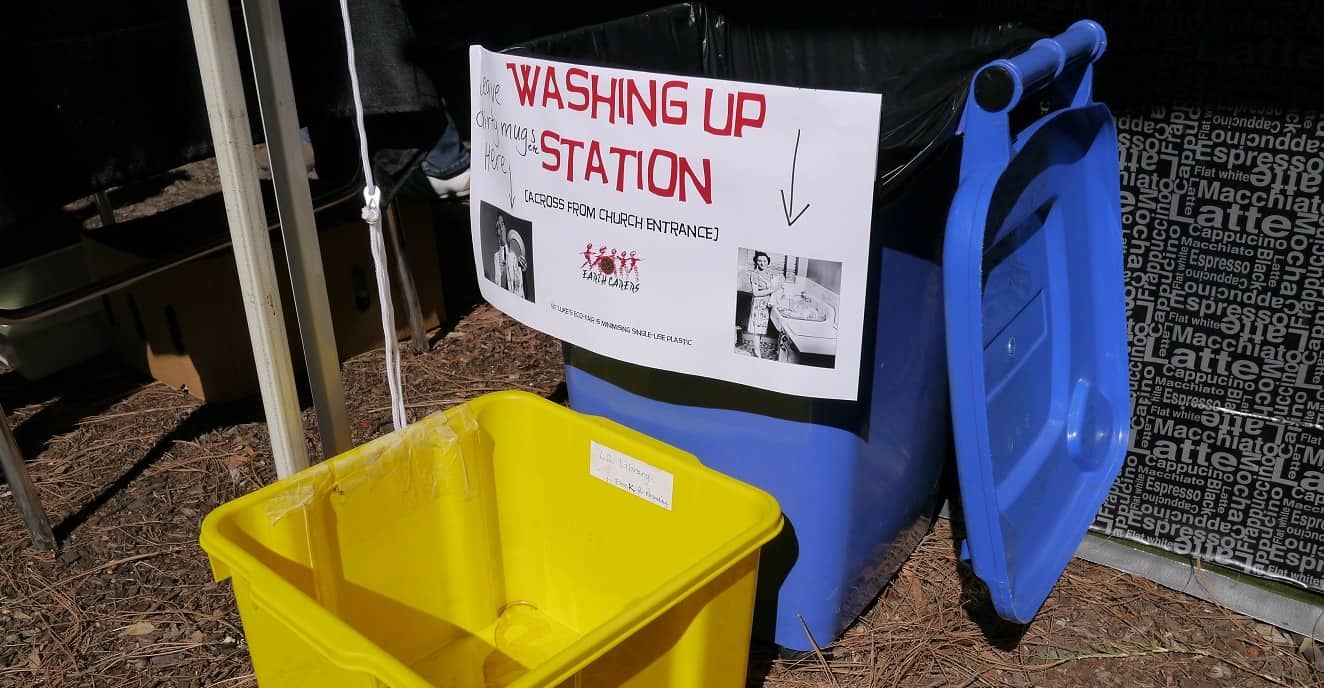
But my absolute favourite thing about the fair was that there was no disposable single-use plastic – no plastic bags, no takeaway cups, no plastic straws, no plastic water bottles and no plastic throwaway plates. And this was achieved in such a simple way – by having a washing-up station! All of the food stalls used ceramic plates and mugs, provided by the Church or sourced from various op shops, which were happily washed up by a team of dedicated Western Earth Carers volunteers.

mosmanpark2jpg
washingupsignbmpjpg
cupsjpg

It’s such an obvious concept really, doing the washing up, and the people who volunteered seemed to be having a great time in the sunshine, chatting to everyone that passed by and doing an awesome job of raising awareness of single-use plastic, and how easy it is to avoid with just a little bit of thought and effort.

And the result of their efforts was fantastic. The organizers were told they would need 20 bins for the size and length of the event (with over 65 stalls plus other activities over 6 hours) but instead, for the whole day, the waste that was generated filled just three recycling bins and one landfill bin. Result!

[leadpages_leadbox leadbox_id=1429a0746639c5] [/leadpages_leadbox]

https://treadingmyownpath.com/wp-content/uploads/2013/05/mosmanecofair1jpg1-e1368431051105.jpg 688 1324 Lindsay (Treading My Own Path) https://treadingmyownpath.com/wp-content/uploads/2019/06/logo.png Lindsay (Treading My Own Path)2013-05-08 16:44:492017-08-30 17:51:33Sustainability and ceramic cups at the Mosman Park EcoFair

The perils of takeaway coffee

0 Comments/in Living With Less Waste, Plastic Free Living/by Lindsay (Treading My Own Path)

I’m a coffee fan, and I like to treat myself to a proper coffee-shop coffee now and then. Nothing beats a decent cup of coffee served by a barista – and unless you have a coffee machine in your kitchen that cost the same as a small car, it’s just not something you can recreate at home.

I’m generally more of a dine-in kinda girl. I like the experience of just sitting there, maybe reading the paper, chatting with friends and family, watching the world go by. But there are times when I get takeaway. When there’s no tables, for example. Or no papers. Or I want to take my coffee with me on the train, to my desk, or to the park.

I’ve always been suspicious of takeaway coffee cups. Even before I knew about plastic, I wasn’t a fan. With their lids that often don’t fit properly, their flimsiness (squeeze too hard and you’re wearing the coffee) and their non-recyclability, nope, I wasn’t a fan.

But bio-degradable takeaway cups? Now they seemed different. Made of renewable resources, and with their promises of sustainability and compost-ability, they seemed to be the answer.

But then I looked into it a little more.

From a environmentally-responsible and sustainability point of view, traditional takeaway coffee cups are bad. At worst, they are made of styrofoam (polystyrene), which is a plastic foam packaging that is rarely accepted for recycling. Even the takeaway coffee cups that are seemingly made from paper or card contain plastic – they have a polyethylene lining – which makes them non-recyclable. (How else could they be waterproof?!) And plastic is made from non-renewable fossil fuels like oil.

So what about biodegradable takeaway coffee cups? Well these are free of plastics made from fossil fuels. One company that make these cups is BioPak: instead of using plastic from fossil fuels, they use a plastic called PLA made from cornstarch, and state ‘compostable and biodegradable’ on the packaging.

However, actual compost-ablility of some of these brands is questionable. I have friends who have tried composting these ‘eco’ cups and putting them in worm farms, and months later they are still completely intact. But even for those brands which will compost, they won’t break down if they’re sent to landfill. The conditions of landfill sites mean there is no oxygen, so microbes cannot break down anything that would normally be biodegradable. There’s nothing sustainable about using a compostable cup unless you are actually going to compost it. In fact, on their website BioPak acknowledge that their cups will only break down in a commercial compost facility, and are more likely to end up in landfill.

So the main benefit to using these cups is that they aren’t made of plastic from fossil fuels. They use other virgin materials though, it’s likely they still use fossil fuels in their manufacturing processes, and they still cause the same problems with landfill. And another interesting thing I learned from the BioPak website, is that PLA is made from genetically modified corn. So this raises other environmental issues. Whatever they may claim, it’s hard to think of these cups as a real environmentally responsible solution.

But what about when you want to buy a coffee?

Ask yourself, are you really in a hurry? So much so that you can’t spare five minutes to sit down, drink your coffee and then go on your way? I’ve seen so many people buy a takeaway coffee and they’ve drunk the entire thing on the two minute walk back to the office before they’re even back at their desk.

Oh. You are in a hurry.

So what’s the solution?

Buy a reusable takeaway coffee cup.

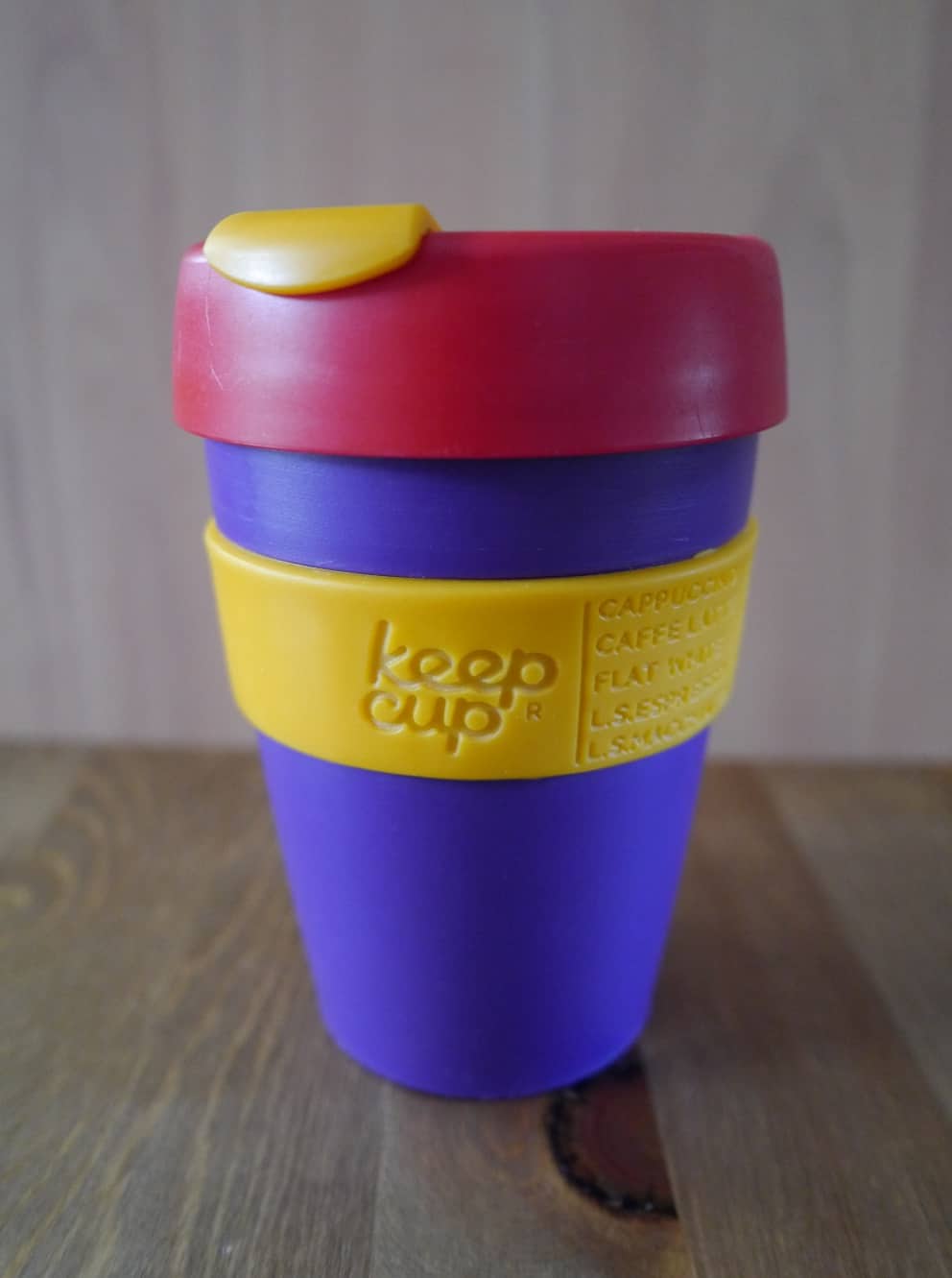
keepcupjpg

There’s a few different brands on the market, but I bought a KeepCup. Yes it’s plastic, but it’s durable and I’ve used it numerous times. (I bought it after I gave up single-use disposable plastic, but before I started questioning the other plastic in my life.) I love it because it’s the same size as the standard takeaway coffee cup sizes, meaning it is accepted everywhere, I don’t get short-changed at the shop, it keeps your coffee warm longer than disposable takeaway coffee cups do, and it’s waste free!

keepcupsjpg

A sustainable coffee-shop run at the office! (And the cardboard tray has been reused too – extra points!)

I would love it if they brought out a stainless steel version, but they haven’t as yet. If you don’t want to buy plastic, there are other companies which sell ceramic and stainless steel alternatives, although the sizes aren’t standardised.

I aim to take my KeepCup with me whenever I go out. Even if I don’t want a coffee, it’s useful for using at water dispensers to avoid plastic disposable cups. And what if I want a coffee and I’ve forgotten my cup? I dine in.

[leadpages_leadbox leadbox_id=1429a0746639c5] [/leadpages_leadbox]
https://treadingmyownpath.com/wp-content/uploads/2014/06/biocup.jpg 900 1218 Lindsay (Treading My Own Path) https://treadingmyownpath.com/wp-content/uploads/2019/06/logo.png Lindsay (Treading My Own Path)2013-05-03 16:08:002017-08-30 17:48:03The perils of takeaway coffee

How to Make Labne (Cheese) and Greek-style Yoghurt

2 Comments/in How to..., Living With Less Waste, Real Food, Recipes/by Lindsay (Treading My Own Path)

I recently started making my own yoghurt (you can read about it in this post). The next part of my yoghurt adventure is making Greek-style yoghurt and labne. The great news is that making it requires no additional ingredients and no cooking either!

In case you’ve never heard of it before, labne (also spelled labneh or lebni) is a simple fresh-tasting cheese made from yoghurt that originates from the Middle-East. It is made by straining the yoghurt to drain off the liquid (whey) and leave the solids (curds). The longer that yoghurt is strained, the firmer the consistency. Labne can be made after 4-6 hours and up to 3 days; thickened Greek-style yoghurt is the intermediate product formed after straining for 2-3 hours.

How is this different to shop-bought Greek-style yoghurt?

There’s no additives! Real natural yoghurt is fairly thin and runny. Draining the liquid off is the natural way to make the yoghurt thicker, but the final volume is much smaller. 1 litre of milk will make 700ml yoghurt, which if strained for several hours will result in around 350ml Greek yoghurt. To save money, instead of straining yoghurt, manufacturers may leave the whey and use additives to bulk and thicken the yoghurt artificially, including gums, gelatine, starch and milk powder. In Australian supermarkets it is almost impossible to find any yoghurt for sale without one or more of these additives. In the UK the market is much better and natural Greek-style yoghurt is more readily available.


Let’s get making!

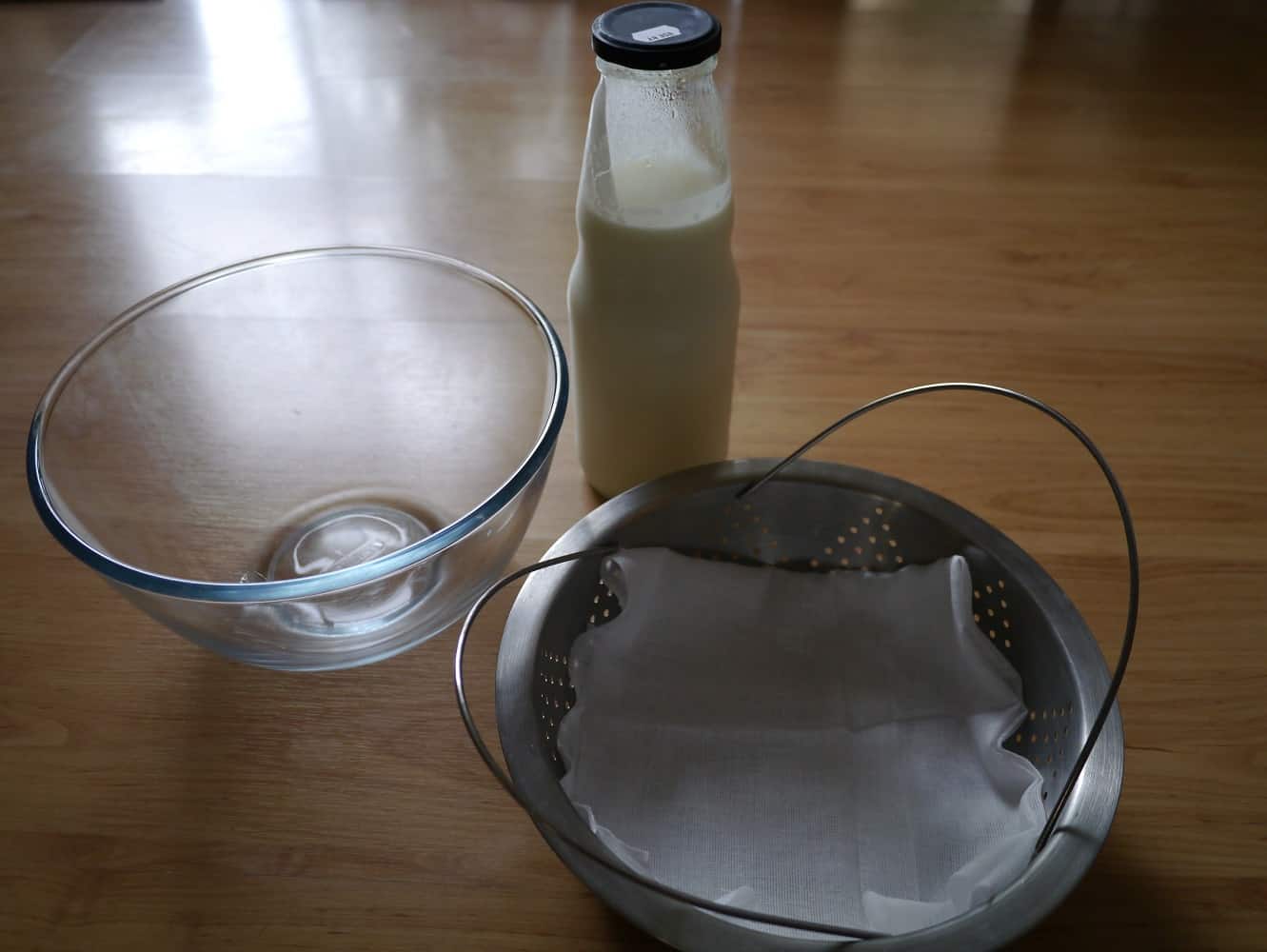
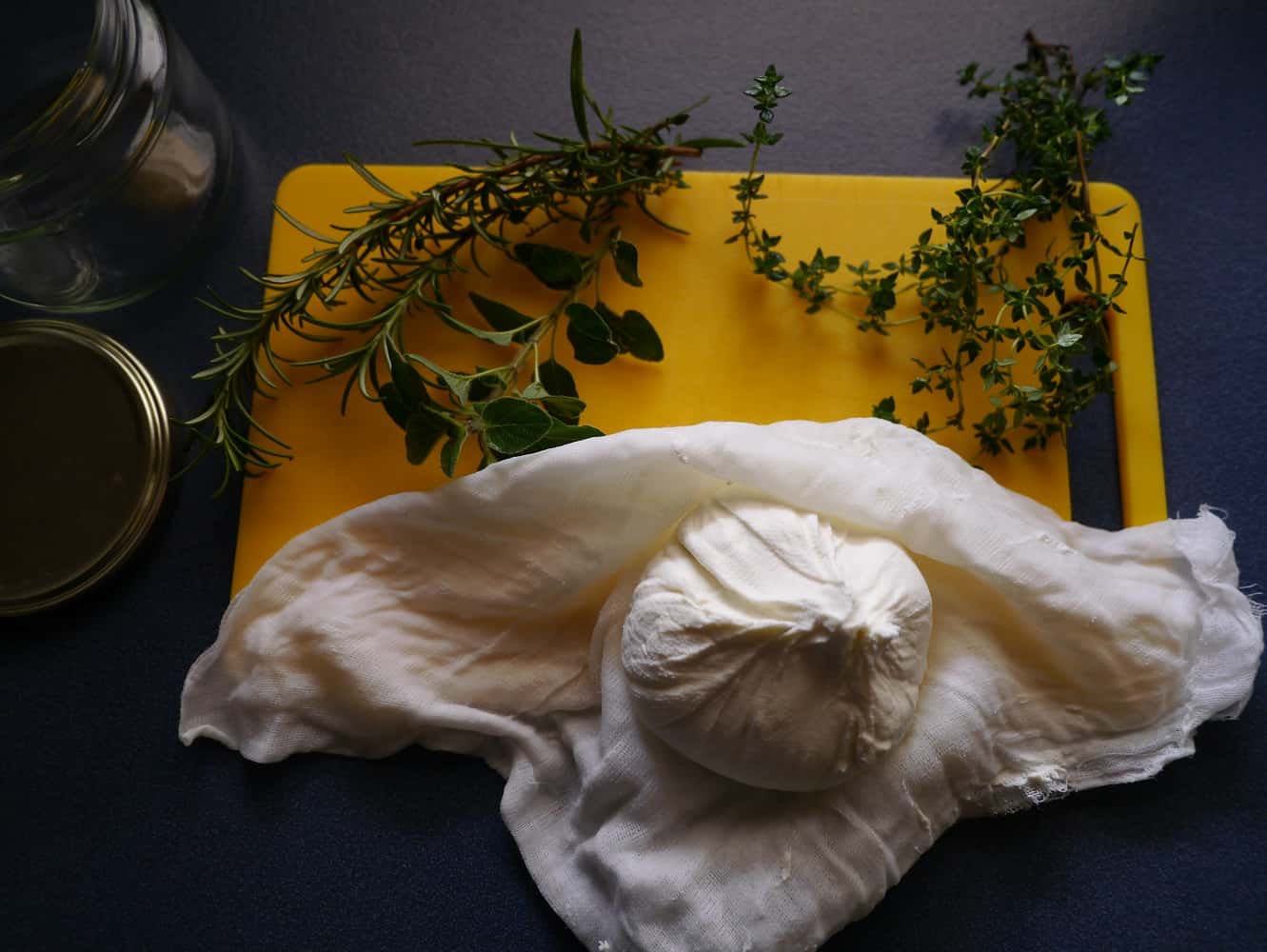
You will need: 1 litre yoghurt, muslin (cheesecloth), a bowl and a sieve or colander. If you don’t have any muslin, you could improvise with other (very clean) material such as an old sheet or tea towel.

How to make thick Greek-style yoghurt

Fold the muslin so it is 4 layers thick and place in the colander. Place the colander over a bowl.

labne1jpg

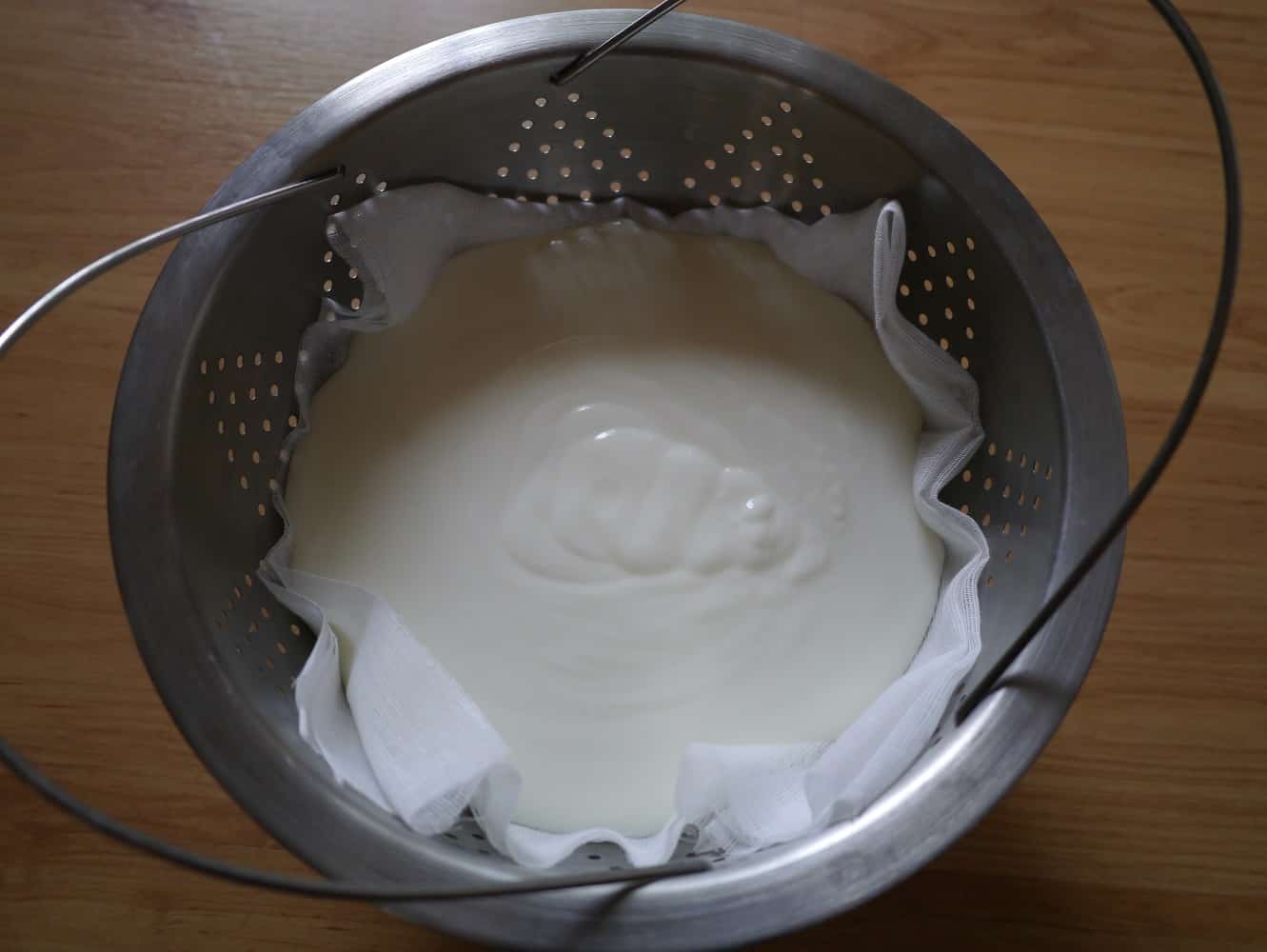
Pour the yoghurt onto the muslin. The whey will begin dripping into the bowl below straight away.

labne2jpg

labne3jpg

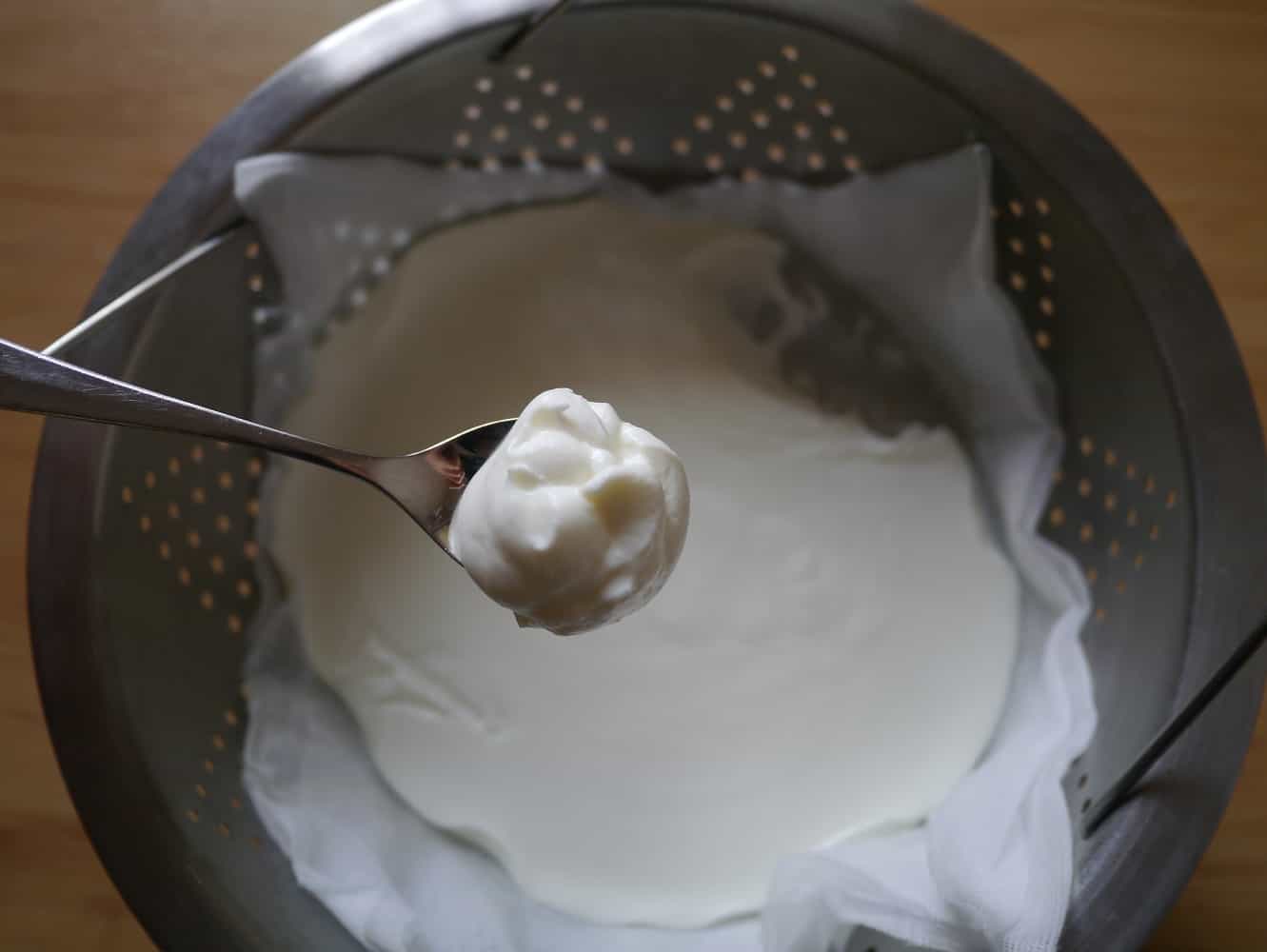
Leave for 2-3 hours until thickened.

labne4jpg

Place in a glass jar and store in the fridge. The yoghurt will last for several days.

Note: if your room is not too warm it is fine to leave out on the side whilst the whey drips out. If it is a particularly hot day or you would prefer, place the bowl in the fridge instead of leaving at room temperature.

How to make labne

This is a lengthier version of the previous recipe, and it starts in an identical manner. By leaving the yoghurt for longer you will make labne instead of Greek-style yoghurt.

Fold the muslin so it is 4 layers thick and place in the colander. Place the colander over a bowl.

Pour the yoghurt onto the muslin. The whey will begin dripping into the bowl below straight away.

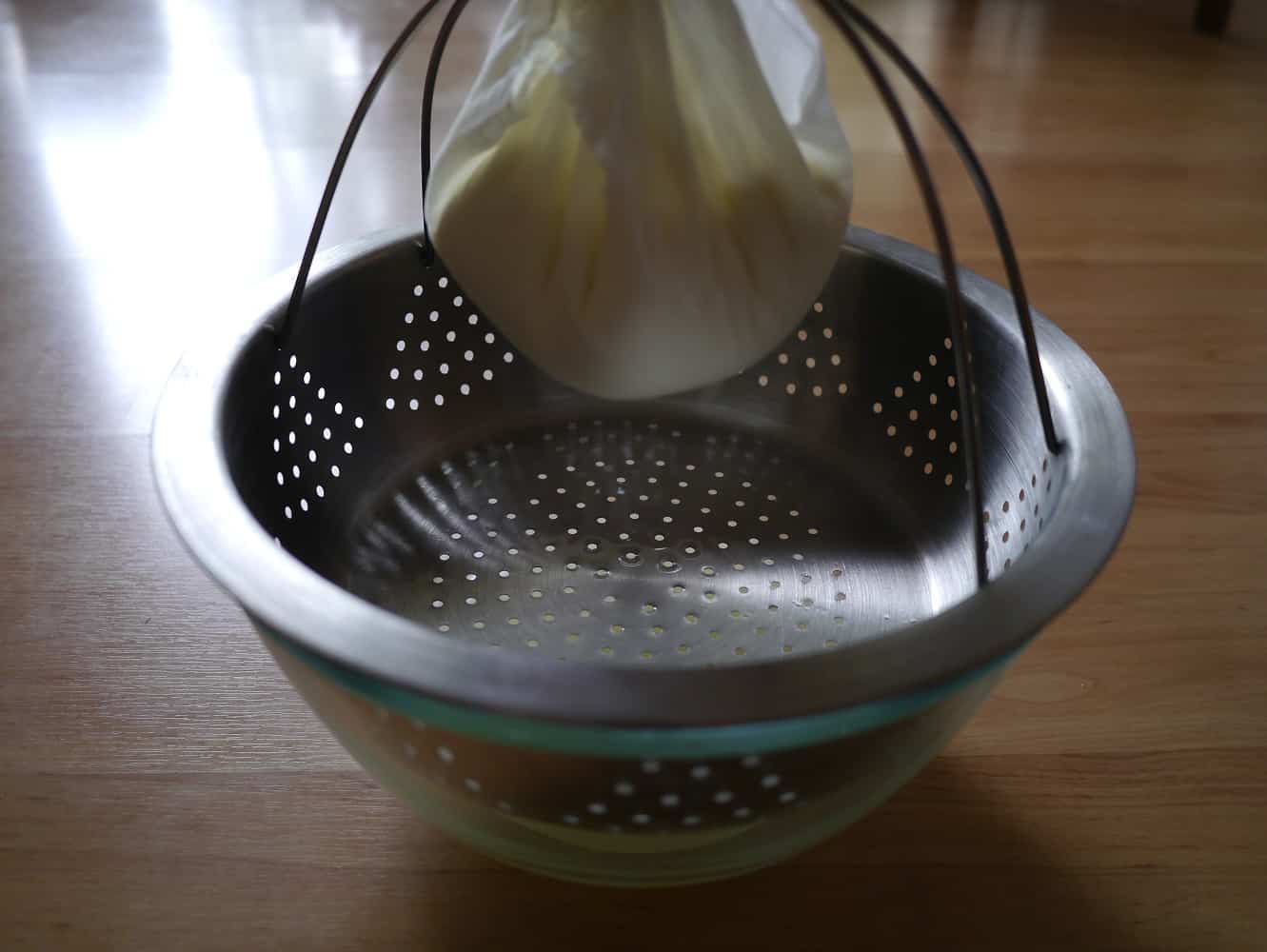
After 2-3 hours, take the four corners of the muslin to make a parcel, and hang over the colander to aid dripping. I used a clothes peg.

labne8jpg

labne6jpg

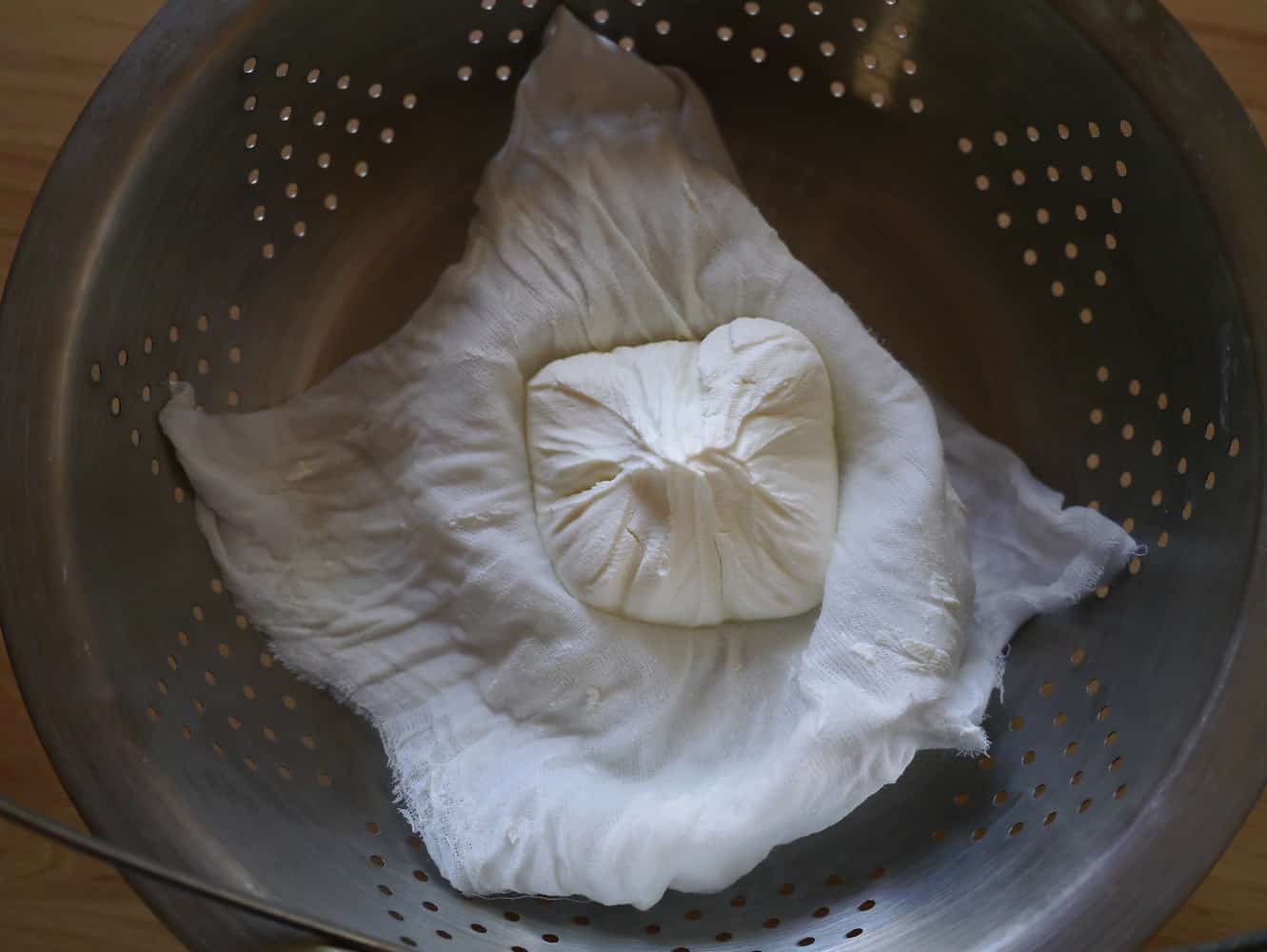
After 6 hours, the yoghurt will have thickened enough to make a soft cheese. You can leave this longer if you want the cheese firmer – leave for up to 2 days in the fridge to make a really firm labne.

labnes1jpg

This is how my yoghurt looked after straining for 6 hours.

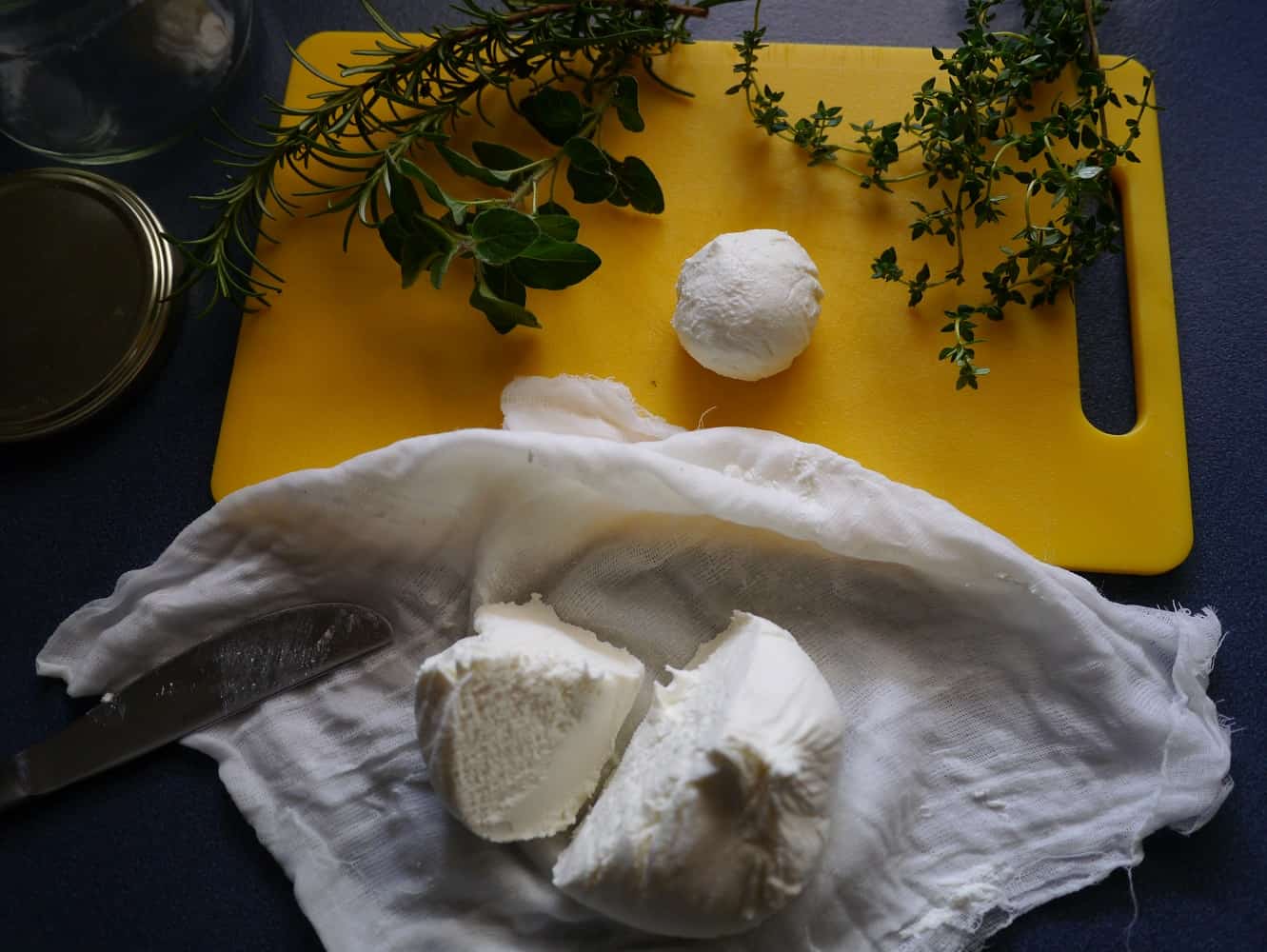
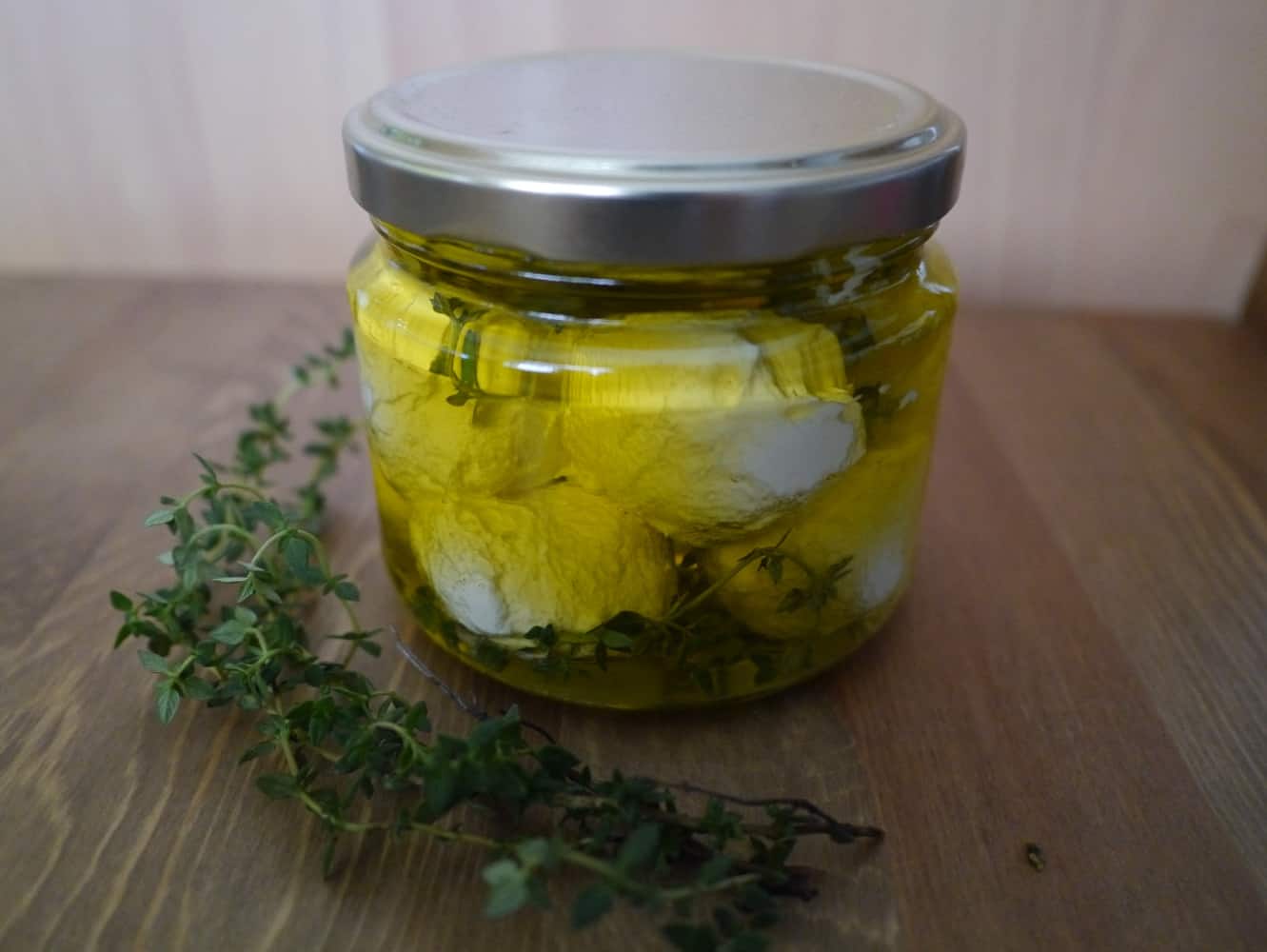
When you are happy with the consistency, remove the curd ball from the muslin. You can eat it straightaway or store covered in olive oil in a jar in the fridge – it will keep for up to a week.

Storing your labne with herbs and olive oil:

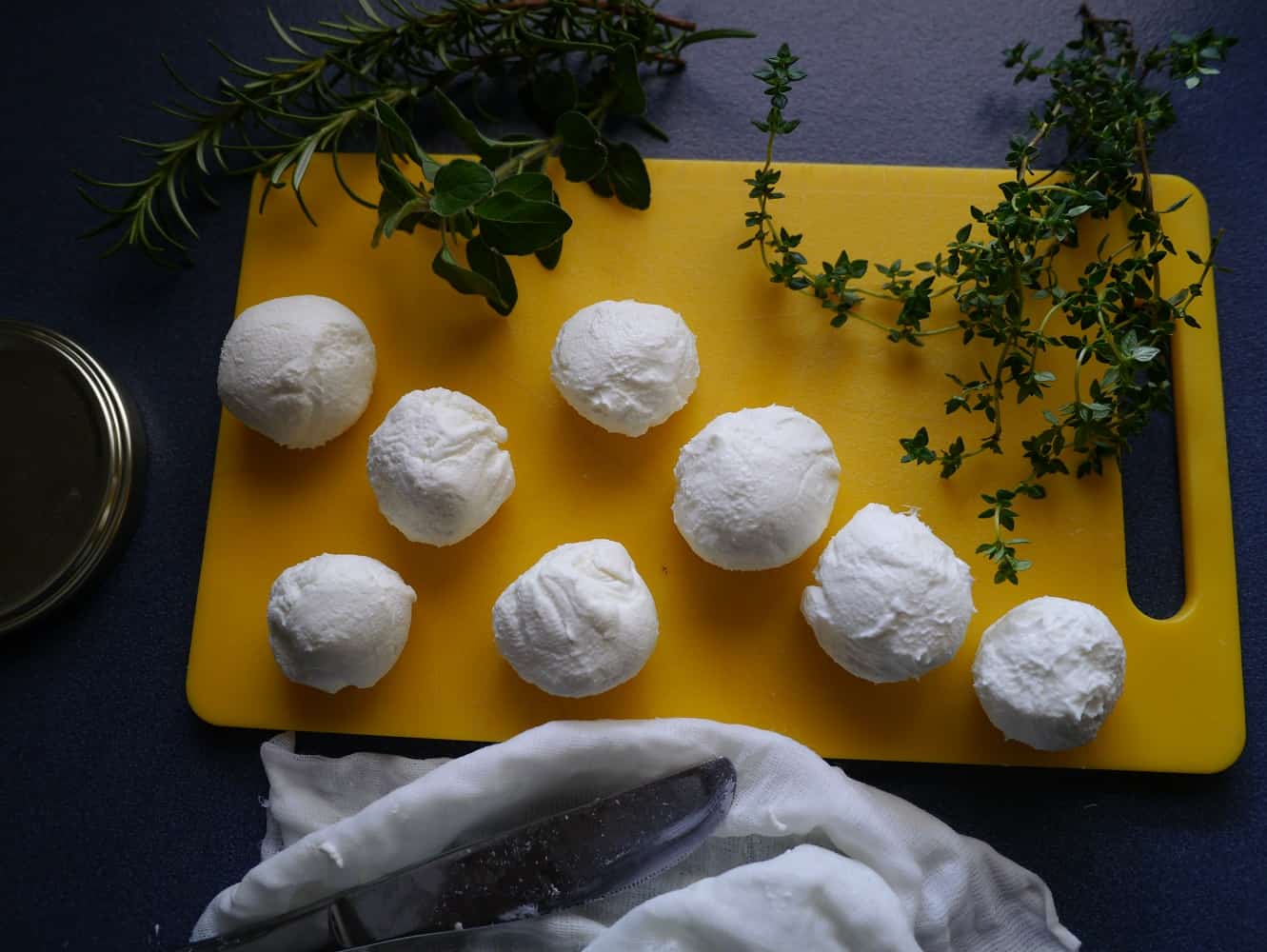
You will need a clean glass jar, olive oil and some fresh herbs.

labnes2jpg

Cut the curd into pieces and shape into walnut-sized balls with your hands.

labnes3jpg

labnes4jpg

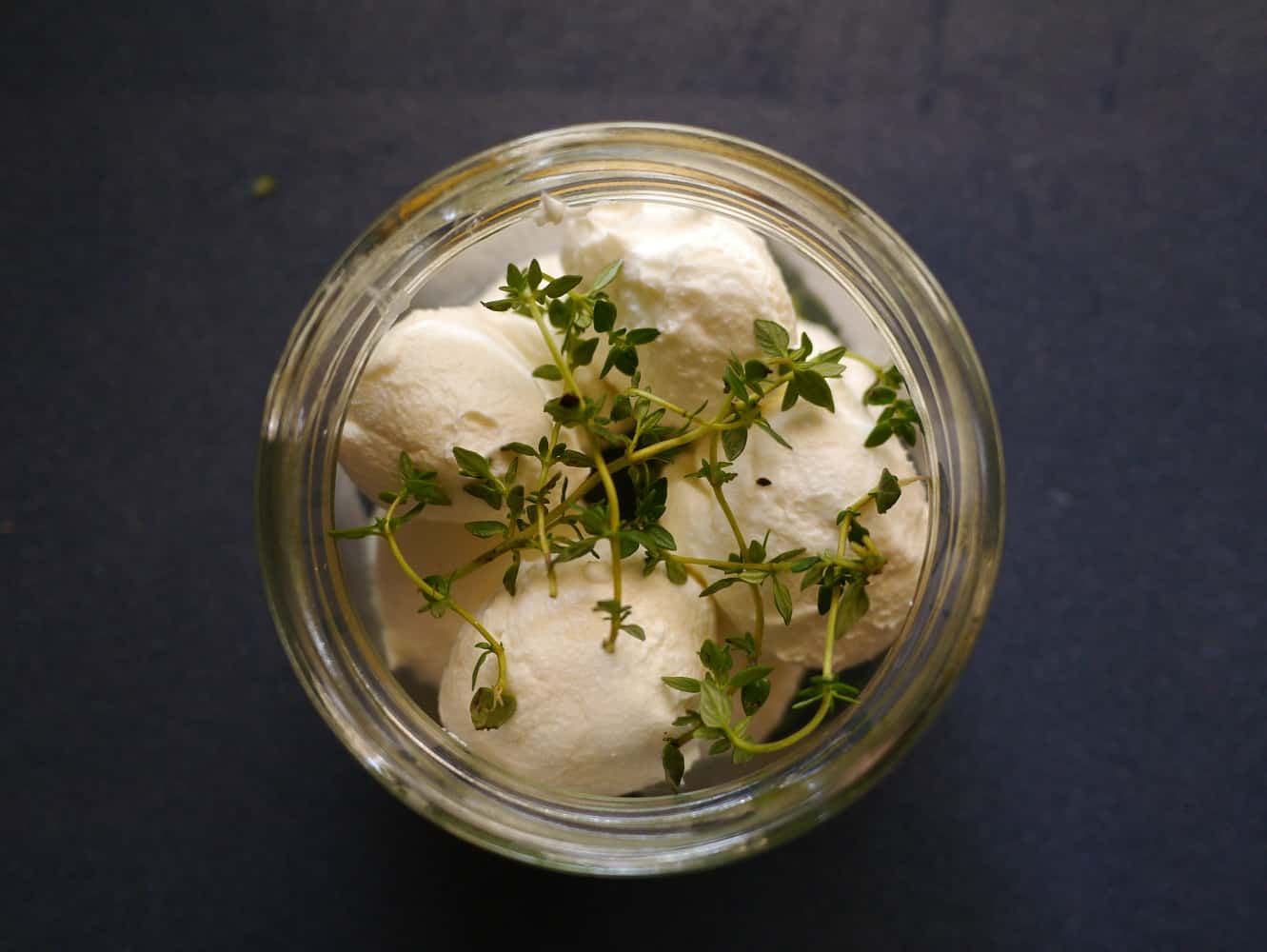
Add the balls to a clean jar along with some herbs, and cover with olive oil.

labnes5jpg

labnes6jpg

labnes7jpg

This will keep in the fridge for up to a week.

Using what’s left – the whey

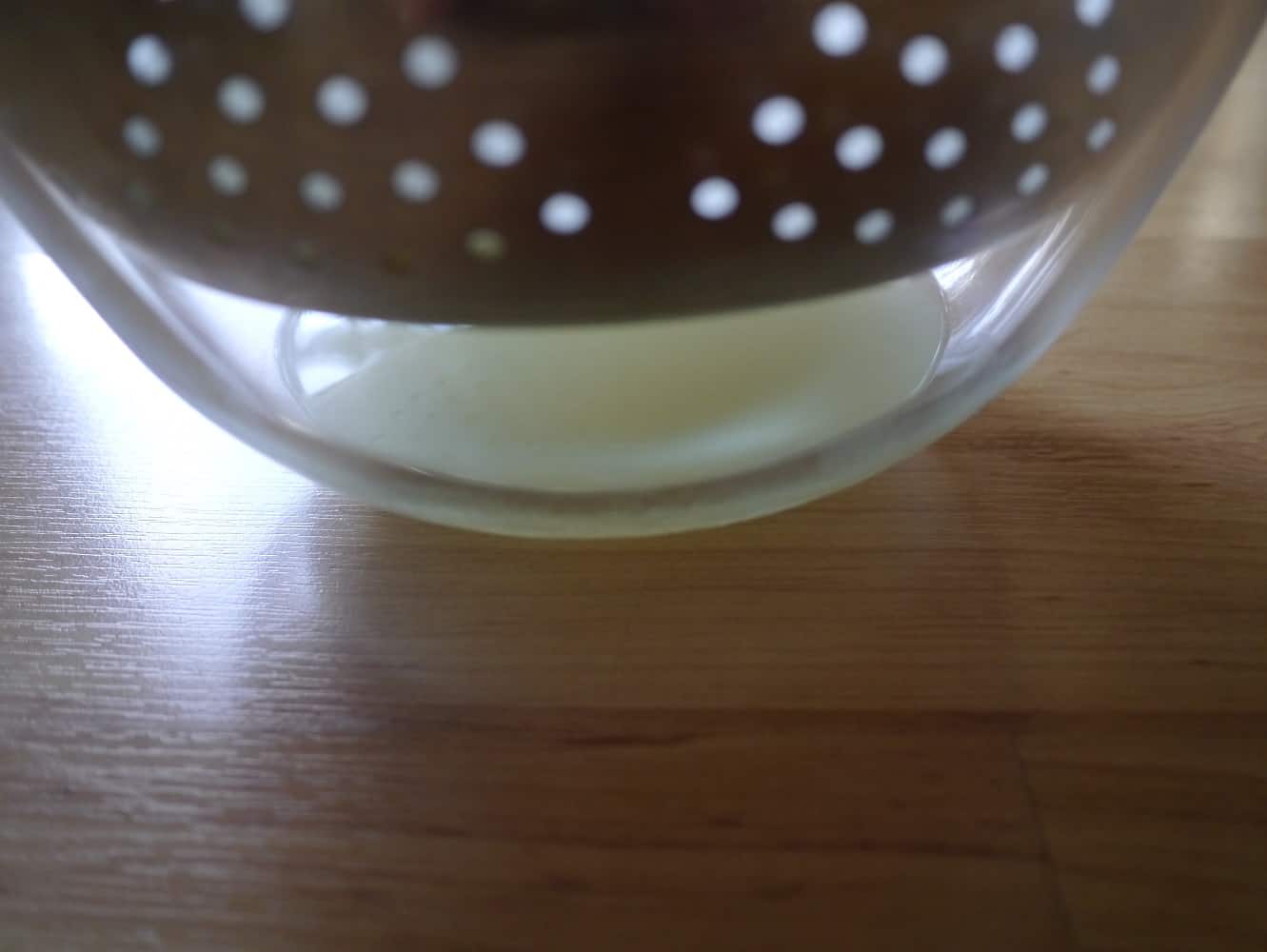
I used 700ml yoghurt to make my labne, which made enough cheese to fill one small jar, and I was left with 350ml of whey.

wheyjpg

This cloudy yellow watery liquid (which has a similar taste to yoghurt) contains proteins, minerals such as calcium, potassium and B2 as well as friendly lactobacteria, making it a great probiotic. Don’t throw it away!

So…what should you do with it then? Well. It can be drunk as a probiotic drink. It can be used to replace the water when making bread products, or to replace the buttermilk in other recipes. You can use it to soak lentils and grains. Apparently. I wouldn’t like to recommend any of these things without trying them out myself first though, so expect a follow-up blog post in the coming weeks with some helpful tips with what to do with all the leftovers! In the meantime, you can leave it in the fridge in a sealed glass jar for several weeks.

[leadpages_leadbox leadbox_id=1429a0746639c5] [/leadpages_leadbox]
https://treadingmyownpath.com/wp-content/uploads/2013/04/labnes5jpg.jpg 1000 1331 Lindsay (Treading My Own Path) https://treadingmyownpath.com/wp-content/uploads/2019/06/logo.png Lindsay (Treading My Own Path)2013-05-01 15:35:092018-08-21 09:27:39How to Make Labne (Cheese) and Greek-style Yoghurt

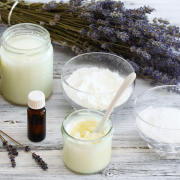
Deodorant: why natural is better and how to make your own!

29 Comments/in Health & Wellness, How to..., Living With Less Waste, Plastic Free Living, Simple Living/by Lindsay (Treading My Own Path)

Before you roll your nose up at the idea of making your own deodorant, let me tell you that is exactly how I was about a year ago. So what changed? Why would I want to make my own deodorant anyway?

Well… the first thing was that I became increasingly interested in what ingredients go into beauty products. I learned that some of the ingredients used in regular products are not good. And when I say ‘not good’, we’re talking carcinogens, neurotoxins, irritants, even pesticides.

Conventional anti-perspirant deodorants (the kind you buy in chemists, supermarkets and beauty stores) contain, among other things, aluminium salts. These have been linked to breast cancer. There is a LOT of info about this on the web; studies have been carried out that ‘prove’ they do with just as many that ‘prove’ they don’t. Whilst the verdict is still out, why take the risk?

The second thing that made me want to stop using conventional deodorant was learning about the way aluminium salts work. Aluminium salts are what makes a deodorant ‘anti-perspirant’, and they work by blocking the pores, or more specifically the sweat ducts. Sweat is still produced by the sweat ducts, but it cannot escape. Sweating is a natural process that has two useful functions – it regulates our body temperature by cooling us down, and also allows us to excrete toxins. (The skin is an excretory organ.) If we’re blocking our sweat ducts, then the toxins cannot be released, so where are they going? My view is, that if the body was designed to allow us to sweat, it’s probably best to let it do it’s thing.

These two reasons were enough to convince me to stop using conventional deodorant. However, I had mixed results with store-bought natural deodorants. They are often expensive, almost always come in plastic packaging, and I would say half of the ones I’ve tried don’t actually work. Let’s face it, the reason we use deodorant is to prevent ourselves from smelling bad. I’m willing to give up aluminium salts, but only if I’m exchanging it with something that will actually work. Natural and useless has no appeal.

So not being completely satisfied with the natural products on the market, I contemplated the concept of making my own. But what actually convinced me to make my own deodorant was meeting other people who made their own deodorant…and didn’t smell! For me that was the final reassurance I needed to jump in and give it a go…

Super Simple DIY Deodorant

This is a really simple recipe that only requires 3 ingredients and will take you about 5 minutes. What’s even better is that the ingredients are cheap, being things that you’d find in your grocery cupboard and are all safe enough to eat!

Makes enough to fill a small jar. Effective enough to last all day without reapplying!

Ingredients:

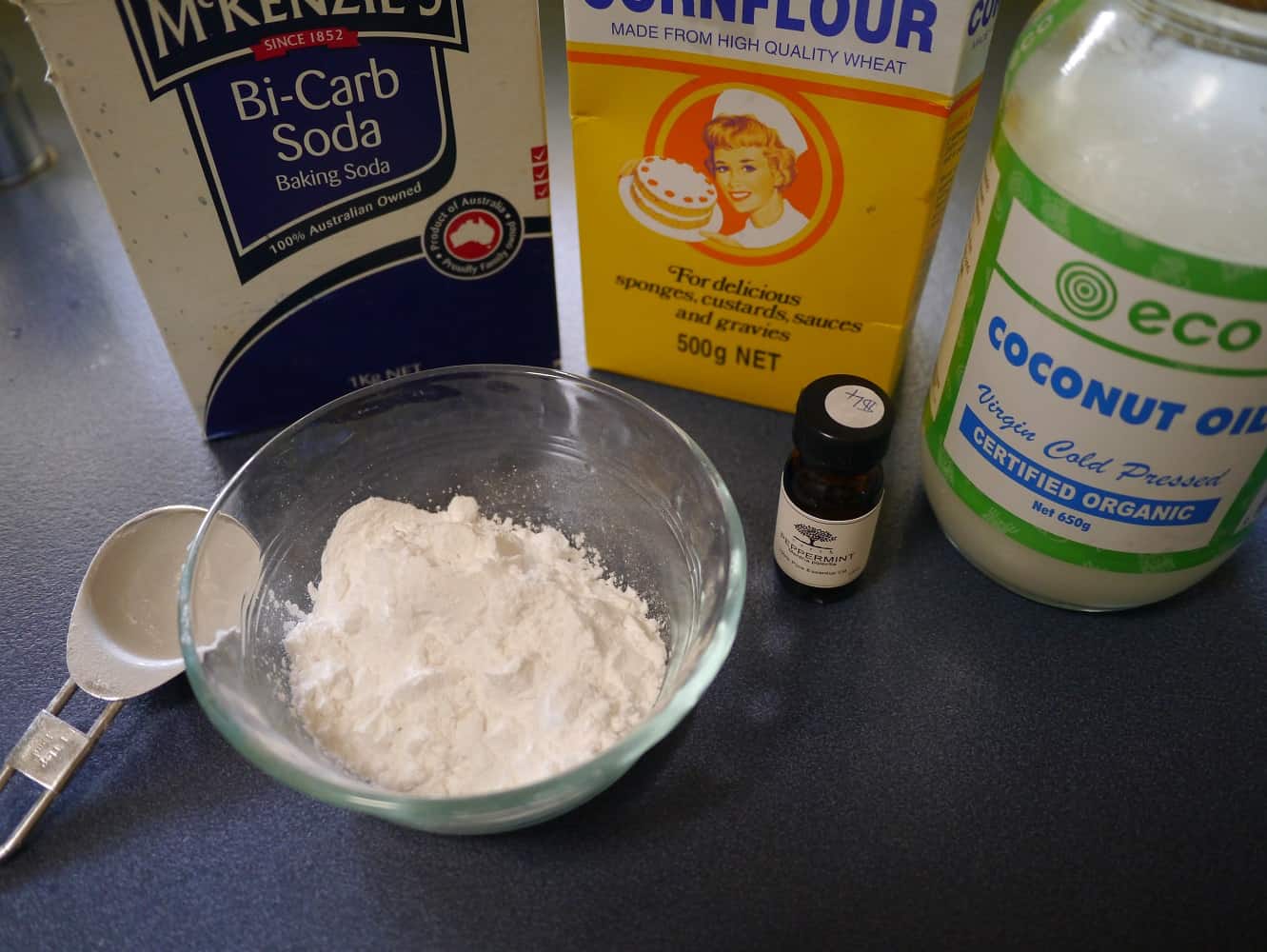
1 tbsp bicarb soda
4 tbsp cornflour / arrowroot powder (sometimes called tapioca flour)
2-3 tbsp coconut oil
optional: essential oils (therapeutic or food grade)

Mix bicarb soda and cornflour together in a bowl.

deo2jpg

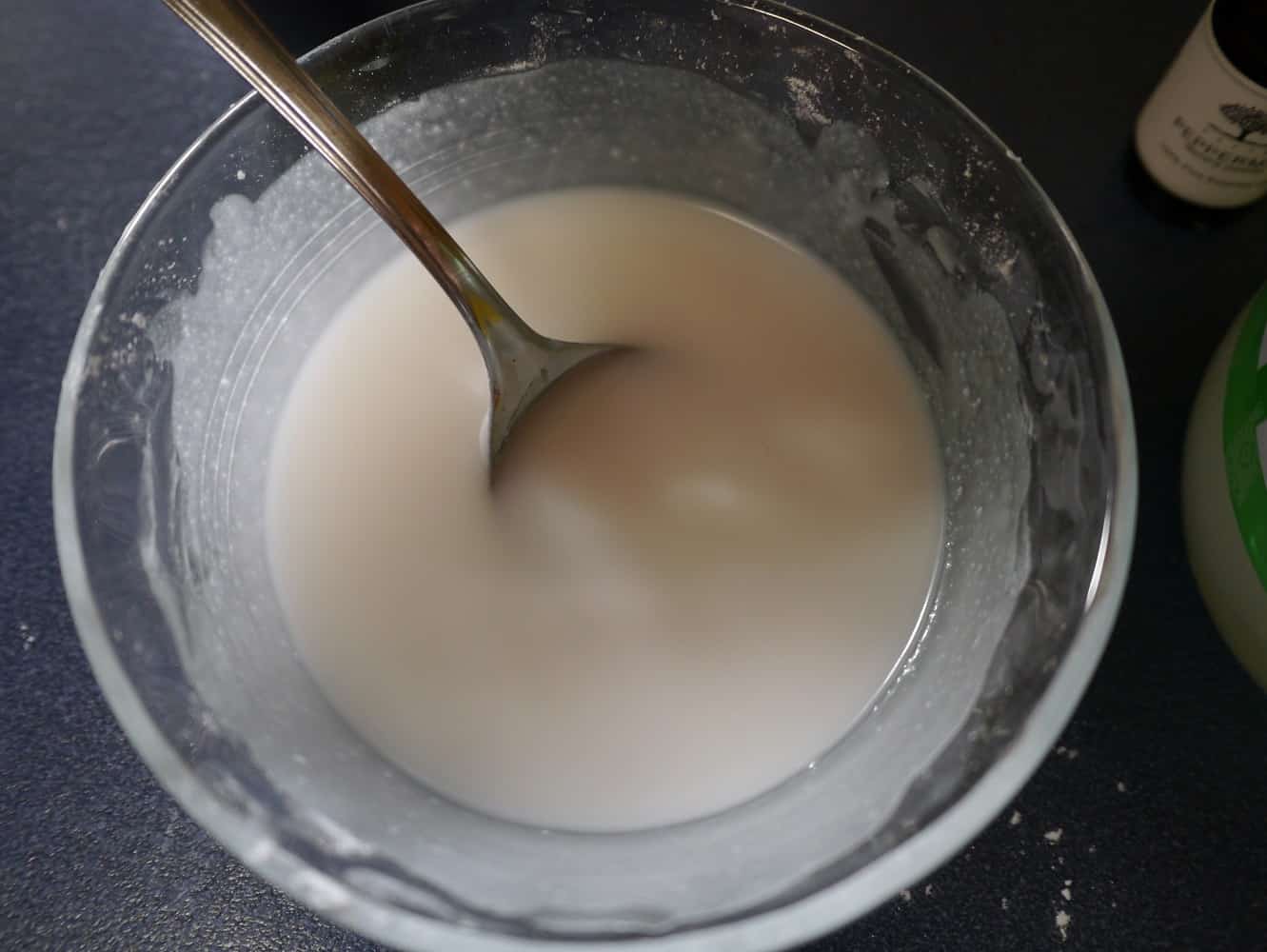
Add 2-3 tbsp coconut oil. (Coconut oil has a melting point of around 25°C, so it will depend on the temperature of your kitchen whether it is solid or liquid. If it is solid, immerse the jar in a bowl of warm water for a few minutes and the oil will melt.)

Solid coconut oil...
Solid coconut oil…
...and liquid after warming slightly
…and liquid after warming slightly

Stir to form a paste.

deo6jpg

This looks runny because I had to warm my coconut oil slightly to melt it. As it cools it will stiffen to form a paste.

Add a few drops of essential oil if using (if not the deodorant will have a mild and pleasant coconut smell.)

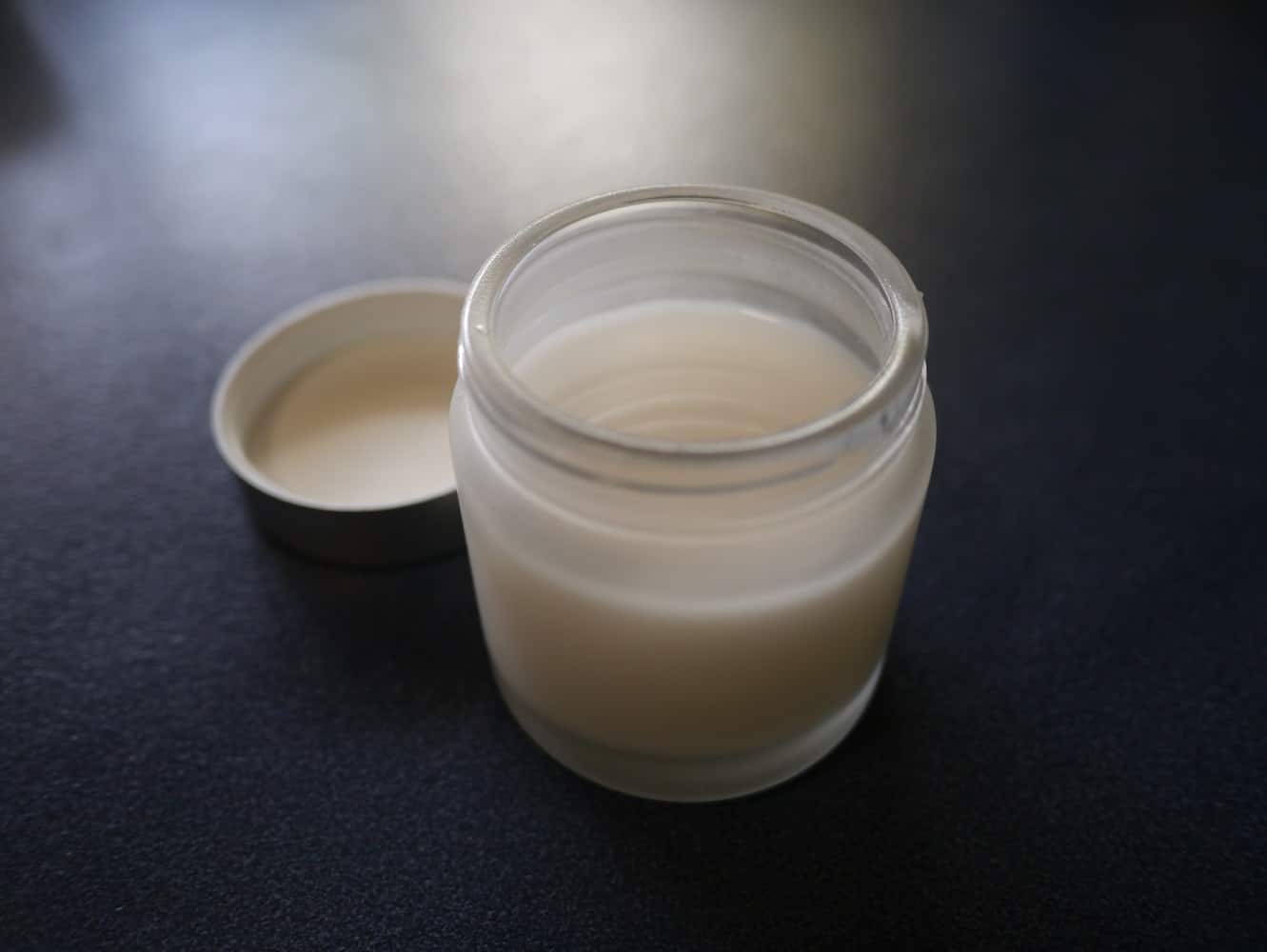
Pour into a clean jar.

deo9jpg

How to Apply

Apply a small amount with fingertips  to underarms and rub in well.

How to store

I keep mine in the bathroom, where usually it maintains a good consistency. If the day is particularly hot and the deodorant completely liquifies, stir with a clean teaspoon and put in the fridge to harden. If it is too stiff, put the container in a bowl of warm water to soften.

Tips

  • Some people are sensitive to bicarb soda. My boyfriend has particularly sensitive skin and so I use the ratio 1:6 bicarb to cornflour. I tried the ratio 1:8 but found it was only effective for 6 or so hours after applying. I have also made it for myself using 1:4 with no problems, and I know people who use 1:1.
  • Everyone is different, so if you find my recipe doesn’t work for you, try tweaking it by adding more bicarb.
  • The amount of coconut oil you need will depend on the temperature of your house. I use less in summer and more in winter because our bathroom temperature fluctuates to maintain the same consistency.

[leadpages_leadbox leadbox_id=1429a0746639c5] [/leadpages_leadbox]

https://treadingmyownpath.com/wp-content/uploads/2013/04/DIY-deodorant-skincare-recipe-plastic-free-treading-my-own-path-min.png 1760 2640 Lindsay (Treading My Own Path) https://treadingmyownpath.com/wp-content/uploads/2019/06/logo.png Lindsay (Treading My Own Path)2013-04-26 19:15:192020-05-20 11:55:49Deodorant: why natural is better and how to make your own!
Page 11 of 12«‹9101112›

Pages

  • 9-tips
  • Birthday book reviews
  • Books
  • Cheatsheets and checklists
  • Every Blog Post I’ve Ever Written
  • Food Waste Challenge
  • Hoarder Minimalist Progress Tracker
  • Instagram
  • Join the mailing list
  • One More Step…
  • Real Food and Recipes
  • Thank you – 3 day food waste challenge
  • Thanks for joining!
  • The Less Waste No Fuss Kitchen Bonus Vault
  • Treading My Own Path Gift Voucher
  • Zero Waste + Plastic Free Living in Perth, Western Australia
  • Home
  • Quotes and facts
  • Resources
  • About
  • Infographics
  • Work with me
  • Minimalism / Simple Living
  • Plastic-free living
  • Upcoming events
  • Zero Waste
  • Explore
  • Blog
  • Less Stuff Book
  • The Less Waste No Fuss Kitchen
  • Thank You
  • Disclaimer & Copyright
  • Privacy Policy

Categories

  • About Me
  • Changemaking
  • Chemical-Free Living
  • Climate action
  • Community
  • Decluttering
  • DIY Skincare
  • Energy
  • environmental guilt
  • Ethical Living
  • Garden
  • growing food
  • Health & Wellness
  • How to…
  • Less Stuff
  • Living With Less Waste
  • Minimalism
  • Money-Saving
  • Musings
  • Out & About
  • Permaculture Gardening
  • Plastic Free July
  • Plastic Free Living
  • Real Food
  • Recipes
  • Simple Living
  • Sustainable Food
  • Thrift
  • Transport
  • Uncategorized
  • urban permaculture
  • Water
  • Zero Waste

Archive

  • November 2022
  • July 2022
  • April 2022
  • March 2022
  • February 2022
  • March 2021
  • February 2021
  • January 2021
  • December 2020
  • November 2020
  • October 2020
  • September 2020
  • August 2020
  • July 2020
  • June 2020
  • May 2020
  • April 2020
  • March 2020
  • February 2020
  • January 2020
  • December 2019
  • November 2019
  • October 2019
  • September 2019
  • August 2019
  • July 2019
  • June 2019
  • May 2019
  • April 2019
  • March 2019
  • February 2019
  • January 2019
  • December 2018
  • November 2018
  • October 2018
  • September 2018
  • August 2018
  • July 2018
  • June 2018
  • April 2018
  • March 2018
  • February 2018
  • January 2018
  • December 2017
  • November 2017
  • October 2017
  • September 2017
  • August 2017
  • July 2017
  • June 2017
  • May 2017
  • April 2017
  • March 2017
  • February 2017
  • January 2017
  • December 2016
  • November 2016
  • October 2016
  • September 2016
  • August 2016
  • July 2016
  • June 2016
  • May 2016
  • April 2016
  • March 2016
  • February 2016
  • January 2016
  • December 2015
  • November 2015
  • October 2015
  • September 2015
  • August 2015
  • July 2015
  • June 2015
  • May 2015
  • April 2015
  • March 2015
  • February 2015
  • January 2015
  • December 2014
  • October 2014
  • September 2014
  • August 2014
  • July 2014
  • June 2014
  • May 2014
  • April 2014
  • March 2014
  • February 2014
  • January 2014
  • December 2013
  • November 2013
  • October 2013
  • September 2013
  • August 2013
  • July 2013
  • June 2013
  • May 2013
  • April 2013
  • March 2013

Treading My Own Path

Privacy / Disclaimer

Sign up to the newsletter

Website by Órla Larkin

Lindsay Miles is an educator, speaker, author and passionate zero waste/plastic-free living advocate helping others live more meaningful lives with less waste and less stuff. She has been sharing ideas, tips, tricks and strategies on her website Treading My Own Path since 2013. Her first book, Less Stuff, was published in 2019 and her second, The Less Waste No Fuss Kitchen was published in June 2020. Originally from the UK, Lindsay now lives in Perth, Western Australia.

Lindsay Miles
© 2024 Lindsay Miles | ABN 84 679 541 090
  • Link to X
  • Link to Youtube
  • Link to Instagram
  • Link to Mail
  • Link to Facebook
Scroll to top Scroll to top Scroll to top

This site uses cookies. Cookies enable me to personalise your experience on this site so I can improve my content and communications.

I'm okay with that

Cookie and Privacy Settings


How we use cookies

We may request cookies to be set on your device. We use cookies to let us know when you visit our websites, how you interact with us, to enrich your user experience, and to customize your relationship with our website.

Click on the different category headings to find out more. You can also change some of your preferences. Note that blocking some types of cookies may impact your experience on our websites and the services we are able to offer.

Essential Website Cookies

These cookies are strictly necessary to provide you with services available through our website and to use some of its features.

Because these cookies are strictly necessary to deliver the website, refusing them will have impact how our site functions. You always can block or delete cookies by changing your browser settings and force blocking all cookies on this website. But this will always prompt you to accept/refuse cookies when revisiting our site.

We fully respect if you want to refuse cookies but to avoid asking you again and again kindly allow us to store a cookie for that. You are free to opt out any time or opt in for other cookies to get a better experience. If you refuse cookies we will remove all set cookies in our domain.

We provide you with a list of stored cookies on your computer in our domain so you can check what we stored. Due to security reasons we are not able to show or modify cookies from other domains. You can check these in your browser security settings.

Other external services

We also use different external services like Google Webfonts, Google Maps, and external Video providers. Since these providers may collect personal data like your IP address we allow you to block them here. Please be aware that this might heavily reduce the functionality and appearance of our site. Changes will take effect once you reload the page.

Google Webfont Settings:

Google Map Settings:

Google reCaptcha Settings:

Vimeo and Youtube video embeds:

Privacy Policy

You can read about our cookies and privacy settings in detail on our Privacy Policy Page.

Privacy Policy
Enough is Enough Free ebook for Subscribers front cover

Join our community and you’ll receive free new content every week and a downloadable eBook “Enough is Enough” to help you take the next steps!

Enough is Enough eBook

Please send me the eBook!

Send my eBook link to:

By downloading the eBook you agree to my Privacy Policy.

I hate spam as much as you do, and I promise to keep your email address safe. I will not share or sell your personal information, ever. You can unsubscribe at any time.

This form collects information I will use to send out the free eBook, new content once a week and an occasional newsletter (with other stuff I think you’ll find useful such as events).

Loading Comments...