• Link to X
  • Link to Youtube
  • Link to Instagram
  • Link to Mail
  • Link to Facebook
Join the community and receive a free EBOOK
Treading My Own Path | Less waste, less stuff, sustainable living
  • ⌂
  • About
  • Work with me
  • Upcoming events
  • Books
    • The Less Waste No Fuss Kitchen
    • Less Stuff
  • Resources
    • Printables
    • Infographics
    • Quotes and facts
  • Explore
    • Minimalism
    • Plastic-free living
    • Real Food and Recipes
    • Zero Waste
  • Blog
  • Click to open the search input field Click to open the search input field Search
  • Menu Menu

Plastic-Free For Absolute Beginners: 7 Tips for Getting Started

20 Comments/in Plastic Free July, Plastic Free Living, Zero Waste/by Lindsay (Treading My Own Path)

When we’re new to living plastic-free or zero waste, just looking at the journey ahead of us can seem a little… daunting. On one hand, we’re eager to make changes, and excited to be making a positive impact on ourselves and the planet. But what first steps to take?

There are so many options it can almost feel overwhelming. If you’re feeling like that, don’t panic! I’m here to help.

If you’re keen to get going with plastic-free or zero waste living but don’t know where to start, here’s a handy guide to help you on your way.

1. Don’t throw anything away!

Before you begin, don’t just throw all your plastic in the bin, or dump it at the charity shop. Whilst it can be tempting to “begin again with a clean slate”, it creates a huge amount of waste. If your main motivation for embracing plastic-free living and zero waste is to reduce waste, this is completely counter-productive.

In time you’ll be able to decide whether you can re-purpose things, pass them on to someone who will use them, or use them up yourself. You’ll learn the best way to dispose of things responsibly. You’ll also know whether you need to replace them.

Plastic-free and zero waste living is a journey, not a race.

2. Remember change takes time, and the more time you spend on it, the faster you’ll see results.

Going plastic-free or zero waste is about changing habits, and change takes time. Like any habit, if you practice every day you’ll get there faster. The more you practice, the easier it will get.

Yes, you can go plastic-free or zero waste and work full time, have children and pursue other hobbies. You will just make slower progress.

Take into account how much time to have to spend learning new habits, and set yourself realistic goals. If your expectations exceed what’s likely or practical for you to achieve, you’ll end up disappointed and disheartened.

3. Go to your regular stores with new eyes.

Bulk stores (especially those that have been established with waste-free and plastic-free living in mind like The Source Bulk Foods) are an ideal place to buy packaging-free groceries, but in the beginning, don’t rule out your regular stores completely.

Instead, take a little extra time, and go to your regular stores and walk up and down every aisle, looking at every single product. Look for products in glass, cardboard, or paper.

When we shop, we often operate on autopilot. We don’t browse the overwhelming choice of products. We tend to buy the one we always buy, or we choose what’s on offer. Now is your chance to look with a different parameter – plastic-free.

You might find there are more alternatives than you realised.

4. Get your reusables ready.

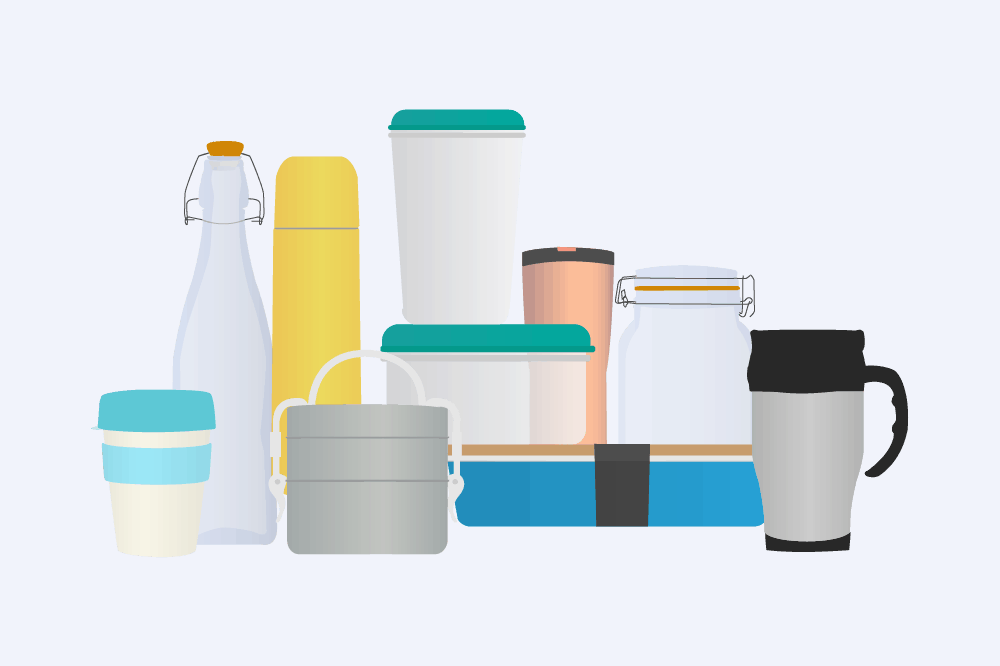
When you first go zero waste or plastic-free grocery shopping, take more reusables than you think you’ll need. As well as reusable shopping bags, take reusable produce bags, glass jars, and glass or plastic containers with lids of various sizes.

Almost everyone has reusable shopping bags; if you don’t, I recommend looking for natural fibres rather than plastic ones that will eventually end up in landfill.

There are many options for reusable bags, and if you sew you can make your own out of old net curtains or bed sheets. If you can’t sew, handmade reusable produce bags can be found via Etsy, an online marketplace for people who do know how to sew.

If you don’t have glass Pyrex or stainless steel food containers, consider using plastic in the short term until you know which sizes work best for you. Glass and stainless steel is an investment, so knowing what you need is helpful before you splash out. If you’re ready to invest, this directory of online zero waste and plastic-free stores might be helpful.

(There are other bits and pieces you might find you need, like cutlery, a water bottle and a coffee cup. You can find the day-to-day reusables I carry in my handbag here.)

5. Look for bulk stores, Farmers Markets and health stores in your local area.

Before you step out the door, it makes sense to look on the internet. Are there any bulk stores close by? Are there any cooperatives that might have food in bulk? What about bakeries or farm shops? Italian grocery stores often have dry goods in bulk, and well-stocked deli counters. Check when local Farmers Markets run, and where.

You can call places to find out if they have a bulk section, but nothing beats going to have a look. Even if bulk isn’t an option, there might be plastic-free and lower waste solutions. Just having a browse can open your mind to some of the potential.

6. One change at a time.

Rather than change everything at once, focus on one thing at a time. It makes sense to tackle things in the order they need replacing. With food, fresh produce comes first, like fruit and vegetables, milk, and bread. Then there’s longer life fresh stuff like yoghurt and cheese. Then there’s dry goods, and it might be a few months before you need alternatives for some of these.

The same will apply in the bathroom, the cleaning cupboard, the wardrobe and the rest of the house.

Work on replacing things as you need to.

7. Join the community!

Zero waste and plastic-free living is a movement, and a movement needs people! You will find it so much easier and far more rewarding if you connect with others on the journey. You’ll be able to share ideas, vent frustrations, ask questions and guide others.

Not everyone has the support of family and friends, at least not at first. Finding a community of like-minded people will give you a strong support network to keep you motivated.

If you can find people locally to connect with, that’s awesome (if you don’t know where to look, the Transition Town movement is a good starting point). If not, there is plenty of opportunity online – and these groups will welcome you with open arms!

Remember, no-one has all the answers on the first day! Plastic-free and zero waste living is a journey. Enjoy the process, have fun, and know that everything you’re doing makes a difference.

Now I’d love to hear from you! If you’re a beginner, is there anywhere in particular that you’re stuck? Anything you’ve been struggling with? If you’re a veteran, are there any other tips you’d like to add? Anything you think I’ve missed out? Any other comments? Please share your thoughts below!

[leadpages_leadbox leadbox_id=1429a0746639c5] [/leadpages_leadbox]

https://treadingmyownpath.com/wp-content/uploads/2017/06/Plastic-Free-Living-for-Absolute-Beginners-Treading-My-Own-Path.png 667 1000 Lindsay (Treading My Own Path) https://treadingmyownpath.com/wp-content/uploads/2019/06/logo.png Lindsay (Treading My Own Path)2017-06-01 12:00:202020-01-13 12:48:49Plastic-Free For Absolute Beginners: 7 Tips for Getting Started

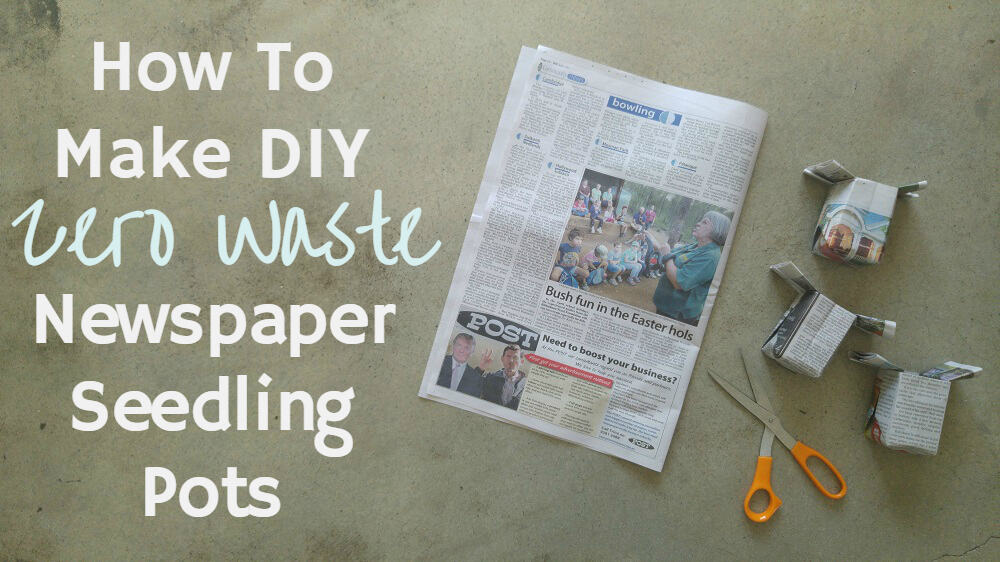
How to Make Zero Waste DIY Newspaper Pots

27 Comments/in Garden, Plastic Free Living, Zero Waste/by Lindsay (Treading My Own Path)

I’m all for small and low cost (or free!) solutions, particularly when they mean zero waste. We’re in the midst of sowing our autumn and winter seeds for our vegetable garden right now, which means we need lots of seedling pots. (Sowing seeds directly into the ground tends to mean the little seedlings get munched by pests before they have the chance to grow big.)

I don’t want to buy new. I’ve learned (the hard way) that reusing the tiny plastic cells from the garden centre (the ones they sell punnets of seedlings in) doesn’t work too well. They are too small and they dry out too fast. We don’t have enough of the bigger plastic pots to use those…plus they take up a lot more space.

Instead, I’m making my own zero waste seedling pots out of newspaper.

You don’t need any fancy gadgets for this. Even the pair of scissors is optional. You just need two hands, and a bit of patience.

Even though I can make these without thinking now, I’ll admit that when my friend (who is a very good teacher) first showed me how to make these, I had a full-on tantrum! (How embarrassing.) If you get frustrated the first few times, just remember it’s only newspaper, and no-one has died. You’ll grasp it soon enough!

If you don’t read the newspaper, I guarantee that your neighbour does, or someone at work, or a family member. Maybe  a local cafe will have a mangled, well-read one.

The other great thing with these is that newspaper breaks down easily, so they can be planted directly into garden beds. No need to disturb the plant roots by removing from the paper. You can always tear the base before planting if you’re worried it will restrict growth.

How to Make DIY Zero Waste Seedling Pots (With Pictures)

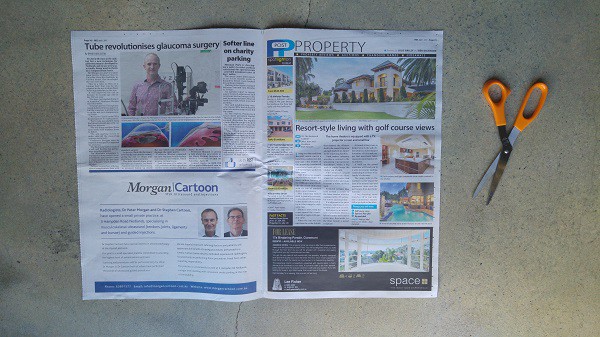
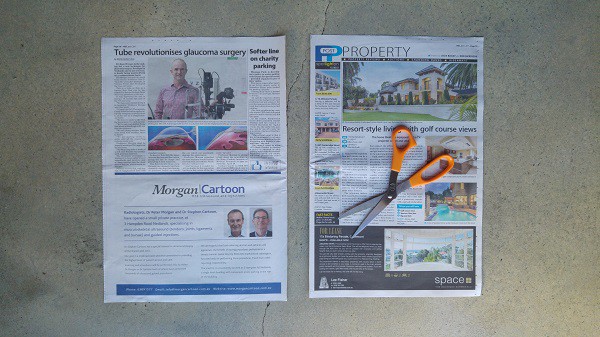
Start with a single sheet of newspaper. For seedling pots, I cut a double sheet like this in half.

All you need to start with: a sheet of newspaper, and some scissors. Although you could do without the scissors, if you can tear neatly ;)

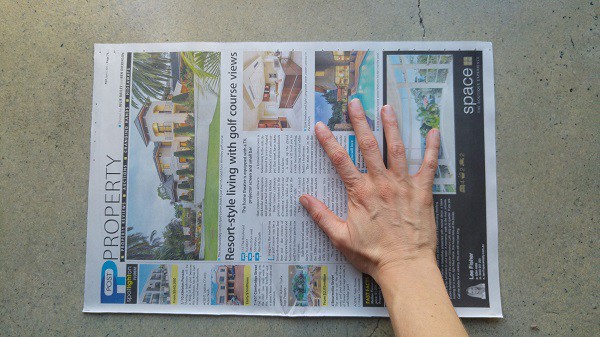
Cut the newspaper sheet in half along the fold. Put the sheet to the left to one side. We will only be working with one sheet at a time.

Turn the sheet of paper so that the longest side is horizontal.

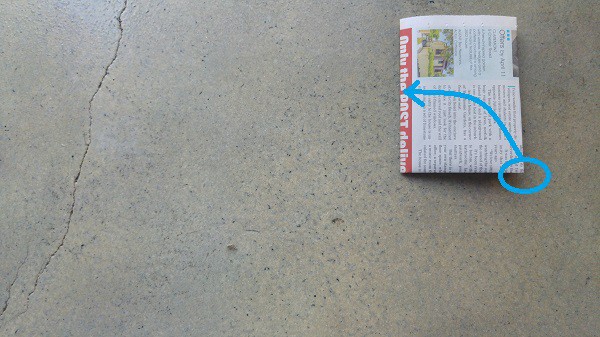
Fold the newspaper in half from left to right (the fold is on the left hand side).

Fold the sheet again from bottom to top (the new fold is on the bottom).

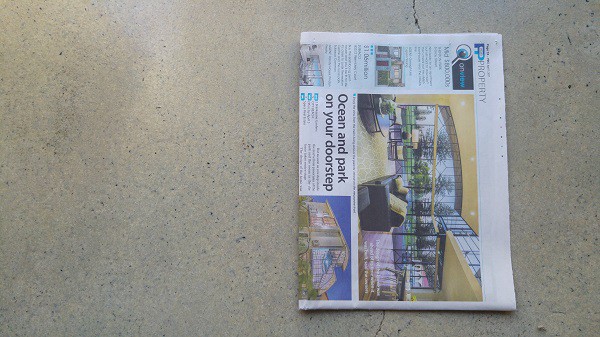
Fold the newspaper one more time from left to right.

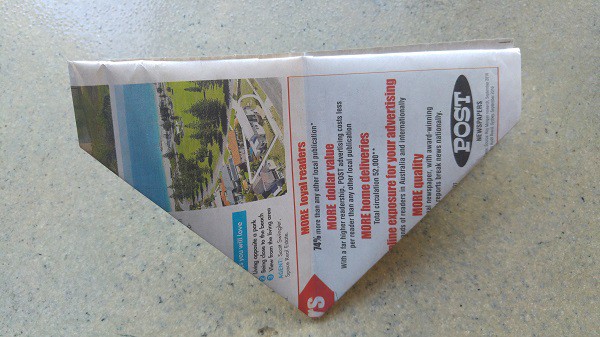
The paper in front of you will be folded a bit like a book, and each flap has a front and a back. You want to take the right-hand corner of the front flap, and fold it towards you, pulling it open as you do so to make a triangle shape along the “spine” of the “book”.

You can see (marked by the blue spot) that the bottom right hand corner has moved to where the spine was, and is opened to form a triangle.

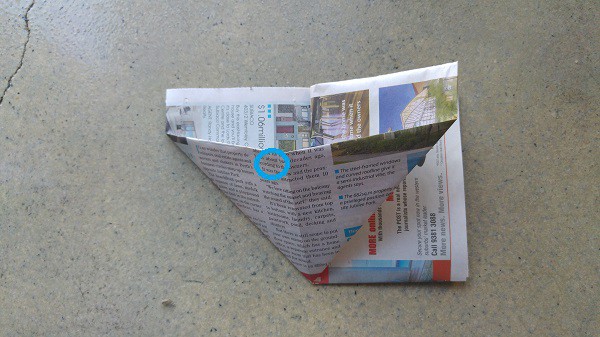
Now that you’ve folded this side, turn the newspaper over (180°) and do the same on the other side. It will be mirrored, so the corner will be on the left hand side.

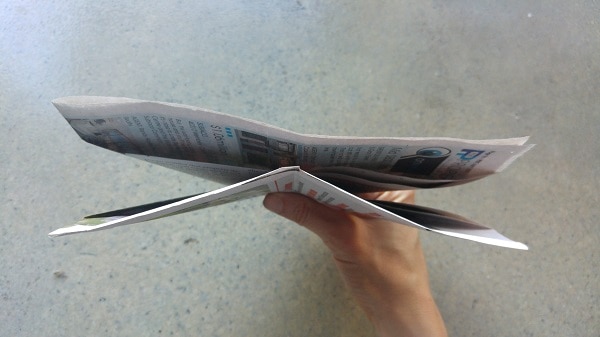
Once both sides have been folded, your newspaper will look like this. There will be a triangle-shaped pocket on the front and the back, and a gap in the centre seam above the two triangles.  Now turn the right hand side of the paper, like the page of a book, to the left (180°) so that you can see one continuous triangle.

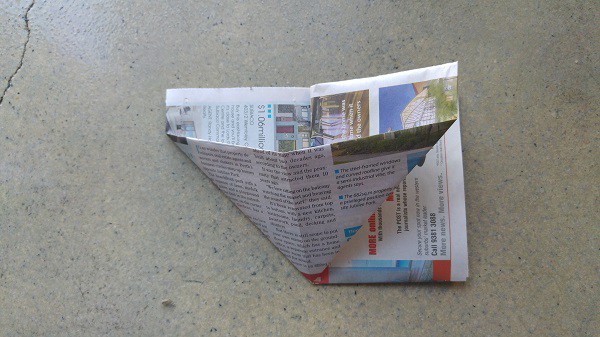
Flip the newspaper over and repeat with the other side so that both sides now look like this.

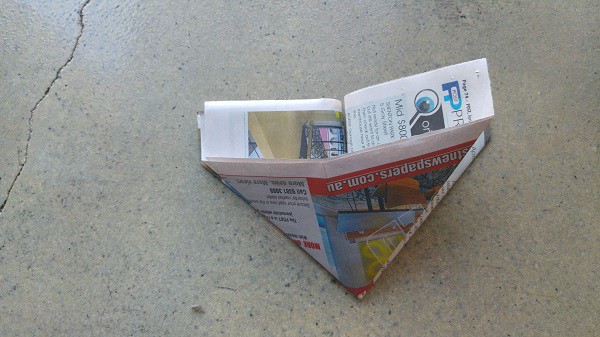
If it is correct, the paper will look like this from above.

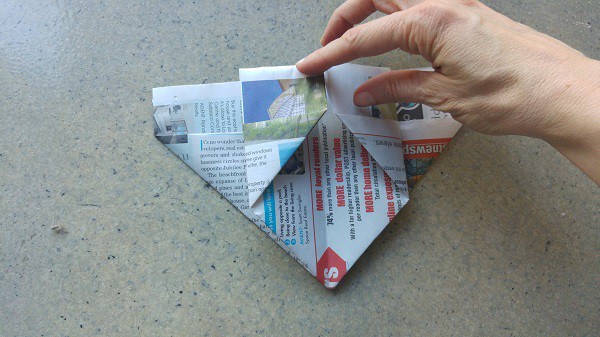
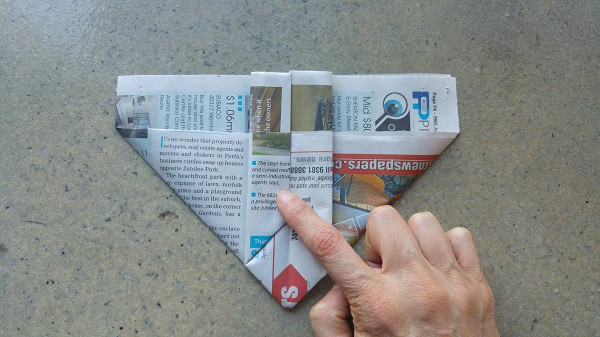
Lay the paper down flat, and fold each of the front flaps into the centre fold.

Fold these two flaps in half again, into the centre fold. (Don’t worry if it’s very flappy when you remove your fingers, that is absolutely fine.)

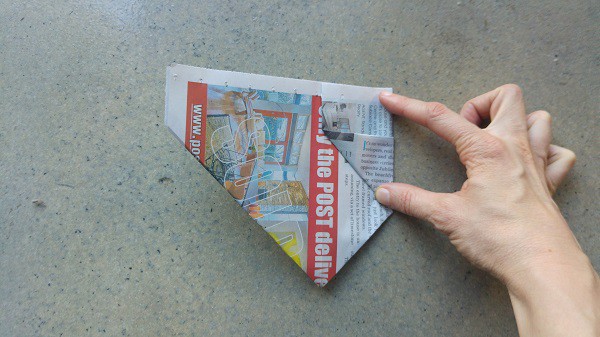
Now flip the newspaper over, and do repeat on the other side.

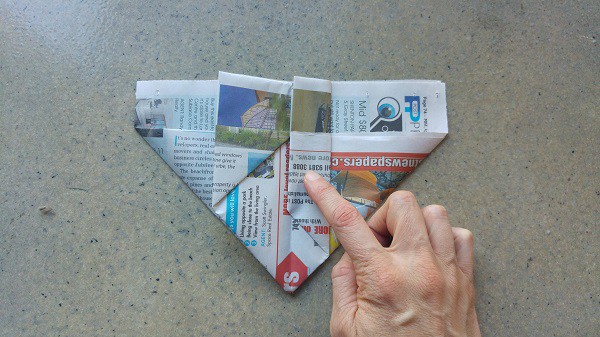
Fold the flaps into the centre…

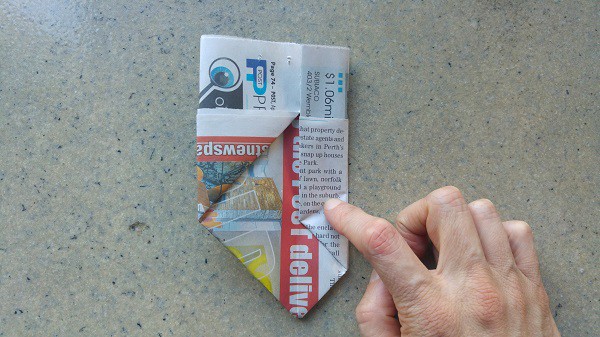
And then fold these flaps inwards again…

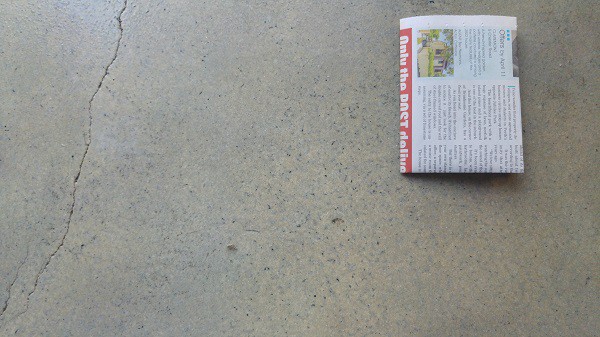
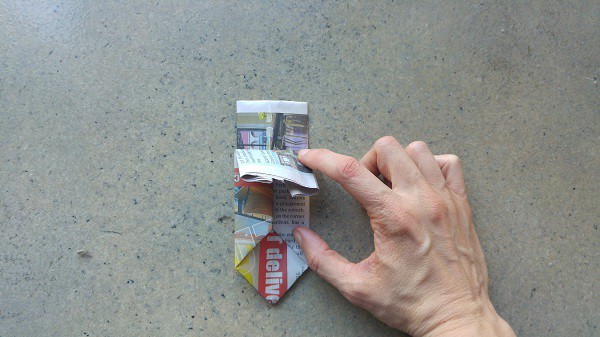
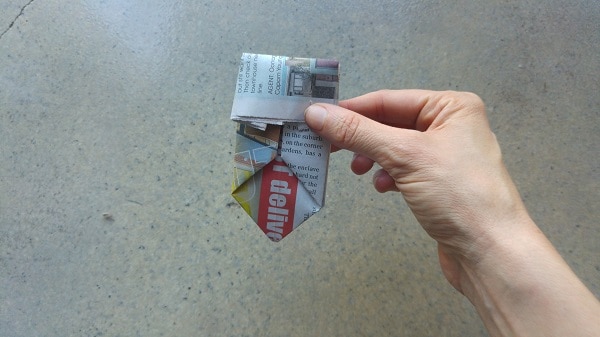
Your newspaper now looks like this. Fold the top flap down towards you along the newspaper line.

Repeat on the other side.

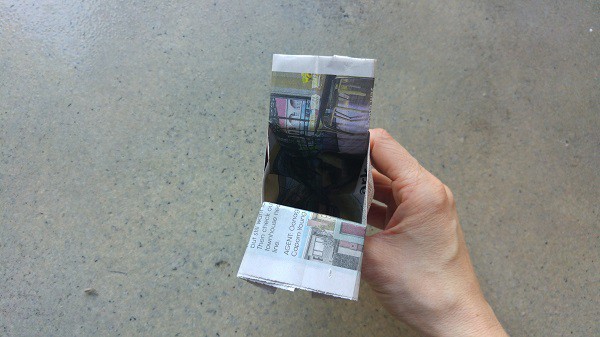
Now you can gently pull the two flaps outwards and open your pot!

Push your fingers inside to straighten out (and flatten out the bottom).

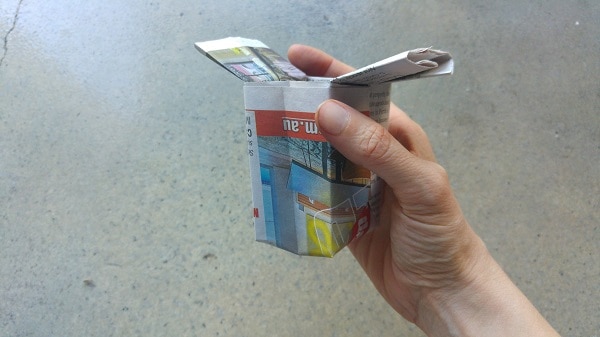
Ta-da! A zero waste newspaper seedling pot.

The flaps can be useful for lifting the pots, or labelling what you’ve planted inside the pot. If you don’t like them you can fold them inside. Once the pot of filled with soil they won’t flap about. I wouldn’t recommend cutting them off as the folding is what keeps it all in place.

Next step… to go forth and plant things!

Now I’ love to hear from you! Have you ever made these before? Do you have a different method? Are you feeling inspired to grow stuff? Do you want to make some and then share a photo with me so I can admire your handiwork? (Answer – yes you do!) Anything else you’d like to add? Please share your thoughts in the comments below!

[leadpages_leadbox leadbox_id=1429a0746639c5] [/leadpages_leadbox]

https://treadingmyownpath.com/wp-content/uploads/2017/04/DIY-Newspaper-Pots-Zero-Waste-Plastic-Free-Permaculture-Treading-My-Own-Path-Lindsay-Miles-Banner.jpg 562 1000 Lindsay (Treading My Own Path) https://treadingmyownpath.com/wp-content/uploads/2019/06/logo.png Lindsay (Treading My Own Path)2017-04-13 12:30:132018-07-28 17:08:52How to Make Zero Waste DIY Newspaper Pots

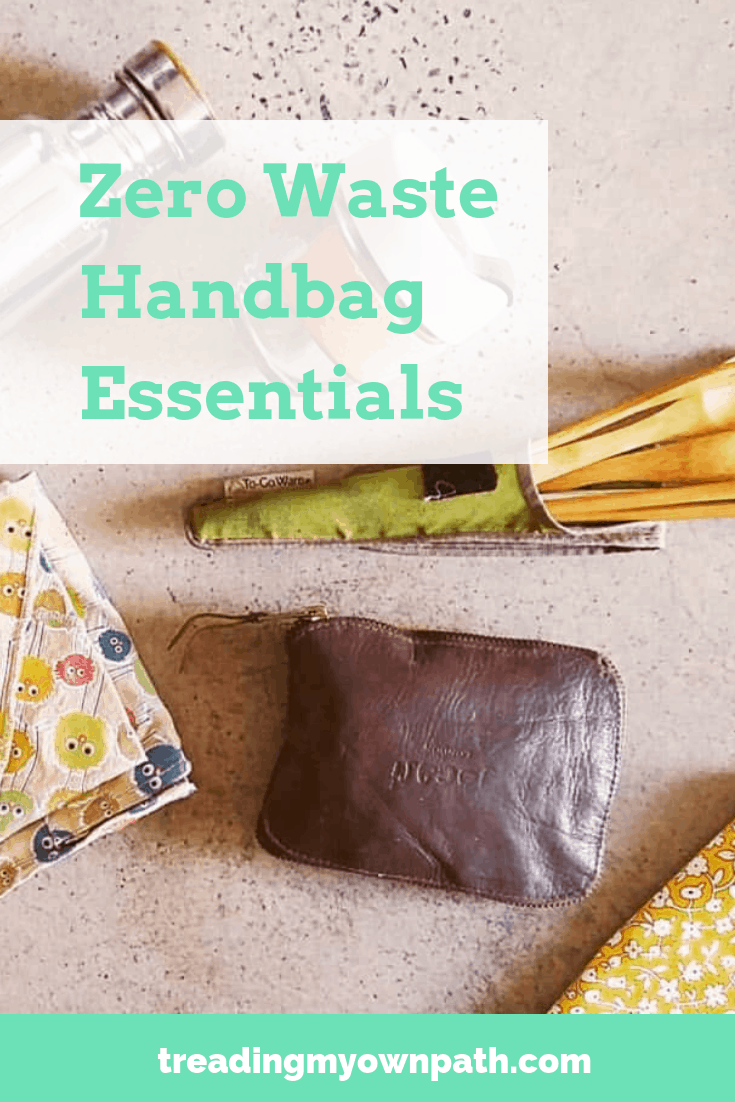
My Zero Waste Kit (Zero Waste Handbag Essentials)

31 Comments/in Living With Less Waste, Plastic Free Living/by Lindsay (Treading My Own Path)

I truly believe that the zero waste lifestyle does not mean going out to buy a whole heap of stuff. Saying that, there are definitely things that I have bought, which make waste-free living a lot easier for me. I refer to these things as my zero waste “kit”.

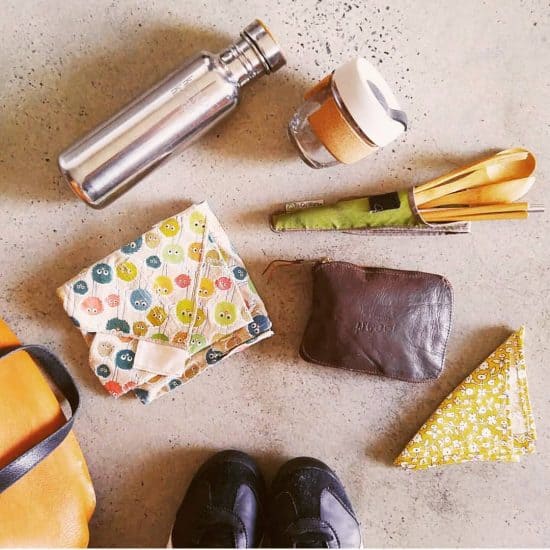
Recently I received a lovely email from a lady called Rachel who follows my Instagram feed, and she asked me: “I’ve seen you mention “zero waste kit” a few times and was wondering what that was!” It dawned on me that I’ve never taken the time to explain what I have and why. So here it is: my list of handbag essentials for zero waste living.

What is essential for me might not be essential for you, and this is definitely no command to go shopping! As always, I recommend using what you have. Whilst I’ve provided links so you can find out more details about the things I’ve personally chosen, please consider making do, buying second-hand and shopping local where you can.

What’s In My Zero Waste Handbag?

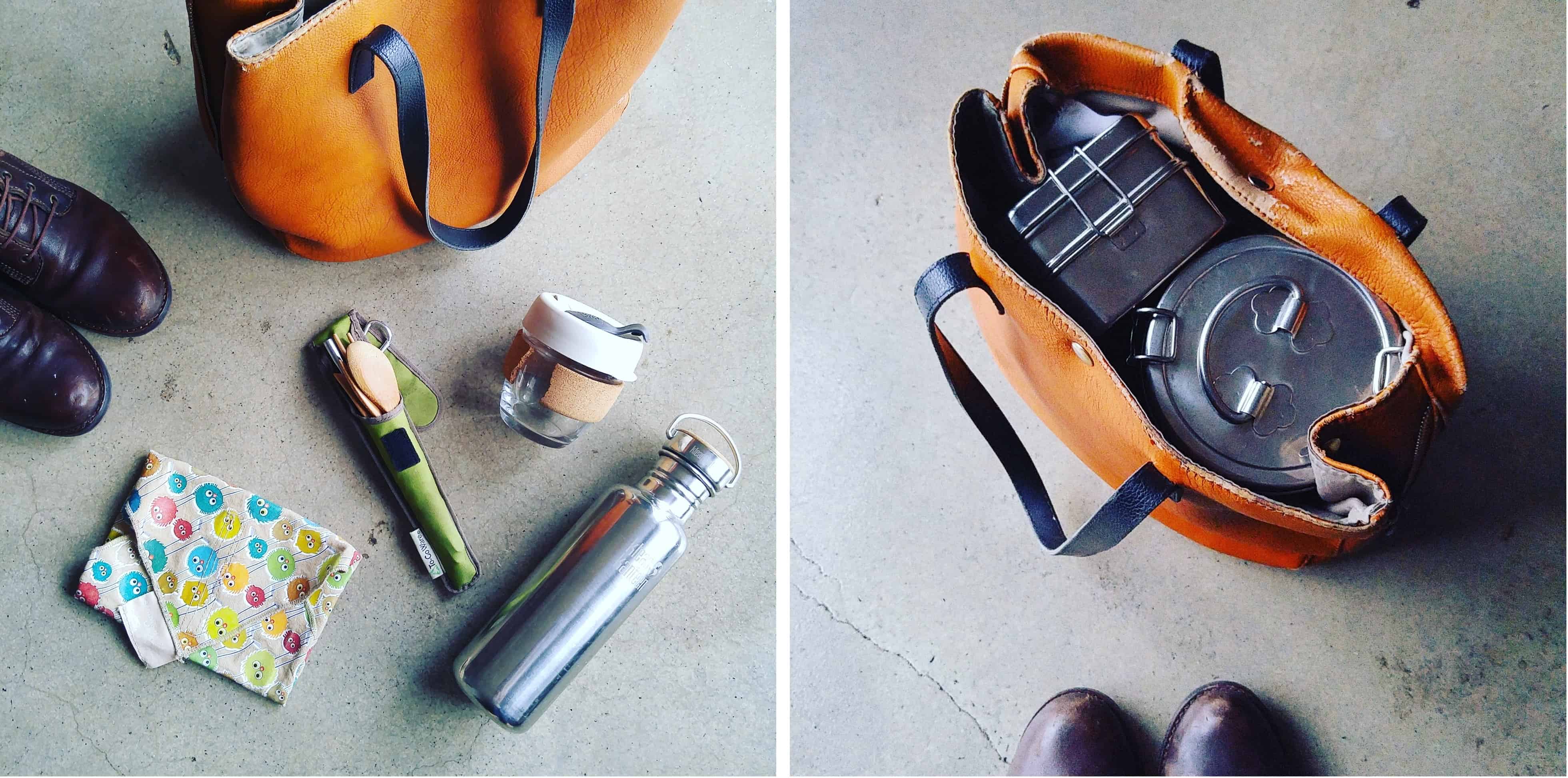
My handbag is by no means a hold-all! None of this stuff takes up that much room and the only heavy thing is my water bottle, when it’s full.

I’ve included links below of the actual things I have, so you can see specific product details, dimensions etc.

Water bottle: I have a Klean Kanteen stainless steel water bottle with a bamboo lid. It holds 800ml. I chose this because it is completely plastic free and I love that Klean Kanteen are committed to producing products with the environment in mind.

Sometimes I leave the water bottle at home to save weight and use my reusable cup instead.

Reusable Coffee Cup: When I started out, I had a plastic KeepCup, but once glass ones were introduced in 2014 I made the switch. I have a 8oz glass KeepCup with a cork band but bigger sizes are also available. The lid is plastic but I like that the rest of the cup is not, and that it is a standard barista size.

I often use this as an impromptu container, or to grab a glass of water from anywhere with a tap if I don’t have my water bottle with me.

Reusable Cutlery: I have a To-Go ware set that was a birthday present: it contains a bamboo fork, spoon, knife and chopsticks and the pouch is made from recycled water bottles. The cutlery is surprisingly sturdy and I have skinned and de-stoned a mango with the knife. It is also suitable to carry onto planes in hand luggage.

Reusable Straw: I have added a reusable metal straw to my reusable cutlery pouch (it needs to be 21.5cm or smaller to fit in the To-Go Ware pouch). I also have reusable glass straws that I love, but I tend to take them out with me less often. The ones I have are made by Glass Dharma and come with a lifetime breakage guarantee. There are other brands with different colours and patterns. Reusable bamboo straws are another option.

Glass straws sound fragile but the glass is toughened and it would be impossible to bite through it. Because the edges are smoothed I think they are a good option for kids.

Produce Bags: Almost all of the produce bags I have are handmade (not by me!), and I think Etsy is a great place to find local craftspeople if you can’t sew your own. My own bags (mostly gifts) are made from old fabric, cafe curtains and an old bedsheet of mine. I love sellers who repurpose old fabric rather than buying new, like these produce bags made from old tablecloths.

I also have a few Onya produce bags too which are handy as they fit in a little stuff sack. The company started down the road from here and the owner is passionate about reducing plastic-bag use.

Reusable Bag: We have a number of calico bags that we’ve picked up over the years and would recommend choosing natural fibres where possible. As well as these, we have a couple of Onya reusable shopping bags. Whilst they are plastic, they scrunch up into a tiny stuff sack when not in use, so they are handy for my husband (who does not carry a handbag!) or when we are travelling as they are pocked-sized.

Sandwich Wraps: These are coated fabric and can be used in place of containers. I have snack pockets and sandwich wraps made by 4MyEarth, a local Perth company. They used to make 2 sizes of each but now they just make 1 size of each. The fabric is coated to make it water- and grease-resistant: it is a plant-based plastic and they are PVC-free. I like that they are machine washable, and they have lasted me a really long time (I got them in 2012).

Metal lunchbox: I bought my husband this metal lunchbox to take to work every day, although we also use it if we are going out to a restaurant or cafe (you never know where there might be leftovers!). I’ve added to our collection since then: a three-tier tiffin and a four-tier tiffin, and a round stainless steel lunchbox for myself that I bought in Thailand.

Stainless steel is expensive  – it is an investment piece that will last forever. If you have an Indian supermarket nearby it is worth checking out if they stock tiffins as the price will likely be kinder to your wallet. Sometimes, they pop up in charity shops too (although I’ve never been this lucky)!

Hanky: I keep a hanky on me at all times, which doubles as a serviette if I’m out. Department stores will likely sell them, but I prefer to keep things local and I’d look on Etsy if I needed more. Or, I’d just cut up some old clothes and make do with the ragged edges ;)

The links above are mostly for Australian stores. If you’re not in Australia, this page has a list of online zero waste and plastic-free stores which you might find useful.

Now I’d like to hear from you! What are your zero waste essentials? How did you choose your items? What eco-minded companies have you chosen to support? How have you been able to make do? Have you made any great second-hand purchases? Any recommendations for where others might be able to make do or find second-hand? Do you consider any of the items I’ve chosen a waste of time?! Anything else you’d like to add? Please leave your thoughts in the comments below!

[leadpages_leadbox leadbox_id=140b48fc6639c5] [/leadpages_leadbox]

Disclaimer: These items are all items that I genuinely use and love, and have purchased with my own money or were received as gifts from friends and family. No company has paid me to be featured on this list. This post contains some affiliate links which means if you click a link and choose to purchase a product, I may be compensated a small amount at no extra cost to you. This in no way affects my recommendations as my priority is always you, my readers.

https://treadingmyownpath.com/wp-content/uploads/2017/03/Zero-Waste-Handbag-Contents-Treading-My-Own-Path-Plastic-Free-FINAL.jpg 1945 3921 Lindsay (Treading My Own Path) https://treadingmyownpath.com/wp-content/uploads/2019/06/logo.png Lindsay (Treading My Own Path)2017-03-30 12:00:042019-01-02 13:02:55My Zero Waste Kit (Zero Waste Handbag Essentials)

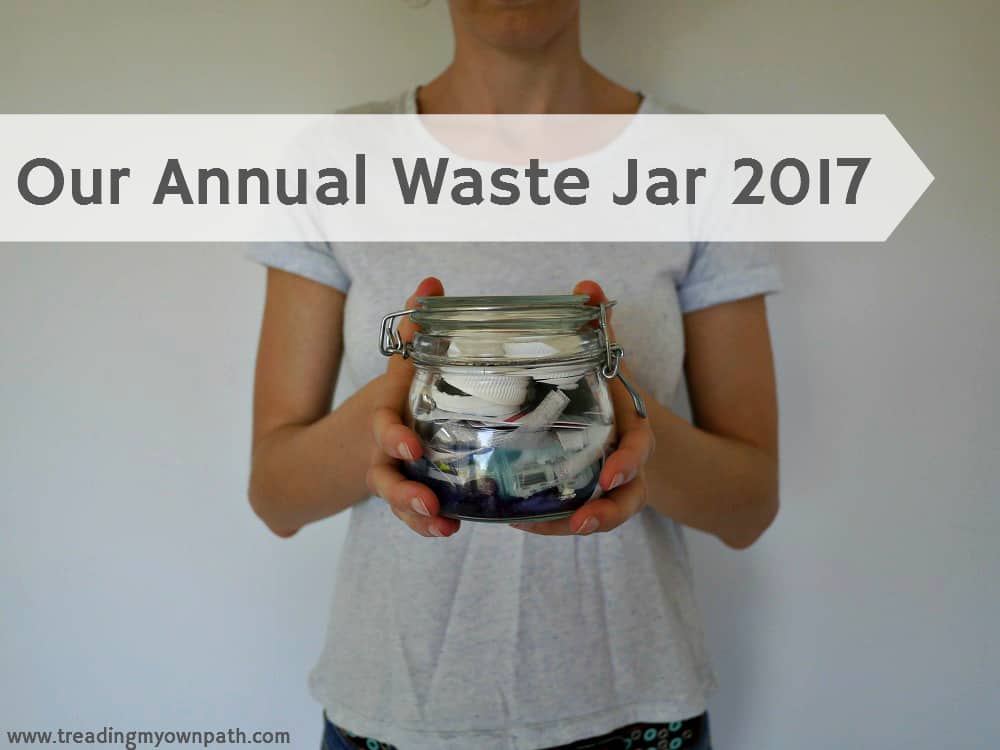
One Year’s Worth of Trash (Except, It Isn’t)

24 Comments/in Living With Less Waste, Plastic Free Living, Zero Waste/by Lindsay (Treading My Own Path)

The idea of keeping landfill trash in a jar has become a symbol of the zero waste movement. Bea Johnson from Zero Waste Home started keeping the waste produced by her family of four in a glass jar back in 2010. Now more and more people use this idea to track their progress and show others what is possible with a little bit of determination and effort.

I have to confess, I don’t love the idea. I find it a little gimmicky (I’ll talk about that later). At the beginning of last year, I was interviewed by a journalist and she asked me if I had a jar of waste. I said no, and she suggested I start one. That it might be a good idea because it was a valuable tool to show others.

I hadn’t really thought of it like that.

I also thought, there I was pooh-poohing the idea when I hadn’t actually given it a fair shot. Wouldn’t it be be better to try it out and see, rather than making judgements? I decided to give it a go.

As fate would have it, at the end of January this year, Channel 9 contacted me to film a segment about zero waste for their 6pm news show. When they found out I had a waste jar, they insisted it be part of the story. So my little jar of waste was on the news…

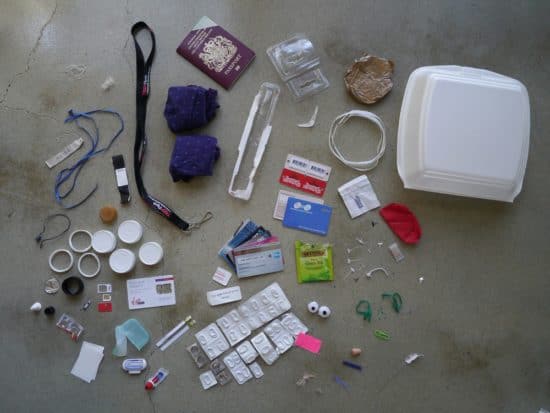
I began our annual jar of waste on 2nd March 2016 – so today it has been exactly a year since I began. So how much landfill waste did our household produce in a year, and what have I learned.

Annual Waste in a Jar – My Rules

The idea is that anything that would end up in the landfill bin is kept in the jar. This means anything that is not recycled, composted, repurposed or repaired.

I didn’t really make any other rules when I started; they formed along the way. The intention was that the jar was for our household waste (my husband’s and mine) but in July we adopted a greyhound, which changed things slightly.

These are the rules we ended up following:

  • Anything purchased or acquired pre- going plastic-free or zero waste in 2012 still counts as waste.
  • Any waste generated by us inside our home goes in the jar.
  • Any waste I produce outside the home goes in the jar (and my husband’s, if he is with me.) My husband’s waste at work and some dog waste (!) does not go in the jar for practical reasons.
  • Any waste that others bring into our home that we do not use does not go in the jar. However, if we use it in some way, then it does.
  • I often find fruit stickers, old clothes elastic and random plastic labels in the compost bin, but 6 households share our composting system and I do not know for sure it is ours – and it is too much effort once it is covered in compost.
  • Anything that is downright gross or dangerous does not go in the jar.

Different people have different rules. These are ours. Our waste shows us where we personally can improve, and let us share what we have learned. It is not a competition.

How Much Landfill Waste Did We Produce?

This is our waste from 1st March 2016 until 1st March 2017.

What Didn’t End Up in the Jar?

Not all of the waste we produced over the last year has ended up in the jar. Here’s what was missed:

  • We broke two glass jars and a glass light bulb in the past few weeks, and I am sure that over the year there were more.
  • We put all weeds in the compost bin except couch grass which is super invasive. We put this in our landfill bin. (It goes through a commercial hot composting machine at the tip, but I’d rather deal with it at home.)
  • I still have an old tub of dental floss I keep for emergencies. Mostly after eating corn-on-the-cob. That tends to get sucked up by the vacuum cleaner.
  • Condoms. For obvious reasons.
  • When I mentioned earlier that our greyhound complicated things, there were a few “issues”.
    • I refuse things, and I refuse things on behalf of my husband ;) but my husband has decided, I cannot refuse things on behalf of our greyhound. If somebody buys him a gift, it is not for me to decide to donate it straightaway simply because it will end up in landfill.
    • Our greyhound has received a few toys as gifts. People tell me they were careful to avoid plastic, as we receive yet another toy made of polyester. (Which is plastic.) They are also cheaply made and do not last. One was torn to shreds and covered in slobber and ended up in the bin. Fortunately Hans is settling down and less prone to destruction these days.
    • Hans is also very particular about his bathroom habits, and categorically refuses to go to the toilet in our yard. Not even for number 1s. His preferred toilet stop is the dog park 10 minutes away. We have a dog poo worm farm at home, but carrying his mess home twice a day with newspaper is a trial. I do it as often as I can, but sometimes it isn’t practical. When it’s raining, the newspaper gets wet before we make it home. When the dog park is full of other dogs we don’t hold onto it – the other dogs are too interested :/ So sometimes dog poo goes in the bin.

Is the ‘Waste-in-a-Jar’ Thing Gimmicky?

That’s a personal choice. For me, I still feel like it is. I have never taken my waste jar to a talk or workshop I’ve presented. In fact, it has never left the house.

I’m not a limelight-lover, and I feel that the jar invites a “look-at-me!” approach that I am just not comfortable with.

I also feel that extremes can put people off making changes, and waste jars might be seen as extreme. I’d prefer to encourage lots of people to change one thing than encourage one person to change everything. My priority in inspiring others, not seeking perfection myself.

That’s not to say it can’t (and doesn’t) work for others. For every cynic in the room, there is someone else who is inspired. For those who love and relish the limelight, it is an awesome opportunity to share and motivate others.

It just does not work for me.

Gimmicks aside, there are things I love as well as things I don’t.

Things I love about keeping my waste in a jar:

  • I like being able to track my progress and visually see where I could make improvements.
  • I like being able to see which companies are responsible for the non-recyclable waste, so I can contact them and suggest that they make changes.
  • I like that it pushes me to look for solutions with the items I end up with.

Things I don’t love about keeping my waste in a jar:

  • I don’t like that it doesn’t account for human error. I put many things in my recycling bin, believing that they will be recycled. But I don’t know for sure that they are. The decision is based on my knowledge, which may be flawed. I could be wrong, and it could end up in landfill.
  • I’m a person who likes details. My goal is always to be transparent and honest. The jar is a simplified view, and I have this constant nagging feeling I need to justify and explain everything. It makes me a little stressed.
  • I don’t like the way it invites comparisons, even though every person takes a different approach.
  • I think it focuses too much on the personal. At the beginning I think a journey of change is always personal. For me, there comes a point when it is time to move onto the local, national and beyond. Worrying about a piece of dental floss or an accidental foil-wrapped teabag isn’t important. I want to encourage change on a bigger level. For me, my jar distracts from that.

Now I’d love to hear from you! Tell me – do you think the waste jar idea is a great idea, or a gimmick? Do you love it or loathe it? Do you keep a waste jar, and what lessons have you learned? Have you tried in the past but given up? Have you thought about it but not committed yet? Have you just started your own, and what are your thoughts so far? What is your favourite thing about them? What is your least favourite thing? Anything else that you’d like to add? Please tell me your thoughts in the comments below!

[leadpages_leadbox leadbox_id=1429a0746639c5] [/leadpages_leadbox]

https://treadingmyownpath.com/wp-content/uploads/2017/03/Annual-Waste-Jar-Lindsay-Miles-2017-Treading-My-Own-Path-Edited.jpg 750 1000 Lindsay (Treading My Own Path) https://treadingmyownpath.com/wp-content/uploads/2019/06/logo.png Lindsay (Treading My Own Path)2017-03-02 12:00:432018-07-28 09:15:09One Year’s Worth of Trash (Except, It Isn’t)

Zero Waste Living (A Day in the Life)

70 Comments/in Plastic Free Living, Zero Waste/by Lindsay (Treading My Own Path)

What does zero waste living actually look like on a daily basis? We all have a different version, and this is mine. I quit plastic in 2012 and began working towards zero waste not long after that, so I’ve been living this way a long time (over 4 years!). I’ve made so many changes to the way I do things and the choices I make, which all seem normal now. But of course, they are completely normal! ;)

These habits are ingrained and I don’t really have to think about them. However, for people starting out, it isn’t always obvious how to get from where we are to where we want to be.

It certainly wasn’t a straight line for me! It is so much easier looking back than looking ahead.

I thought I’d share a typical “day in the life” to explain some of the zero waste choices we make everyday. This is what zero waste living looks like for us.

Zero Waste Living: A Day in the Life

Our breakfast is usually coffee (made with a coffee machine – not a pod one! – that has a milk steamer) and porridge, a smoothie or sometimes good old toast and avocado.

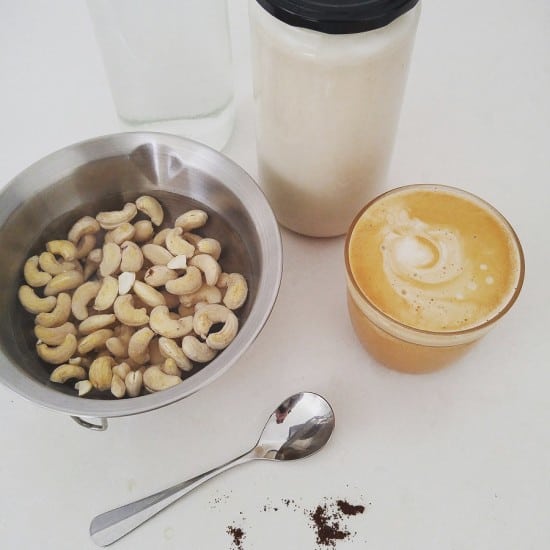
The coffee machine was a second-hand freebie and we use it every day. We buy our coffee directly from a local cafe who grind their own beans and we take a reusable bag. We buy oats from our local bulk store, bread from a local bakery. When we started out we purchased milk in returnable bottles, but now we make our own cashew milk and use that in both the coffee and the porridge.

When it comes to the dishes we buy dishwashing liquid from our local bulk store. We take a glass jar or bottle and fill it up. I’ve never tried to make my own – sometimes it’s easier to buy things.We also buy laundry detergent from the bulk store.

I have a wooden dish brush with compostable bristles, a wooden pot brush, a scourer made from coconut coir and a bottle brush made from wire and coconut coir. I also have a plastic brush that came with my food processor before my plastic-free days (pre-2012). I will use it until it breaks, and then no more plastic for me!

img_20160711_090707

Our adopted greyhound called Hans lives with us, and we take him for a walk first thing in the morning. He prefers to do his business in the park a 10 minute walk from our house rather than in our yard.  I pick it up using old newspaper (usually the community newspaper that my husband likes to read first), carry it home (!) and we put it in our homemade dog poo worm farm.

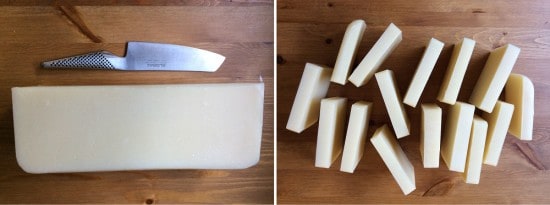
Our bathroom routine is pretty simple. We decluttered a lot of products once we realised that they were unnecessary for us. We use bar soap for washing: I buy a big 2kg block packaging-free from a local lady and chop it into bars. My husband also uses this for his hair; I use rye flour (or occasionally bicarb) and white vinegar to rinse. I buy both of these from the bulk store.

Bulk Soap Chopped Into Bars Zero Waste Natural Beauty Treading My Own Path

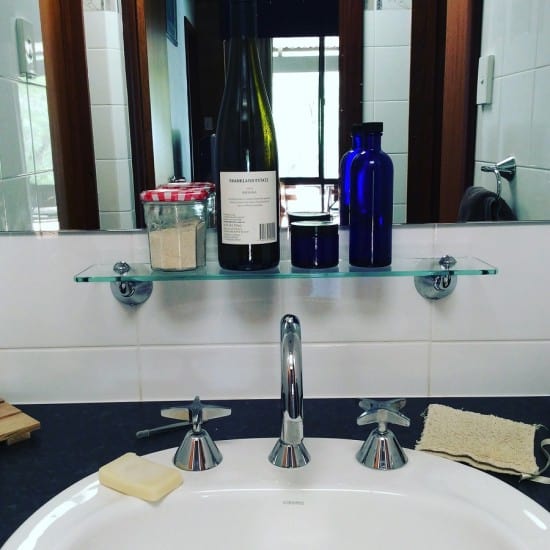
Skincare Regime Zero Waste Bathroom Products Treading My Own Path

We use almond oil as a moisturiser. We use different deodorants as my husband reacts to bicarb and I don’t – I make both of them using ingredients purchased in bulk. I also make my own toothpaste and sunscreen. It sounds like a lot of effort, but most of these recipes are simply mixing a few things together in a jar.

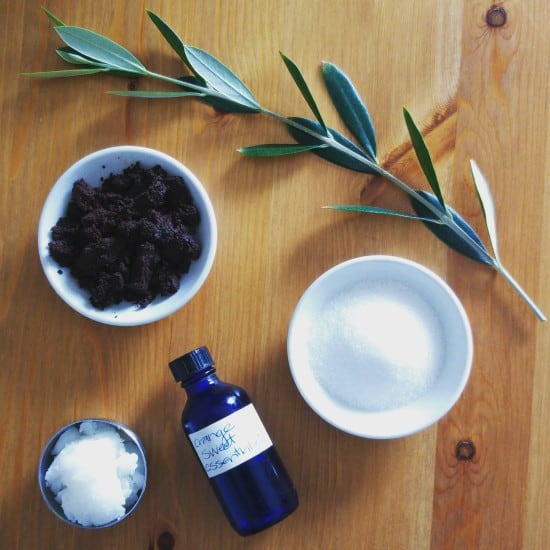
I have a body brush which I use to exfoliate, and I make coffee scrub using the waste coffee grounds collected from a nearby cafe. (We put the rest of the coffee grounds in our compost as it is a great compost activator.)

DIY Coffee Scrub Treading My Own Path

I use a Diva cup (a reusable menstrual cup) and a reusable cloth pad.

The bamboo toothbrush is almost seen as a zero waste essential, but we no longer use them. We found the bristles falling out and washing down the drain too frustrating. Instead we have toothbrushes with reusable heads that need replacing once every six months. The toothbrush head and the packaging is currently recycled by Terracycle in Australia. (We got these in 2014. There are now many more bamboo toothbrushes on the market: it may be possible to find a better brand than the one we used to use. As we have these we will continue to use them until they no longer make the replacement heads.)

SilverCare Toothbrushes with Replaceable Heads Treading My Own Path

We buy toilet paper from Who Gives a Crap, an Australian company that donate 50% of their profits to water charities and don’t package their paper in plastic. I also use the wrappers to pick up Hans’ business. I’ve used the toilet rolls to make seedling pots.

We don’t have tissues in our home. I have 3 hankies, and if I’m desperate I’ll use toilet paper and compost it. Yes, used tissues are compostable!

I work from home, but my husband heads out and he always takes his lunch with him in a stainless steel lunchbox (or occasionally, a Pyrex dish). Lunch is usually leftovers from the previous evening’s dinner.

Zero Waste Lunchbox Stainless Steel

Both of us keep a bamboo cutlery set (with a metal reusable straw added in), a water bottle, reusable coffee cup, a reusable shopping bag and reusable produce bags in our bags. They don’t weigh much or take up much space, and you never know when they might come in handy!

If we are heading the the bulk store we will sometimes take glass jars, and always extra produce bags and reusable shopping bags. My husband works close to our local bulk store so he tends to make a few trips a week rather than doing one big shop – it’s easier for him to carry home, and he gets less flustered!

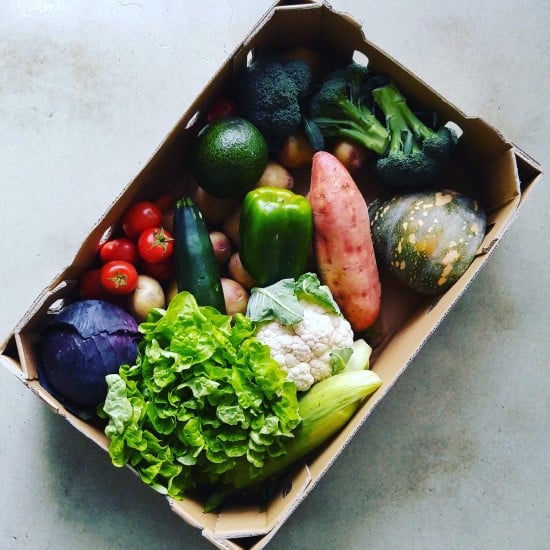
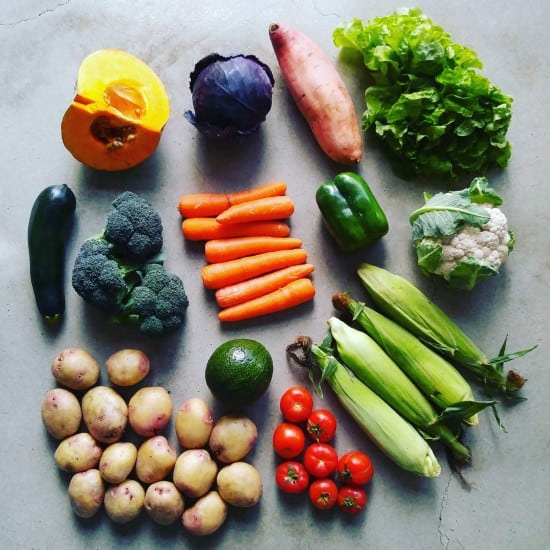
We get a vegetable box delivered from a local company once a fortnight. It is plastic-free and organic, and we top up from our local independent store or the local farmers markets. We eat a plant-based diet, meaning we eat a lot of vegetables, pulses and grains. Oh, and chocolate!

Organic Collective Veg Box Treading My Own Path Organic Veg Box Delivery Treading My Own Path

Our veggie garden is beginning to be more productive and we’ve had lots of additional produce from there.

It’s easy to find everything we want to eat without packaging. We have so much choice that if we can’t find a food item without packaging, we don’t buy it. There are two exceptions that I can think of: we buy capers in a jar (at my husband’s insistence – we found a big size that lasts for 6 months) and alcohol.

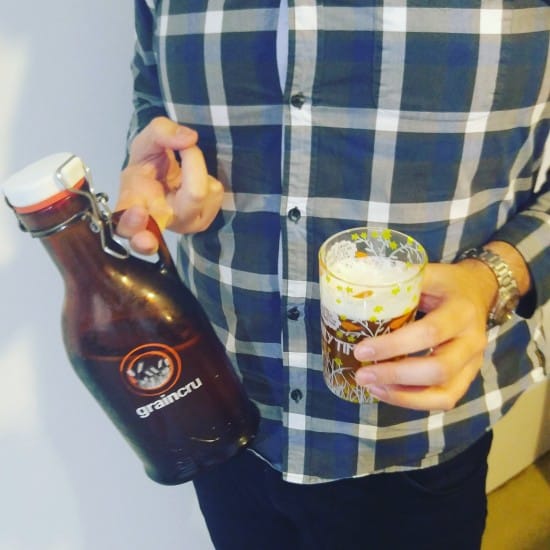
We live very close to an amazing off-license/liquor store that sells a number of beers without packaging, and is always rotating their stock. My husband has two refillable growlers and fills them there, but he does also buy beer in glass bottles and cans occasionally (by which I mean, more than I’d like ;)

Graincru zero waste beer Treading My Own Path

The store also sells white wine in bulk, and we have purchased that, but we tend to buy wine in regular wine bottles. We don’t buy it often – it is generally limited to when we have guests.

We have a “No Junk Mail” sticker on our letterbox which eliminates a lot of the unnecessary advertising we receive. We have turned all of our bills to paperless, but we do still receive post. There are some works happening nearby and we have received at least 10 notices in the last 6 months telling us about them!

I would love to tell you that I have a paperless office, but I sit here surrounded on both sides by paper. I don’t buy any paper, nor have a printer – and still it comes! Often I use old letters, invoices and the back of used envelopes to make notes, and then I later put the info on my computer and recycle the paper. (I have been told that it is a better use of resources to recycle paper rather than compost it, and so that is what I do.)

All of the furniture in our home is second-hand, although not everything we own. However, we do always check the second-hand listings before buying anything new. We are usually happy to wait before buying, just in case.

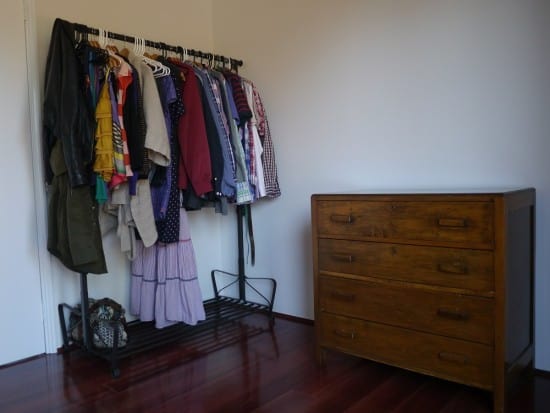
Our clothes are a mix of pre-zero waste purchases, second hand charity shop finds, second hand eBay finds and new ethical/organic products. I’m working on making my wardrobe 100% biodegradable and natural fibres (or as close as I can) and whilst I love second hand, I also want to support small producers who are trying to do the right thing. It’s a balance.

bedroom-wardrobe-chest-of-drawers-hoarder-minimalist-treading-my-own-path

We tend to only drink water (from the tap), tea or coffee, and my husband – beer. We buy loose leaf tea (from the bulk store) and use a teapot (well technically the thermos flask).

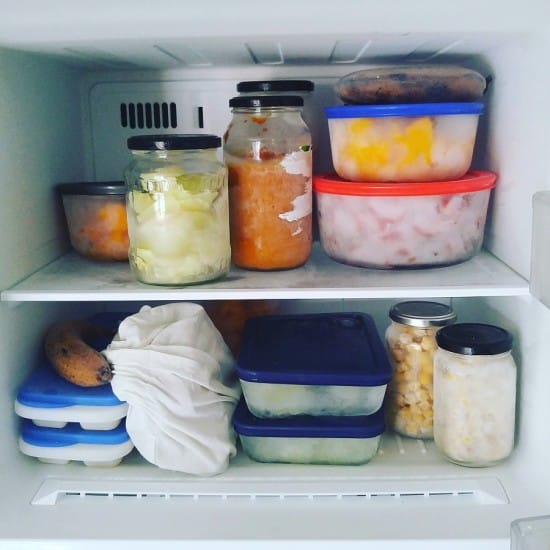
Our dinners are usually rice, quinoa or potatoes, and occasionally pasta, with vegetables and lentils/pulses. We eat a lot of nuts, too. I could dedicate a whole other post to what we eat (and maybe I will!). We always make enough for leftovers the following day, and maybe even a couple of days. Any leftovers that won’t be eaten soon go in the freezer – usually in a glass jar.

Zero Waste Freezer Glass Jar Storage

If we go out for dinner we always take a container with us, and our reusables. You never know when you might be caught out! We rarely get takeaway as we prefer to dine in, although we do get takeaway pizza a couple of times a year. The empty boxes go in our compost bin.

Our home cleaning routine is pretty simple. We use water, vinegar, bicarb and a scrubber for almost everything. Clove oil is great in the bathroom as it kills mould. We have a mop (a metal frame with removable washable cloths) and a dustpan for the floors. We still have a vacuum cleaner, too.

We are both members of our local library, and my husband must be their best client! We can borrow magazines, DVDs and CDs in addition to books, and he has almost always maxed out his loan allowance (of 15 items!). We do not have a television, and we use the laptop to watch DVDs.

We empty our compost scraps daily into our compost bin. We have a small wastepaper basket which we use for our recycling, and we currently empty this about once a month.

What did you think? I’d love to hear from you! Do you have any questions? Was there anything I missed off the list? Anything you’d like to know more about? How does this compare with your own lifestyle? Are there any changes there that you think will be easy for you to implement? Are there any changes there that you’d like to suggest to me? Anything else that you’d like to add? Please tell me your thoughts in the comments below!

[leadpages_leadbox leadbox_id=1429a0746639c5] [/leadpages_leadbox]

https://treadingmyownpath.com/wp-content/uploads/2016/11/A-Day-in-the-Life-Treading-My-Own-Path.jpg 666 1000 Lindsay (Treading My Own Path) https://treadingmyownpath.com/wp-content/uploads/2019/06/logo.png Lindsay (Treading My Own Path)2017-01-25 13:16:532019-06-15 20:35:38Zero Waste Living (A Day in the Life)

Where to Find Zero Waste + Plastic Free Essentials Online

87 Comments/in Plastic Free Living, Zero Waste/by Lindsay (Treading My Own Path)

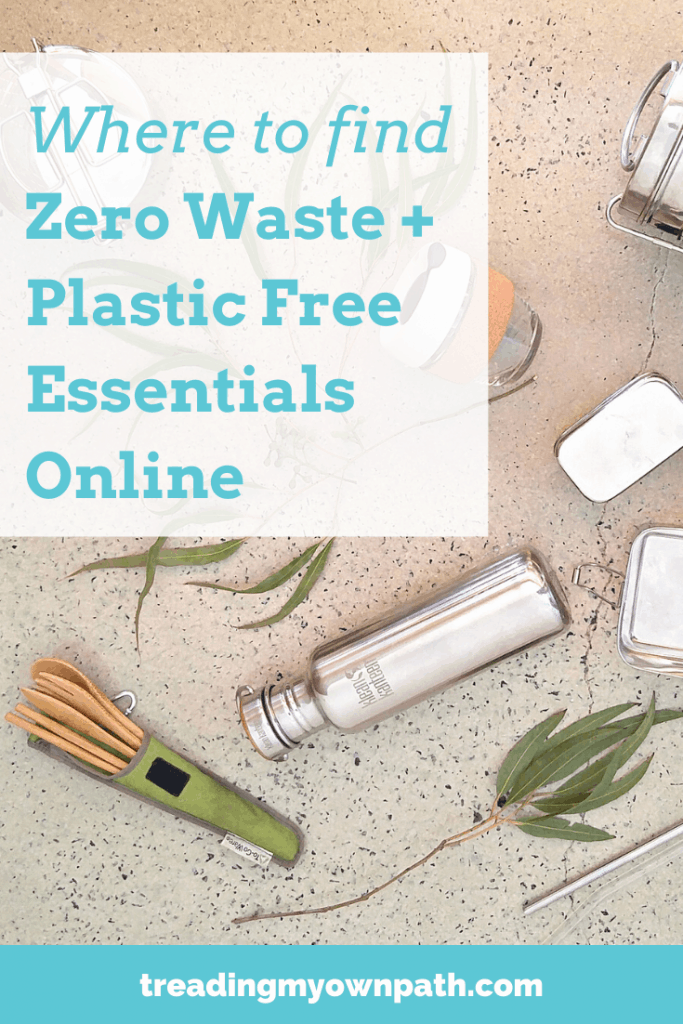
As someone who does her best to discourage shopping, I’ve put off writing this guide. For years. Yet I’m regularly asked where to find certain eco-friendly products. And yes: there are certain items that make living plastic-free and zero waste easier. The purpose of this website is to make it easier for people to live more sustainable, ethical, plastic-free and zero waste lives. Very occasionally, that means stuff.

I’ve put this resource together to help anyone looking for zero waste or plastic-free alternatives. I would always encourage everyone to use what they have first, and to look for second-hand options before buying anything new. Borrowing things from friends to establish whether you will actually use them before buying is also recommended.

I would also plead: shop as local as possible, and support independent stores. We all bemoan the lack of choice, the rise of big box stores and the demise of the independent store. Yet when we buy something, the temptation is often to choose the cheapest option, rather than the most ethical.

Remember, when we buy things, we vote with our money for the companies we want to support and the kind of future we want to see.
Zero Waste and Plastic Free Online Shopping

I’ve tried to feature stores that have a range of products, rather than just one or two offerings. This list is only as good as my personal experience and the feedback and recommendations I receive. If you know of a store I should add to this list – please tell me!

The most zero waste option is always to buy from a physical store rather than to purchase online, where the option exists. The next best option is to choose the most local online store to you. Etsy is a handmade marketplace and is a great place to find handmade produce bags, reusable bags and other crafted items, and to support local producers.

Zero Waste and Plastic Free Online Shopping, Australia
Biome Eco Store

An online store (with stores in Brisbane) that isn’t exclusively plastic-free or zero waste but with a very high proportion of zero waste products. They do have a dedicated “No Waste and Plastic Free” section, and also ship their products without using plastic.

Great for: stainless steel and glass lunchboxes and containers, water bottles, reusable straws, icy pole moulds, cutlery, glass jars, bamboo dental care, and lots more.

W: biome.com.au

Delivery: Australia (Free Delivery over $130); international delivery at cost

…

Shop Naturally

An online store (with pickup from their warehouse available in NSW) is an online health and wellbeing store with a fair range of plastic-free products in bamboo and stainless steel, and BPA-free silicone.

Great for: water bottles, bamboo kitchenware, glass food storage, popsicle moulds and ice cube trays.

W: shopnaturally.com.au

Delivery: Australia only (free shipping starts at $100 spend and minimum spend increases with weight and postcode).

…

Flora & Fauna

Flora & Fauna is a vegan, cruelty-free and eco-friendly online store selling everything from fashion to homewares, dental care to reusables. Not everything in their store is zero waste or even plastic-free, but they do have a range of options spread across their categories. They also sell some unusual products including copper water bottles.

W: floraandfauna.com.au

Delivery: Worlwide. Austalia: $6.95 for orders up to $50.00, free delivery over $50. Some smaller items have free shipping with no minimum spend. New Zealand: shipping from $10 via DHL. Worldwide shipping from $15 via DHL.

…

Dandelion Eco Store

An online health and wellbeing store based in Perth, WA (with pickup available from the Growers Green Farmers Market, South Fremantle on Sundays). Rachel has a growing collection of stainless steel and plastic-free food storage and food preparation containers.

Great for: plastic-free food storage solutions including lunchboxes, water bottles, other reusables.

W: dandelionecostore.com.au

Delivery: Australia only (Free shipping to Perth metro over $50; $15 flat rate shipping for Australia-wide metro with spends up to $299; free shipping Australia-wide metro for spends over $300; rural Australia shipping calculated by weight and postcode).

…

Urban Revolution

An online eco-store based in Perth with a range of plastic free items and reusables and a big focus on natural and compostable options, that ship all parcels with reused materials and avoids plastic where possible.

W: urbanrevolution.com.au

Delivery: Australia only (delivery calculated by weight; local pickup available)

…

Ecolosophy

An online eco-store with a range of plastic free items and reusables, that ship all parcels without plastic tape or packaging.

W: ecolosophy.com.au

Delivery: Australia only ($9.95 under $150, free delivery over $150)

…

Going Green Solutions

An online store based in Melbourne (with local pickup available from Hurstbridge, Melbourne) with two main categories: green catering & packaging; and eco home & lifestyle. Has a broad range of products with some less-commonly found items including make-up refills.

W: goinggreensolutions.com.au

Delivery: Australia only (free delivery over $100 if less than 3kg; heavier orders calculated by weight; local pickup available)

…

The Source Bulk Foods

As the name suggests, The Source Bulk Foods are predominantly a food retailer. They are passionate about zero waste living and reducing plastic though, and have a number of reusables for sale on their website or at their 33 stores across Australia including beeswax wraps, produce bags, Planet Box lunchboxes and water bottles.

W. thesourcebulkfoods.com.au

Delivery: Australia only (from $9.95; price dependent on postcode and weight of order)

Zero Waste and Plastic Free Online Shopping, USA and Canada

Life Without Plastic

An online store dedicated to offering products that are plastic-free, this store has everything you might need (and no doubt, plenty you don’t!) for living a plastic-free and zero waste lifestyle. All of the products are made with stainless steel, glass and wood.

W: lifewithoutplastic.com

Delivery: Flat Rate Shipping to North America & Canada (excluding Hawaii & Alaska); International Delivery at cost.

…

Mighty Nest

An online store with a focus on natural, organic and non-toxic products, with lots of glass, stainless steel and non-plastic options.

W: mightynest.com

Delivery: USA (free delivery over $50 except Alaska, Hawaii and US Territories), Australia and Canada (delivery at cost)

…

The Ultimate Green Store

This isn’t a plastic-free or zero waste store as such, and there are no dedicated categories. There are lots of natural products and recycled materials, and the range is huge. The store offers bamboo homewares, recycled glass products and a small selection of reusables. You won’t find specialist zero waste products here but it is helpful for the basics. They also have a big range of organic natural clothing.

W: theultimategreenstore.com

Delivery: USA only (except by special request)

…

Tiny Yellow Bungalow

A small eco-store based in Athens, Georgia (local pickup is also available) dedicated to zero waste living, which also sells a small number of vintage items.

Great for: vintage and arty zero waste items, and reusables.

W: tinyyellowbungalow.com

Delivery: USA (price per order value; orders over $100 cost a flat rate $15), International ($26 for orders under $150, $36 for orders over $150)

…

Wild Minimalist

A small zero waste online store based in San Rafael, California which also sells a small number of vintage items. They are committed to packaging items plastic-free, and use recyclable materials where possible.

W: wildminimalist.com

Delivery: USA and Canada (shipping calculated at checkout; free standard delivery for orders over $75 to the Continental U.S. & Canada)

…

NU Grocery (Canada)

An online zero waste store with a growing collection of zero waste products under five categories. They also ship their products completely plastic-free and all packaging is fully recyclable.

W: nu-grocery.myshopify.com

Delivery: Canada only ($10, free delivery on orders over $85)

…

PAREdown Home (Canada)

An online zero waste store with a small range of products, most of which are plastic-free.

W: paredownhome.com

Delivery: Worldwide, no prices listed.

Zero Waste and Plastic Free Online Shopping, UK and Ireland

A Slice of Green

The sister site of Green Tulip (listed below), A Slice of Green products are focused on waste minimization and the mantra “reduce-reuse-recycle”. Not all products are plastic-free, but the emphasis is on reusables and sustainability. Focussed on food preparation, storage and transport.

W : asliceofgreen.co.uk

Delivery: UK (free delivery over £30, costs £2.95 under £30), international delivery at cost (on request)

…

Green Tulip

An ethical gifts website with 6 core values: organic, natural, British, recycled, sustainable and fair trade. Their sister site A Slice of Green focuses on food-based reusables, but Green Tulip has plenty of sustainable alternatives to conventional products including garden, wellbeing and recycled glass.

W: greentulip.co.uk

Delivery: UK (free delivery over £30, costs £2.95 under £30), international delivery at cost (on request)

…

Boobalou

Boobalou is a small UK company working to reduce household waste, with a huge focus on family-friendly reusables. There are four main categories: eco lady, eco baby, eco home and eco living. Whilst not everything is plastic-free, the majority is, and all of the products are more eco-friendly than conventional alternatives.

Great for: anyone with babies, young kids and families.

W: boobalou.co.uk

Delivery: UK (free delivery over £50, costs £2.85 under £50), International (£6.85 flat rate; large orders at cost)

…

Less Plastic

This small online store is committed to promoting the plastic-free way of life, and all products are designed to live without (or with less plastic). Most products are for food prep, storage and transport, with a real emphasis on stainless steel reusables.

W: lessplastic.co.uk

Delivery: UK (£3.50 under £50, free delivery over £50), international delivery on request

…

Eqo Living

A small online store and family business committed to offering eco-friendly, reusable products for living with less waste. Most products are for food preparation, storage and transport.

W: eqoliving.com

Delivery: UK only (£4.90 standard delivery under £100, free delivery over £100)

…

&Keep

Based in Dorset, this online homewares store stocks products chosen with the idea that they are bought “once” and will last forever. Lots of natural materials and fibres, and a selection of reusables.

W: andkeep.com

Delivery: UK only (Standard delivery £1.99, free delivery over £50

…

Ethical Superstore

This isn’t a plastic-free or zero waste store as such, and there is plenty of plastic! But there is such a vast array of products (it is definitely a superstore!) that there are some zero waste options. They have a home composting section, bamboo homewares, and a small selection of reusables. You won’t find specialist zero waste products here but it is helpful for the basics. They also have a big range of organic natural clothing.

W: ethicalsuperstore.com

Delivery: UK and Ireland only (free delivery over £50)

…

Natural Collection

Owned by the same company as Ethical Superstore, this online shop has many of the same products but they seem to run different offers, so it may be worth checking both.

W: naturalcollection.com

Delivery: UK and Ireland only (free delivery over £50)

Anything But Plastic

A small online eco store selling a limited range of plastic-free products including personal care items (dental floss, soap and make-up).

W: anythingbutplastic.co.uk

Zero Waste and Plastic Free Online Shopping, Europe
European stores are divided into two sections: those with English versions and those without. (The latter are presented as a list simply because I am unable to read them to give a more detailed account of their offering!)

Sinplastico (Spain)

A Spanish website (with English and French translations) that focuses on alternative products to plastic. There are five categories: kitchen, bath & body, home, kids & babies, and takeaway.

W : sinplastico.com

Delivery: Europe (Spain and Portugal €3-10 under €120, free over €120; France €10 under €120, free over €200; rest of Europe €15 under €120, €10 over €200)

Non-English Online Zero Waste Stores:

France:

Sans BPA
W: sans-bpa.com

Hakuna Tata – Boutique Zero Dechet
W: boutiquezerodechet.com

Czech Republik:

Econea
W: econea.cz

Germany:

Laguna
W: laguna-onlineshop.de

Monomeer
W: monomeer.de

Original Unverpackt
W: original-unverpackt.de

Plasno
W: plasno.de

Plasticarian
W: einfach-ohne-plastik.at

Zero Waste Laden
W: zerowasteladen.de

Zero Waste Shop
W: zerowasteshop.de

Greece

Sapontina
W: sapontina.gr

Netherlands:

Babongo
W: babongoshop.nl

Ecomondo
W: ecomondo.nl

Bag-Again NL
W: bag-again.nl

Younetics
W: younetics.nl

Now I’d love to hear from you! Please help make this list as useful as possible to as many people as possible! If you know of a store that’s missing, please let me know in the comments so I can add it to the list. If you have any experiences of these (or other) stores, please share away and let everyone know your thoughts – good and bad! Any other tips or alternatives to find products also welcome. Tell me what you think in the comments below!

[leadpages_leadbox leadbox_id=1429a0746639c5] [/leadpages_leadbox]

Disclaimer: These companies have been included by me or recommended by my readers as great online stores to purchase zero waste or plastic-free products, based solely on their product offering, ethics and customer service. No store has paid me to be featured on this list. Whilst I have not personally shopped at all of these stores, I can recognise products that I own or recommend in their pages, and I trust the opinion of my readers. This post contains some affiliate links which means if you click a link and choose to purchase a product, I may be compensated a small amount at no extra cost to you. This in no way affects my recommendations as my priority is always you, my readers.
https://treadingmyownpath.com/wp-content/uploads/2017/01/Shops_MainBanner.png 666 1000 Lindsay (Treading My Own Path) https://treadingmyownpath.com/wp-content/uploads/2019/06/logo.png Lindsay (Treading My Own Path)2017-01-12 11:00:132019-11-21 16:56:49Where to Find Zero Waste + Plastic Free Essentials Online

Changing the Story: Talking Rubbish on the Tedx Stage

45 Comments/in Out & About, Plastic Free Living, Zero Waste/by Lindsay (Treading My Own Path)

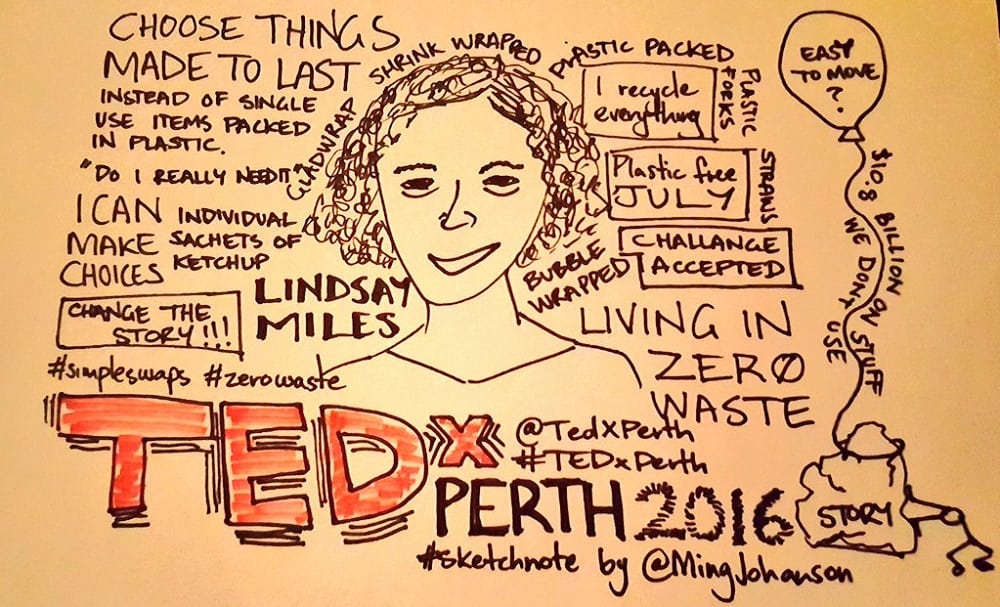
Taking the stage at last year’s TedX Perth event has to be one of the highlights of the year. On behalf of the zero waste and plastic-free community, the opportunity to share the message about living with less waste with 1700 people was pretty mind-blowing.

From a personal perspective, talking in front of that many people was pretty mind-blowing too!

I never thought of myself as a public speaker. At school, if asked to speak in front of the class, I’d end up bawling until I was allowed to sit back down. (I’m sorry, classmates, for having to put you all through that.) And yes, this was in my teens.

When I first began writing this blog back in 2012 it was completely anonymous.

I’m not someone who loves the limelight.

My first public speaking opportunity came in 2013, when Plastic Free July asked me to talk for 5 minutes in front of 60 people. The only reason I said yes was because I felt that the message I had to share was more important than my personal fear of embarrassment/humiliation/self-doubt.

I remember pacing in the toilets beforehand, heart racing and sweaty palms, panicking about standing in front of all those people.

After that 5 minute talk, where I spoke too fast, flailed my arms wildly and trembled, a radio host who was watching asked me for a pre-recorded interview. I said no.

He approached me again as I was leaving. After some persuasion about how important the message was, I reluctantly agreed.

Then the next community group or organsiation asked. And the next.

And that is how this non-public speaker became a public speaker. Whenever I was asked to speak or present, I’d remember that the story and the cause is the most important thing, and I’d bite my lip and agree.

And in time, with practice, I got better. I learned to slow down. I learned not to panic. I felt more confident in myself, and in what I was talking about.

I still flail my arms uncontrollably! Something to work on ;)

Now, I love to speak to others. It’s a way to amplify the message. I can do what I do, and tell all my friends, but the impact is limited. When I start to speak to people who don’t know me and share my story with them, that’s when the message really starts to spread.

If you’re passionate about the plastic-free life and the zero waste movement (or something else!), then I encourage you to get out there, into your community, and spread the word. You don’t have to take the stage at a big event (at least, not at first)! I have spoken to groups as small as 15 people.

The opportunities are everywhere: at your local library, the farmers’ market, your workplace, a local school or community group. Your message is too important not to share.

You don’t have to be a public speaker. I wasn’t. You don’t have to love standing in front of an audience, or have confidence in spades. I didn’t. I’m just someone with a message I want to share. That’s all you need to get out there and make a difference.

Now I’d love to hear from you! If you get a chance to watch the video, I’d love to hear what you think! And if you’ve tips for keeping flailing arms at bay, I’m all ears ;) Have you personally had any experiences of speaking in public? Is it something that you embrace, or that you dread? Is it something you’d like to do in 2017? How have you managed to conquer your nerves? Do you have tips for anyone starting out? Is it something you still struggle with? Anything else you’d like to add? Please tell me your thoughts in the comments below!

[leadpages_leadbox leadbox_id=1429a0746639c5] [/leadpages_leadbox]

https://treadingmyownpath.com/wp-content/uploads/2017/01/Sketchnote-Tedx-Perth-Living-with-Less-Waste-Lindsay-Miles-Treading-My-Own-Path.jpg 607 1000 Lindsay (Treading My Own Path) https://treadingmyownpath.com/wp-content/uploads/2019/06/logo.png Lindsay (Treading My Own Path)2017-01-05 12:00:022019-06-15 20:41:04Changing the Story: Talking Rubbish on the Tedx Stage

Finding Solutions to Plastic Pollution (How You Can Help)

5 Comments/in Community, Living With Less Waste, Plastic Free Living/by Lindsay (Treading My Own Path)

One person can make a difference. I believe this, and I embrace it wholeheartedly. Knowing that my actions matter, that is what empowers and motivates me to strive to do a little better every day.

Whilst one individual can have an impact, when individuals get together… well, that’s when change really begins to happen! Collectively, our impact can be amplified. That’s what a movement is – a group of people, working together for the same outcome.

Plastic pollution and over-consumption of resources are both massive, complex issues. The problem isn’t going to be solved just because I no longer have a rubbish bin, or can fit my waste into a glass jar. It’s not going to be solved if 10,000 of us can all fit our waste into a glass jar, either.

It’s going to be solved when we all work together to share ideas, apply pressure to decision-makers and organizations, and offer solutions!

If you’d like to do more, and be part of a movement, here are some options. Whether it’s getting out into your local community, volunteering, joining a campaign, learning more or donating to an organization doing great work, there are plenty of possibilities. If you see something you like, see if there is something similar in your local area… or start your own group!

If you have any others you’d like to add, please let me know in the comments below : )

Citizen Science + Litter Apps

litter-apps-and-citizen-science-treading-my-own-path

Litter apps are a simple way to add any litter you pick up to a national or international database. Citizen science in action! Simply take a photo of what you pick up, and record the location, litter type and brand. This data is collected to identify the most commonly found brands and products, and problem hotspots. The data can be used to work with companies and organisations to find more sustainable solutions, and to influence politicians, councils and other decision-makers to make change.

– Litterati (US and Worldwide)

Litterati describe themselves as a community that’s identifying, mapping, and collecting the world’s litter. Based in America, they track plastic and other litter anywhere in the world.

Litterati App (iPhone only)

Website: www.litterati.org

– Marine Debris Tracker (US and Worldwide)

An American Debris Tracker app that collects marine debris data from all over the world, including 1200 locations in the USA.

Marine Debris Tracker App for Android / Marine Debris Tracker App for iPhone

Website: www.marinedebris.engr.uga.edu/

– Marine LitterWatch (Europe)

Monitors beach litter in Europe. The app was developed by the European Environment Agency to help aid data gathering in coastal areas.

Marine LitterWatch App for Android / Marine Litterwatch App for iPhone

Website: www.eea.europa.eu

– Tangaroa Blue (AU)

Whilst not an app, Tangaroa Blue’s Australian Marine Debris Database is the most comprehensive collection of marine debris data in Australia. All data can be submitted via this AMDI submission form: since 2004 over 2million pieces of debris have been recorded.

Website: www.tangaroablue.org

Litter Clean-Ups

beach-treading-my-own-path

Sure, it’s possible to just go outside your front door any time, and pick up litter. In fact, that is what many of these organisations encourage. But there’s also something nice about getting together with a group of like-minded individuals and making a much bigger impact.

– Responsible Runners (AU)

An Australian initiative to get runners and walkers clearing up litter. They organize weekly clean-up events around the country involving 30 minute litter picking, and have picked up 21 tonnes of rubbish to date. All rubbish is recorded, and the data is submitted to Tangaroa Blue Australian Marine Debris Database (see above).

Website: www.responsiblerunners.org

– Take 3 For The Sea (AU and worldwide)

An Australian movement that encourages everyone to simply take 3 pieces of rubbish with you when you leave the beach, river, or anywhere else. As well as running school education programs, they also offer a Guardian program for local groups to establish, and use social media to spread the #take3forthesea message.

Website: www.take3.org.au

– Sea Shepherd Marine Debris Campaign (AU)

In 2016, Sea Shepherd Australia announced a new marine debris campaign which involves organizing beach and river clean-up events, community engagement and education. At present this appears to be specific to Australia.

Website: www.seashepherd.org.au

– Ocean Conservancy (US)

An American not-for-profit organisation that promotes science-based solutions to protect the ocean. Ocean Conservancy organises the annual International Coastal Cleanup event (a global event), and helps individuals organise their own beach and river cleanups for other times of the year.

Website: www.oceanconservancy.org

– Two Hands Project (AU)

Two Hands Project embodies the spirit of international Clean Up Days, but asks – why not use your two hands and 3o minutes of your time to clean up on ANY day of the year? They occasionally run organized beach clean-ups, and offer secondary school education programs.

Website: www.twohandsproject.org

– Keep Australia Beautiful (AU)

Keep Australia Beautiful works towards a litter-free environment by running grass-roots programs in every state and territory in Australia. They run “Keep Austrlia Beautiful Week” annually, and assist in organising cleanup and other community events.

Website: www.kab.org.au

Campaigning

campaiging

Organisations often work on specific campaigns. Campaigns work towards a specific goal, such as changing legislation on particular issues, often by raising awareness and gaining the support of the public to apply pressure to decision-makers.

– Plastic Soup Foundation (NL)

Plastic Soup Foundation is a campaigning and advocacy group working towards eliminating plastic pollution from our oceans. Based in the Netherlands, they work on a number of campaigns including Reach for the Zero, Beat the Microbead and Ocean Clean Wash.

Website: www.plasticsoupfoundation.org

– Marine Conservation Society (UK)

The Marine Conservation Society (MCS) is a UK ocean protection charity. They campaign on a number of issues including banning the mass release of balloons and sky lanterns, microbeads and clearer labelling for wet wipes (to prevent them being flushed down the loo). They also run a Plastic Free June fundraising challenge.

Website: www.mcsuk.org

– Surfrider Foundation (US and Worldwide)

Surfrider Foundation is a campaigning organisation dedicated to the protection and enjoyment of the world’s oceans and beaches. Beginning in the USA 30 years ago, Surfrider Foundation has grown to 18 countries around the world, including Australia. Among other ocean-realted campaigning, they support local, regional, state and national campaigns on plastic pollution.

Website: www.surfrider.org
Surfrider Australia Website: www.surfrider.org.au

– Surfers Against Sewage (UK)

A UK environmental charity protecting the UK’s waves, oceans and beaches. Surfers Against Sewage campaign against marine litter, and recent campagins include “No Butts on the Beach”, “Return to Offender” (which has to be my favourite) and “Think Before You Flush“.

Website: www.sas.org.uk

– Story of Stuff (US)

The Story of Stuff project began as a series of education movies about the environmental impacts of “stuff”. As well as education, they now run campaigns fighting plastic pollution, including banning bottled water and banning the microbead.

Website: www.storyofstuff.org

– The Last Plastic Straw (US)

The Last Plastic Straw campaigns to get businesses to only give out straws on demand, and to use fully biodegradable alternatives to plastic straws. They also raise awareness of plastic pollution.

Website: www.thelastplasticstraw.org

Challenges

calendar

Collective challenges are a great way to raise awareness and build momentum on an issue, as well as creating community and inspiring further action.

– Plastic Free July (AU and Worldwide)

Plastic Free July is a month-long challenge to refuse and avoid single-use plastic. It’s what got me started on my plastic-free journey and has expanded from a local campaign with just 30 participants to a global initiative that spans almost 200 countries.

Website: www.plasticfreejuly.org

Marine Research and Education

Ocean Plastic Research Treading My Own Path

Expeditions and research bring in the real scientific data, and allow us to understand the wider impacts of plastic pollution. It is this knowledge that raises awareness and drives campaigns, education and action.

– 5 Gyres (US)

Founded in 2008, 5 Gyres is a non-profit organisation raising awareness about plastic pollution through science, art, education and adventure. They have been involved with campaigns including the “ban the microbead” campaign, and run programs and expeditions.

Website: www.5gyres.org

– Algalita (US)

Founded in 1994 by Captain Charles Moore, the man who discovered the Great Pacific Garbage Patch, Algalita have pioneered the study of plastic pollution in the marine environment. They focus on research, education and action, and lead marine expeditions.

Website: www.algalita.org

Umbrella Groups and Coalitions

lighthouse

Umbrella organizations provide resources and offer an identity to smaller organisations, whilst building a sense of community and inclusiveness. Umbrella organisations allow members to share resources and amplify their message, meaning increased effectiveness.

– Plastic Pollution Coalition (US)

The Plastic Pollution Coalition is a global alliance of individuals, organizations, businesses and policymakers working toward a world free of plastic pollution. Founded in 2009 and now with more than 400 member organisations (you can find a list of current members here), they provide education, scientific research and solutions for both individuals and organisations. The Education page is a wealth of useful information : )

Website: www.plasticpollutioncoalition.org

Now I’d love to hear from you! Are they any great organisations I’ve missed off the list? Any campaigns or groups I failed to mention? Any I’ve mentioned here that you are already involved with? Any that are completely new to you? Do you work with local groups in your area? Do you know about great work being done at grass roots level? I love to hear about others making a difference and creating positive impact so share away! Any other thoughts or comments, I’d love to hear those too, so please tell me in the space below!

[leadpages_leadbox leadbox_id=1429a0746639c5] [/leadpages_leadbox]

https://treadingmyownpath.com/wp-content/uploads/2016/11/jeremy-bishop-160882-unsplash.jpg 750 1000 Lindsay (Treading My Own Path) https://treadingmyownpath.com/wp-content/uploads/2019/06/logo.png Lindsay (Treading My Own Path)2016-11-10 13:00:242019-06-25 11:38:14Finding Solutions to Plastic Pollution (How You Can Help)

My Top Ten Documentaries To Get You Thinking (and Questioning)

53 Comments/in Ethical Living, Living With Less Waste, Plastic Free Living/by Lindsay (Treading My Own Path)

Recently a reader asked if I could write a blog post about my top environmental documentaries. How could I possibly refuse?! There are so many great documentaries out there, and watching them is a great way to understand the issues, learn more, and feel re-inspired to take action. Not to mention coerce friends and family into learning a little more (and maybe help them understand why we do what we do). Invite them over with the lure of (plastic-free) popcorn and hope that the message will give them something to think about ;)

Here it is: my top 10 eco documentaries. Actually, I’ve listed 12 (well, if you count the side recommendations, 14). I could give you a list of ten documentaries about plastic, but I wanted to cover some of the other topics I’m interested in, so there is a mix. I’ve listed them roughly in my order of preference.

So, drumroll please…

1. Bag It

Bag It! has to feature as number 1 on my list. It’s the documentary I saw in June 2012 after signing up for Plastic Free July that changed my whole perspective on the way I consume, how I view plastic, and in fact, the whole course of my life! I often describe it as “my lightbulb moment”, because, despite the cliche, it really was!

Bag It! is a documentary about the issues of plastic, but offers a raft of solutions, and steps that we as individuals can take to make change. It’s easy to follow, entertaining and funny, but with plenty to think about. It was released in 2011, but remains as relevant as ever. A must watch!

2. True Cost

True Cost is a documentary released in 2015 that looks behind the modern fashion industry. This is far more than a documentary about sweat shops. It explores the issues of materialism and overconsumption; the power of the big retailers and advertising; the health impacts suffered by workers and the environmental devastation that happens worldwide. It gives a face to some of the workers and workers, and provides stories of those trying to change the system. However much you think you know about fast fashion, I guarantee that you will learn something new.

3. Cowspiracy: The Sustainability Secret

This documentary is often touted by vegans as a “must-watch”, which tends to put non-vegans off. Please, do not be put off from watching this great documentary on the basis of what you eat for dinner! Cowspiracy is not a lecture, nor is it trying to make the world vegan. And there is no gory stuff. What it talks about is the impact that industrial agriculture has on the world – and how, when there was 1 billion people on the planet, this wasn’t an issue, now there’s 7 billion, it is becoming one. It also talks a lot about politics and power, which was what I found really interesting. Modern agriculture is big business, and has a lot of influence over governments, corporations…and even charities and environmental organisations. It is thought-provoking and well-made.

4. Tapped

Tapped is a documentary about bottled water. It’s my second-favourite plastic documentary after Bag It! It’s not just about the ridiculous waste that comes with drinking bottled water, and the environmental damage caused by producing so much single use plastic, but also the issues of power, greed and social justice (or lack of). What I found particularly alarming was the complete lack of regulation surrounding bottled water testing – yet it is cleverly marketed as “safer” than tap water. Bottled water isn’t just a plastic issue. It’s a people issue too – and there are some moving stories told by people whose lives have been negatively impacted by the industrialization of bottled water.

5. Just Eat It / Dive

There are two popular documentaries about food waste: the newest is Just Eat It: A Food Waste Story, released in 2014. Made by the same people who made the Clean Bin Project in 2010 (which you will find below at number 6), Just Eat It follows their attempts to live only on food that would otherwise be thrown away. It questions why we throw so much food away, and what the environmental, social and other impacts are on the failures of our food system. Jen and Grant have a lighthearted and fun approach, but  beneath the humour there is something far less palatable.

Dive! is another documentary about food waste and dumpster diving. It’s older, and not as slick, but still just as informative. You can watch the Dive! trailer here.

6. The Clean Bin Project

Made by Jen and Grant from Just Eat It fame in 2010, the Clean Bin Project follows their attempt to live zero waste for a year, producing no landfill. They compete with each other to produce the smallest amount of waste, and the documentary is funny and entertaining whilst still exploring the bigger issues, particularly the issues with plastic and packaging. If you want to introduce others to the idea of plastic-free and zero waste lifestyles without overloading them with information or terrorizing them into inaction, then this movie (along with Bag It!) is a really great place to start.

7. Trashed

I prefer the documentaries I watch to end with at least a glimmer of home, and with Trashed, this is borderline. I left the screening feeling motivated to do more – but only just. It is hard-hitting. If you are someone who is easily overwhelmed, I don’t recommend this – and it definitely isn’t a movie to show friends who you are trying to encourage to make small changes! However, if you are somebody who really wants to understand the issues, and wants to see (very clearly!) the impact that our consumption is having on the planet, this documentary is a very graphic example of this.

8. Minimalism: a Documentary about the Important Things

Released this year, Minimalism: a Documentary about the Important Things is a project by the Minimalists Joshua Fields Milburn and Ryan Nicodemus that explores how minimalism has changed the lives of others for the better. It focuses heavily on consumption (or over-consumption), and how moving away from that has improved the lives of the people interviewed. It touches on other aspects of sustainability, including fast fashion and waste. It’s a thoughtful movie, and whilst I didn’t learn anything new, I’d still recommend it. It felt like a taster, and if you are somebody new to these ideas you will get a lot out of it. It’s positive and upbeat, with lots of inspiring stories about people living both conventional and unconventional lives with less stuff.

9. The Lightbulb Conspiracy

This documentary isn’t the most entertaining, beautifully shot or carefully crafted, but it talks about an issue that we don’t often hear about: planned obsolescence. It’s the way companies force us to replace products quicker than we’d like, and it is sure to get you thinking! Planned obsolescence is the deliberate design of a product to ensure that it breaks, falls apart and needs replacing, to encourage us to consume. The Lightbulb Conspiracy tells the story of the Light Bulb Cartel, a true story of companies coming together in the 1920s to deliberately make their products fail, in order to sell more. It also shows how other companies, including Apple and Hewlett Packard, continue to use planned obsolescence today.

10. Tiny / Small is Beautiful

Tiny and Small is Beautiful are both documentaries about tiny houses, and the people who chose to build them. Tiny follows the story of a guy who decides to build his own tiny house, whereas Small is Beautiful follows four couples, all building their own tiny homes. Of the two, Tiny is my favourite, as it not only follows the guy making the film, but also interviews others who have made tiny houses their home. Whilst the filmmaker is building the tiny house primarily to make a documentary and begin a career in film-making, his experiences are still interesting. What really makes the documentary is the other stories – the people who have chosen to live in these homes, what led them to make these choices and how they feel their lives have changed as a result.

If you are interested in tiny houses, Small is Beautiful is also worth viewing. You can watch the Small is Beautiful trailer here.

11. No Impact Man

Colin Beavan, who made No Impact Man in 2009, in which he decides to live a no impact life, reducing his waste, transport use, energy consumption (at one point he gets rid of his fridge!) and food miles. He brings his (sometimes reluctant) family on the journey with him. He recieves a fair amount of criticism with both the movie and his decision to make these lifestyle choices in the first place: some question his motivation (he chose to live the life to write a book about his experiences), and others wonder about his choice to film and share some private family moments with his audience. Whilst he does not always come across as likeable, this documentary is all the better for Colin Beavan’s complete warts-an-all approach to telling his story. Incidentally, his passion and commitment to the cause has been proven over time: in 2016, he is still talking about these issues and is interviewed in Minimalism: a Documentary about the Important Things.

12. Rise of the Eco Warriors

I’ve included this documentary because, despite the name (cheesy as!) and the first 20 minutes or so – where a bunch of mostly white teenagers and young people who have crowdsourced and fundraised for their trip, arrive in Borneo with a plan to “save the world” in 100 days – Rise of the Eco Warriors does has something to offer. After the first 20 minutes, the reality of the situation hits the “eco warriors” and what unfolds is a story about people trying to work together, the enormous devastation that palm oil plantations cause and the complex issues at the heart of it all. If you’d like to know more about palm oil and deforestation, this is definitely worth watching.

Now I’d like to hear from you! What are your favourite eco or environmental documentaries? Are there any that you’d add to this list? Any that you recommend I watch? Were there any that were life-changing (or “lightbulb moments”) for you? Have you seen any of the movies I’ve listed, and what did you think of them? Which were your favourites, and which did you not enjoy at all?  Anything else that you’d like to add? Tell me your thoughts in the comments below!

[leadpages_leadbox leadbox_id=1429a0746639c5] [/leadpages_leadbox]

https://treadingmyownpath.com/wp-content/uploads/2016/10/Movie-Screen-Treading-My-Own-Path.jpg 664 1000 Lindsay (Treading My Own Path) https://treadingmyownpath.com/wp-content/uploads/2019/06/logo.png Lindsay (Treading My Own Path)2016-10-20 14:39:022019-12-23 10:27:22My Top Ten Documentaries To Get You Thinking (and Questioning)

Straws Suck… Don’t They? (And Why It Doesn’t Matter If People Disagree)

79 Comments/in Plastic Free Living, Zero Waste/by Lindsay (Treading My Own Path)

Last week, I shared a picture of some reusable glass and metal straws for sale in a local café on my Instagram feed, and it went a tiny bit viral.

reusable-glass-and-stainless-steel-straws-treading-my-own-path

There were a lot of comments, some commending the reuse of items rather than their disposal, but others shocked, horrified – disgusted even – at the idea of washing something up when it’s been used and reusing it again.

that-is-disgusting full-of-bacteria

I have to say, I was surprised by some of the comments. It had never occurred to me that people would find the idea of a reusable straw unhygienic. It’s not as if plastic straws, made in factories, and stored in warehouses, are sterile.

What surprised me most is that most people would think nothing of going into a café or restaurant and using their glassware, mugs or cutlery…even though those things have been used by other people.

What is so different about straws?
id-be-all-for-this

Washing up has been around for centuries, and the human race is still here. Most cafes do have dishwashers that reach hot temperatures, meaning they sterilise their crockery, cutlery and glassware. If people are really concerned about using stuff that other people have touched, they can bring their own.

But I have never seen anyone bring their own plate, glass, knife and fork to a restaurant because they are worried about “bodily fluid diseases”.

These straws weren’t even being re-used: they were for customers to buy and take home to sterilise to their heart’s content.

no-thank-you-im-out

Of course, I don’t expect everyone to have the same opinion as me. We all see things differently! But I truly expected any disagreement to stem from laziness or cost. Or whether straws are necessary altogether.

I realise that bringing a straw is too much effort for some, and that the idea of paying for something when you can use the disposable one for free is new to others. Buying one is obviously more expensive than not buying one, and we all have bills to pay.

I just didn’t think that people would consider disposable plastic straws to be a better option.

more-dishes-that-are-impossible-to-wash

Of course, part of me ( a big part of me!) wanted to curl up in a little ball and hide from all the mean comments, or delete the post altogether. But it isn’t about preaching to the converted, is it? What I’m hoping to do is show people new ideas; things they haven’t thought of before. To get them to think about the choices they make, and maybe make better ones in the future.

Are reusable straws are really necessary? Well, that’s a personal choice. I know from watching my mother-in-law struggle (after I insisted that she didn’t need the straw) that drinking a frozen daiquiri is pretty difficult without a straw. So is drinking fresh coconut water from a coconut. Children struggle with holding big glasses, and I used to work at a café where an elderly lady would order her cappuccino with a straw, as her hands were too shaky to hold the cup.

Whether you chose to avoid daiquiris and drinking coconuts, or get a reusable straw, well, that’s up to you. I have a reusable straw, and whilst I don’t consider it strictly necessary, I love the opportunity it gives me to start conversations.

That’s what this is about, after all. Starting conversations. I’m not expecting everyone to see a single photo and change their ways. I’m hoping to plant a seed, or prepare the way for future seeds. I’m hoping to get people thinking, and to question why they make the choices they make.

Not everyone, of course.

I’d love to tell all those naysayers that plastic straws are made of polypropylene, or plastic number 5, which isn’t commonly recycled.

Where it is recycled, it is made into fence posts and garden furniture, or to produce chemicals: it isn’t made into new straws.

I’d love to tell them that plastic straws are one of the top 10 items found in beach clean-ups. That they harm wildlife (hasn’t everyone seen the turtle video?), and create litter.

That disposable plastic straws do more harm than good.

But would they want to listen? I doubt it.

Some people will never change. And actually, that doesn’t matter. Because we don’t need everyone on board with an idea to bring about change. We need far fewer than you might think.

We need as little as ten per cent.

The tipping point for bringing ideas from the minority into the mainstream can be as little as ten per cent. (Here’s the science to back it up.) That is what keeps me smiling when faced with the naysayers.

My goal is not to preach to the converted. But it isn’t to fight, argue, or try to reason with the disbelievers, either. It’s to find those people in the middle ground. In between these two extremes, in the middle ground, lies everyone else.

That’s where I was, when I started this journey. The middle ground. I thought I was pretty sustainable, but I didn’t know what I didn’t know. I thought it was all about the recycling. I’d never given much thought to reducing, or reusing, or refusing. Once I did – well, that changed everything.

Mixed in with the converts, and the disbelievers, are the people who see this as a great idea: something they hadn’t thought of before, and an easy action to take (be it getting a reusable straw, or simply refusing a plastic one). For every person who makes a better choice, the planet wins.

Vive the Reuse Revolution : )

Now I’d love to hear from you! Are there any “green” habits or products that you think are so glaringly obvious to support, and yet you’ve found that others disagree – for reasons you didn’t expect? What reasons? Are there any “green” ideas that at first you weren’t sure about, but over time you’ve changed your mind? What is the craziest reason you’ve heard not to support something that’s better for the planet? How do you deal with naysayers? Where do you sit with reusable straws – do you have one? Anything else you’d like to add? Please tell me your thoughts in the comments below!

[leadpages_leadbox leadbox_id=1429a0746639c5] [/leadpages_leadbox]

https://treadingmyownpath.com/wp-content/uploads/2016/10/Plastic-Straws-Treading-My-Own-Path.jpg 618 1000 Lindsay (Treading My Own Path) https://treadingmyownpath.com/wp-content/uploads/2019/06/logo.png Lindsay (Treading My Own Path)2016-10-13 12:00:522019-06-29 15:29:42Straws Suck… Don’t They? (And Why It Doesn’t Matter If People Disagree)
Page 5 of 13«‹34567›»

Pages

  • 9-tips
  • Birthday book reviews
  • Books
  • Cheatsheets and checklists
  • Every Blog Post I’ve Ever Written
  • Food Waste Challenge
  • Hoarder Minimalist Progress Tracker
  • Instagram
  • Join the mailing list
  • One More Step…
  • Real Food and Recipes
  • Thank you – 3 day food waste challenge
  • Thanks for joining!
  • The Less Waste No Fuss Kitchen Bonus Vault
  • Treading My Own Path Gift Voucher
  • Zero Waste + Plastic Free Living in Perth, Western Australia
  • Home
  • Quotes and facts
  • Resources
  • About
  • Infographics
  • Work with me
  • Minimalism / Simple Living
  • Plastic-free living
  • Upcoming events
  • Zero Waste
  • Explore
  • Blog
  • Less Stuff Book
  • The Less Waste No Fuss Kitchen
  • Thank You
  • Disclaimer & Copyright
  • Privacy Policy

Categories

  • About Me
  • Changemaking
  • Chemical-Free Living
  • Climate action
  • Community
  • Decluttering
  • DIY Skincare
  • Energy
  • environmental guilt
  • Ethical Living
  • Garden
  • growing food
  • Health & Wellness
  • How to…
  • Less Stuff
  • Living With Less Waste
  • Minimalism
  • Money-Saving
  • Musings
  • Out & About
  • Permaculture Gardening
  • Plastic Free July
  • Plastic Free Living
  • Real Food
  • Recipes
  • Simple Living
  • Sustainable Food
  • Thrift
  • Transport
  • Uncategorized
  • urban permaculture
  • Water
  • Zero Waste

Archive

  • November 2022
  • July 2022
  • April 2022
  • March 2022
  • February 2022
  • March 2021
  • February 2021
  • January 2021
  • December 2020
  • November 2020
  • October 2020
  • September 2020
  • August 2020
  • July 2020
  • June 2020
  • May 2020
  • April 2020
  • March 2020
  • February 2020
  • January 2020
  • December 2019
  • November 2019
  • October 2019
  • September 2019
  • August 2019
  • July 2019
  • June 2019
  • May 2019
  • April 2019
  • March 2019
  • February 2019
  • January 2019
  • December 2018
  • November 2018
  • October 2018
  • September 2018
  • August 2018
  • July 2018
  • June 2018
  • April 2018
  • March 2018
  • February 2018
  • January 2018
  • December 2017
  • November 2017
  • October 2017
  • September 2017
  • August 2017
  • July 2017
  • June 2017
  • May 2017
  • April 2017
  • March 2017
  • February 2017
  • January 2017
  • December 2016
  • November 2016
  • October 2016
  • September 2016
  • August 2016
  • July 2016
  • June 2016
  • May 2016
  • April 2016
  • March 2016
  • February 2016
  • January 2016
  • December 2015
  • November 2015
  • October 2015
  • September 2015
  • August 2015
  • July 2015
  • June 2015
  • May 2015
  • April 2015
  • March 2015
  • February 2015
  • January 2015
  • December 2014
  • October 2014
  • September 2014
  • August 2014
  • July 2014
  • June 2014
  • May 2014
  • April 2014
  • March 2014
  • February 2014
  • January 2014
  • December 2013
  • November 2013
  • October 2013
  • September 2013
  • August 2013
  • July 2013
  • June 2013
  • May 2013
  • April 2013
  • March 2013

Treading My Own Path

Privacy / Disclaimer

Sign up to the newsletter

Website by Órla Larkin

Lindsay Miles is an educator, speaker, author and passionate zero waste/plastic-free living advocate helping others live more meaningful lives with less waste and less stuff. She has been sharing ideas, tips, tricks and strategies on her website Treading My Own Path since 2013. Her first book, Less Stuff, was published in 2019 and her second, The Less Waste No Fuss Kitchen was published in June 2020. Originally from the UK, Lindsay now lives in Perth, Western Australia.

Lindsay Miles
© 2024 Lindsay Miles | ABN 84 679 541 090
  • Link to X
  • Link to Youtube
  • Link to Instagram
  • Link to Mail
  • Link to Facebook
Scroll to top Scroll to top Scroll to top

This site uses cookies. Cookies enable me to personalise your experience on this site so I can improve my content and communications.

I'm okay with that

Cookie and Privacy Settings


How we use cookies

We may request cookies to be set on your device. We use cookies to let us know when you visit our websites, how you interact with us, to enrich your user experience, and to customize your relationship with our website.

Click on the different category headings to find out more. You can also change some of your preferences. Note that blocking some types of cookies may impact your experience on our websites and the services we are able to offer.

Essential Website Cookies

These cookies are strictly necessary to provide you with services available through our website and to use some of its features.

Because these cookies are strictly necessary to deliver the website, refusing them will have impact how our site functions. You always can block or delete cookies by changing your browser settings and force blocking all cookies on this website. But this will always prompt you to accept/refuse cookies when revisiting our site.

We fully respect if you want to refuse cookies but to avoid asking you again and again kindly allow us to store a cookie for that. You are free to opt out any time or opt in for other cookies to get a better experience. If you refuse cookies we will remove all set cookies in our domain.

We provide you with a list of stored cookies on your computer in our domain so you can check what we stored. Due to security reasons we are not able to show or modify cookies from other domains. You can check these in your browser security settings.

Other external services

We also use different external services like Google Webfonts, Google Maps, and external Video providers. Since these providers may collect personal data like your IP address we allow you to block them here. Please be aware that this might heavily reduce the functionality and appearance of our site. Changes will take effect once you reload the page.
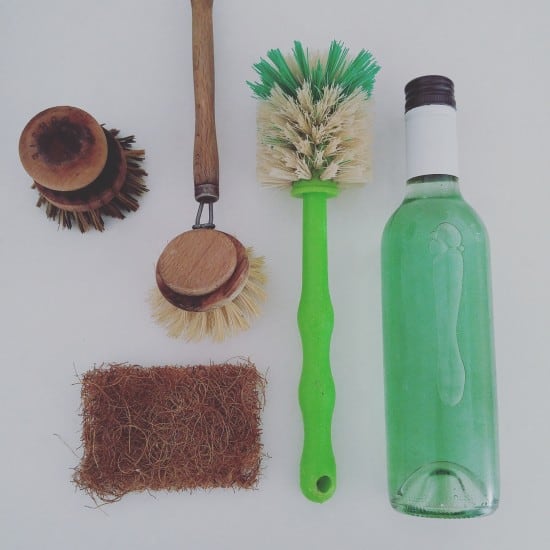
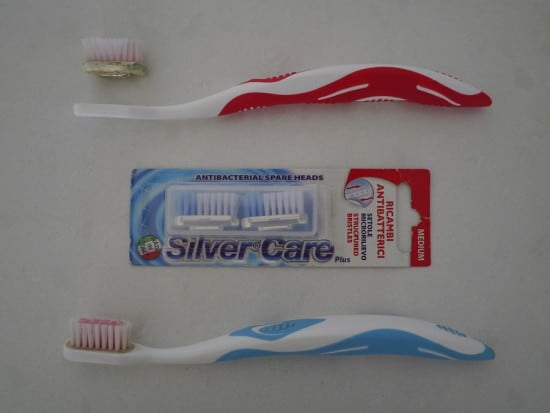
Google Webfont Settings:

Google Map Settings:

Google reCaptcha Settings:

Vimeo and Youtube video embeds:

Privacy Policy

You can read about our cookies and privacy settings in detail on our Privacy Policy Page.

Privacy Policy
Enough is Enough Free ebook for Subscribers front cover

Join our community and you’ll receive free new content every week and a downloadable eBook “Enough is Enough” to help you take the next steps!

Enough is Enough eBook

Please send me the eBook!

Send my eBook link to:

By downloading the eBook you agree to my Privacy Policy.

I hate spam as much as you do, and I promise to keep your email address safe. I will not share or sell your personal information, ever. You can unsubscribe at any time.

This form collects information I will use to send out the free eBook, new content once a week and an occasional newsletter (with other stuff I think you’ll find useful such as events).

Loading Comments...